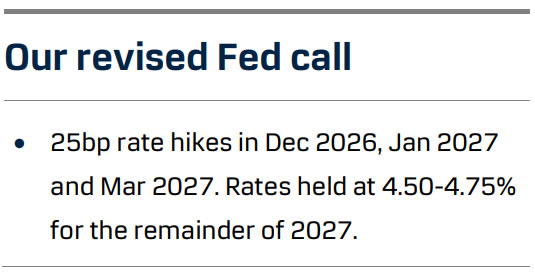
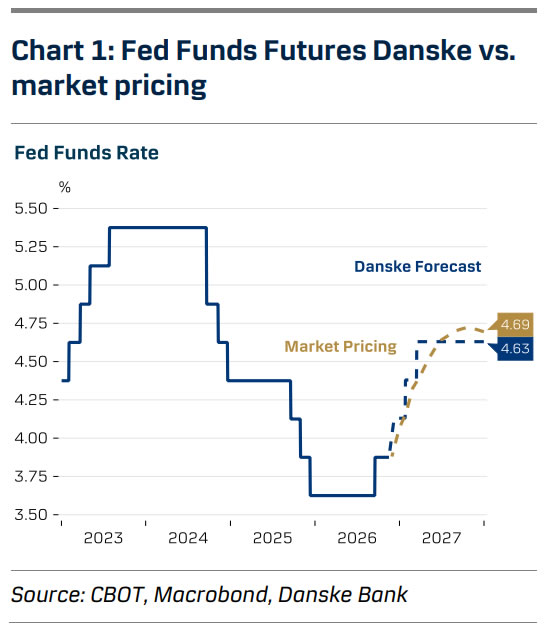
- We adjust our Fed call and expect an additional 25bp rate hike in January 2027. We still expect 25bp rate hikes in December and March, bringing the fed funds rate to 4.50-4.75% for the remainder of 2027.
- Growth has surprised to the upside, while the relatively tight labour market continues to expand at a solid pace. This allows Fed to focus on its inflation mandate.
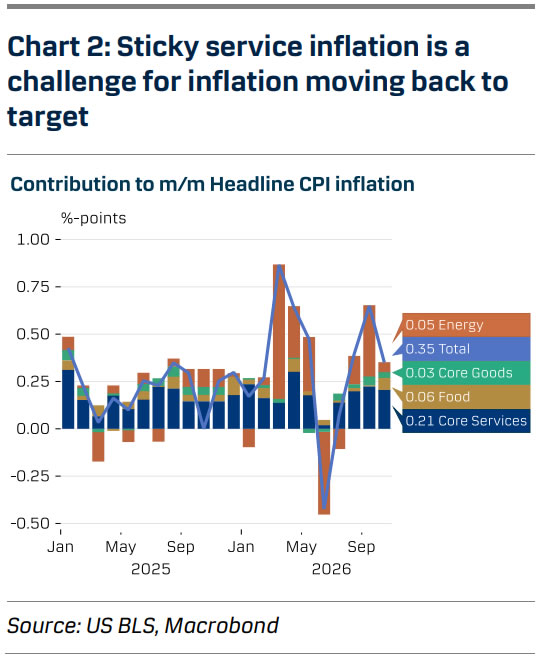
- Inflation is broadening to non-energy components, especially services. The pickup in labour demand, will drive wage growth, and make core service inflation less like to return to target without further tightening.
When we last lifted our US rates forecast in May , we identified three risks of sticky inflation that could warrant a Fed tightening bias: 1) strong labour market developments, 2) an AI capex boom becoming increasingly inflationary and 3) fiscal policy turning expansionary (see RtM USD – The case for a tightening bias, 19 May). This story has unfolded stronger than we initially expected, and underlying inflation has broadened, with core CPI rising 0.3% or more in each of the past three months, a pace inconsistent with 2% annual inflation. Upside surprises have been particularly evident in services inflation.
The labour market has surprised to the upside. Employment growth has picked up, with the 3-month moving average above 100,000. While this has been helped somewhat by the recent rebound in participation rates (see RtM USD – Labour supply recovery would pose upside risk to growth, 16 November), the labour market has tightened notably. The unemployment rate dropped to 4.1% in October from 4.4% at the end of last year. Initial unemployment claims are hovering near all-time lows, while continuing claims are at their lowest level since early 2023.
Recent indicators point to early signs of faster wage growth and companies raising compensation plans. Corporate profits have boomed in 2026 and contributed to inflation. We think strong profitability is incentivising hiring, boosting labour demand, growth and inflation. High labour demand in a tight but somewhat adaptable labour market could drive solid growth in wages disposable incomes and consumption in first half of 2027.
The Fed will need to address this strong underlying demand outlook with more tightening than we had initially pencilled in. We see demand and underlying inflation increasing through the first half of 2027. From the second half of 2027, we expect growth and inflation to slow as tighter monetary policy hits the real economy.
The recent hawkish shift in Fed communication supports our view for more tightening. Fed’s Waller has aired support for a 50bp jumbo hike at the December meeting. While we think support for such a move within the FOMC is limited, it still points to greater urgency for tightening. We still see broader support for smaller incremental rate hikes in most Fed communication.