Bundesbank Weidmann: Worries of slowdown are exaggerated

    Bundesbank head Jens Weidmann tried to talk down worries over Eurozone growth slow down. He said “some observers already see evidence of an approaching end to the upswing in the recent economic slowdown:”. He added “however, I think such worries are exaggerated.”

    He also said expectations of an ECB hike towards mid-2019 remain realistic.

    SNB bucks expectations and keeps interest rate steady

      In an unexpected move that diverged from the market’s anticipations, SNB held its policy rate steady at 1.75%, side-stepping the anticipated hike to 2.00%. The conditional inflation projections have undergone downward revision. While inflation could surge above 2% target in upcoming quarters, it’s projected to retract back to 1.9% in 2025 based on current interest rate, without further tightening.

      Despite this, SNB did not completely distance itself from a hawkish tone, and maintained the further tightening “may become necessary”. It also reiterated the willingness to intervene in the market with focus on “selling foreign currency

      Delving into the specifics of the conditional inflation projections, based on steady 1.75% policy rate, inflation is forecasted to ascend to 2.0% by the end of this year. It will scale up to its apex at 2.2% in the second quarter of 2024, before experiencing a slight dip to 1.9% at the onset of 2025, maintaining that level thereafter.

      On the economic growth front, SNB’s projections lean towards the cautious side, forecasting tepid growth for the remainder of the year. The annual growth is projected to hover around a modest 1%.

      BoC Poloz: Couple of negative developments caused detour of the economy’s way home

        BoC Governor Stephen Poloz told the House of Commons Standing Committee on Finance that since six months ago, there was a “couple of negative developments” that have caused a “detour for the economy and are delaying its return home.” Nevertheless, he’s confidence that the impacts would be “temporary”, and “stronger economic growth will resume” after associated adjustments.

        On the developments he said, firstly, the global economy slowed as affected by “US-led trade war”. Secondly, there was sharp decline in oil price late in 2018, which put Canada’s oil sector under “considerable stress”. Also, BoC have continued to watch how the housing markets is adjusting to policy measures and past rate hikes. Fourthly, combined impact of adjusted spending plans of federal and provincial governments led to reduction in growth projections.

        Poloz noted that there is good reason to believe that the economy will accelerate in the second half of this year. In this context, the Bank’s Governing Council judges that an accommodative policy interest rate continues to be warranted.

        Full remarks here.

        ECB accounts: PEPP to continue with significantly higher pace

          In the accounts of June 9-10 meeting, ECB said, “it was stressed that the recovery was at an early stage and lacked robustness, as it depended heavily on policy support”. The projected path for the economy was ” was subject to significant uncertainties and risks”. An ” undue tightening of financing conditions at the current juncture could jeopardise the ongoing economic recovery and the outlook for inflation.”

          Hence, “a noticeable slowing of the pace of purchases for the next quarter was therefore seen as inappropriate at the current juncture”. A remark was even made that, “in view of the persistent inflation shortfall projected in the June staff projections, even an increase in asset purchases as the main monetary policy instrument could be justified at present.”

          Nevertheless, “in view of the better outlook for growth and inflation and the associated upside risks, it was, however, also argued that, to provide the same degree of accommodation, asset purchases should be scaled back somewhat.” Concerns were also expressed about potential side effects “if the highly accommodative monetary policy stance was maintained much longer.”

          Overall, most members consent that net PEPP purchases should continue at a significantly higher pace in Q3. But the “reaction function” on purchases would “continue to rely on a joint assessment of financing conditions and the outlook for inflation over the medium term”.

          Full meeting accounts here.

          US initial jobless claims falls to 207k vs exp 225k

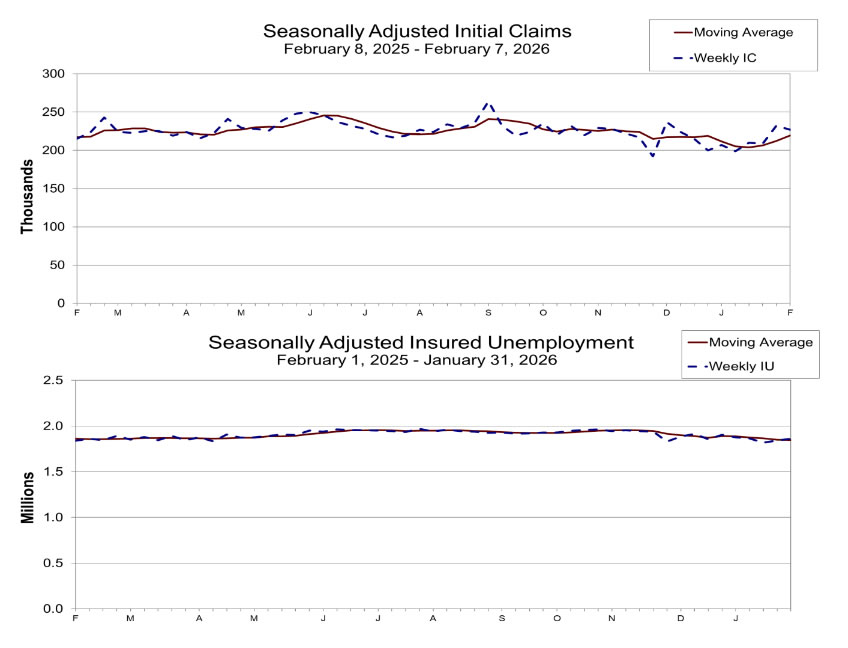
            US initial jobless claims fell -16k to 207k in the week ending January 25, below expectation of 225k. Four-week moving average of initial claims fell -1k to 213k.

            Continuing claims fell -42k to 1858k in the week ending January 18. Four-week moving average of continuing claims rose 6k to 1872k.

            Full US jobless claims release here.

            BoE to assess the government’s growth plan at “next scheduled meeting”

              BoE Governor Andrew Bailey said in a statement that it’s “monitoring developments in financial markets very closely in light of the significant repricing of financial assets.

              He pointed to the UK government’s Growth Plan announced on Friday and he “welcome the Government’s commitment to sustainable economic growth”.

              The MPC will make a full assessment “at its next scheduled meeting” of the impact of the plan on demand and inflation, and the fall in Sterling, and “act” accordingly.

              Full statement here.

              Japan’s PMI manufacturing dips to 49.6, services rises to 53.9

                Japan’s PMI manufacturing index ticked down from 49.8 to 49.6, marking its third consecutive month in negative territory. On the other hand, services sector offered some relief as its PMI edged higher, rising from 53.7 to 53.9. Composite PMI slipped from 52.9 to 52.5, indicating a slight softening in growth momentum.

                Usamah Bhatti, Economist at S&P Global Market Intelligence, noted that Japan’s private sector expansion carried on through Q3, though at a slower pace. The expansion remained services-led, with the sector showing its strongest growth in five months, while manufacturing output fell back into contraction for the second time in three months.

                Bhatti also highlighted that input cost inflation has eased to a six-month low, with both manufacturing and services firms reporting softer cost pressures. However, service providers are increasingly passing higher costs onto customers, as output price inflation ticked up slightly in September. Confidence in the future remains positive, but the overall sentiment has weakened to its lowest level since April 2022.

                Full Japan PMI release here.

                Canada’s retail sales rise 0.3% mom in April, but May outlook weakens on trade tensions

                  Canada’s retail sales rose 0.3% mom in April to CAD 70.1B, falling short of market expectations of a 0.5% mom rise. Growth was supported by increases in six of nine subsectors, particularly in motor vehicle and parts dealers. However, sales excluding autos and fuel—rose just 0.1% mom. In volume terms, sales rose a healthier 0.5%, but the strength may not carry forward. Statistics Canada’s advance estimate for May suggests a -1.1% mom decline.

                  Trade tensions between Canada and the US are emerging as a key drag on the retail sector. Statistics Canada reported that 36% of retail businesses were affected in April, citing price increases, shifting demand, and supply chain disruptions. While most subsectors recorded sales growth, all nine reported some degree of negative impact.

                  Full Canada’s retail sales release here.

                  NZ ANZ business confidence hits 10-yr high , optimism grows on lower interest rates

                    New Zealand’s ANZ Business Confidence surged from 60.9 to 65.7 in October, marking its highest level in a decade and reflecting a wave of optimism among businesses.

                    This renewed confidence is supported by a range of positive indicators: the outlook for own activity increased slightly from 45.3 to 45.9, while export intentions jumped from 13.8 to 17.1, the highest since September 2018. Investment intentions also surged from 9.2, reaching 20.0, the highest level since June 2021, and employment intentions rose from 11.8 to 14.2, the highest since November 2021.

                    Several key metrics highlight this optimism. Cost expectations dropped from 66.8 to 64.2, indicating some relief in business expenses, while wage expectations edged up slightly from 76.4 to 77.0. Pricing intentions also rose, climbing from 42.8 to 44.2, suggesting businesses may feel confident in passing some costs to consumers. Profit expectations strengthened from 22.2 to 27.0, and inflation expectations continued their downward trend, dipping from 2.92% to 2.82%.

                    According to ANZ, “steady falls in interest rates” have provided a strong boost to business sentiment, encouraging growth across multiple sectors.

                    Full NZ ANZ business confidence release here.

                    New Zealand ANZ business confidence jumped to -26, firms looking through coronavirus re-emergence

                      Preliminary reading of ANZ Business Outlook survey showed marked improvement in business confidence , from -41.8 to -26.0. Own activity outlook also jumped form -17.5 to -9.9. ANZ said “firms are largely looking through the re-emergence of COVID-19 in the community”. Many activity indicators are also “at their highest levels since February”, even though still well down compared to pre-COVID days”.

                      ANZ added: “The New Zealand economy has a long way to go to navigate this crisis. Fiscal and monetary policy are certainly working their magic. But come year end, far fewer firms will be supported by wage subsidies, and the loss of tourists will be more sorely felt. But for now, things appear to be firmly in the “could be worse” basket.”

                      Also released, manufacturing sales dropped -12.2% in Q2. The main industry movements were: petroleum and coal products; down -33%, metal products, down -22%; transport equipment, machinery, and equipment, down -14%.

                      USD/CAD break or hold? 1.3930 support tested ahead of BoC–Fed double cuts

                        Global attention turns to North America today, with both the BoC and the Fed expected to deliver 25bps rate cuts. The BoC’s decision will come first at 13:45 GMT, followed by the Fed’s announcement later at 18:00 GMT.

                        The BoC’s overnight rate is widely expected to fall to 2.25%, reflecting the bank’s persistent concern about growth despite recent resilience in jobs and inflation data. Policymakers remain uneasy about the impact of U.S. tariffs and weak domestic demand, even as headline inflation overshoots target. For Governor Tiff Macklem and his team, the near-term goal remains cushioning the economy without reigniting price pressures.

                        Most analysts expect today’s cut to be the final one of this cycle, with the BoC likely to enter a prolonged pause. A Reuters poll showed 21 of 34 economists forecasting rates at 2.25% by the end of 2026, implying stability for an extended period. Only eight respondents saw further easing to 2.00% or below.

                        Still, the balance of risks leans dovish, as agreed by most, and a terminal rate at 2.00% is a real possibility. Growth remains soft, exports are vulnerable to trade restrictions, and business confidence has yet to rebound. Policymakers are likely to leave the door open for further cuts without explicitly signaling another move.

                        Attention will then shift to the Fed, which is widely expected to lower the federal funds rate to 3.75–4.00%. Futures markets also price in a 90% probability of another 25bps cut in December, taking the target range to 3.50–3.75%.

                        However, the 2026 policy path remains clouded by diverging risks — inflation could reaccelerate if tariffs bite harder, even as the labor market shows signs of fatigue. A recent Reuters survey reflected this uncertainty, showing economists split seven ways on where rates might stand by the end of next year — anywhere between 2.25%–2.50% and 3.75%–4.00%.

                        The debate has been complicated further by speculation over who will replace Chair Jerome Powell when his term ends in May. Treasury Secretary Scott Bessent confirmed earlier this week that the shortlist includes Fed Governors Christopher Waller and Michelle Bowman, National Economic Council Director Kevin Hassett, former Fed Governor Kevin Warsh, and BlackRock executive Rick Rieder, all representing slightly different shades of monetary philosophy.

                        Given that backdrop, Powell is unlikely to make any firm commitments on policy beyond today’s meeting. Markets will instead look to the December Summary of Economic Projections and updated dot plot for clarity on the 2026 rate path.

                        In the currency markets, USD/CAD has weakened sharply just ahead of the twin policy events, hovering just above 1.3930 support after yesterday’s selloff. A rebound from current levels would keep the broader uptrend from 1.3538 intact, with a break above 1.4006 suggesting the rally’s resumption through 1.4078.

                        Conversely, decisive break below 1.3930 would signal that the advance has likely topped, opening the way for a deeper pullback toward the channel floor near 1.3829, where the next key directional cue will emerge.

                        Australia retail sales dropped -4.4% in Dec, up 8.2% in Q4

                          Australia retail sales dropped -4.4% mom in December to AUD 31.93B. For Q4, sales rose 8.2%, fastest on record.

                          Ben James, Director of Quarterly Economy Wide Statistics, said: “Consumers enthusiastically returned to discretionary spending following the end of Delta related lockdowns in October, and the continued easing of restrictions over the quarter. Well publicised concerns over product availability and delivery timeliness led to consumers bringing forward their end of year shopping, in conjunction with a re-opening spending splurge due to pent up consumer demand.”

                          “This post lockdown recovery aligns well with the previous nationwide Covid lockdown recovery in the September quarter 2020 where sales rose 6.3 per cent, more than recovering the losses of the June 2020 quarter fall of 3.5 per cent”.

                          Full release here.

                          Australia NAB business conditions rose to 25, record high

                            Australia NAB business conditions rose from 17 to 25 in March, hitting a record high. The rise was driven by strong increases in all sub-components. Looking at some details, trading condition rose from 23 to 35. Profitability condition rose from 18 to 26. Employment condition rose from 9 to 16. Forward orders rose from 10 to 17. Business confidence dropped to from 18 to 15, but remains well above its long-run average.

                            NAB said, “This is a very solid survey result. Businesses are telling us activity continues to increase at a very healthy rate as we have move past the rebound phase in activity with the earlier removal of pandemic-related restrictions. Overall, the recovery over the last year has been much more rapid than anyone could have forecast.”

                            Full release here.

                            EU to offer assurances to UK on Brexit, but not re-negotiations

                              Reuters reported that EU is preparing to offer UK some assurances that can help get the Brexit agreement through the Parliament. An unnamed official was quoted saying “I cannot tell you what sort of re-assurance leaders will give to Prime Minister May. What is not feasible is the re-negotiation of the withdrawal agreement, everything else is possible. Whatever assurances can be given, cannot contradict the deal”.

                              The ideas will likely be discussed at the EU summit on Thursday and Friday, after May is given a chance to explain her concerns.

                              BIS: Central banks have to work out the implications of rising bond yields

                                The Bank for International Settlements said, with the release of its quarterly review, that “prospects of a more robust economic recovery buoyed risky asset prices, with signs of exuberance reflected in the behaviour of retail investors.” And, “sovereign yield curves steepened as investors priced in higher inflation and fiscal support.” Also, “sentiment towards emerging market assets remained favourable, in particular in East Asia.”

                                “The recent market jitters confirm that the back-up in bond yields and reflation trade are casting the financial market outlook in a completely new light,” said Claudio Borio, Head of the BIS’ Monetary and Economic Department. “People just saw low rates for as far as the eye could see, whereas now they have started having doubts about how long these conditions would last.”

                                Central banks “will have to work out what the implications of that (rising bond yields) for their objectives and respond accordingly,” Borio added.

                                Full release here.

                                New Zealand ANZ business confidence dropped to 10 year low, economy feels increasingly late in the cycle

                                  New Zealand ANZ business confidence index dropped to -45 in July, down -5 pts. That’s the lowest level since May 2008. Own activity index dropped -5 pts to 4, lowest since May 2009. Sub-indicators were weak across the board, and retail is the least
                                  confident sector.

                                  ANZ noted in the release that “this economy feels increasingly late in the cycle”. While fiscal stimulus and strong terms of trade will support growth, “sustained low business confidence increases the risk that firms will delay investment and hiring decisions”. “The Road ahead is looking less assured, and risks of a stall have increased.

                                  Full release here.

                                  Also from down under, New Zealand building permits dropped -7.6% mom in June. Australia building approvals rose 6.4% mom in June.

                                  Fed’s Kashkari: Staying patient amid tariff uncertainty, sees strong economy

                                    Minneapolis Fed President Neel Kashkari reiterated Fed’s cautious stance overnight, emphasizing that policymakers remain in “wait and see mode” as they monitor the economic fallout from tariff policy. He noted that while officials are hesitant to make any “dramatic changes” to the policy outlook just yet, their priority is to gain clarity on how tariffs will impact inflation and broader growth dynamics.

                                    Kashkari struck a generally optimistic tone on the domestic economy, saying the fundamentals remain “quite strong” and that inflation appears to be trending back toward the 2% target. He pointed to recent data suggesting underlying inflation is running near 2.5%, which—while still above target—is showing a welcome moderation.

                                    However, the lingering uncertainty around tariffs continues to cloud the outlook. Kashkari warned that “nervousness” around trade is leading some firms to pause investment and may amplify inflation risks. While ongoing negotiations offer a path forward, he made clear that “ultimately we need to see what actually happens and then adjust our analysis of the economy.”

                                    ECB to announce new easing package, some previews

                                      ECB rate decision is the mega events today. It’s widely expected to announce a package of stimulus measures. But up till now, it’s unsure what the exact package would be. Opinions are rather divided, leaving much room for disappointments for both sides. Additionally, ECB will release new economic projections which would be closely watched too.

                                      Here is our take on the package:. 1. Deposit rate cut by -20bps to -0.60%. 2. Two-tiered system to exempt some backs on paying deposit interests. 3. Restart QE at EUR 30B per month. 4. Adjustments to TLTRO. 5. Change of forward guiance to keep interest rates low well past horizon of QE.

                                      More in ECB Preview – Awaiting New Easing Package

                                      Suggested readings:

                                      China’s CPI slows to 0.2% in Jun, PPI negative for 21st month

                                        China’s CPI slowed to 0.2% yoy in June, down from 0.3% yoy in May, missing expectations of a 0.4% yoy increase. Core CPI, which excludes volatile food and energy prices, rose by 0.6% yoy, unchanged from May, but slightly slower than the 0.7% increase observed in the first half of the year.

                                        On a month-on-month basis, inflation remained negative in June, with CPI falling by -0.2%, following a -0.1% decrease in May. This continued negative trend reflects ongoing deflationary pressures in the economy.

                                        PPI fell by -0.8% yoy, improving from the prior month’s -1.4% yoy decline and matching market expectations. Despite the slight improvement, PPI has remained negative for the 21st consecutive month, indicating persistent weakness in industrial prices.

                                        Conservatives to select the next leader and UK Prime Minister by end of June

                                          The Conservative party chairman Brandon Lewis and the vice-chairs of the 1922 Committee, Cheryl Gillan and Charles Walker, have issued a joint statement setting out the process for selecting the next Conservative Party Leader.

                                          Nominations will close in the week commencing 10 June. Then, successive rounds of voting will take place until a final choice of candidates to put to a vote of all party members is determined.

                                          Together, they expect the process to be concluded by the end of June, allowing for a series of hustings around the UK for members to meet and question the candidates, then cast their votes in time for the result to be announced before parliament rises for the summer.”