BoE Broadbent: A Brexit deal would lead to quite a strong bounce-back in investment

    BoE Deputy Governor Ben Broadbent warned that further Brexit delays beyond October 31. risks greater damage to the economy. He said “it’s pretty clear that investment has been feeling the consequences of the uncertainty about Brexit and particularly the possibility of a bad outcome”.

    He warned, “if you continually expect news to arrive imminently – a resolution – then that can have quite a depressing effect on investment”. And, persistent depression on investment is clearly bad for the economy as “we rely on investment for making us collectively more productive and better off.

    Instead, a Brexit deal would lead to “quite a strong bounce-back in investment.” “There would be quite a strong bounce-back in investment,” he said. “These are not cancelled projects – it’s delay. If, as a business person, you’re assured that the worst thing is suddenly off the table, that has quite a powerful effect on your incentive to invest.”

    FOMC minutes: Several members noted interest rate could shift in either direction

      Minutes of March 19-20 FOMC meeting released overnight solidify Fed’s patience stance. Additionally, the minutes indicated that some members are open to rate cut if incoming data and development warrant so.

      It’s noted that a “majority” of participants expected that evolution of economy and risks would likely warrant leaving interest rate unchanged for the rest of year. Some of them noted current interest rate was “close to” neutral.

      At the same time, participants continued to “emphasize” decisions at coming meetings would depend on their ongoing assessments of the economic outlook and how risks evolved. “Several” participants noted their view on interest rate “could shift in either direction based on incoming data and other developments.”

      Full minutes here.

      ECB’s Nagel urges caution on rate cuts

        In a speech today, ECB Governing Council member Joachim Nagel stressed the importance of caution in making further interest rate cuts, citing ongoing economic uncertainty and persistent inflation pressures.

        Nagel remarked, “I don’t see us on a mountain top from which we will inevitably come down. Rather, I see us on a ridge where we still have to find the right point for a further descent,” indicating the need for a measured approach on monetary policy.

        Nagel projected that inflation in Eurozone area would gradually decrease towards the ECB’s target, reaching 2% by the end of 2025, albeit later than previously expected. This suggests a longer path to achieving stable inflation, necessitating careful policy decisions.

        Earlier today, fellow Governing Council member Peter Kazimir underscored the ongoing battle against inflation, referring to it as the “inflation beast.” Kazimir emphasized that the upcoming September meeting will be pivotal for determining the necessity of further rate cuts.

        CHF/JPY topped in short term, but up trend intact

          CHF/JPY’s up trend should have passed its climax for the near term. It has been lifted by buying in Swiss Franc on SNB’s hawkish rate hike in June, while BoJ is still standing firm by its ultra loose monetary policy. But recent pull back in benchmark treasury yields is giving Yen a lift. Meanwhile, as for the Franc, the pull back could be deeper if EUR/CHF manages to rebound firmly from 0.9970 long term support.

          Technically, a short term top should be in place at 143.74, on bearish divergence condition in 4 hour MACD. Deeper correction cannot be ruled out for now. But downside should be contained by 137.77 cluster support (38.2% retracement of 127.48 to 143.73 at 137.52) to bring rebound. The overall long term up trend in CHF/JPY is still in healthy shape to retest 151.22 high (2014 high, the spike after SNB removed the EUR/CHF floor).

          Mid-US Update: Selloff in emerging market currencies could be back in spotlight

            Risk aversion seems to be the main theme in the markets today, as Brexit and NAFTA(?) take a back seat. Instead, selloff in Turkish Lira and stocks are what’s driving the forex markets. Yen is trading as the strongest one for today, followed by Dollar and then Swiss Franc. Yen and the Swissy are clearly benefiting from risk aversion. The greenback continues to take advantage of slump in emerging market currencies.

            Meanwhile, commodity currencies are all weak, including Canadian, Australian and New Zealand Dollar. Sterling also retreats mildly as the lift from Brexit optimism fades. Make no mistake that it’s still likely to have deal when both sides want to, but they have to deliver. And just like Canada-US trade talks, eyes will be on whether there is a conclusion by the end of tomorrow.

            US stocks and yields are trading generally in red. DOW is down -0.40%, S&P 500 down -0.28%, NASDAQ down -0.07%. But remember that both S&P 500 and NASDAQ are on record runs. So such shallow retreat does nothing to change the trend. In Europe, FTSE closed down -0.62%, DAX down -0.54% and CAC down -0.42%.

            USD/CNH (offshore Yuan), is trading up more than 0.6% at the time of writing. Break of the near term channel resistance argues that pull back from 6.9586 could completed with three waves down to 6.7776 already. Immediate focus is on 6.8959, for tomorrow and early next week. Break will bring rest of 6.9586 and even resume the down trend in Yuan.

            And as we mentioned early, USD/TRY’s break of 61.8% retracement of 7.2068 to 5.6919 at 6.6281 could pave the way to retest 7.2069 high.

            Selloff in emerging market currency could come back into spot light. If that happens, Dollar and Yen would be the main beneficiary.


            GBP/CAD ready for triangle breakout with today’s selloff?

              GBP/CAD falls sharply on broad based Sterling selloff today. Deeper decline should now be seen to support zone between 1.6810 and trend line support (now at 1.6865). One interpretation is that price actions from 1.6542 are a triangle pattern. Decisive break of 1.6810 support will indicate that such triangle has completed with five waves to 1.7496. The decline from 1.8052 would then be resuming through 1.6542 support. In that case, we’re probably looking at a medium term down move back to 1.5746.5875 support zone.

              China Caixin PMI dropped to 50.9, hard to turn around without strong stimulus

                China Caixin PMI services dropped to 53.6 in January, down from 53.9 but beat expectation of 53.3. PMI composite dropped to 50.9, down from 52.2. Caixin noted that “services activity continues to rise solidly, but manufacturing sector remains subdued”, “new orders rise only slightly, despite rebound in export sales”, “overall employment stabilises”.

                Commenting on the China General Services PMI™ data, Dr. Zhengsheng Zhong, Director of Macroeconomic Analysis at CEBM Group said:

                “The Caixin China General Services Business Activity Index came in at 53.6 in January, down slightly from the previous month. Demand for services remained solid as the increase in new business accelerated marginally. The sub-index of employment rose, pointing to a faster expansion of payroll number at service providers. The fall in the input prices sub-index was quicker than the decline seen for the prices charged sub-index, which helped ease the pressure on companies’ profit margins. However, the sub-index of business expectations declined from the previous month, indicating services providers’ weakening confidence in the outlook of their operation for the coming 12 months.

                “The Caixin China Composite Output Index fell from the previous month to 50.9 in January. The increase in new orders softened while new export business rose for the first time after dropping for nine consecutive months. That suggested the downward pressure on domestic demand was growing while external demand was holding up. The sub-index of employment rebounded to the break-even point of 50 after staying in contraction territory for seven straight months, underlining that government efforts to stabilize employment have taken effect. The sub-indices of input prices and output prices both went down, while the sub-index of future output, which reflects business confidence, edged up for the second month in a row.

                “Overall, China’s economic growth was weighed on by weakening domestic demand in January, although exports improved marginally as the Sino-U.S. trade negotiations flagged signs of progress. The effects of China’s policies to support domestic demand and the development of the trade war between the country and the U.S. will remain key to the prospects of the Chinese economy. Given that the government has refrained from taking policies of strong stimulus, the downward trend of the economy may be hard to turn around for the time being.”

                Full release here.

                Fed Bostic: Appropriate to normalize interest rate by summertime next year

                  Atlanta Fed President Raphael Bostic said on Thursday, “right now, our projections suggest that by the summertime of next year, the number of jobs that we have in the economy will be pretty much where we were pre-pandemic.”

                  “And at that point, I think it’s appropriate for us to try to normalize our interest rate policy,” he added.

                  ECB Draghi said substantial stimulus remains essential, de Guindos said weaker growth will weigh on inflation

                    In ECB annual report published today, President Mario Draghi maintained that “substantial monetary policy stimulus remains essential to ensure the continued build-up of domestic price pressures over the medium term”. Also,”In view of the persistence of uncertainties related to geopolitical factors, the threat of protectionism and vulnerabilities in emerging markets, the conduct of monetary policy in the euro area will continue to require patience, prudence and persistence.”

                    In presenting the report, Vice President Luis de Guindos warned that “the effect of the adverse factors weighing on growth is expected to unwind over time.” And, “weaker growth momentum will leave its mark on domestic price pressures, slowing the adjustment of inflation towards our aim”.

                    Japan PMI Manufacturing dropped to 49.5, further loss of momentum

                      Japan PMI Manufacturing dropped to 49.5 in June, down from 49.8, and missed expectation of 50.0. Markit noted there was the fastest drop in new orders since June 2016. However, there was resilient output trend as manufacturers reduce backlogs of work to greatest extent since January 2013.

                      Commenting on the Japanese Manufacturing PMI survey data, Tim Moore, Associate Director at IHS Markit, which compiles the survey, said:

                      “June survey data reveals a further loss of momentum across the manufacturing sector, as signalled by the headline PMI dropping to a three-month low. Softer demand in both domestic and international markets contributed to the sharpest fall in total new orders for three years. A soft patch for automotive demand and subdued client confidence in the wake of US-China trade frictions were often cited by survey respondents.

                      “Disappointing sales volumes also led to the largest accumulation of finished goods inventories for over six-and-a-half years. At the same time, backlogs of work were depleted to the greatest extent since January 2013, which will likely act as an additional drag on production volumes in the months ahead.”

                      Full release here.

                      South Korea the first that got indefinite exemption on US steel tariffs

                        The South Korea’s Ministry of Trade said today that is’ exempted from the US steel and aluminum tariffs. However, South Korea now received a quota of around 2.68m tonnes of steel exports. And that is 70% of the annual average of Korean steel exports to the US between 2015-2017. South Korean contributed to 9.7% of US steel imports in 2017.

                        In the mean time, Both countries also agreed on 20-year extension of Korean pickup trucks, until 2041. US automakers could also bring in 50000 vehicles to South Korean annually, doubling from prior amount of 25000.

                        That is the first of many US allies to receive an indefinite exemption on the steel and aluminum tariffs. Other six, Argentina, Australia, Brazil, Canada, Mexico and EU are just having the tariffs temporarily suspended.

                        At this point, there is no news regarding the expemption on Japan and Taiwan, two other major US allies in Asia, yet.

                        Japan PMI services holds strong at 53.2, optimism hits year high

                          Japan’s Services PMI was finalized at 53.2 in November, edging up from 53.1 in October. Composite PMI also improved, rising to 52.0 from 51.5. S&P Global’s Annabel Fiddes noted “a number of positive developments,” with the sector consistently driving overall activity since mid-year.

                          Forward-looking indicators strengthened notably. Business optimism and hiring intentions both climbed to their highest levels since early 2025. New orders also accelerated modestly, the first pickup in three months, signaling a gradual improvement in underlying demand even if the pace remains mild. However, the positive momentum was accompanied by firmer inflation pressures. Input costs rose at the fastest rate since May, prompting another solid increase in selling prices as firms sought to protect margins.

                          With Japan’s new stimulus package now approved—aimed at supporting growth and offsetting rising costs—markets will be watching closely to see whether demand and output continue to improve in the coming months.

                          Full Japan PMI services final release here.

                          Fed Kaplan: Inflation to stay around target next year and fiscal stimulus fades

                            Dallas Fed President Robert Kaplan said Fed is reaching its dual mandate of price stability and full employment. He saw strong GDP growth this year. Nonetheless, he also pointed to recent surged in 10-year Treasury yield and said it’s “telling me that prospects for future U.S. growth are somewhat sluggish (and) that outward growth is looking a little more uncertain.”

                            Besides also expected inflation to just stay around Fed’s target as the impact of fiscal stimulus fades in 2019. He added “to the extent that (inflation) gets above our target, our base case is that that move will be more gradual than something more sudden or substantial.”

                            BoE’s Pill warns of uncomfortable strength in underlying inflation

                              In a speech today, BoE Chief Economist Huw Pill highlighted that while it is “welcome news” that the UK’s headline CPI returned to 2% in May, it is crucial for the inflation target to be achieved on a “lasting and sustainable basis.”

                              He emphasized three key indicators of inflation persistence: labor market tightness, pay growth, and services price inflation. Pill noted that recent developments in these areas suggest “some upside risk to my assessment of inflation persistence.”

                              Pill pointed out that annual rates of services price inflation and wage growth, which remain close to 6%, indicate an “uncomfortable strength” in the underlying inflation dynamics.

                              He also cautioned that the MPC should remain cautious about interpreting any “single data” point as either a “necessary or sufficient trigger” for reassessing their stance.

                              Full speech of BoE’s Pill here.

                              World not ready for Wuhan coronavirus pandemic, as cases in South Korea and Italy continue to surge

                                A team of 25 global health experts returned from China’s Wuhan, the epicenter of the coronavirus outbreak. Team leader Bruce Aylward warned in a press conference that the Wuhan coronavirus is a “rapidly escalating epidemic in different places that we’ve got to tackle superfast to prevent a pandemic.” However, “big conclusion for the world is – it’s simply not ready,”

                                According to data from China’s National Health Commission, situation seems to be easing with slowing increase in new cases and deaths. On February 25, there were 406 new confirmed cases, bringing the total accumulated number to 78064. Death tolls rose 52 to 2715. Separately announced, the northwestern regions of Inner Mongolia and Xinjiang and the southwestern province of Sichuan have downgraded their emergency response level. Gansu, Yunnan, Guangdong, Shanxi, Guizhou and Anhui downgrade emergency level earlier this week.

                                Situations in other countries worsen, however. South Korea reported 169 news cases today, bringing the total to 1146,with 11 deaths. There are 323 cases in Italy, with 11 deaths. Japan’s cases rise steadily to 159, with 1 death. Iran has reported a total of 95 cases, with 16 deaths.

                                Into US session: Sterling recovers on Brexit rumor, Kiwi stays weakest

                                  Entering into US session, Sterling pares back some losses and recovers broadly today. The recovery is believed to be triggered by rumor that the EU is considering to offer a major Brexit concession to the UK. But there is so far no detail on the deal, and it remains just a rumor. Nonetheless, it’s no too surprising for the oversold Pound to have a mild recovery. On the other hand, Dollar is trading as the second strongest one for today. But upside is capped by yesterday’s high except versus New Zealand Dollar.

                                  Kiwi remains the weakest one for today after more dovish than RBNZ statement. Australian Dollar truly lacks a clear direction. It was the strongest one in Asian session as lifted by stocks rebound. But it’s now the second weakest. Euro follows as the third weakest for today as it’s rebound lost steam.

                                  Over the week, New Zealand Dollar is the weakest one, followed by Sterling. Australian Dollar is the strongest one, followed by Euro.

                                  In other markets, European stocks are trading generally softer today with DAX and CAC both down -0.4%. FTSE is down -0.74%. Earlier in Asia, major indices closed mixed. China Shanghai SSE closed up 1.83% at 2794.38, can’t hold on to 2800 handle. Hong Kong HSI rebounded 0.88%. But Nikkei and Singapore Strait Times are down -0.2% and -0.4% respectively.

                                  WTI crude oil is extending weakness after rejection from 70 handle. It’s now back below 67 at 66.92 and looks set to dip further. The boring gold continues to engage in sideway consolidation around 1210.

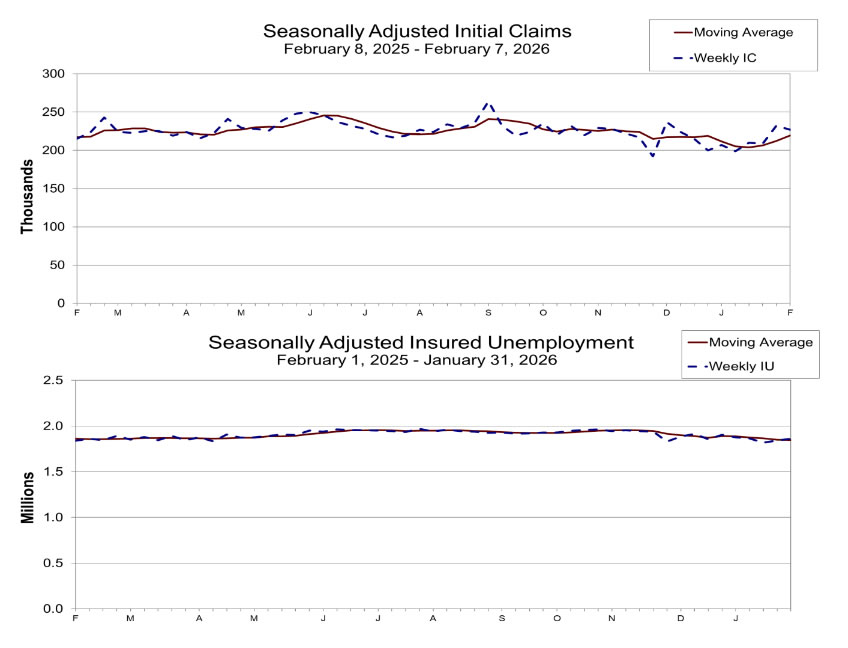
                                  Looking ahead, Canada will release housing starts and new housing price index. US will release PPI, jobless claims and wholesale inventories.

                                  BoJ stands pat, forecasts deeper contraction in 2020

                                    BoJ left monetary policy unchanged as widely expected. Under the Yield Curve Control framework, short term policy interest rate is held at -0.1%. BoJ will also continue to purchase unlimited JGBs to keep 10-year yield at around 0%. It maintained the pledge to continue with QQE “as long as it is necessary” for achieving 2% price target in a stable manner. The decision was made by 8-1 vote, as Kataoka Goushi dissented again, pushing for more stimulus by lowering short and long term interest rates. He also pushed for revising the forward guidance to relate it to price stability target.

                                    In the Outlook for Economic Activity and Prices, BoJ said the economy is “likely to improve gradually from the second half of this year” But the pace is expected to be “only moderate while the impact of the novel coronavirus remains worldwide”. Year-on-year CPI less fresh food is “likely to be negative for the time being”. The projected growth rates and projected CPI in the report are “broadly within the range” or prior forecasts. Nevertheless, outlook is “extremely unclear” with risks “skewed to the downside”.

                                    In the new forecasts:

                                    • GDP to contract -5.7% to -4.5% in fiscal 2020 (versus prior -5.0% to -3.0%).
                                    • GDP to grow 3.0% to 4.0% in fiscal 2021 (vs prior 2.8% to 3.9%).
                                    • GDP to growth to grow 1.3% to 1.6% in fiscal 2022 (vs prior 0.8% to 1.6%).
                                    • Core CPI at -0.6% to 0.4% in fiscal 2020 (vs prior -0.7% to -0.3%).
                                    • Core CPI at 0.2% to 0.5% in fiscal 2021 (vs prior 0.0% to 0.7%).
                                    • Core CPI at 0.5% to 0.8% in fiscal 2022 (vs prior 0.4% to 1.0%).

                                    BoJ maintains policy, expects gradual rebound in inflation after near term weakness

                                      BoJ kept its short-term interest rate unchanged at 0.5% in a unanimous decision today, while sticking with its current bond tapering program through March 2026. Looking further out, the central bank introduced a new bond purchase schedule for fiscal 2026, planning to reduce monthly purchases by JPY 200B each quarter, bringing the total to JPY 2T per month by March 2027.

                                      In its statement, the BoJ downgraded its growth outlook, noting that Japan’s economy is “likely to moderate” in the near term as overseas economies slow and domestic corporate profits weaken. While accommodative financial conditions should provide some support, the central bank only expects a modest recovery later as global growth returns.

                                      On inflation, the impact from food and import price increases is “expected to wane”, while underlying CPI is likely to remain “sluggish” due to a slowing economy. However, the bank anticipates that inflation will gradually pick up over time, supported by rising medium- to long-term inflation expectations and a growing “sense of labor shortage” as the economy recovers.

                                      BoJ also acknowledged “extremely uncertain” outlook around the global trade and policy environment, warning of spillovers to Japan’s financial markets and inflation outlook. The statement emphasized the need to closely monitor foreign exchange developments and their broader implications.

                                      Full BoJ statement here.

                                      Japan PMIs: Potential hit to Q2 could be as large as 20% on previous year

                                        PMI Manufacturing dropped to 31.7 in May, down from 34.7. PMI Services recovered to 25.3, up from 21.5. PMI Composite recovered to 27.4, up from 25.8.

                                        Joe Hayes, Economist at IHS Markit, said latest data provide “yet another shocking insight into the devastating impact of the COVID-19 outbreak”. “Plummeting demand for goods is finally catching up with manufacturing sector”. Taking April and May data together, they’re indicative of GDP falling at an annual rate in excess of 10% and the economy is going to contract for a third straight quarter. Potential hit to Q2 could be as large as 20% on the previous year. Also, “damage to the manufacturing sector could continue to worsen as global trade conditions deteriorate and the global economic recovery is slow”.

                                        Full release here.

                                        US ISM manufacturing rises to 49.0, fourth month of contraction

                                          US ISM Manufacturing PMI inched higher to 49.0 in June from 48.5, marking its fourth straight month in contraction territory but beating expectations of 48.8. While the slight improvement hints at stabilization, the broader picture remains soft. Notably, employment deteriorated further, falling to from 46.8 to 45.0, the fifth consecutive month of contraction. The prices paid index rose marginally from 69.4 to 69.7, indicating that cost pressures remain elevated, though the reading was still below market expectations of 70.2.

                                          According to ISM, 46% of the manufacturing sector’s GDP contracted in June, a notable improvement from 57% in May. However, the share of GDP considered to be in “strong contraction” (PMI 45 or below) jumped to 25%, up sharply from 5% the prior month.

                                          Despite the overall PMI suggesting 1.9% annualized GDP growth based on historical relationships, the underlying data show significant fragility in manufacturing employment and uneven recovery across subsectors.

                                          Full US ISM manufacturing release here.