

Live Comments
Australia CPI Eases to 3.5%, but Sticky Trimmed Mean Keeps September RBA Hike Live
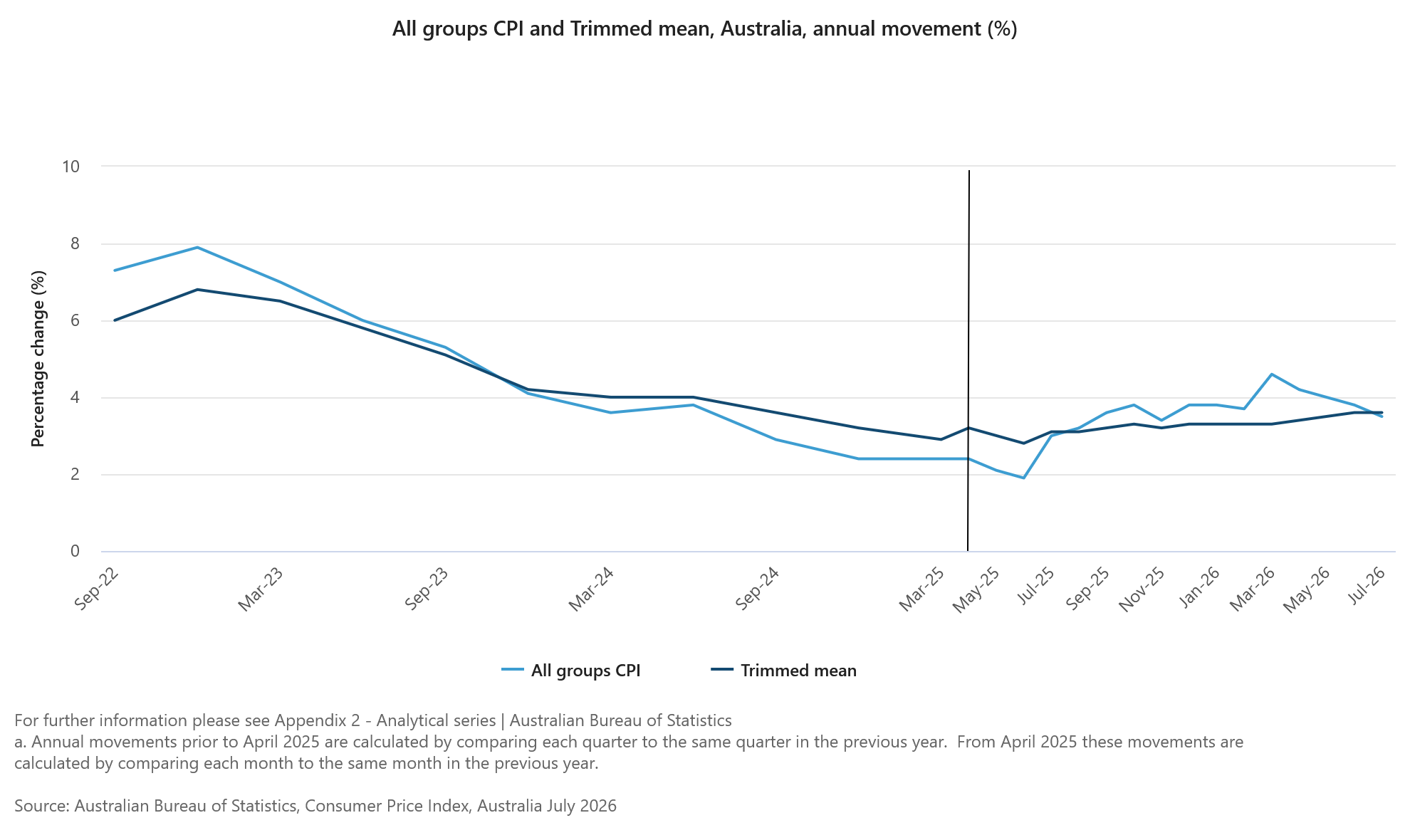
Australia’s headline CPI eased from 3.8% to 3.5% y/y in July, but still came in above 3.2% consensus. Monthly CPI rose 1.0% m/m, after a -0.1% decline in June, also slightly above 0.9% expected. More importantly for RBA, Trimmed Mean CPI held at 3.6% y/y, above 3.5% consensus, while monthly trimmed mean accelerated from 0.3% m/m to 0.5%, against expectations for another 0.3% increase.
Inflation pressure was not confined to one category. Housing was the largest annual contributor, rising 5.0% y/y, with new dwelling prices up 5.7% as builders passed through higher material and labour costs. Food and non-alcoholic beverages rose 3.2%, including a 4.5% increase in meals out and takeaway, while recreation and culture gained 2.6%. Transport inflation accelerated sharply from 0.1% to 1.6% y/y, with automotive fuel jumping 7.5% m/m as world oil prices rose and part of federal fuel-excise relief was unwound.
For RBA, sticky underlying inflation is the more important signal than decline in headline rate. Minutes released a day earlier showed Board explicitly considered whether it might be appropriate to tighten “pre-emptively” if upside inflation risks strengthened, while several members saw further tightening as “quite possible.” July data now give that camp fresh evidence: headline inflation is easing, but trimmed mean has stopped improving and monthly underlying momentum has strengthened. That keeps September meeting firmly live.
Data Summary
| Indicator | July | Expected | June |
|---|---|---|---|
| CPI y/y | 3.5% | 3.2% | 3.8% |
| CPI m/m, original | +1.0% | +0.9% | -0.1% |
| Trimmed Mean CPI y/y | 3.6% | 3.5% | 3.6% |
| Trimmed Mean CPI m/m | +0.5% | +0.3% | +0.3% |
Key Takeaways
- Australia headline CPI eased from 3.8% to 3.5% y/y in July, but still exceeded 3.2% consensus.
- More important for RBA, Trimmed Mean CPI stayed at 3.6% y/y and monthly trimmed mean accelerated from 0.3% to 0.5%, above 0.3% expected.
- Housing remained largest annual contributor at 5.0%, with new dwelling prices up 5.7% as builders passed through higher labour and material costs.
- Transport inflation accelerated from 0.1% to 1.6% y/y, while automotive fuel jumped 7.5% m/m on higher global oil prices and partial unwinding of fuel-excise relief.
- Report reinforces concern that underlying inflation is not cooling as quickly as headline rate suggests.
- Combined with RBA’s recent discussion of pre-emptive tightening and explicit focus on monthly inflation data, July CPI keeps September meeting firmly live.
Full Australia CPI release here.
US Consumer Confidence Slips to 89.4 as Expectations Weaken Despite Better Current Conditions
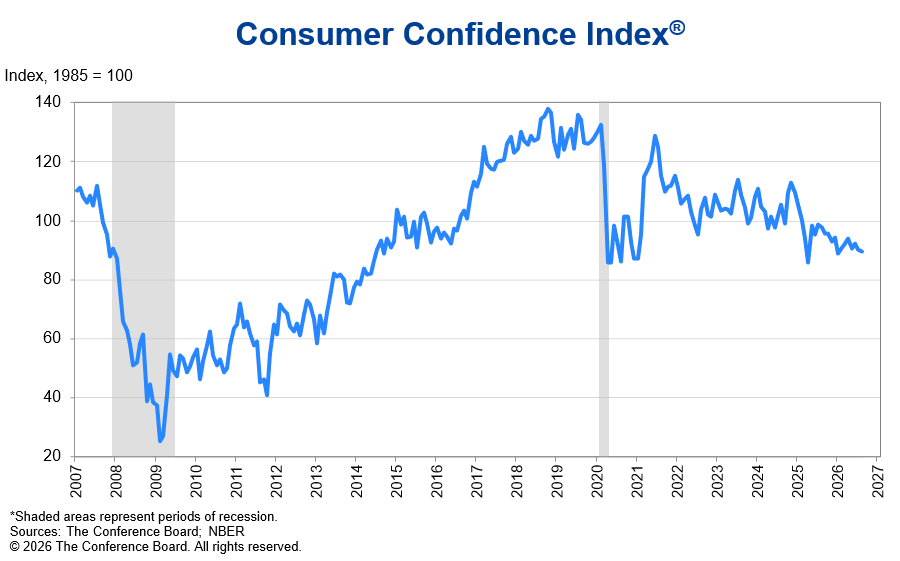
US consumer confidence edged lower in August, with Conference Board Consumer Confidence Index falling from 90.2 to 89.4, marking a second consecutive monthly decline. Headline weakness masked a sharp divergence between consumers’ views of present conditions and future outlook. Present Situation Index rose from 114.4 to 121.2, reversing three months of declines, while Expectations Index fell from 74.0 to 68.2.
Consumers became more positive about current business and labor-market conditions, but considerably more cautious about next six months. Conference Board said perceptions of current labor market improved, while expectations for future business conditions and employment deteriorated. Household income expectations also moderated, although they remained positive overall.
Inflation concerns edged higher at the same time. Both average and median 12-month inflation expectations increased slightly in August, while 61.3% of consumers expected interest rates to rise over coming year, down from 62.0% in July. Overall, survey points to a consumer that feels somewhat better about conditions today but increasingly uneasy about what comes next, leaving headline confidence under pressure despite improvement in current assessments.
Data Summary
| Indicator | August 2026 | July 2026 | Change |
|---|---|---|---|
| Consumer Confidence Index | 89.4 | 90.2 | -0.8 |
| Present Situation Index | 121.2 | 114.4 | +6.8 |
| Expectations Index | 68.2 | 74.0 | -5.8 |
| Expecting Higher Interest Rates, 12M | 61.3% | 62.0% | -0.7 ppt |
Key Takeaways
- US Consumer Confidence Index fell from 90.2 to 89.4 in August, marking a second consecutive monthly decline.
- Headline weakness masked a sharp divergence between current conditions and future expectations.
- Present Situation Index rose from 114.4 to 121.2, reversing three months of declines as consumers became more positive about business and labor-market conditions.
- Expectations Index fell from 74.0 to 68.2, showing greater pessimism about business conditions and labor market over next six months.
- Household income expectations moderated but remained positive overall.
- Average and median 12-month inflation expectations edged higher, while share expecting higher interest rates slipped from 62.0% to 61.3%.
- Overall message is mixed: consumers feel better about economy today, but confidence in what comes next is deteriorating.
Germany Ifo Business Climate Jumps as Recovery Broadens Across Sectors
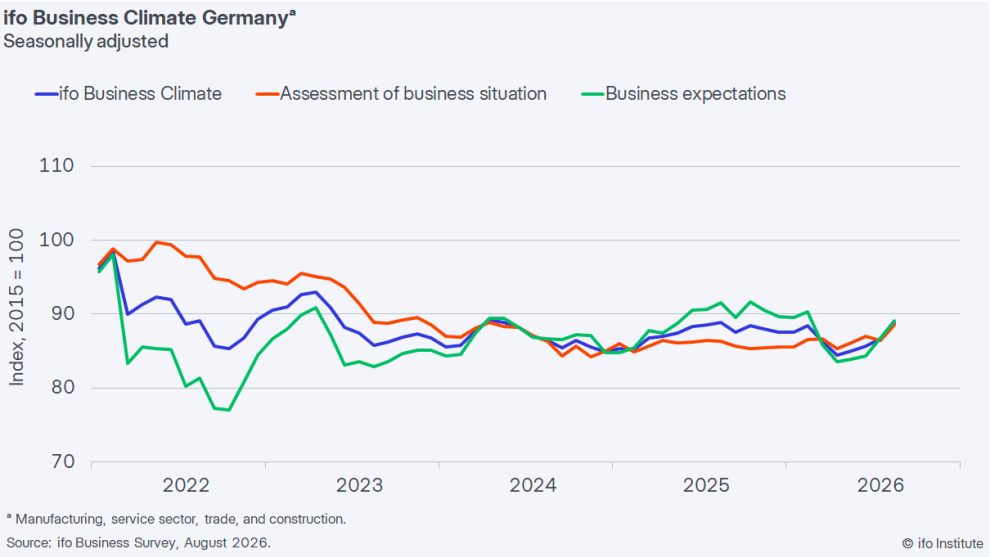
Germany’s Ifo Business Climate Index rose from 86.7 to 88.8 in August, extending a sharp recovery in corporate sentiment. Current Situation improved from 86.5 to 88.5, while Expectations climbed from 86.8 to 89.1. Ifo said companies were more satisfied with current conditions, significantly upgraded their outlook and reported declining uncertainty despite another increase in energy prices.
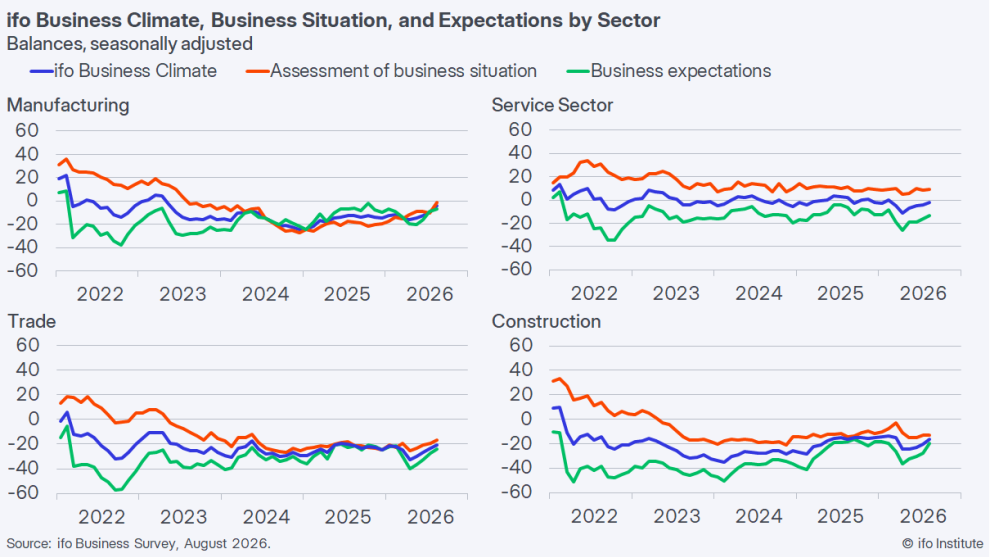
Sector data showed improvement was broad-based. Manufacturing recorded the strongest rebound, with its balance rising from -9.6 to -4.2, as firms reported better current conditions and expected production to increase over next three months, although order books remained weak. Services improved from -4.4 to -2.1, trade from -23.4 to -20.5, and construction from -20.5 to -16.5. In construction, improvement came from less pessimistic expectations even as current conditions softened slightly.
August survey therefore points to a more convincing broadening of Germany’s recovery in business confidence. Manufacturing is providing strongest momentum, while services, trade and construction are all moving in same direction. Weak orders and persistent pressure in areas such as transport and logistics still argue against calling recovery complete, but combination of stronger current assessments, improving expectations and falling uncertainty supports Ifo’s conclusion that German economy is recovering.
Data Summary
| Metric | Aug 2026 | Jul 2026 | Change |
|---|---|---|---|
| Ifo Business Climate | 88.8 | 86.7 | +2.1 |
| Ifo Current Situation | 88.5 | 86.5 | +2.0 |
| Ifo Expectations | 89.1 | 86.8 | +2.3 |
| Germany sector balance | -5.9 | -10.5 | +4.6 |
| Manufacturing | -4.2 | -9.6 | +5.4 |
| Services | -2.1 | -4.4 | +2.3 |
| Trade | -20.5 | -23.4 | +2.9 |
| Construction | -16.5 | -20.5 | +4.0 |
Headline indicators are index readings; sector figures are seasonally adjusted balances.
Key Takeaways
- Germany’s Ifo Business Climate rose from 86.7 to 88.8 in August, with improvement in both current conditions and expectations.
- Current Situation increased from 86.5 to 88.5, while Expectations rose from 86.8 to 89.1, showing recovery was not driven solely by optimism about future.
- Improvement was broad across all major sectors, with manufacturing leading as its balance jumped from -9.6 to -4.2.
- Services improved from -4.4 to -2.1, trade from -23.4 to -20.5, and construction from -20.5 to -16.5.
- Ifo said uncertainty continued to decline and German economy was recovering despite another rise in energy prices.
- Weak manufacturing orders, difficult conditions in transportation and logistics, and softer current conditions in construction still temper recovery signal.