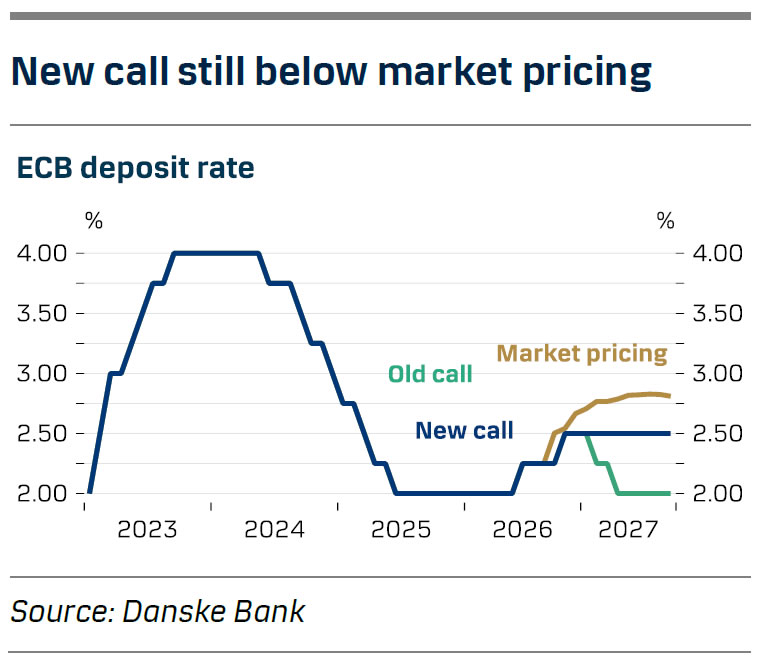
We revise our ECB call and no longer expect the ECB to cut rates in 2027. We still expect a final 25bp hike in September, taking the deposit rate to 2.50%, but now expect the ECB to keep it there throughout 2027 rather than cut it back to 2.00%.
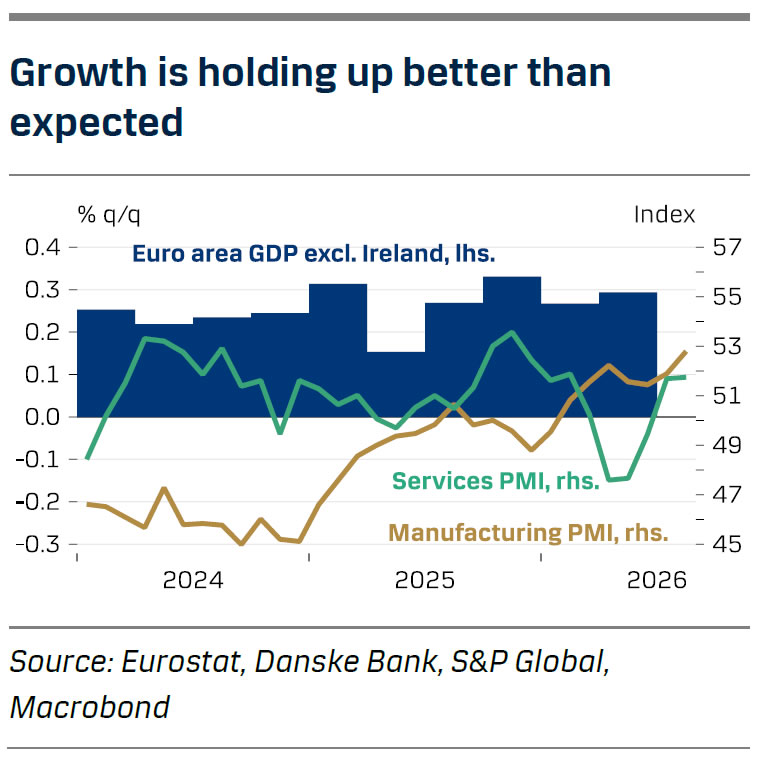
The change reflects a more resilient growth backdrop than we previously assumed. The conflict in Iran has raised corporate costs and consumer prices, yet growth has remained close to potential. Manufacturing is recovering more strongly than expected, supported by higher new orders. Rapid global investment in artificial intelligence is one driver: although European firms are not leading this investment, many supply the equipment, components and infrastructure required for data centres and power systems. Fiscal policy is also more supportive, particularly as German public spending has risen faster than anticipated and France is tightening less than expected. As these sectors of the economy are relatively less sensitive to interest rates, growth around potential is expected to continue in 2027 despite higher rates in our forecast.
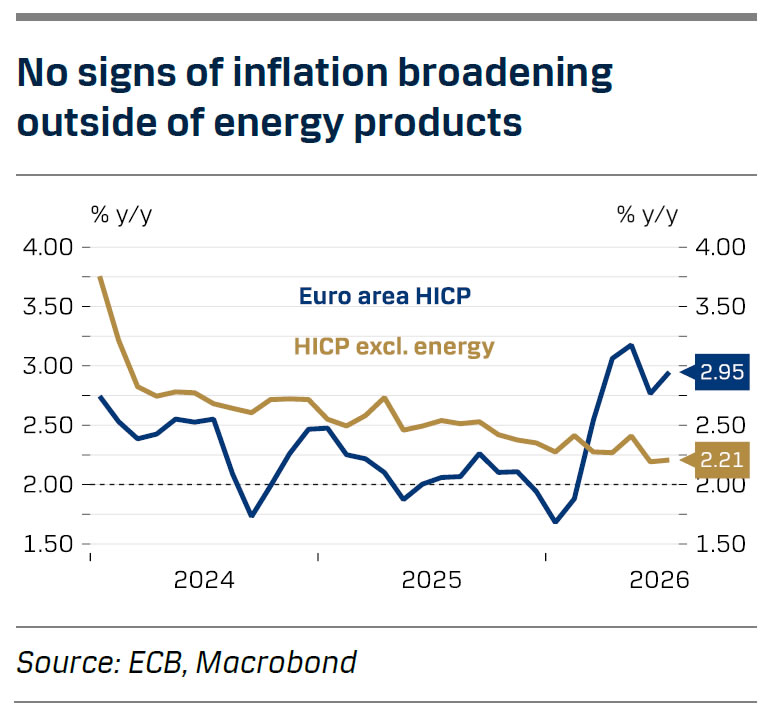
While stronger growth removes the need for cuts next year, contained underlying inflation limits the need for more than one additional hike. The rise in headline inflation has been confined to a narrow range of energy products, with no signs of spillovers to other goods and services, including food. Wage growth is still easing, wage expectations are unchanged, and there is no evidence of second-round effects. This likely reflects the relatively balanced starting point of the economy before the conflict in Iran particularly regarding labour market conditions. Low consumer confidence may also make it difficult for businesses to raise prices in this environment.
With the deposit rate at 2.50% from September and onwards, the deposit rate will be at the upper end of the ECB’s estimated neutral range. Further hikes would take policy into restrictive territory and deliberately weaken demand. That would be a materially different step from raising the rate within neutral territory from 2.00% to 2.50%, and we do not think the inflation data justifies it. Resilient growth suggests that the economy can withstand higher rates, but the absence of energy-related spillovers to underlying inflation means that the ECB does not need to move into restrictive territory.
We see the risks to our call as balanced. Stronger-than-expected spillovers to underlying inflation and low gas inventories could prompt another hike late this year or in early 2027. Conversely, slower than expected wage growth and a weakening labour market could still lead the ECB to cut before the end of 2027. Over the longer term, we expect the deposit rate to fall towards 2.00%, but in 2027 the ECB is likely to keep rates somewhat higher to guard against inflation becoming de-anchored amid the temporary demand boost from AI investment and fiscal policy.