


- The rally in Brent is driving up Treasury yields and strengthening the US dollar.
- The longer Saudi Arabia’s export difficulties persist, the higher oil prices will rise.
The US dollar came close to recording its best daily performance since June as yields on 10-year US Treasury bonds touched the psychologically significant 5% level. The last time this level was reached was in 2023, and debt market yields have not consistently remained above it since 2007, although even then the peak was close to 5.3%. Yields have not remained consistently above this level for the past 25 years, and inflation (actual or expected) can hardly explain such heights.
There are many reasons behind the rally in Treasury yields. Spending on artificial intelligence is a significant driver. This factor has a direct impact through competition in the debt markets between the Treasury and high-frequency traders. Indirectly, investment is fuelling the US economy, whilst the growing demand for electricity from data centres is fuelling inflation and growth, increasing the likelihood of a tightening of Fed policy.
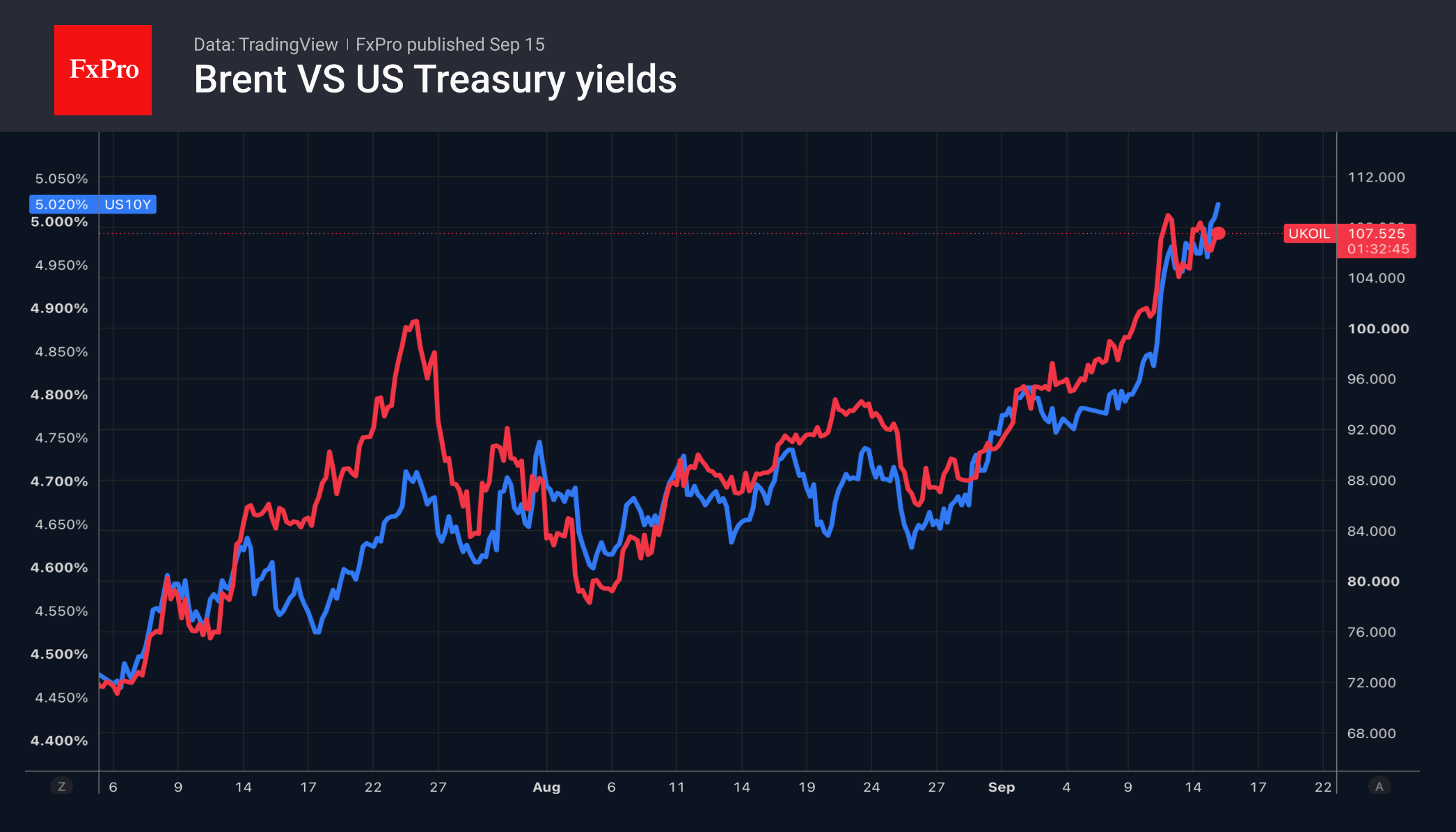
However, the key driver of the rise in Treasury bond yields is the conflict in the Middle East. Since it began in February, Brent crude has risen by 53%, driving up consumer prices and heightening the risk of an acceleration in core inflation due to second-order effects of the prolonged economic impact. As a result, central banks can no longer turn a blind eye to the supposedly temporary rise in energy prices. Investors expect three rate rises from the Fed by the end of next year, four from the ECB and five from the Bank of England.
Brent’s muted reaction to Saudi Arabia’s closure of the East-West pipeline suggests that markets still hope Riyadh will manage to find alternatives and continue supplying oil. There are reports of its intention to increase flows through the Strait of Hormuz. According to the US Department of Energy, the pipeline will reopen shortly.
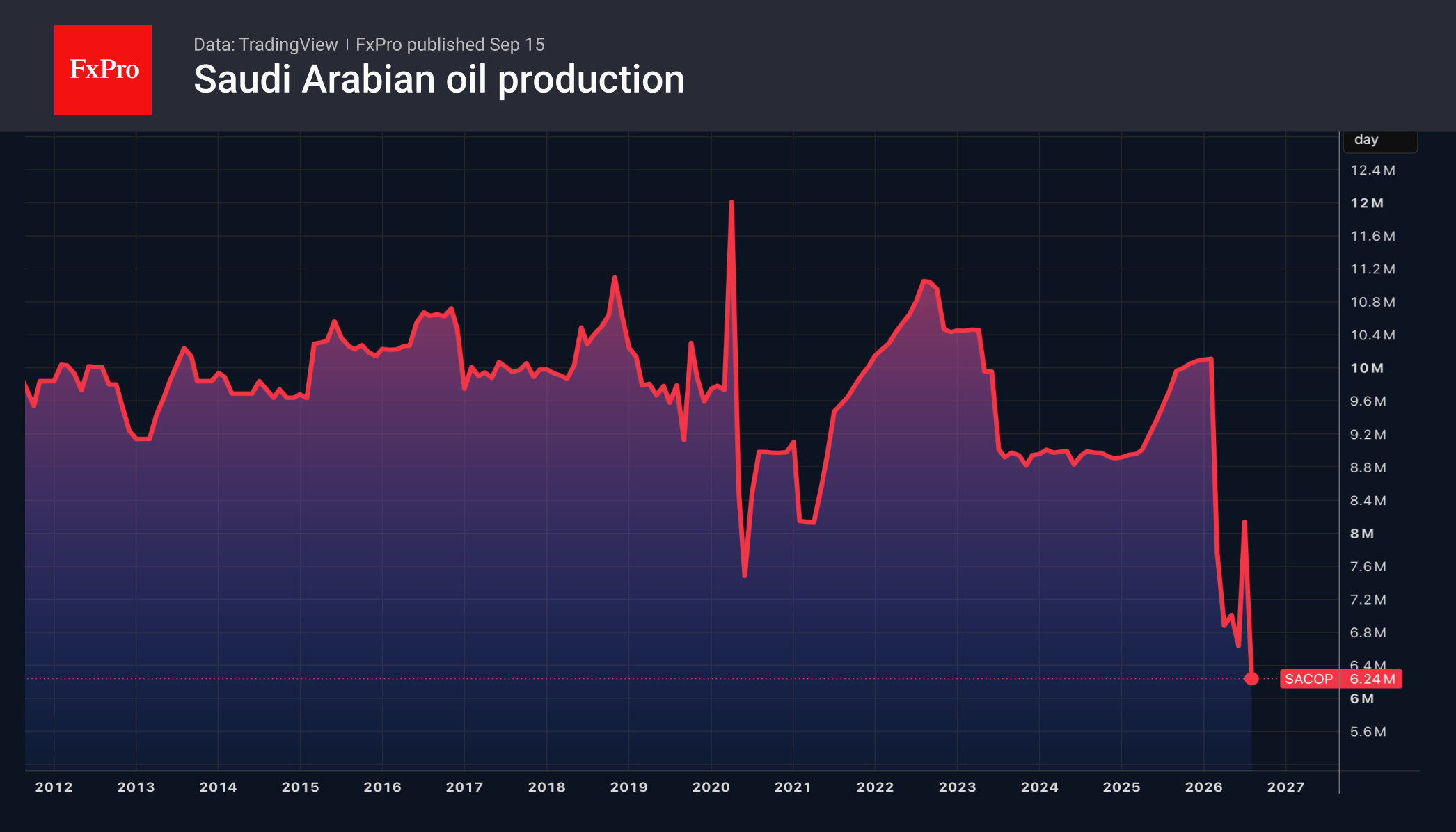
The Associated Press has a different account. Citing regional sources, the agency claims that it will remain out of operation for several weeks. Rystad Energy believes that, in this scenario, Brent will continue its rally towards $120 per barrel. In early September, Saudi Arabia exported around 3 million barrels per day via the East-West Pipeline. A further 1 million barrels per day were transported through the Strait of Hormuz. The removal of 4 million barrels per day of supply from the global market will exacerbate the shortage and contribute to further price rises.
The FxPro Analyst Team





