- Concerns over the effectiveness of AI spending.
- The midterms are emerging as a risk factor for stock indices.
A fresh wave of sell-offs in technology stocks, triggered by disappointing earnings reports and expectations of a Democratic victory in the midterms, has sent the Nasdaq-100 into its third technical correction since the start of the year, with the index falling 10% from its most recent peak. The index recorded its worst monthly performance since March 2025. As Morgan Stanley noted, the pullback was already taking place beneath the surface, while the equity market appeared calm on the surface.
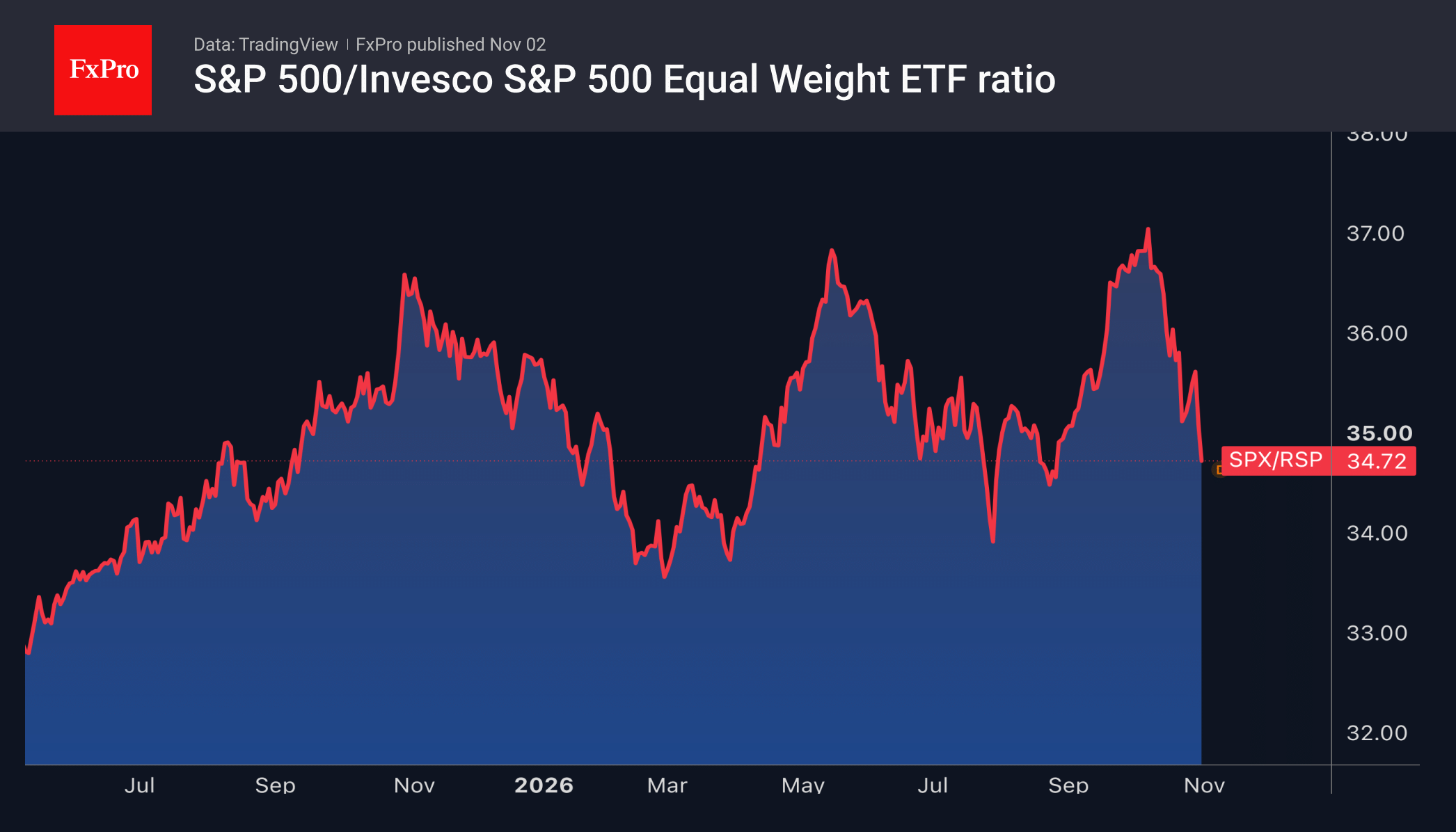
In market parlance, this is known as rotation. It occurs when investors sell shares in technology companies and replace them in their portfolios with other securities issued by firms capable of capitalising on the strength of the US economy or high oil prices. As a result, the divergence between the equally weighted S&P 500 and the standard S&P 500 in October was the widest since April 2009, when markets were recovering from the global economic crisis.
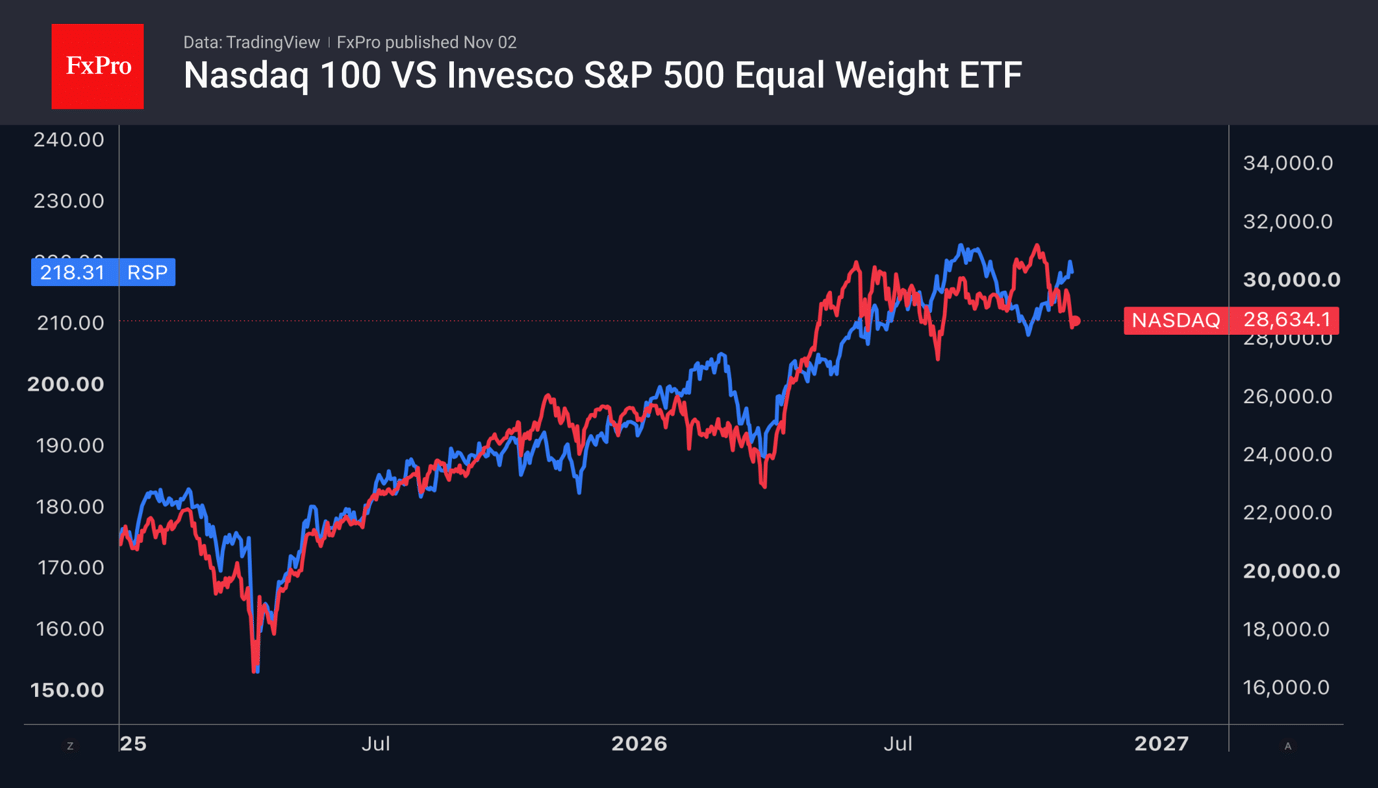
Further evidence of this rotation is the divergence between the Nasdaq-100 and the equally weighted S&P 500. During previous sell-offs, the indices moved in the same direction. Morgan Stanley refers to this as a correction and argues that it is driven by factors such as the midterm elections, concerns over AI spending and a lack of liquidity. That said, the bank remains optimistic: once these factors have run their course, the equity market will begin to rise steadily.
Kalshi and Polymarket estimate the Democrats’ chances of victory at 70%. The Democrats may tighten oversight and regulation of Big Tech, adding to the list of problems facing artificial intelligence. Local authorities are under public pressure to block the construction of data centres.
At present, investors are concerned less about technology companies’ ability to meet Wall Street’s forecasts than about the colossal spending that is eating into free cash flow. Meanwhile, Wells Fargo highlights the slowdown in profit growth among S&P 500 companies, from 32% to 26% y/y in the third quarter. The figure remains high by historical standards (typically 8–12%).
The FxPro Analyst Team