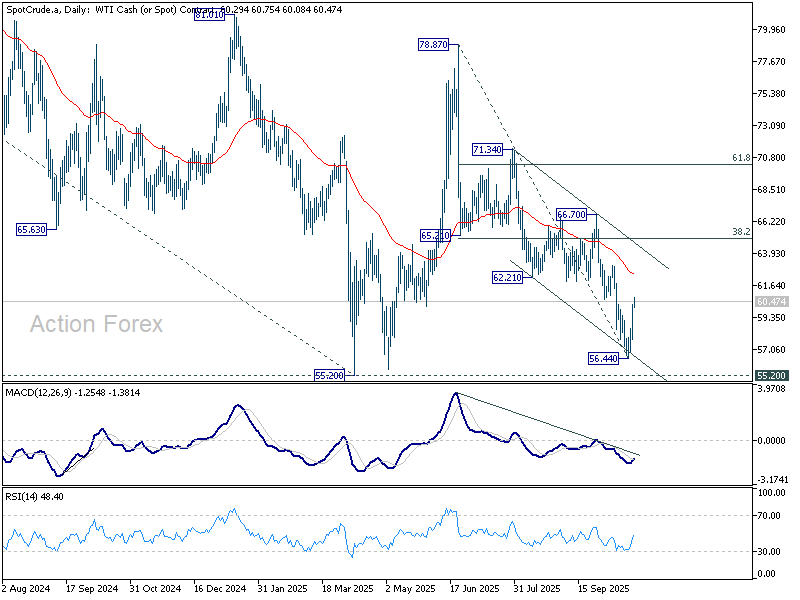
Oil prices rebounded sharply today, with WTI crude rising back above the 60 mark, as geopolitical tensions re-entered focus after the Trump administration imposed new sanctions on Russia’s two largest oil producers, Rosneft and Lukoil.
The U.S. Treasury said the move was in response to Moscow’s “lack of serious commitment” to a peace process to end the war in Ukraine. Announcing the sanctions, Treasury Secretary Scott Bessent said “now is the time to stop the killing and for an immediate ceasefire,” warning that Washington is prepared to “take further action if necessary.” He urged U.S. allies to join in applying pressure on Moscow. Reports suggested that the new round of sanctions followed the collapse of a planned Trump–Putin meeting in Budapest, which had raised hopes for progress toward de-escalation.
The sanctions created a short-covering wave across crude futures, helping oil snap its recent losing streak. While demand signals remain mixed, the reemergence of supply-side uncertainty has stabilized sentiment, halting a multi-week slide that had dragged prices persistently.
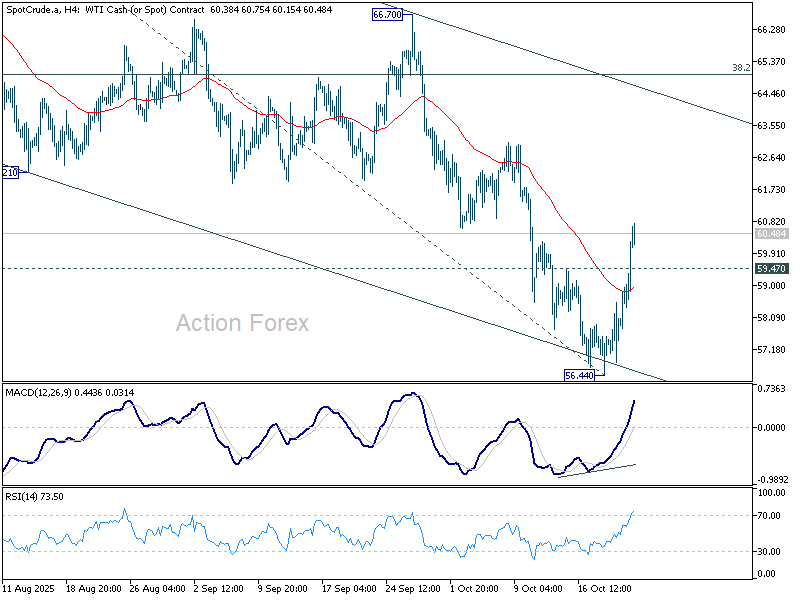
Technically, the rebound has taken on added significance. The firm break above 59.47 resistance confirms that a short-term bottom has likely formed at 56.44, accompanied by bullish convergence in 4H MACD after testing the channel floor.
The focus now shifts to whether the fall from 78.87 has completed as a corrective move as second leg of the broader pattern from 55.20 (2025 low made in April).
In either case, further gains are favored toward key resistance zone between 62.21 support turned resistance and 55 EMA (now at 62.46). Sustained break above this area would strengthen the case for near-term bullish reversal, opening the way to 38.2% retracement of 78.87 to 56.44 at 65.00.
However, failure to clear this zone would suggest the rebound remains corrective, keeping risks skewed toward another dip back toward 55.20 before a more durable bottom forms.