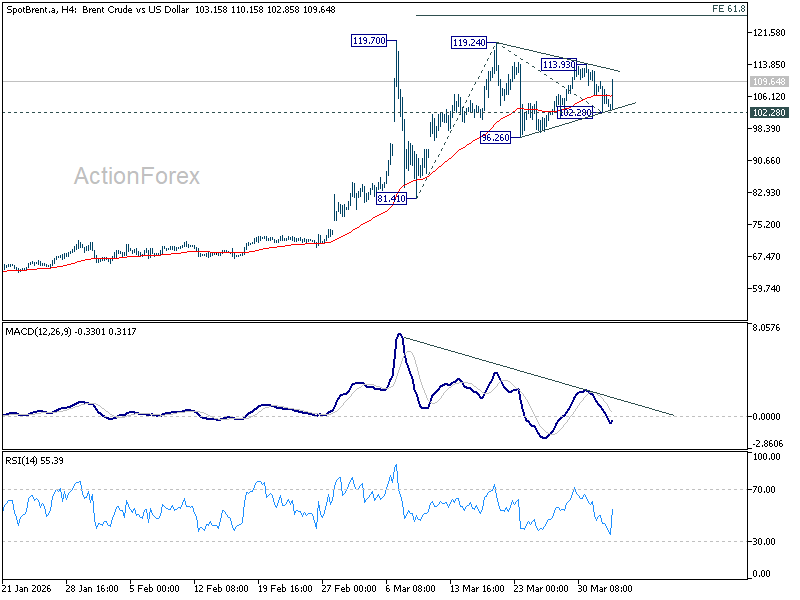
Instead of confirming a near-term exit from the Iran War, US President Donald Trump’s address has triggered a sharp repricing of war risk, with markets shifting from de-escalation expectations to renewed escalation. Hopes for any diplomatic resolutions were dashed. Brent oil price surged back toward $110, and risks are now skewed toward a further move through $120 to $125.
The key shift lies in Trump’s explicit commitment to further military action. While he noted progress toward US objectives, his statement that forces will “hit them extremely hard over the next two to three weeks” signals a clear intensification phase. This two-to-three-week escalation window effectively delays any prospect of stabilization. The Strait of Hormuz will remain closed for at least that duration.
The most alarming element came from Trump’s “bring them back to the Stone Ages” remark. This “scorched-earth” rhetoric implies a shift from targeted military operations toward broader infrastructure destruction, including strikes on energy facilities, power grids, and logistics networks. Such a strategy significantly raises the risk of collateral damage across the region.
This escalation risk extends beyond Iran itself. If infrastructure is heavily targeted, the probability increases that Iran could retaliate against regional oil assets in Saudi Arabia or the UAE. That scenario would transform the conflict into a wider supply shock, which explains why oil reacted so quickly and aggressively. More importantly, it eliminates the hope of a diplomatic de-escalation in the near term
Technically, Brent oil’s strong rebound raises the chance that consolidation pattern from 119.24 has completed with three waves to 102.28. Risk will stay on the upside as long as 102.28 holds. Firm break of 113.93 will argue that the whole rise from 81.41 is ready to resume. In this case, 120 psychological level will likely be breached, at least briefly, as Brent targets 61.8% projection of 81.41 to 119.24 from 102.28 at 125.65.