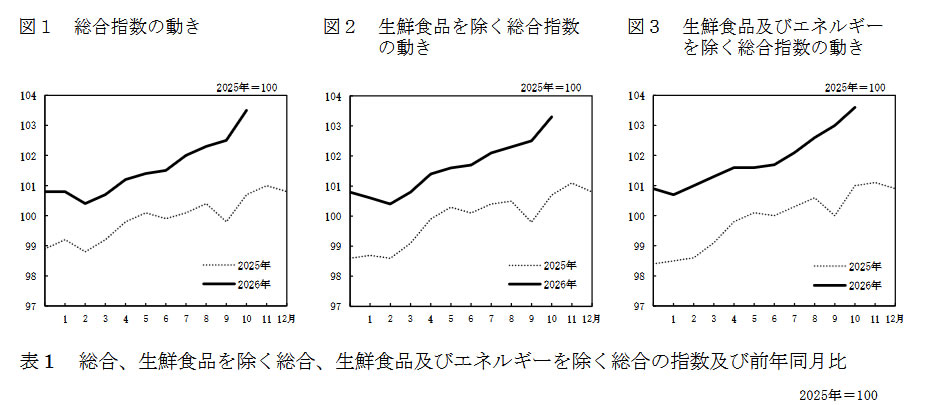
Tokyo’s core CPI inflation, which excludes fresh food, eased from 2.7% to 2.6% y/y in October, matching market expectations while staying above BoJ’s 2% inflation target. Headline CPI inflation edged higher from 2.7% to 2.8%, exceeding expectations of 2.7%. Meanwhile, core-core inflation, excluding fresh food and energy, slowed from 2.9% to 2.6%, undershooting expectations of 2.7%. The divergence suggests that underlying price pressures moderated even as headline inflation strengthened, with the October readings offering little evidence of a broad acceleration in inflation.
Energy prices were an important source of renewed headline inflation pressure, with annual energy inflation reversing from -1.9% to +2.2%. Electricity prices turned from a 2.6% decline to a 1.7% increase, while city gas prices shifted from -0.5% to +4.9%. Energy’s contribution to headline inflation consequently increased by approximately 0.18 percentage points. Fresh food inflation also jumped from 1.7% to 8.6%, while inflation in food excluding fresh products eased from 3.6% to 3.0%. Accommodation price increases accelerated from 4.6% to 6.7%, although overall services inflation moderated slightly from 2.3% to 2.2%. Government energy subsidies and other household relief measures continued to influence the readings, complicating assessments of underlying inflation trends.
The figures indicate persistent above-target inflation rather than a fresh acceleration in underlying price pressures. While the return of positive energy inflation and the potential withdrawal of subsidies could lift measured prices in coming months, softer core-core inflation and easing services inflation suggest that price pressures were not strengthening uniformly. The release came ahead of BoJ’s October policy decision, with markets widely expecting the policy rate to remain at 1.25% and overnight swaps pricing approximately 80% probability of a December hike, according to media reports. October’s CPI data do not materially challenge expectations for further tightening, but the absence of an upside core inflation surprise provides limited additional urgency for an immediate move.
Data Summary
Japan Tokyo CPI — October 2026 (Preliminary)
| Indicator (y/y) | Sep | Oct | Exp |
|---|---|---|---|
| Headline CPI | 2.7% | 2.8% | 2.7% |
| Core CPI | 2.7% | 2.6% | 2.6% |
| Core-Core CPI | 2.9% | 2.6% | 2.7% |
Seasonally Adjusted Monthly Changes
| Indicator (m/m) | Sep | Oct |
|---|---|---|
| Headline CPI | 0.6% | 0.5% |
| Core CPI | 0.9% | 0.3% |
| Core-Core CPI | 0.7% | 0.2% |
Selected Inflation Components (y/y)
| Component | Sep | Oct |
|---|---|---|
| Energy | -1.9% | 2.2% |
| Electricity | -2.6% | 1.7% |
| City Gas | -0.5% | 4.9% |
| Gasoline | -2.6% | -2.3% |
| Fresh Food | 1.7% | 8.6% |
| Food Excluding Fresh Food | 3.6% | 3.0% |
| Accommodation | 4.6% | 6.7% |
| Services Overall | 2.3% | 2.2% |
| Goods Overall | 3.2% | 3.5% |
Source: Japan Ministry of Internal Affairs and Communications, Tokyo CPI Preliminary Release, October 30, 2026.
Key Takeaways
- Tokyo core inflation eases but stays above target: CPI excluding fresh food slowed from 2.7% to 2.6% y/y in October, matching expectations and remaining above BoJ’s 2% inflation target.
- Headline inflation edges higher: Overall CPI increased from 2.7% to 2.8%, exceeding expectations of 2.7%, as fresh food and energy prices contributed to stronger headline pressure.
- Core-core inflation moderates more sharply: Inflation excluding fresh food and energy slowed from 2.9% to 2.6%, below expectations of 2.7%, indicating less broad underlying price pressure.
- Energy inflation reverses into positive territory: Annual energy inflation shifted from -1.9% to +2.2%, led by electricity and city gas, adding approximately 0.18 percentage points to the change in headline inflation.
- Fresh food inflation accelerates sharply: Fresh food prices increased from 1.7% to 8.6% y/y, contributing to the rise in headline CPI, while inflation in food excluding fresh products moderated from 3.6% to 3.0%.
- Services inflation presents a mixed picture: Accommodation inflation accelerated from 4.6% to 6.7%, but overall services inflation edged down from 2.3% to 2.2%, providing limited evidence of a broad acceleration.
- Government subsidies complicate inflation signals: Energy relief measures and other household support programmes continue to affect measured prices. Changes in these measures could influence future inflation readings independently of underlying demand.
- BoJ tightening expectations remain elevated: With markets pricing approximately 80% probability of a December hike ahead of the October policy decision, persistent above-target inflation supports the case for further tightening, although the softer core-core reading provides little fresh urgency.