Sample Category Title
Brutal risk shift ahead of US CPI: Yields sink, NASDAQ fails, USD/JPY under threat
US equities staged a sharp reversal overnight, closing decisively lower with NASDAQ leading losses at -2%. DOW fell -1.3%, slipping back below the 50,000 mark after managing to hold it for four sessions only. Treasury markets reinforced the risk-off signal as 10-year yield took another leg lower and is now on the verge of breaking below 4.1% handle.
January CPI is due, but its influence may be limited. The strong non-farm payrolls report has effectively removed urgency for a March Fed move and supports a pause at least through June. Unless inflation delivers a major shock, markets would revert to broader risk dynamics once the event passes.
The catalyst behind the equity selloff is once again AI disruption anxiety. Software stocks, which have been under persistent pressure this year, extended losses sharply. More concerning is that the negative tone is spreading beyond technology. Financials came under pressure amid fears that AI could disrupt wealth management and advisory services. Industrials and logistics stocks also saw heavy selling on concerns that AI-driven efficiency gains in freight and supply chains could erode traditional revenue models. Even real estate came under scrutiny on speculation that higher unemployment or automation could dampen demand for office space.
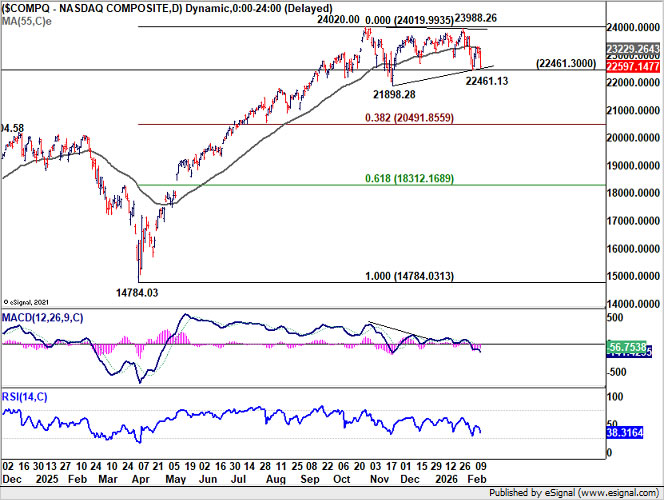
Technically, NASDAQ’s rejection at the 55 D EMA (now at 23,229), is a clear near-term bearish signal. Immediate focus now turns to 22,461 support. Firm break there would open the door through 21,898 support towards 38.2% retracement of 14,784.03 to 24,020.00 at 20,419.85.
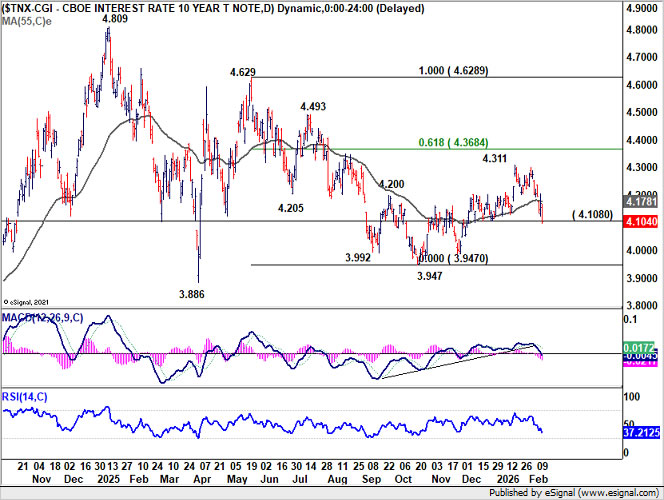
Meanwhile, 10-year yield’s close below 4.108 solidifies the view that the rebound from 3.947 3.947 has completed as a corrective move to 4.311. As long as 55 D EMA (now at 4.178) caps upside, downside risk dominates. Sustained trading below 4.100 would send yield further to 4.000 psychological level and potentially retest the October low near 3.947.
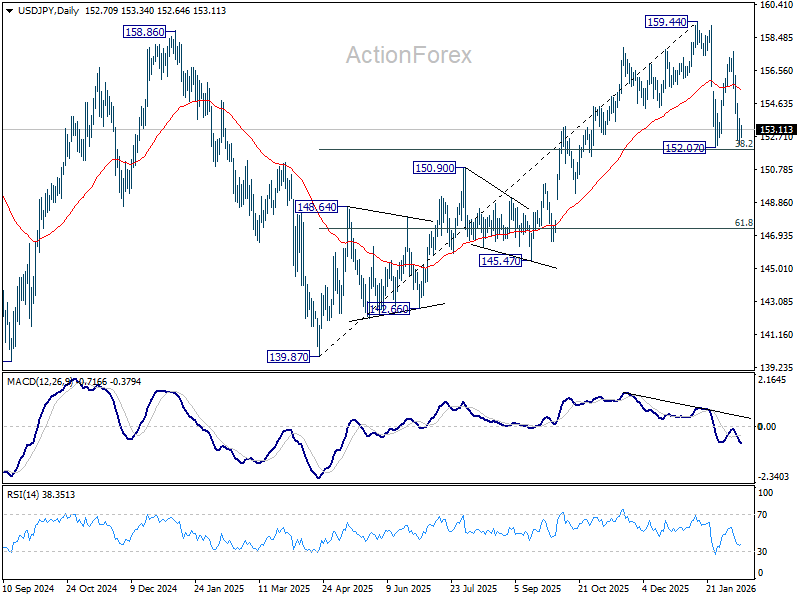
USD/JPY remains marginally above 38.2% retracement of 139.87 to 159.44 at 151.96, leaving the pattern from 159.44 technically seen as a consolidation within the broader uptrend from 139.87. As long as this level holds, the structural bias cannot be deemed decisively bearish.
That said, extended weakness in US equities and further decline in Treasury yields would likely intensify downside pressure on USD/JPY. A clear break below 151.96 would mark a significant technical shift towards bearish trend reversal. Deeper fall would then likely be seen to 61.8% retracement at 147.34, and possibly below.
USD/JPY Slides Back To Square One After Failed Breakout
Key Highlights
- USD/JPY trimmed all gains and traded below 155.00.
- It traded below a key bullish trend line with support at 155.20 on the 4-hour chart.
- EUR/USD is consolidating above the 1.1840 support.
- The US CPI could rise by 2.5% in Jan 2026 (YoY).
USD/JPY Technical Analysis
The US Dollar failed to extend gains above 157.50 against the Japanese Yen. USD/JPY dipped below 155.50 and 155.00 to enter a bearish zone.
Looking at the 4-hour chart, the pair dipped below a key bullish trend line with support at 155.20. The pair even settled below the 100 simple moving average (red, 4-hour) and the 200 simple moving average (green, 4-hour).
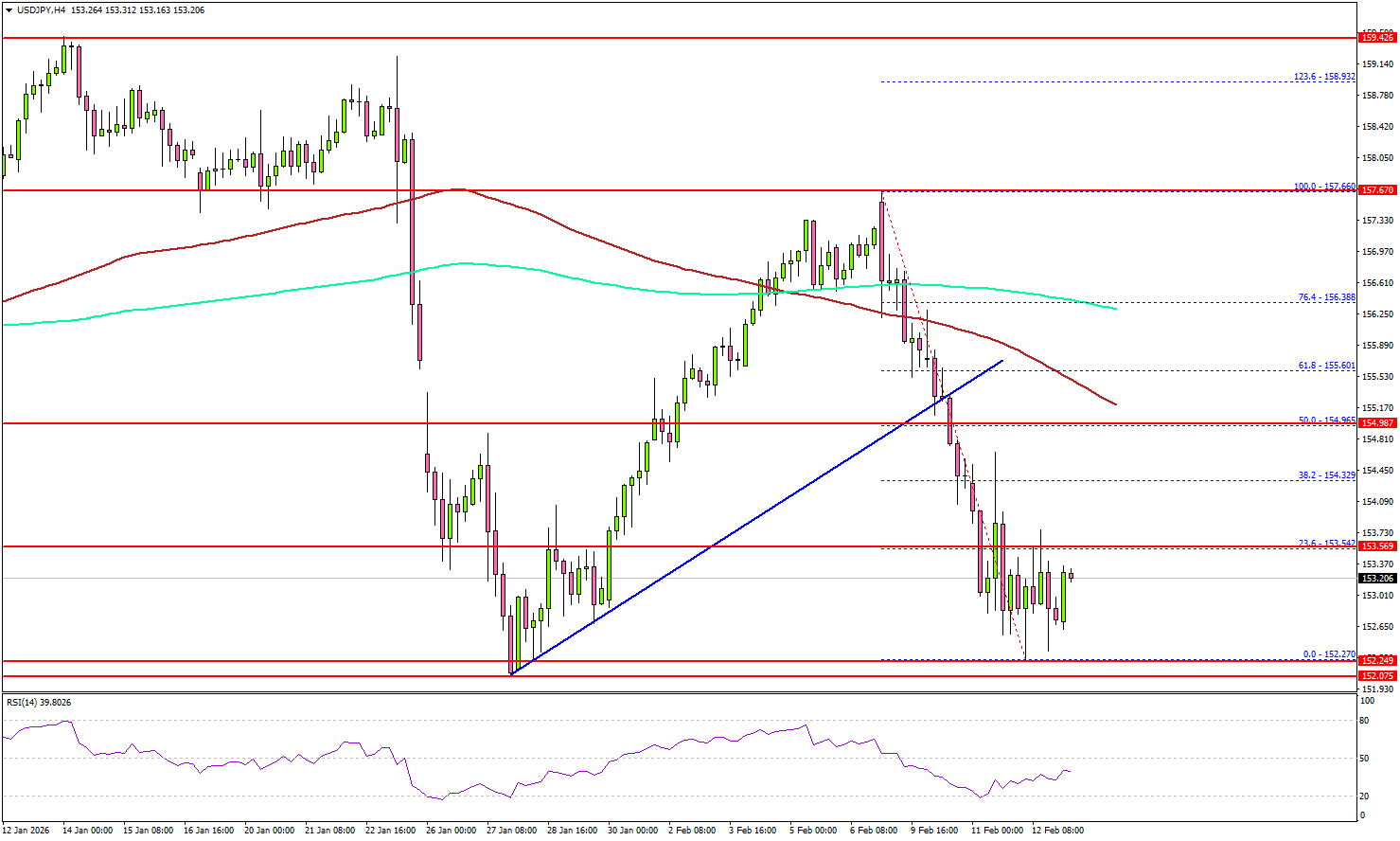
A low was formed at 152.27, and the pair is now consolidating below the 23.6% Fib retracement level of the downward move from the 157.66 swing high to the 152.27 low.
On the upside, the pair could face hurdles near 153.50. The next stop for the bulls might be 154.00. A close above 154.00 could open the doors for more gains. In the stated case, the bulls could aim for a move toward the 50% Fib retracement level of the downward move from the 157.66 swing high to the 152.27 low at 154.95.
Any more gains could set the pace for a fresh move to 156.50. Immediate support could be 152.65. The first major area for the bulls might be near 152.20. The main support sits at 151.50, below which the pair might gain bearish momentum. In the stated case, it could even revisit 150.00.
Looking at EUR/USD, the pair struggled to clear 1.1920 and might again decline if it fails to stay above 1.1800.
Upcoming Key Economic Events:
- US Consumer Price Index for Jan 2026 (MoM) – Forecast +0.3%, versus +0.3% previous.
- US Consumer Price Index for Jan 2026 (YoY) – Forecast +2.5%, versus +2.7% previous.
- US Consumer Price Index Ex Food & Energy for Jan 2026 (YoY) – Forecast +2.5%, versus +2.6% previous.
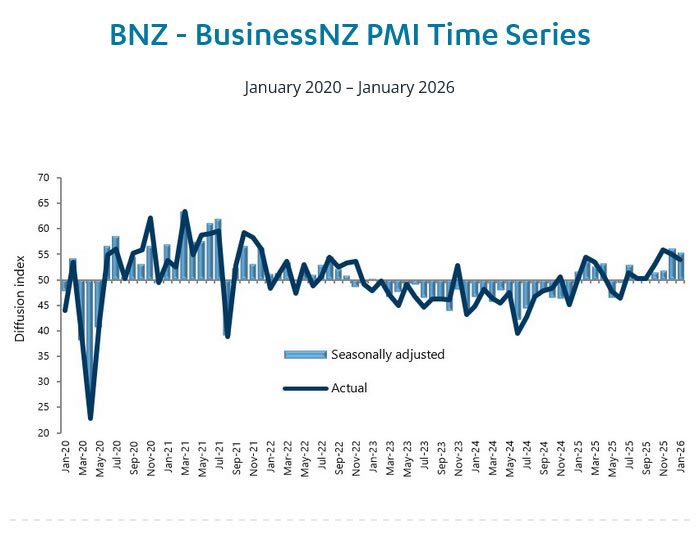
NZ BNZ manufacturing eases to 55.2, but signals continued expansion
New Zealand’s BusinessNZ Performance of Manufacturing Index eased from 56.1 to 55.2 in January, indicating a slight moderation in momentum but remaining firmly in expansion territory. Production slipped from 57.5 to 56.6, employment edged down from 53.7 to 52.9, and new orders cooled from 59.9 to 56.4, pointing to slower yet still solid activity.
Despite the pullback, BNZ described the latest reading as reflecting a “healthy level of expansion.” Senior Economist Doug Steel said the January PMI adds to evidence that the economy has “finally turned the corner,” aligning with forecasts and a broader set of indicators suggesting decent growth.
However, underlying sentiment showed some softening. The proportion of positive comments from respondents fell to 47.7% in January, down from 57.1% in December and 54.4% in November. While the sector remains in growth mode, the decline in optimism hints at a more cautious tone among manufacturers as 2026 begins.