


- USD strength fading within range: Post-FOMC USD strength lacks follow-through, with the US Dollar Index nearing key resistance (100.10–100.54), suggesting limited upside and potential near-term exhaustion.
- Hawkish ECB supporting EUR: Rising inflation risks (linked to the US-Iran conflict and energy shock) have pushed the European Central Bank toward a more hawkish stance, narrowing US–Eurozone yield spreads and underpinning a potential EUR/USD rebound.
- EUR/USD at key technical inflection: Pair is holding above 1.1495 support; a break above 1.1573 could drive a rebound toward 1.1635–1.1673, while a drop below 1.1495 would resume the broader downtrend toward 1.1455–1.1400.
The initial pop-up in US dollar strength following the FOMC meeting last Wednesday, 18 March 2026, does not have a clear positive follow-through, as the US Dollar Index remains trapped within a complex medium-term sideways range configuration that has been in place since 29 May 2025.
The recent 3-day rally in the US Dollar Index, which began on Tuesday, 24 March 2026, has almost reached the medium-term range resistance zone of 100.10/100.54, where minor short-term US dollar strength may be dissipated at this juncture (see Fig. 1).
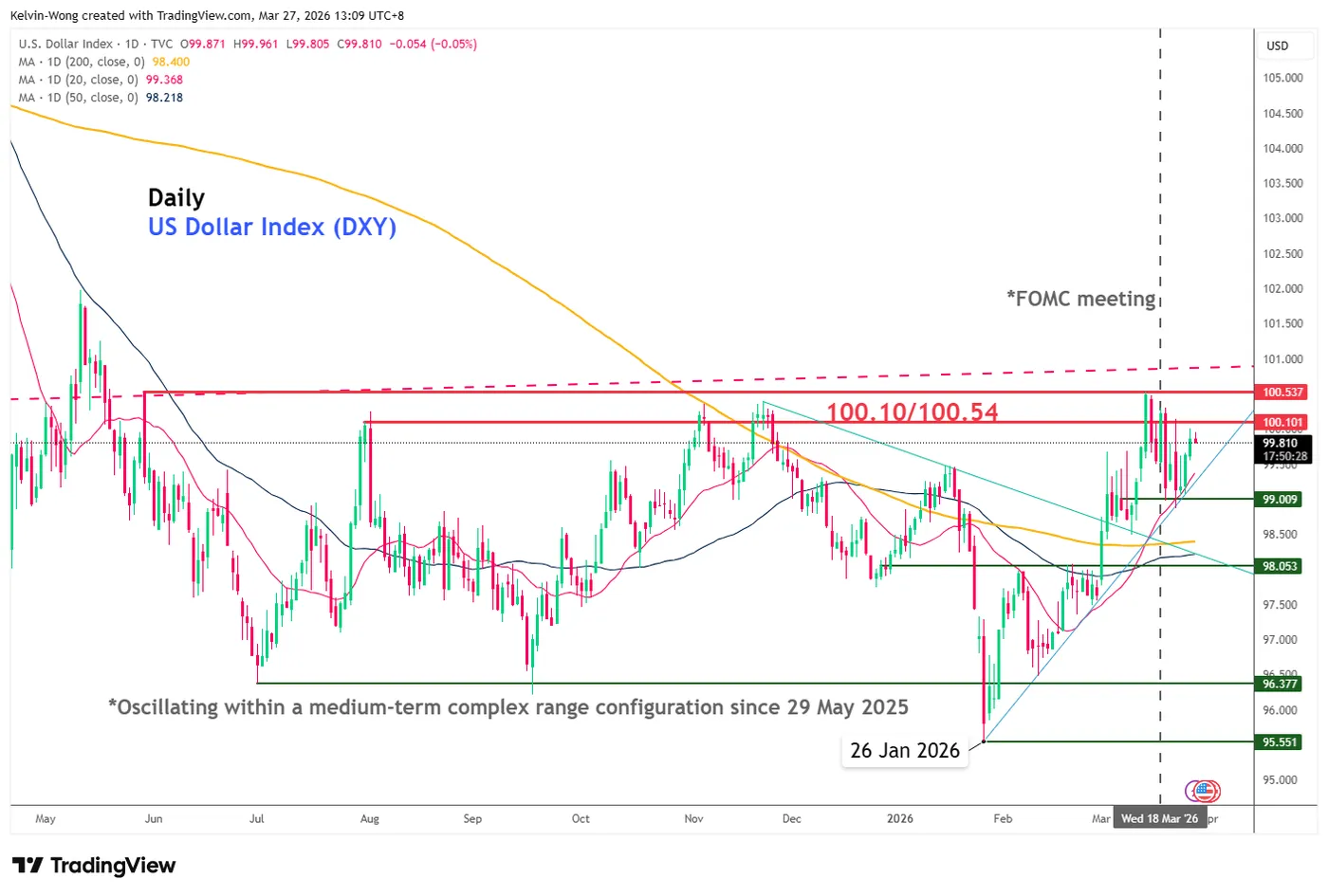
Fig. 1: US Dollar Index medium-term trend as of 27 Mar 2026 (Source: TradingView)
Hawkish ECB ‘saves’ the euro for now
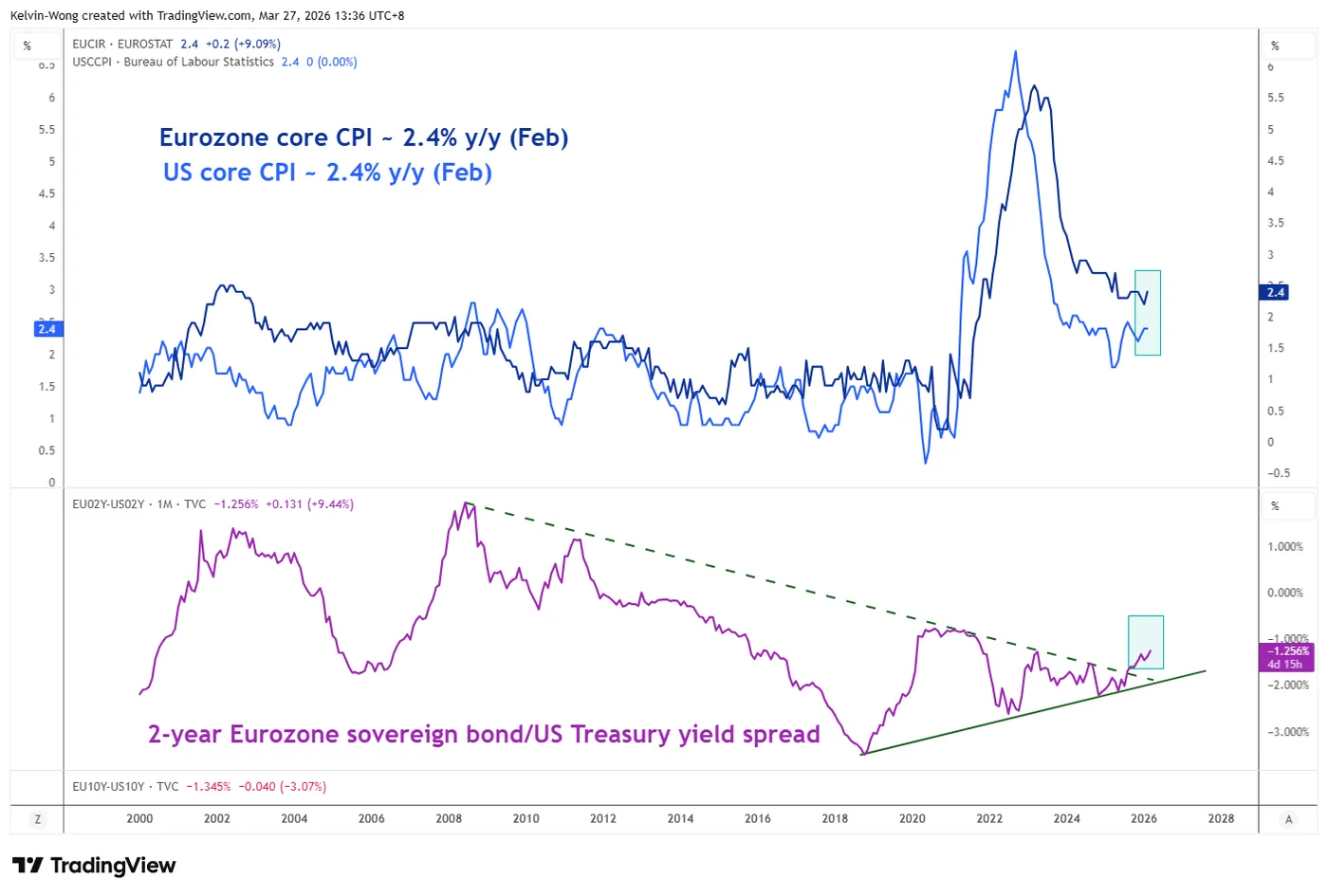
Fig. 2: Narrowing of 2-year yield discount spread between Eurozone sovereign bond and US Treasury note as of 27 Mar 2026 (Source: TradingView)
A hawkish stance or guidance from the US Federal Reserve does not necessarily result in sustained US dollar strength, as the currency’s trajectory is ultimately shaped by relative monetary policy dynamics across other major developed market central banks.
The European Central Bank (ECB) has voiced concerns of stagflation risk arising from the ongoing US-Iran war that led to the closure of the Strait of Hormuz, reducing global oil and energy flows significantly.
Even though, in the ECB’s last monetary policy meeting on 19 March 2026, where it left its key policy deposit rate unchanged at 2% since June 2025, it has issued a hawkish guidance where the ECB prioritized heightened inflation risk over demand destruction that led to the Eurozone’s interest rate swaps market to price in at least two interest rate hikes by ECB before 2026 ends.
In a slew of public speeches made this week so far, key ECB officials have maintained their stances of combating inflation as a primary initiative over demand growth concerns arising from a potential prolonged global oil and energy supply shock.
ECB President Lagarde said the ECB will act decisively and swiftly if the current surge in energy costs risks a broader bout of inflation.
ECB Governing Council member Nagel added that the ECB may start to hike interest rates at its next monetary policy meeting in April if the inflation outlook continues to accelerate due to the US-Iran war.
The European Central Bank’s increasingly hawkish stance has driven a further narrowing of the 2-year yield discount differential between Eurozone sovereign bonds and US Treasuries (see Fig. 2).
The 2-year yield spread of the Eurozone sovereign bond over the US Treasury note has inched higher since its major bullish breakout in September 2025, from -1.6% to -1.26% at this time of writing.
A further narrowing of the 2-year sovereign bond yield discount between the Eurozone and the US is likely to support at least a minor recovery in the EUR/USD.
Let’s focus now on the short-term trajectory (1 to 3 days) of the EUR/USD from a technical analysis perspective.
EUR/USD – 3-day decline stalling at “Expanding Wedge” support
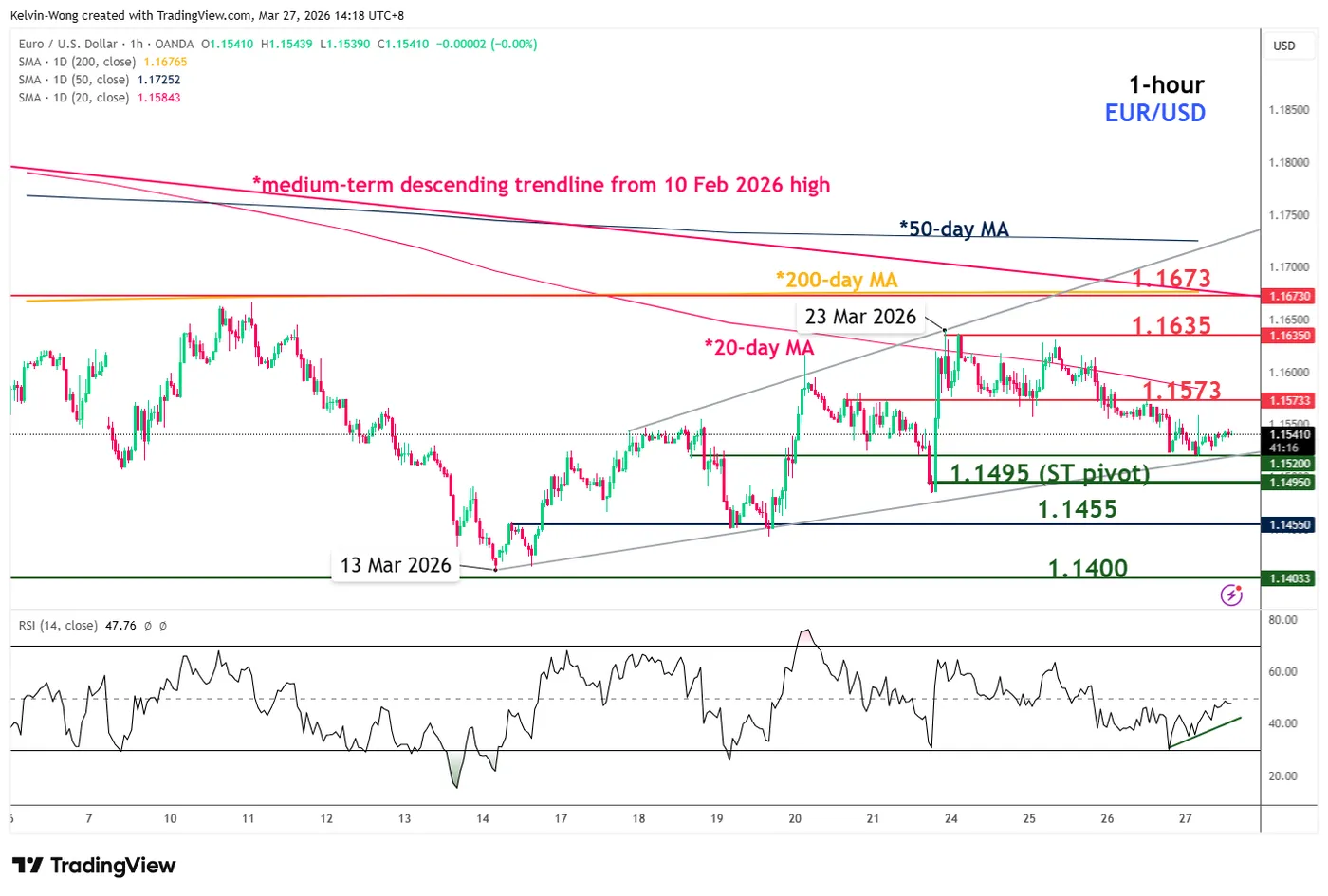
Fig. 3: EUR/USD minor trend as of 27 Mar 2026 (Source: TradingView)
The recent 3-day decline of 1% seen in the EUR/USD from the Monday, 23 March 2026 minor swing high of 1.1640 has started to stall at the minor “Expanding Wedge” support on Thursday, 26 March 2026.
Watch the 1.1495 key short-term pivotal support on the EUR/USD, breaking above 1.1573 near-term resistance (also the 20-day moving average) may unleash a further corrective push up towards the upper limit of the minor “Expanding Wedge” configuration, with the next intermediate resistances coming in at 1.1635 and 1.1673 (also the key 200-day moving average) (see Fig. 3).
On the other hand, a break with an hourly close below 1.1495 invalidates the corrective rebound scenario for the multi-month bearish impulsive down move sequence to resume, exposing the next intermediate supports at 1.1455 and 1.1400 in the first step.
Key elements to support the bullish bias on EUR/USD
- The recent 3-day decline has stalled at the minor “Expanding Wedge” support in place since the 13 March 2026 minor swing low.
- The hourly RSI momentum indicator has traced out a bullish divergence condition near its oversold region.





