Key Takeaways
- Global equity markets rallied as optimism over a potential U.S.-Iran peace agreement boosted risk appetite, driving a sharp pullback in oil prices and renewed buying in Asian and U.S. equities.
- Despite improving geopolitical sentiment, financial markets continue to price in a “higher for longer” interest-rate environment as sticky U.S. inflation and elevated bond yields reinforce expectations that the Federal Reserve may still tighten policy later this year.
- Asia Pacific markets were led by Japan’s strong equity surge and Singapore’s stronger-than-expected Q1 GDP growth. At the same time, policymakers across the region remain highly sensitive to ongoing energy supply disruptions tied to the Strait of Hormuz blockade.
- Chart of the day: Hang Seng Index’s potential short-term rebound remains in focus above the 25,267 key short-term support, with 25,850 acting as the upside trigger level.
Top Macro Headlines
- Imminent U.S.-Iran peace deal speculation sparks market turnaround: Global risk appetite surged following a wave of optimistic messaging from U.S. President Donald Trump and Secretary of State Marco Rubio, suggesting that an imminent peace deal between the United States and Iran may be approaching. The sudden diplomatic optimism triggered a swift reversal in stagflation fears.
- Iran downplays imminent pact, citing Hormuz specifics: Countering the initial wave of Washington optimism, Tehran issued a cautious statement clarifying that a possible memorandum of understanding does not yet contain critical specifics regarding the Strait of Hormuz, warning market participants that a comprehensive deal is not immediate.
- Japan eased market concerns over government finances: Japanese Prime Minister Takaichi said the government will finance its extra budget without increasing bond issuance on a calendar basis. The supplementary budget will total just over 3 trillion yen and may be submitted to parliament as early as next week, with energy subsidies expected to play a key role.
- Bank of Japan Deputy Governor Himino reaffirmed the BoJ’s rate hike path: Himino highlighted the central bank’s commitment to raising interest rates while warning that the timing of future hikes will depend on Middle East developments affecting Japan’s growth and inflation outlook.
Key Macro Themes
- Geopolitical “whiplash” and energy fragility: Cross-asset markets remain caught in a tug-of-war between speculative peace breakthroughs and physical supply realities. While optimistic traders are driving short-covering rallies, independent energy researchers warn that global oil inventories may reach critical levels by June, potentially sending crude prices above $150/barrel if the Hormuz blockade is not structurally resolved.
- The repricing of “higher for longer” into active tightening: Before the escalation of the Iran conflict, macro participants expected two to three Fed rate cuts in 2026. Following persistent inflation pressures, including headline CPI at 3.8% and core PCE expected at 3.3%, Fed funds futures have erased easing expectations and shifted toward pricing a possible Fed rate hike by December 2026.
- The trillion-dollar primary market liquidity drain: The combination of SpaceX’s massive $75 billion capital raise and a confidential draft IPO filing from OpenAI signals a structural shift in equity markets. This tech-driven listing boom may become a major test of public liquidity and investor risk appetite.
Global Market Impact (Last 24 Hours)
Equities: U.S. stock index futures pointed higher, buoyed by optimism surrounding the Trump-Iran memorandum. This followed a quiet Memorial Day closure in the U.S. and UK, where equity sentiment remained constructive despite persistent concerns over bond yields.
Fixed Income: Developed bond markets continue to face multi-speed pressures despite softer oil prices tied to the prospect of a U.S.-Iran peace deal. U.S. Treasuries remain deeply unanchored, with long-dated yields hovering near 2007 highs as the 30-year yield continues to hold near the 5% psychological level.
FX: The U.S. Dollar Index (DXY) weakened marginally as capital rotated out of safe-haven cash positions and back into risk-sensitive currencies, providing temporary relief for G10 and emerging market FX. AUD rose 0.7%, GBP gained 0.6%, and EUR advanced 0.4% against the USD on Monday, 25 May.
Commodities: Crude oil plunged sharply, with Brent briefly slipping below the critical $100/barrel threshold to hit a fresh two-week low as geopolitical war premium faded. Meanwhile, spot gold rebounded 1.3% as a softer U.S. dollar triggered a technical bounce, closing Monday at $4,570/oz while remaining below the 20-day moving average resistance at $4,602/oz.
Asia Pacific Impact
- Japanese equities explode to all-time highs: Tokyo led global markets with a major breakout, as the Nikkei surged 3% to a record high on expectations of a rapid resolution to the Middle East supply crisis. In today’s Asia session, some profit-taking emerged, with the Nikkei 225 slipping 0.4%, while other regional indices traded positively, including the Hang Seng Index (+0.2%), China A50 (+0.2%), and KOSPI (+3.4%).
- Singapore Q1 GDP blows past estimates: Supported by the regional AI infrastructure boom, Singapore posted Q1 GDP growth of 6.0% y/y, comfortably beating expectations. However, policymakers continue to face mixed prospects tied to ongoing Middle East maritime disruptions.
- Regional currency stabilization: Alongside the softer U.S. dollar, broader Asia FX markets strengthened, easing immediate balance-of-payments and capital flight concerns for energy-importing economies.
Top 4 Events to Watch Today
- Japan Leading Economic Index Final (March) – 1:00 pm SGT
Impact: USD/JPY, JPY crosses, Nikkei 225 - Singapore Industrial Production (April) – 1:00 pm SGT
Consensus: 12% y/y, previous: 10.1%
Impact: USD/SGD, SGD crosses, STI - US Conference Board Consumer Confidence (May) – 10:00 pm SGT
Impact: USD, U.S. stock indices - US-Iran peace deal news flow
Impact: All asset classes
Chart of the Day – Short-Term Rebound in Hang Seng Index Above April Gap Support
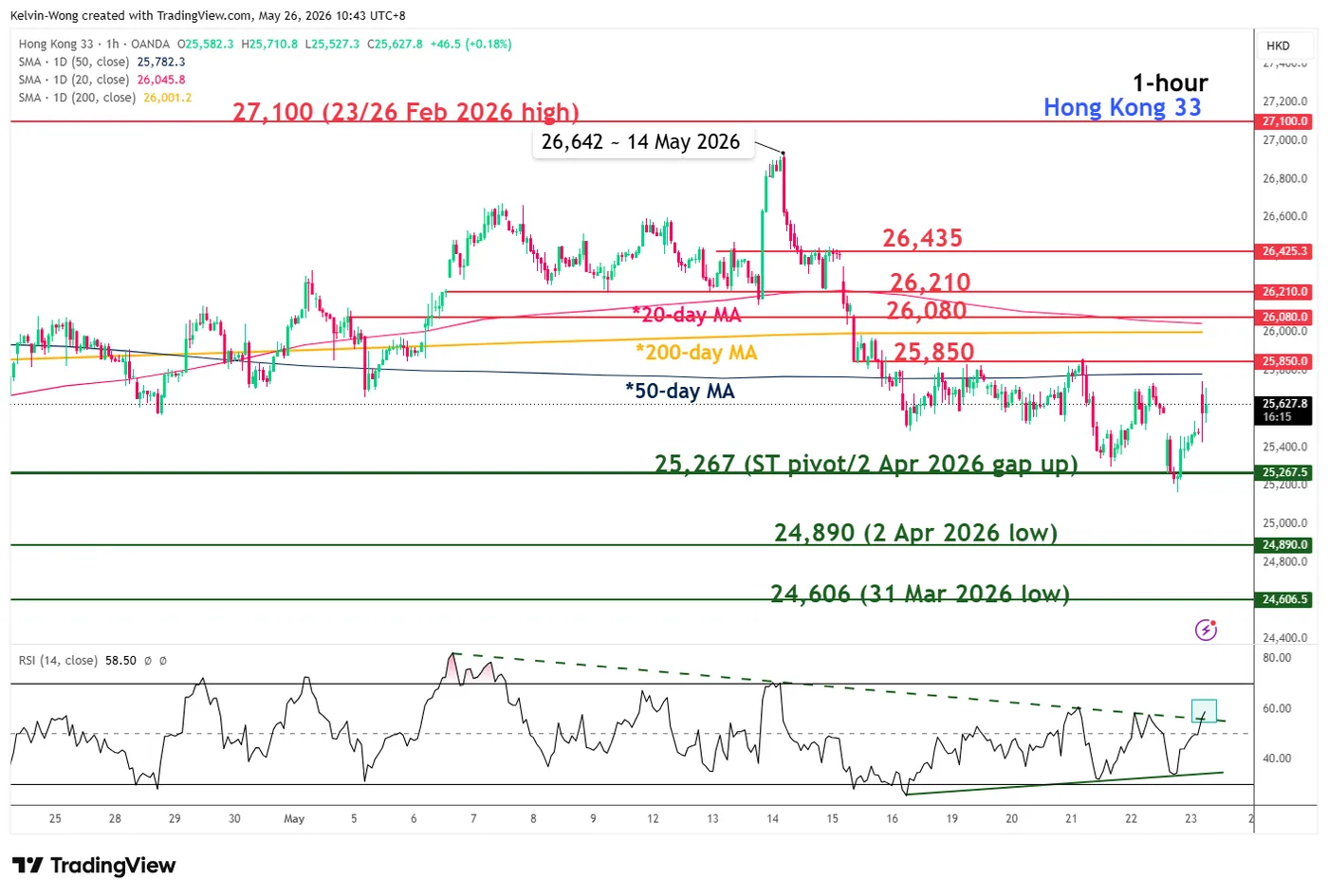
Fig. 1: Hong Kong 33 CFD minor trend as of 26 May 2026 (Source: TradingView).
The recent 6.6% decline in the Hong Kong 33 CFD, a proxy for Hang Seng Index futures, from its intraday high of 26,642 has found support at the early April 2026 gap support level of 25,267.
In addition, the hourly RSI momentum indicator continues to display short-term bullish momentum conditions following a prior bullish divergence signal that emerged in oversold territory on 22 May 2026.
Watch the 25,267 key short-term pivotal support for a potential rebound. A break above 25,850, acting as the upside trigger, could expose the next intermediate resistances at 26,080 and 26,210.
On the other hand, an hourly close below 25,267 would invalidate the bullish scenario and expose the next intermediate supports at 24,890 and 24,606.