


- Currency interventions spooked speculators trading USDJPY.
- The likelihood of a Fed rate hike in 2026 continues to fall.
The US dollar fell back to a two-month low after a sudden 0.6% decline in US retail sales in July, versus an expected 0.1% rise. This unwelcome surprise, coupled with a decline in the University of Michigan’s consumer sentiment index, has reduced the likelihood of the Fed tightening monetary policy in September to 31%, and by the end of the year to 64%.
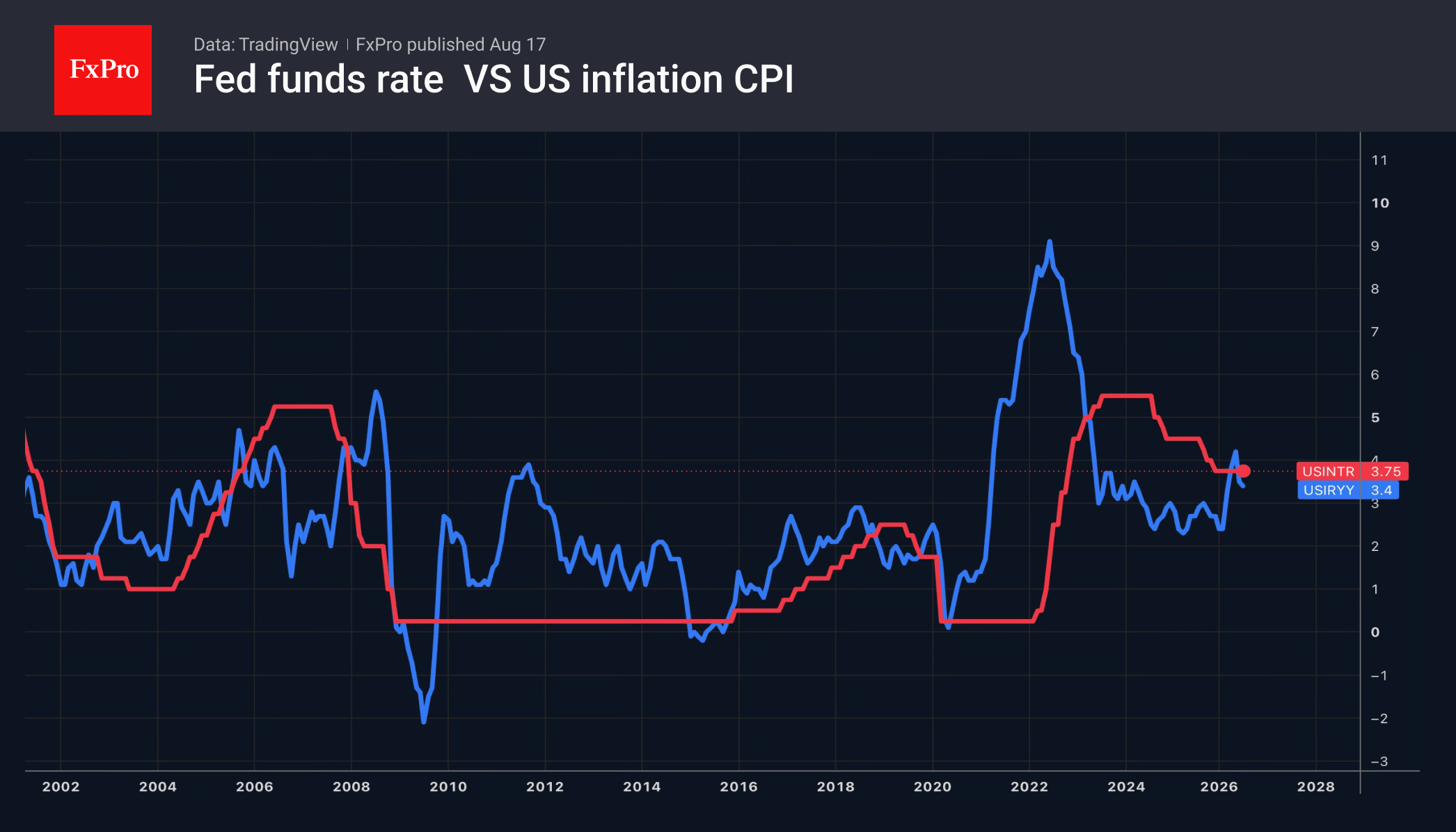
Goldman Sachs believes these figures are still overestimated. A federal funds rate hike in September is highly unlikely against a backdrop of slowing inflation, falling employment and declining retail sales. Looking ahead, the bank believes that consumer price inflation will continue to fall without any intervention from the Fed.
The only factor that might disrupt the disinflationary process is if Brent breaks out of the $80–90 per barrel trading range. Moreover, Israel’s attacks on Lebanon heighten the risks of such a scenario due to the potential escalation of the conflict in the Middle East. However, if Brent fails to break out of its consolidation range, the chances of a slowdown in US inflation will increase. This would cause the Fed to lag behind other central banks in tightening monetary policy and would weaken the dollar.
The decline in the US dollar has allowed USDJPY bears to push prices away from the key round 160, thereby reducing the risk of further currency interventions by the US and Japan. Since the previous intervention, hedge funds have halved their short positions in the yen.
Speculators appear less confident in the continuation of the USDJPY rally than they were in May–July. They have finally taken on board that Sanae Takaichi’s government will not stand in the way of monetary tightening, and that the BoJ may raise rates as early as September. The probability of such an outcome has risen to 80 per cent. The futures market is fully convinced that monetary tightening will take place in October.
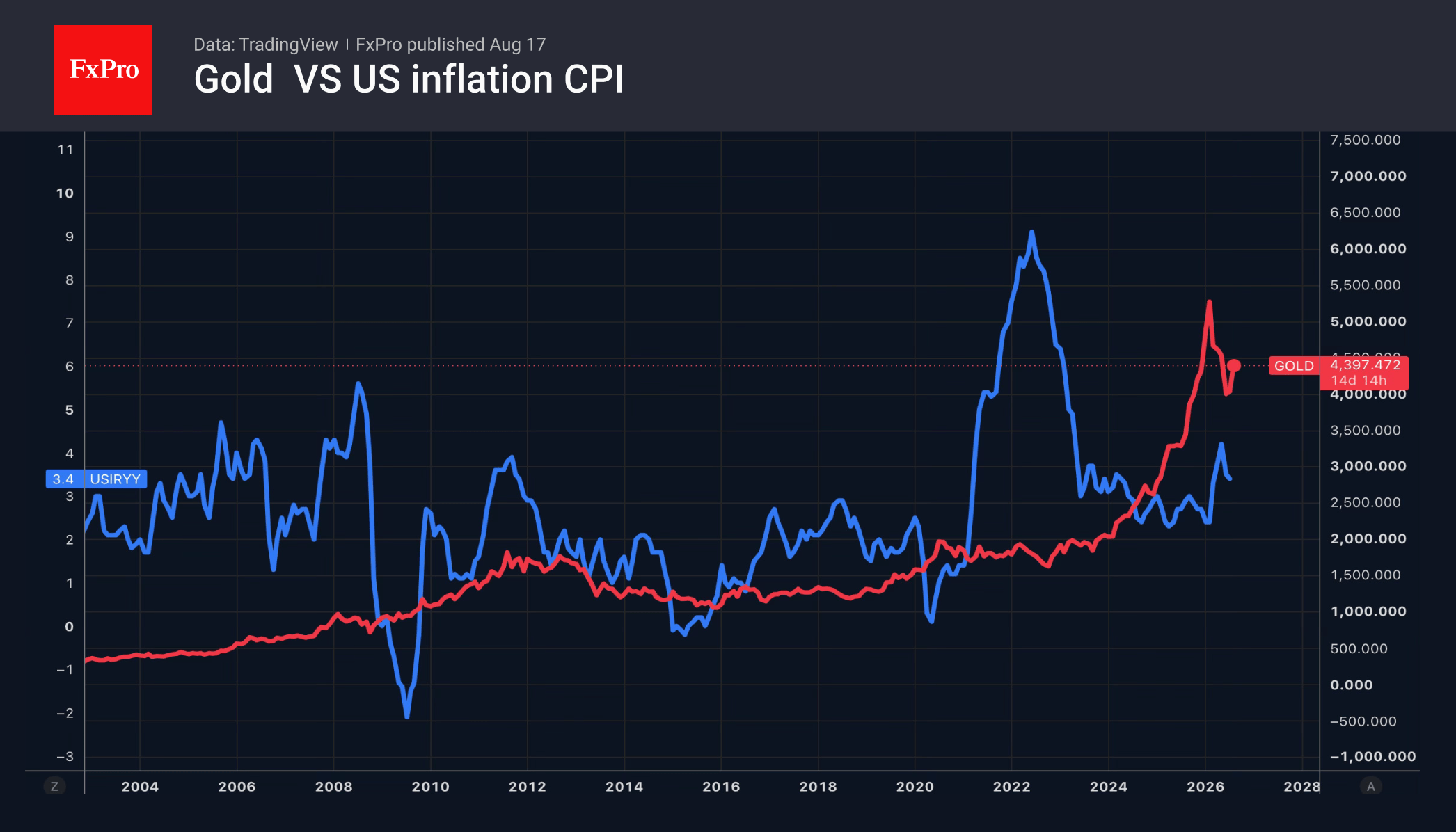
Disappointing US retail sales figures have helped gold climb back above $4,400 per ounce. For the precious metal, there is little difference between a recession and stagflation. In either case, it is poised to continue its rally. If US GDP growth continues to fall, it will not matter how inflation behaves. The bulls will be able to capitalise on its dynamics.
The FxPro Analyst Team





