


TL;DR: Canada has avoided an immediate 50% US tariff for three days while paperwork is finalized, but the Loonie’s muted reaction suggests markets see this as deadline relief, not the broader trade normalization needed to justify a bigger CAD rally.
Canada Dodges One Deadline, Not the Trade War
Canada has avoided an immediate 50% US tariff, but only for three days. US President Donald Trump announced Wednesday that planned levy on a wide range of Canadian products would be paused while both sides finalize paperwork on what he called a deal. Tariff had been due to take effect at midnight, so delay clearly reduces near-term risk for Canadian businesses and gives CAD another reason to hold recent gains.
What it does not yet provide is certainty. Ottawa has not confirmed detailed terms, paperwork remains unsigned, and Canadian Prime Minister Mark Carney had only days earlier expressed caution over whether an agreement would be completed in time. Trump’s suggestion that Keystone XL pipeline could return as part of improved relationship adds another potentially important element, but without concrete details it is not yet something markets can price with confidence.
That leaves headline in an awkward middle ground: positive enough to remove an immediate shock, but not complete enough to justify calling broader trade dispute resolved.
Bigger Tariff Architecture Is Still Standing
Most important limitation is scope. Threatened 50% tariff is only one part of much larger trade confrontation that has built between US and Canada since early 2025. Separate measures covering steel and aluminum, autos and softwood lumber remain in place unless final agreement unexpectedly addresses them too.
Canada has consistently pushed for a broader settlement rather than a narrow fix. Latest 50% threat, however, arose from a smaller group of disputes involving vehicle rules, provincial alcohol restrictions and dairy access. That leaves market with a critical unanswered question: is this paperwork a comprehensive trade package, or simply a settlement of most urgent current dispute?
Difference matters enormously for CAD. Removing one tariff threat reduces near-term uncertainty. Removing broad tariff structure would change Canada’s medium-term growth and investment outlook much more substantially.
Until scope is known, calling this a trade reset would run ahead of evidence.
Even a Signed Deal May Not Solve Everything
Provincial alcohol restrictions show why implementation may remain difficult even after federal signatures.
US has objected to limits on sale of American alcohol imposed by Canadian provinces. Yet Ottawa cannot simply order every province to change its liquor policy, and Ontario and British Columbia have already shown resistance to backing down.
So part of dispute sits outside direct control of federal negotiators. Washington and Ottawa could announce agreement while provincial-level friction persists.
That is a useful reminder that trade conflict is not always resolved by one bilateral document. Some underlying disputes may survive even if immediate tariff is withdrawn permanently.
Loonie’s Muted Reaction Is Telling
Canadian Dollar strengthened after Trump’s announcement, but not dramatically. That matters because market reaction helps distinguish relief from genuine regime change.
If investors believed US-Canada relationship had suddenly shifted toward comprehensive normalization, CAD would have had reason to rally much more aggressively. Instead, modest response suggests market is reserving judgment until details are signed and confirmed.
There is another reason not to over-credit tariff pause. Canadian Dollar was already strengthening before announcement. Stronger domestic GDP, a large employment beat and firmer inflation had improved Canadian fundamental backdrop, while higher oil prices provided additional terms-of-trade support.
This creates a useful test for next few sessions. If CAD keeps strengthening even with tariff story quiet and Brent consolidating, domestic fundamentals are carrying move. If gains fade once deadline relief is fully priced, trade announcement itself probably had limited lasting impact.
ActionForex’s Technical View on USD/CAD: 1.4002 Keeps USD/CAD Bearish Case Alive
USD/CAD chart still favors further downside despite current recovery from 1.3843, which looks like a temporary low. Some consolidation is natural after recent decline, but recovery should remain corrective while 1.4002 resistance holds.
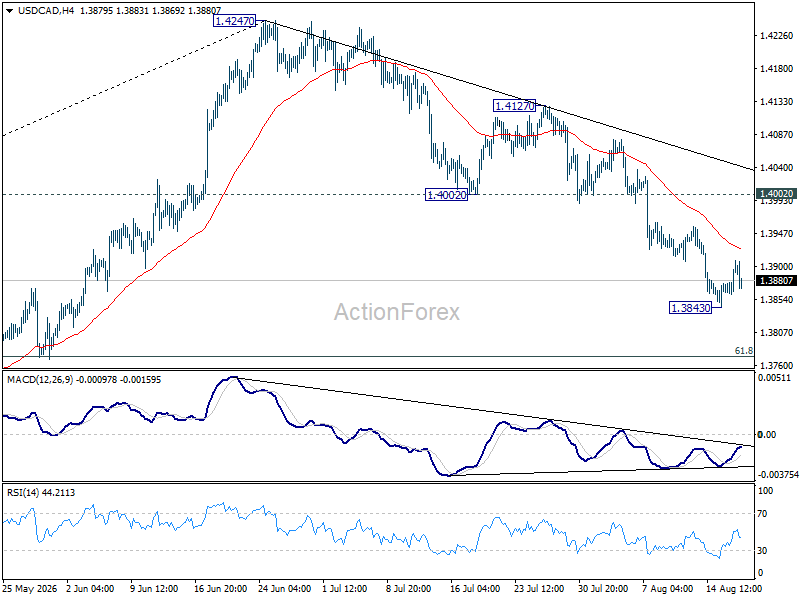
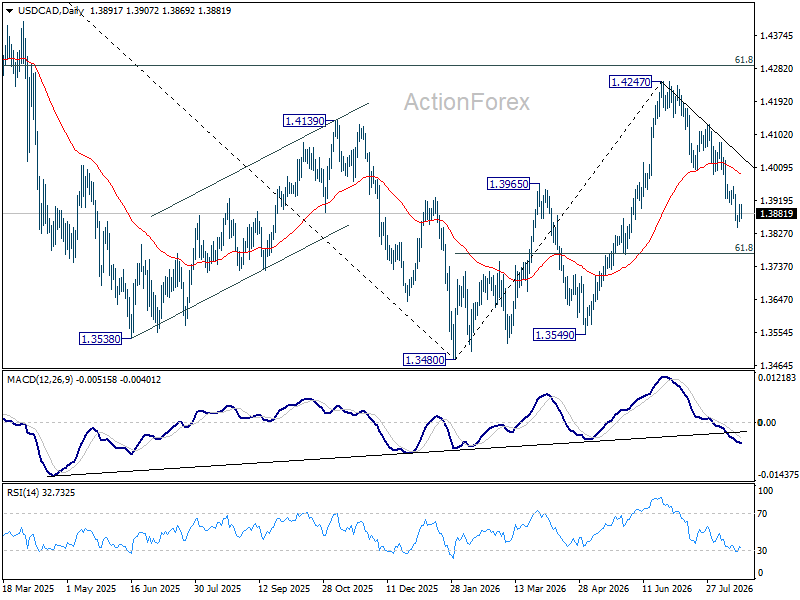
Medium-term structure is more important. Advance from 1.3480 to 1.4247 is currently favored as a completed three-wave correction. If that interpretation is correct, decline from 1.4247 should eventually resume toward 1.3773, the 61.8% retracement of that entire advance.
Break below 1.3843 would provide first confirmation that current consolidation has ended. Decisive break of 1.3773 would then materially strengthen bearish case and shift focus back to 1.3480 January low.
Bullish invalidation is clear as well. Firm break above 1.4002 would argue decline from 1.4247 has already run its course and revive possibility that broader rebound from 1.3480 remains intact.
The Next Three Days Matter More Than the Announcement
Markets now need three answers.
First, does agreement actually get signed before pause expires? Second, does Ottawa confirm same terms and scope Washington is describing? Third, does settlement extend beyond this specific tariff fight into older disputes involving metals, autos and lumber?
If answer to third question is no, latest development should be viewed as another episode of deadline de-escalation rather than genuine normalization of US-Canada trade relationship.
That still matters for Canadian Dollar because one major downside risk has been removed temporarily. But it does not replace stronger Canadian data and oil as broader drivers of recent CAD performance.
Key Takeaways
- Trump’s 50% tariff pause is a three-day paperwork delay, not a confirmed deal, with terms still unsigned and unconfirmed by Ottawa.
- Separate tariffs on steel, aluminum, autos, and softwood lumber remain untouched, meaning even a signed deal wouldn’t necessarily resolve the broader trade dispute.
- Provincial-level disputes, like alcohol restrictions, sit outside federal control and could persist even after a federal agreement is signed.
- CAD’s muted reaction to the announcement, combined with gains that predate it, suggests domestic data (GDP, jobs, inflation) and oil are the bigger drivers, not the tariff pause itself.
- USD/CAD’s bearish case stays intact below 1.4002 resistance; a break of 1.3843 and then 1.3773 would open a retest of the 1.3480 low.





