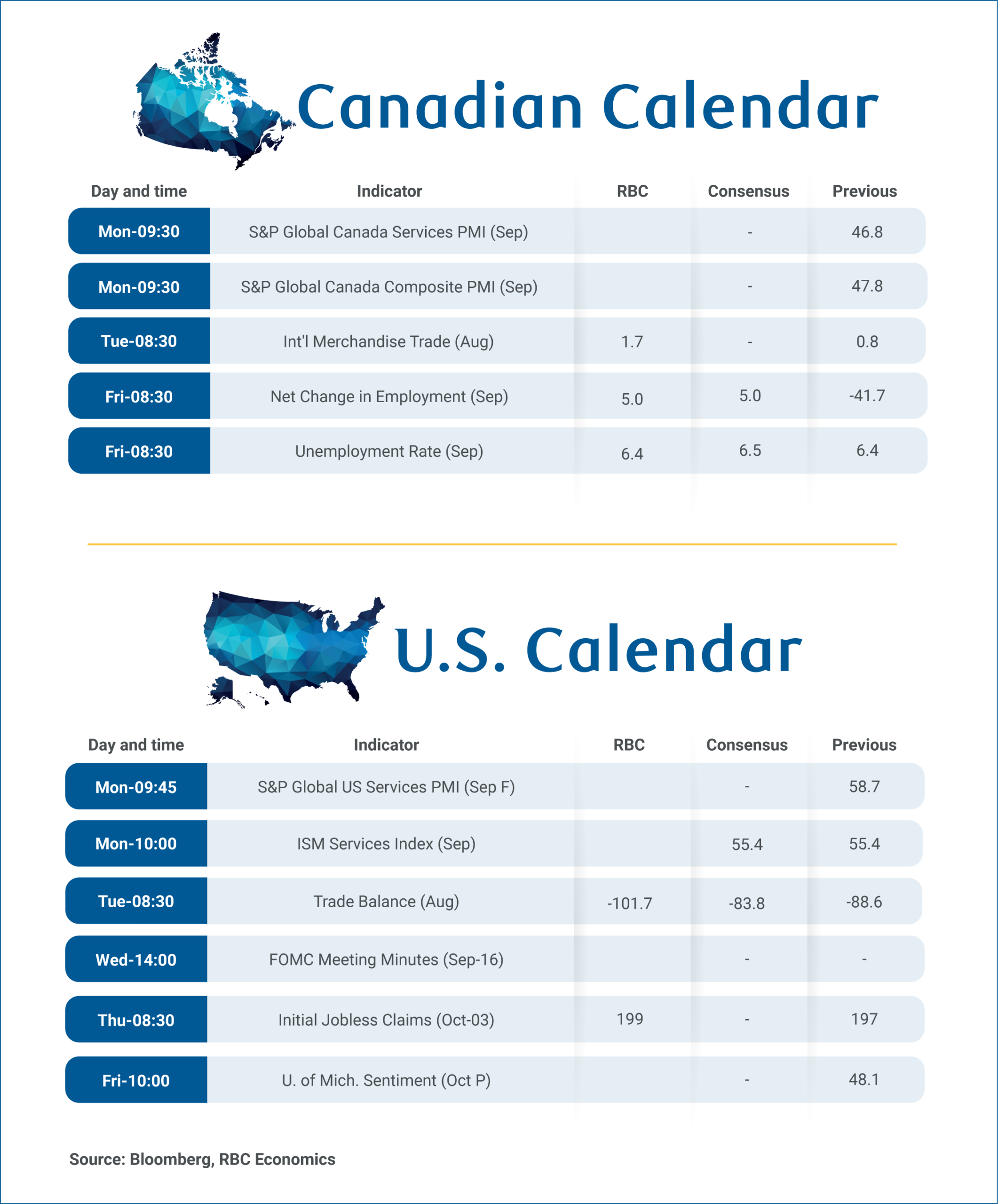
Canada’s labour report for September on Friday will be the first full month of jobs data since U.S. Section 338 tariffs took effect on Aug. 22, offering important clues on their impact.
Overall, we estimate that about 0.4% of Canada’s gross domestic product, and employment supports U.S. demand for goods on the tariff lists. Not all of that production and jobs will be impacted as exporters may pivot to other foreign and domestic buyers, while those unable to do so can access government support to partially offset losses.
We expect new tariffs may have stalled progress in Canada’s labour market, but are not severe enough to reverse it. In September, total employment is expected to have risen by a modest 5,000, leaving year-to-date job growth slightly positive.
Statistics Canada’s upward revisions to recent population estimates underscore the importance of looking through volatile headline employment changes, which are heavily influenced by demographics.
We continue to rely on the unemployment rate as a more reliable gauge of market conditions. It’s expected to have held at 6.4% in September—still somewhat elevated, but 0.7 percentage points below a year ago.
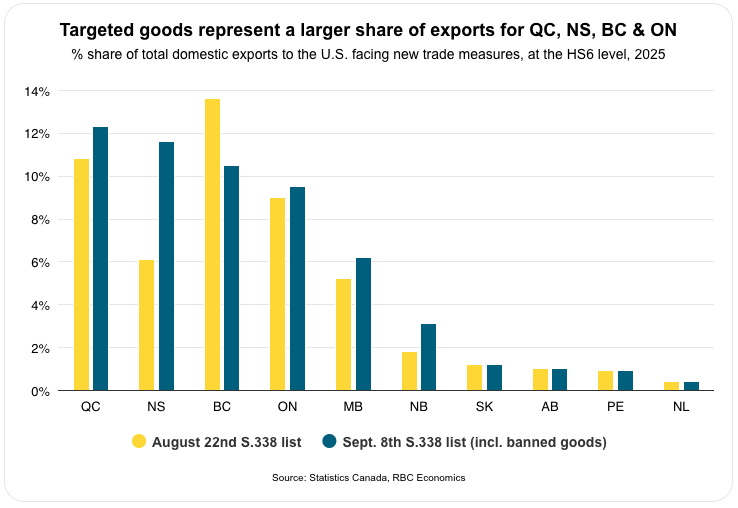
With over 80% of Canada’s exports to the U.S. tariff-free, existing U.S. tariff measures will likely have a pronounced but localized impact in Canada. Quebec, Nova Scotia, B.C., and Ontario are among the provinces with exports more heavily exposed to new tariffs.
Recent GDP data pointed to 2% annualized growth in Q3 following a 3.3% gain in Q2. Backed by solid domestic demand, we expect the labour market to continue recovering over the rest of 2026 with the unemployment rate declining to 6.3% by year end.
We expect Canadian exports decreased 0.1% in August despite marginally higher oil prices in the month (+4%), while imports decreased by a larger 1.4%. That should leave the merchandise trade balance at a wider surplus from July, at $1.7B. Details will be watched closely for increased volatility in shipments of products targeted with new U.S. tariffs starting on August 22nd. The tariff rate imposed (50%) was likely prohibitive for many of those products after tariffs were imposed but also may have led to an acceleration of shipments earlier in the month.