Japan’s producer price inflation slowed more than expected in September, with the annual rate easing from 7.6% to 6.8%, below market expectations of 7.6%. The Producer Price Index fell -0.3% month-on-month for the second consecutive month, according to data released by Bank of Japan. The slowdown points to easing wholesale inflation at the aggregate level, although price pressures remain elevated across several industrial sectors, suggesting that the improvement is far from uniform.
The monthly decline was driven largely by agricultural and petroleum prices. Agriculture, forestry and fishery prices fell -8.8% month-on-month, contributing -0.42 percentage points to the overall index, with rice and pork among the main drivers. Their annual rate plunged from 1.5% to -13.3%. Petroleum and coal products declined -2.2% monthly, contributing another -0.15 percentage points. However, inflation accelerated in several industrial categories. Annual price growth rose from 13.0% to 13.3% in chemicals, from 11.3% to 12.8% in plastics, and from 14.8% to 15.3% in information and communications equipment. Nonferrous metals inflation moderated from 43.3% to 40.2%, but remained exceptionally elevated.
Import prices continued to reveal substantial external cost pressures, although currency movements helped cushion their immediate impact. Yen-denominated import inflation eased from 25.1% to 24.5% annually, with prices falling -0.2% month-on-month. In contrast, contract-currency import prices rebounded from -1.0% to 1.0% monthly, driven primarily by petroleum, coal and natural gas. Yen appreciation during September helped offset some of these increases. Overall, the release suggests that wholesale inflation is moderating, but underlying industrial cost pressures have not eased consistently, leaving the potential for further price transmission through production chains.
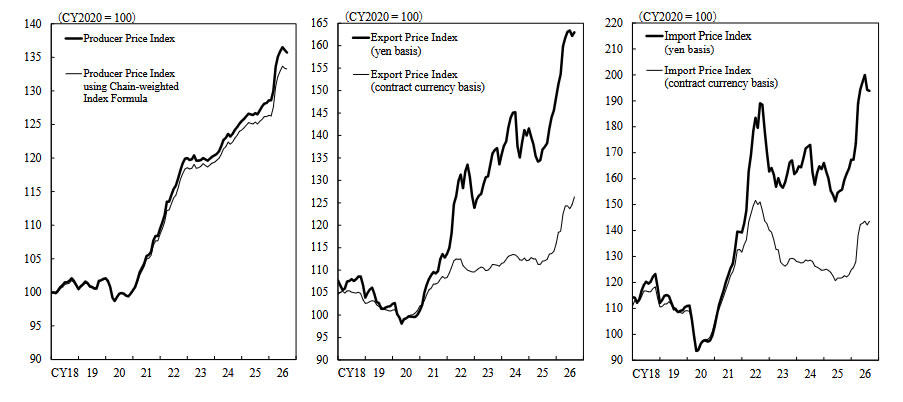
Data Summary — Japan September PPI
| Indicator | Previous | September |
|---|---|---|
| PPI y/y | 7.6% | 6.8% |
| PPI m/m | -0.3% | -0.3% |
| Import Prices y/y (Yen basis) | 25.1% | 24.5% |
| Import Prices m/m (Yen basis) | -2.9% | -0.2% |
| Import Prices y/y (Contract currency) | 16.8% | 17.9% |
| Import Prices m/m (Contract currency) | -1.0% | +1.0% |
| Export Prices y/y (Yen basis) | 18.0% | 17.9% |
Consensus: PPI +7.6% y/y. Actual +6.8%, a downside surprise of 0.8 percentage points.
Major Components
| Component | August y/y | September y/y |
|---|---|---|
| Agriculture, Forestry & Fishery | +1.5% | -13.3% |
| Petroleum & Coal Products | +14.7% | +11.5% |
| Chemicals | +13.0% | +13.3% |
| Plastic Products | +11.3% | +12.8% |
| Nonferrous Metals | +43.3% | +40.2% |
| Information & Communications Equipment | +14.8% | +15.3% |
Source: Bank of Japan, September 2026 Corporate Goods Price Index.
Key Takeaways
- PPI slows more than expected: Annual producer inflation eased from 7.6% to 6.8%, missing the 7.6% forecast. Prices fell 0.3% month-on-month for a second consecutive month.
- Agriculture drives the headline decline: Agricultural prices plunged 8.8% monthly, subtracting 0.42 percentage points from PPI, while petroleum and coal products contributed another -0.15 percentage points.
- Industrial inflation remains elevated: Annual price growth accelerated in chemicals, plastics and information and communications equipment. Nonferrous metals inflation moderated but remained high at 40.2%.
- Import costs present a mixed picture: Yen-denominated import prices fell 0.2% monthly, while contract-currency prices rose 1.0%. Yen appreciation helped cushion the increase in foreign-currency costs.
- Inflation pressures remain uneven: The headline slowdown provides evidence of easing wholesale inflation, but persistent industrial cost pressures leave the possibility of further price transmission through production chains.