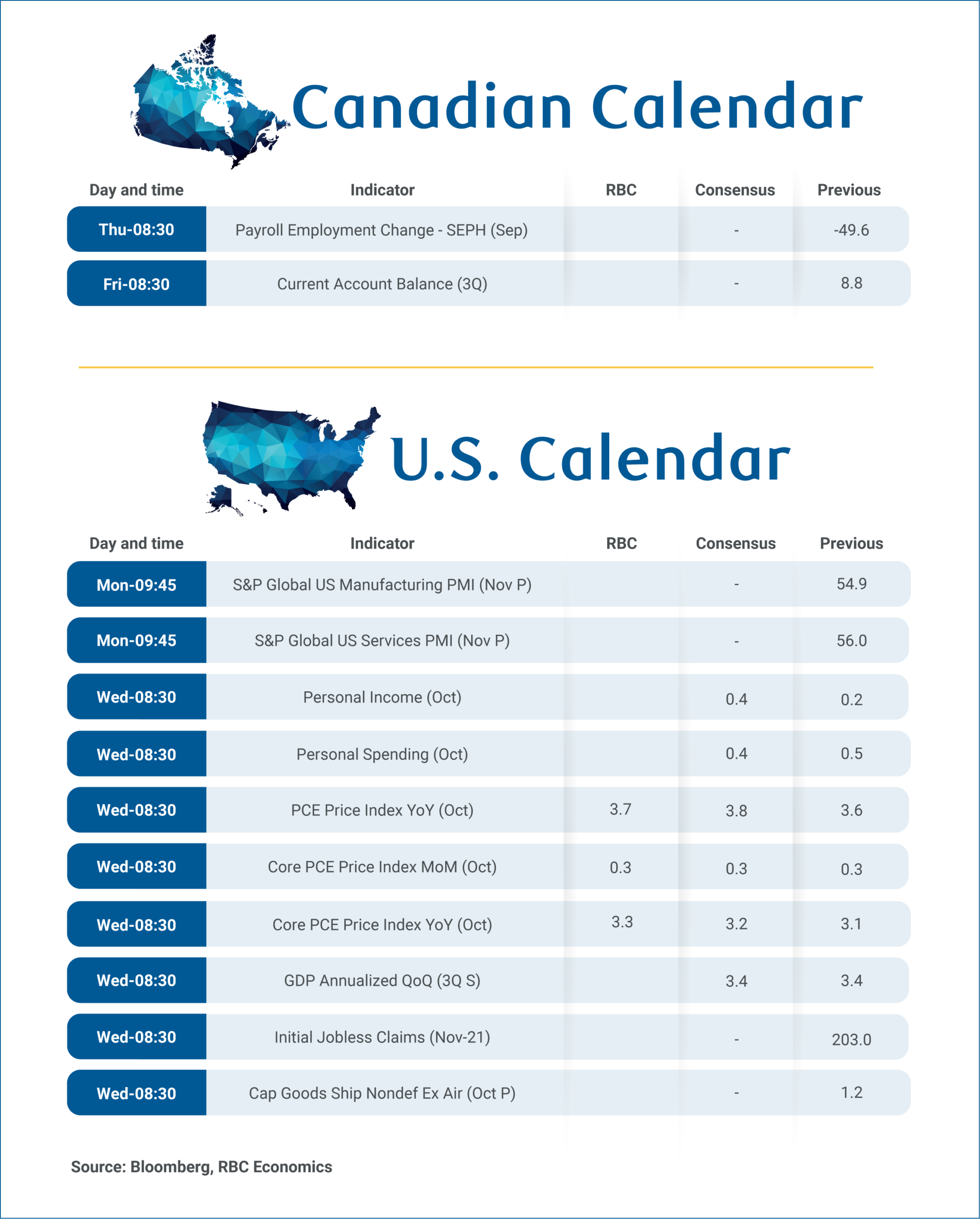
Advance estimates of Canadian October manufacturing and wholesale sales on Monday and Wednesday should offer a first look at activity in Q4, after growth mostly stalled in Q3.
Real gross domestic product changed little in July and August, and likely contracted 0.1% in September, according to Statistics Canada’s advance estimate – consistent with a 1.5% decline in manufacturing sales and a 0.2% decline in wholesale sales that month.
Part of the wholesale weakness can be traced back to the auto sector, as production stoppages in the United States due to supply issues drove a 16% decline in Canadian auto imports between July and September.
But machinery and equipment sales were stronger, reflecting increased investment in computer equipment as the data centre buildout in Canada continues to gain momentum. These equipment purchases aren’t likely to add significantly to overall GDP growth, mainly due to their high import content.
Other economic indicators are still supportive of a modest expansion in activities in Q4. The labour market softened in October, but weakness was concentrated among young participants, where data tends to be more volatile. Hours worked rose 0.3% despite job losses, and job openings from Indeed.com continued to rise into November.
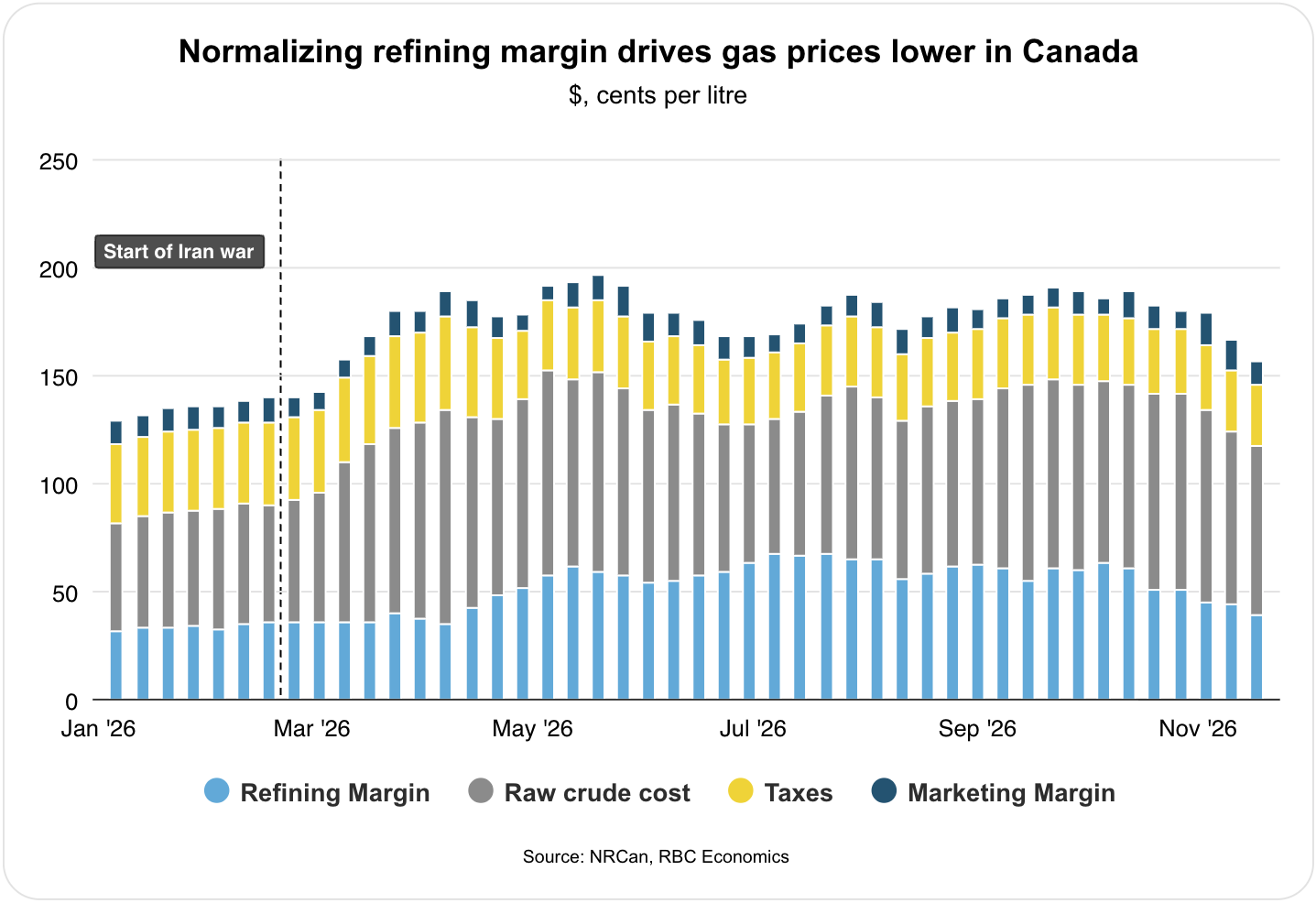
Our tracking of RBC cardholder purchases points to renewed strength in household spending into the fall. Moreover, lower gasoline prices in recent weeks as refining margin normalizes should help stabilize consumer sentiment and improve their purchasing power. Backed by resilient domestic demand, we continue to assume further but modest growth in the Canadian economy, and improvements in the labour market in Q4.
September’s Survey of Employment, Payrolls and Hours (SEPH) data on Thursday will provide more detail on labour market conditions compared to recent weak prints in the separate Labour Force Survey. Public sector employment has declined significantly in the (LFS) since May before rebounding in October. Trends observed in SEPH over the same period have been milder.
US personal consumption expenditure next week is expected to show strong spending that supported GDP growth in the year through Q3 extending into October. Following hotter recent CPI prints, the PCE price deflator is expected to have accelerated to 3.8% year-over-year, and 3.3% excluding food and energy components.