BoJ’s Adachi warns against premature rate hikes, urges most conservative approach

    In a speech today, BoJ Board Member Seiji Adachi suggested that Japan’s economy has met the conditions for beginning to normalize its ultra-loose monetary policy. He pointed to the firm economic outlook and broadening price increases as positive signs.

    However, Adachi emphasized the need for caution, stating that until underlying inflation sustainably reaches the 2% target, Japan must maintain an “accommodative” financial environment. He added that any interest rate increases should be at a “very moderate pace.”

    Adachi also stressed the importance to “avoid raising rates prematurely”, suggesting that BoJ should use the “most conservative estimate” when considering policy adjustments.

    “Given high uncertainty surrounding global developments, there is significant uncertainty over next year’s wage developments in Japan. We must carefully monitor the situation,” Adachi added.

    NZ CPI falls to 2.2% in Q3, back in RBNZ’s target band

      New Zealand’s CPI rose 0.6% qoq in Q3, slightly below market expectations of 0.7% qoq. Annually, inflation slowed sharply from 3.3% yoy to 2.2% yoy, in line with forecasts.

      This marks the first time since March 2021 that annual inflation has returned within RBNZ’s target range of 1 to 3%. The result was also softer than RBNZ’s own forecast of 0.8% quarterly and 2.3% annual inflation.

      Rent prices were the largest contributor to the annual inflation figure, rising by 4.5%. Nearly 20% of the overall inflation increase came from rent.

      On the other hand, lower fuel costs, with petrol prices dropping -8.0%, helped balance rising costs, alongside a notable -17.9% drop in vegetable prices following last year’s spike in potato, kūmara, and onion prices.

      Full NZ CPI release here.

      Australia’s Westpac leading index ticks up to -0.15%, growth outlook remains subdued

        Australia’s Westpac Leading Index showed a slight improvement, rising from -0.26% to -0.15% in September. However, the index remains in negative territory, indicating “below-trend momentum” that is expected to carry into 2025.

        Westpac maintains that while growth will improve next year, it will remain “relatively subdued,” with GDP growth forecasted to gradually rise from annualized 1% currently to 1.5% by the end of 2024, reaching 2.4% by the end of 2025—still below the long-term trend of slightly above 2.5%.

        As for monetary policy, RBA is not expected to change its cash rate target at the upcoming meetings in November and December.

        However, Westpac anticipates a shift in RBA’s messages, moving away from its 2024 focus on “inflation vigilance.”

        Key data releases, including Q3 CPI on October 30 and national accounts on December 4, are likely to confirm a subdued growth environment and provide RBA with enough confidence to start considering less restrictive policies in 2025.

        Full Westpac Leading Index release here.

        RBA’s Hunter: Monitoring China’s stimulus and inflation expectations closely

          RBA Assistant Governor Sarah Hunter emphasized today the importance of China’s economic stimulus measures for Australia, noting that the central bank is actively assessing their local implications.

          In a Bloomberg interview, Hunter explained, “We are factoring it into our forecasts going into November,” as China remains a key player in Australia’s economy. “China’s still very important, and we put a lot of our time and attention into thinking through what’s happening there and what it means for the economy here.”

          In a separate speech, Hunter also addressed the importance of keeping inflation expectations anchored within RBA’s 2-3% target range.

          She noted that “the fact that expectations feed into actual inflation outcomes means de-anchored expectations typically lead to greater inflation volatility.”

          RBA remains vigilant to ensure inflation expectations remain steady, as de-anchoring could cause significant economic disruption. Hunter stressed the need to constantly track and understand how inflation expectations are evolving to mitigate any risks to the broader economy.

          Fed’s Bostic sees one more 25bps rate cut in 2024

            In a moderated discussion, Atlanta Fed President Raphael Bostic addressed the key question on investors’ minds: “how fast” will the Fed proceed with further rate cuts?

            According to Bostic, Fed’s median projection suggests an additional 50bps of rate cuts this year, following 50bps cut in September. However, for Bostic, “My dot was 25 basis points more”.

            Nevertheless, he emphasized that his stance is not set in stone. “I’m keeping my options open,” Bostic said, indicating that he would reassess based on incoming data on inflation and the labor market.

            He also projected GDP growth of around 2.6% for 2024 and expects it to moderate to 2% in 2025 as household savings dwindle.

            Fed’s Daly: One or two more rate cuts reasonable this year

              San Francisco Fed President Mary Daly signaled in a speech overnight that additional rate cuts are in the pipeline for this year, suggesting that “one or two” further reductions would be a “reasonable thing to do.”

              Daly emphasized that the primary focus now is on determining “how quickly to adjust,” rather than where the ultimate destination of the easing cycle will be.

              She also acknowledged that “the economy is clearly in a better place,” pointing to significant progress in reducing inflation pressures. She also highlighted that the labor market is now on a more sustainable path, which was a key concern earlier this year. With both inflation and employment showing healthier trends, Daly noted, “the risks to our goals are now balanced.”

              Canadian CPI down -0.4% mom in Sep, annual rate slows to 1.6% yoy

                Canada’s CPI fell -0.4% mom in September, much worse than expectation of -0.2% mom. Over the 12-month period, CPI slowed from 2.0% yoy to 1.6% yoy, below expectation of 1.8% yoy. That was the lowest figure since February 2021. The main contributor to headline deceleration was lower year-over-year prices for gasoline in September (-10.7%). CPI ex-gasoline was unchanged at 2.2% yoy.

                The core measures showed CPI median unchanged at 2.3% yoy. CPI trimmed unchanged at 2.4% yoy. CPI common rose from 1.9% yoy to 2.1% yoy. All matched expectations.

                Full Canada CPI release here.

                Germany’s ZEW jumps to 13.1 in Oct, driven by optimism on inflation and ECB rate cuts

                  Germany’s ZEW Economic Sentiment index surged significantly to from 3.6 to 13.1 in October, surpassing market expectations of 10.2. However, Current Situation Index dropped further into negative territory, falling from -84.5 to -86.9, slightly worse than forecast of -85.0.

                  For the Eurozone, ZEW Economic Sentiment rose from 9.3 to 20.1, beating expectations of 16.9. Current Situation Index, however, saw a small decline, edging lower by -0.4 points to -40.8.

                  ZEW President Achim Wambach highlighted the mixed signals, noting that despite a very weak current economic situation in Germany, optimism is growing. He cited “stable inflation” expectations and the prospect of “further interest rate cuts” by ECB as key contributors to this improved outlook.

                  Wambach added that positive signals from key export markets such as the US, China, and the Eurozone also played a role in improving the outlook for Germany’s economy. China’s recent economic stimulus measures have contributed to this optimism too, boosting expectations for Germany’s exports.

                  Full German ZEW release here.

                  Eurozone industrial production rises 1.8% mom in Aug, driven by capital goods

                    Eurozone industrial production increased by 1.8% mom in August, meeting market expectations. This growth was supported primarily by a significant 3.7% rise in capital goods production. Durable consumer goods also saw a notable rise of 1.7%, while energy production edged up by 0.4%. However, intermediate goods saw a contraction of -0.3%, and non-durable consumer goods posted a modest gain of 0.2%.

                    Across the broader European Union, industrial production rose by 1.3% mom. Ireland led the gains with a robust 4.5% rise, followed by Germany and Lithuania, which both saw increases of 3.3%. Malta also posted solid growth of 2.7%. On the downside, Luxembourg experienced a sharp decline of -9.2%, while Croatia and Denmark saw drops of -4.6% and -4.5%, respectively.

                    Full Eurozone industrial production release here.

                    UK payrolled employment falls -15k in Sep, unemployment rate dips to 4% in Aug

                      In September, UK payrolled employment decreased -15k or -0.0% mom, but increased by 113k or 0.4% yoy, to 30.3m. Median monthly pay rose 5.3% yoy, down from prior 6.0% yoy, but stays well above June’s 3.8% yoy. Claimant count rose 27.9k to 1.797m, above expectation of 20.2k.

                      In the three months to August, unemployment rate fell from 4.1% to 4.0%, below expectation of 4.0%. Average regular earnings excluding bonuses rose 4.9% yoy, down from prior 5.1% yoy, below expectation of 5.0% yoy. Average regular earnings including bonuses rose 3.8% yoy, down from prior 4.0% yoy, matched expectations.

                      Full UK labor market overview release here.

                      Cryptocurrencies surge amid optimism over US regulatory outlook post-election

                        Cryptocurrencies rallied overnight on growing optimism that regulatory environment for digital assets in the US may improve following the upcoming presidential election in November. This boost in sentiment was initially driven by a rise in Donald Trump’s standing in prediction markets and some polls, as he is perceived to be more pro-crypto compared. Later, the market received another push after Kamala Harris’ campaign made supportive comments, pledging to support a regulatory framework for cryptocurrencies.

                        Technically, however, Bitcoin is still stuck in medium term consolidation pattern from 73012 (March high). The range is pretty much set between 50% retracement of 24896 to 37812 at 49354, i.e. between 49k and 74k in short.

                        Further near term rise is in favor as long as 58846 support holds. Break of 66854 will target a test on 73812 high. However, there is so far no indication of sustainable momentum through to new record.

                        Ethereum’s outlook is worse. Current bounce might be just a leg of the consolidation pattern from 2084.52 low. Further decline will remain in favor as long as 2797.60 resistance holds. Break of 20845.71 will resume the larger down trend from 4092.55 (March high).

                        Fed’s Waller advocates for caution in policy easing amid solid economic conditions

                          In a speech overnight, Fed Governor Christopher Waller provided noted that recent economic data has been “uneven,” with both positive signals and areas of concern, but emphasized that the US economy remains on “solid footing.” Employment is near the Fed’s maximum objective, and inflation is approaching the target, despite some disappointing recent inflation figures.

                          In light of this, Waller expressed caution about the pace of monetary easing, noting that while the September 50bps cut was necessary, the Fed should now proceed with “more caution on the pace of rate cuts.” He reaffirmed his view that the Fed would reduce the policy rate “gradually over the next year.”

                          Looking ahead, Waller’s baseline forecast still calls for a gradual reduction in the policy rate over the next year. However, he acknowledged uncertainty about the “final destination” for interest rates, with projections for the long-run federal funds rate varying significantly among Fed officials. The range extends from 2.4% to 3.8%, with the median estimate sitting at 2.9%.

                          While much of the market focus is on the size of rate cuts in the near term, Waller pointed out that the “larger message” from Fed’s economic projections is the extent of policy tightening that still needs to be reversed. If the economy continues its current stable performance, Waller expects that easing will occur gradually over time.

                          Full speech of Fed’s Waller here.

                          Fed’s Kashkari: Further modest rate reduction appropriate in coming quarters

                            In a speech today, Minneapolis Fed President Neel Kashkari indicated that ” further modest reductions in our policy rate will be appropriate in the coming quarters to achieve both sides of our mandate.”

                            Kashkari stressed that future decisions will be data-driven, stating that “ultimately, the path ahead for policy will be driven by the actual economic, inflation, and labor market data.”

                            While acknowledging that the current federal funds rate, set between 4.75% and 5%, remains restrictive, Kashkari noted that it is still unclear exactly how much this restrictiveness is weighing on economic growth.

                            However, he expressed confidence in the Fed’s progress toward its inflation goals, saying the central bank is in the “final stages of bringing inflation down to our 2% target.”

                            China’s export grow slows to 2.4% yoy, imports edge up 0.3% yoy

                              China’s export and import data for September painted a weaker-than-expected picture of the nation’s trade performance. Exports grew by just 2.4% yoy to USD 303.7B, well below expectations of 6.0% yoy and down from the 8.7% yoy rise in the previous month. Imports edged up a modest 0.3% yoy to USD 222B, missing expectations of 0.9% yoy increase and lower than August’s 0.5% yoy rise. Trade surplus narrowed to USD 81.7B, smaller than the expected USD 89.8B and down from USD 91.0B in August.

                              Breaking down the data by region, exports to the US, China’s largest trading partner, rose by 2.2% yoy, while imports saw a stronger 6.7% yoy growth. Trade with ASEAN remained more robust, with exports up 5.5% yoy and imports climbing 4.2%yoy. However, exports to the EU edged up by only 1.3%, while imports from the bloc fell by -4% yoy. Trade with Russia was mixed, with exports surging by 16.6% yoy, but imports declining by -8.4% yoy.

                              Customs spokesman Lu Daliang attributed the weaker export growth to “short-term incidental factors,” including frequent typhoons in key port cities, a high base from last year, and ongoing global shipping congestion. Lu noted that the peak export season for some Chinese products typically seen in Q3 had been moved forward by more than a month this year due to the shipping delays.

                              New Zealand BNZ services unchanged at 457, stuck in contraction

                                New Zealand’s BusinessNZ Performance of Services Index was unchanged at 45.7 in September, marking the seventh consecutive month in contraction and remaining well below the long-term average of 53.1.

                                Katherine Rich, CEO of BusinessNZ, noted that the services sector appears to be “stuck in a rut” and is struggling to get out of contraction.

                                The detailed data reflects mixed performance across key components. While activity/sales edged slightly higher from 44.3 to 45.6, employment saw a sharp decline, dropping from 49.4 to 45.7—reflecting further weakness in job creation. New orders/business also ticked down marginally from 46.9 to 46.7, while supplier deliveries dipped further to 43.2 from 43.5.

                                One small positive came from a reduction in the proportion of negative comments from respondents, which fell to 58.5% in September, compared to 60.8% in August and 67.0% in June and July. However, a significant number of businesses still cited the broader economic environment as a key negative factor impacting their performance.

                                Full NZ BNZ PSI release here.

                                China’s CPI falls back to 0.4% yoy in Sep, PPI down -2.8% yoy

                                  China’s inflation data for September, released over the weekend, showed continuously weak price momentum.

                                  Headline CPI growth slowed to 0.4% yoy, down from 0.6% yoy in August and missing market expectations of 0.6%. Core CPI, which excludes volatile food and energy prices, rose by just 0.1% yoy, its lowest reading since February 2021. This marked the 20th consecutive month in which core inflation remained below 1.0%, underscoring persistent weak domestic demand and the need for stronger economic stimulus to encourage consumer spending.

                                  Food prices remained a key driver of inflation, with a 3.3% yoy increase. Vegetable prices surged by 22.9% yoy, and pork prices jumped by 16.2% yoy. These spikes in food costs contributed to the overall rise in consumer prices, but price weakness in other areas remains a concern. For instance, prices of new energy vehicles, which face international tariff pressures, fell by -6.9% yoy.

                                  On the industrial front, PPI fell by -2.8% yoy in September, deeper than the -1.8% yoy decline in August and missing expectations of a -2.5% yoy drop. This marked the 24th consecutive month of negative PPI readings

                                  US PPI at 0.0% mom, 1.8% yoy in Sep

                                    US PPI for final demand was unchanged for the month in September, below expectation of 0.1% mom rise. PPI services rose 0.2% mom but PPI goods fell -0.2% mom. PPI less foods, energy, and trade services rose 0.1% mom.

                                    For the 12-month period, PPI rose 1.8% yoy, down from prior 1.9% yoy, but above expectation of 1.8% yoy. PPI less foods, energy, and trade services rose 3.2% yoy.

                                    Full US PPI release here.

                                    Canada’s employment grows 46.7k in Sep, unemployment rate falls to 6.5%

                                      Canada’s employment grew 46.7k in September, above expectation of 34.5k. Full-time employment rose 112k or 0.7% mom, largest gain since March 2022. Part-time work fell -65k or -1.7%.

                                      Unemployment rate fell from 6.6% to 6.5% better than expectation of 6.6%. Participation rate fell -0.2% to 64.9%. Total hours worked, however, fell -0.4% mom. Average hourly wages rose 4.6% yoy, slowed from 5.0% yoy.

                                      Full Canada employment release here.

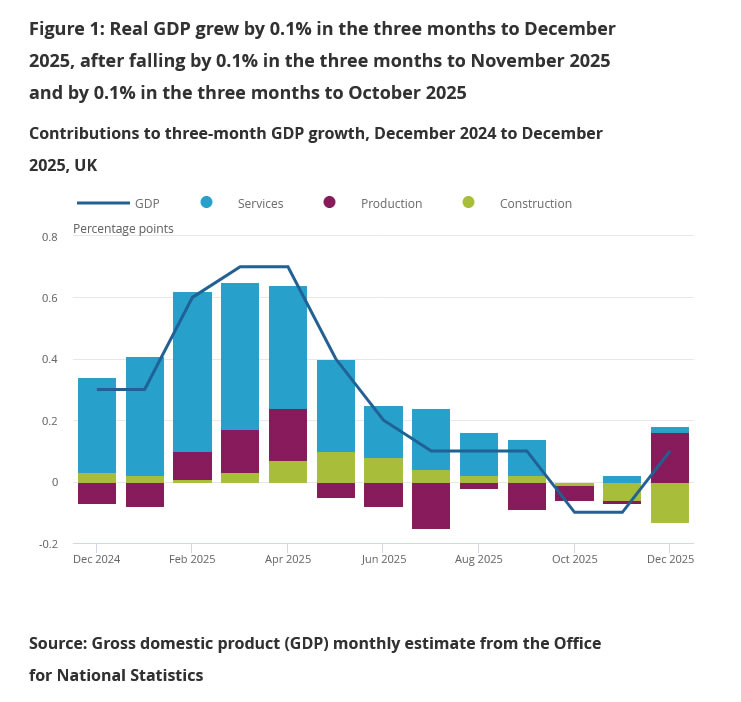
                                      UK GDP grows 0.2% mom in Aug, matches expectations

                                        UK GDP grew 0.2% mom in August, matched expectations. Services output grew by 0.1% mom. Production output grew by 0.5% mom. Construction output grew by 0.4% mom.

                                        In the three months to August compared with the three months to May, GDP grew 0.2%. Service output rose 0.1%. Production output showed no growth. Construction output rose 1.0%.

                                        Full UK GDP release here.

                                        New Zealand BNZ PMI rises to 46.9, but stays in contraction for 19th month

                                          New Zealand’s BusinessNZ Performance of Manufacturing Index rose slightly from 46.1 to 46.9 in September, marking the third consecutive month of improvement. Despite this, the sector remains in contraction for the 19th straight month, with the index still well below the long-term average of 52.6.

                                          Catherine Beard, Director of Advocacy at BusinessNZ, highlighted that while it’s positive to see the highest PMI result since April, the sector faces a “long and slow road” to recovery.

                                          The components painted a mixed picture: production improved from 46.6 to 48.0, while employment dipped slightly from 46.8 to 46.6. New orders also inched higher from 47.3 to 47.8, but deliveries fell further from 45.8 to 45.6.

                                          Negative sentiment among respondents is gradually improving, with 63.5% expressing pessimism in September, down from 64.2% in August and significantly lower than the 76.3% seen in June. The main concerns continue to revolve around weak demand, with many businesses citing a lack of orders and sales as key issues.

                                          Full NZ BNZ PMI release here.