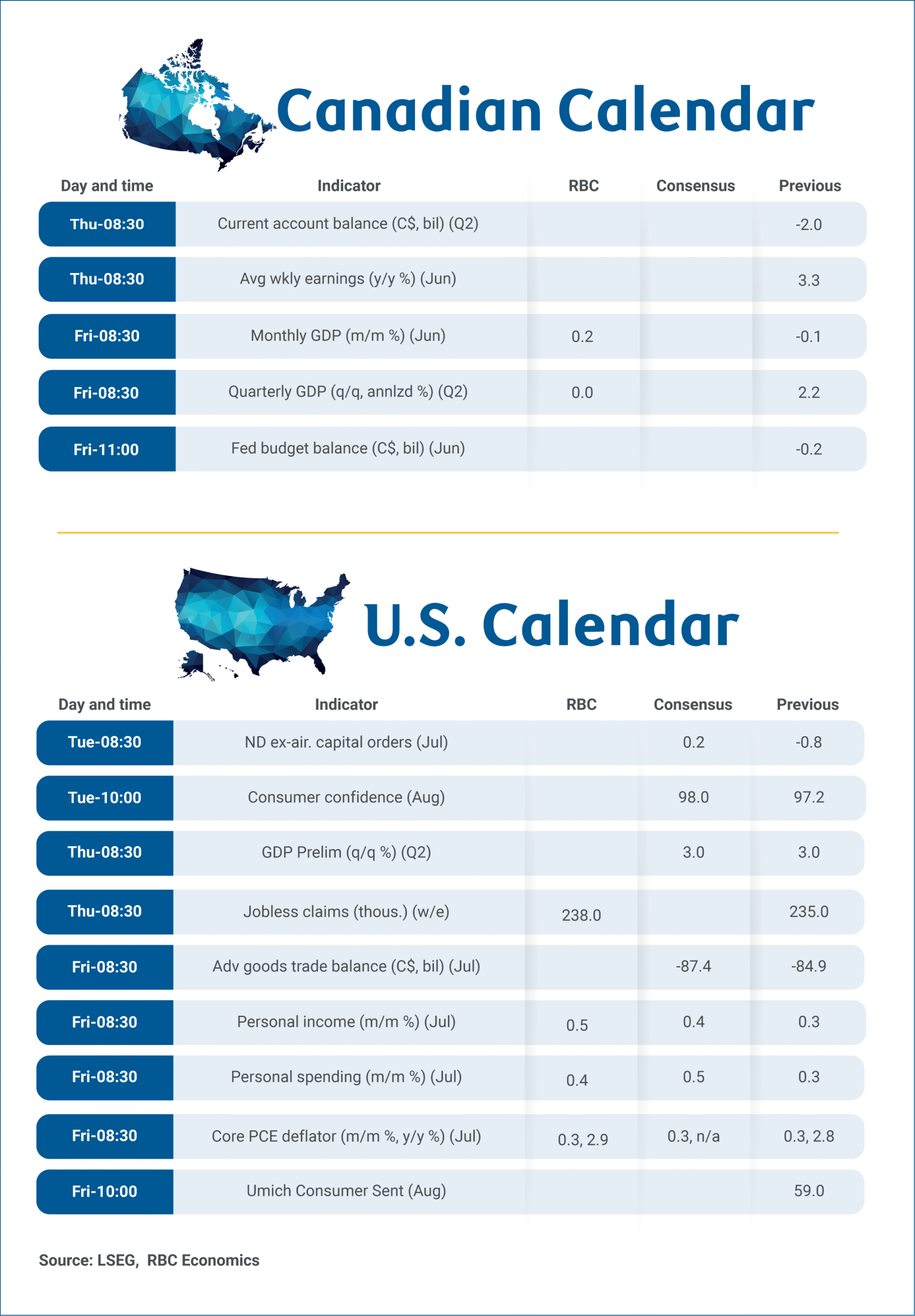
Canada’s gross domestic product report next Friday is expected to show zero growth in Q2─a sharp cooling from the 2.2% gain in Q1 this year.
Still, a flat reading in Q2 consistent with Statistics Canada’s advance estimates of monthly output through June is better than feared, given spring saw a surge in U.S. tariffs (and threats) that rattled business and consumer confidence.
These international trade disruptions have significantly impacted the economy. Canadian merchandise export volumes fell an annualized 31% in Q2 alongside a broader drop in U.S. imports as pre-tariff inventory building unwinds. Business investment likely edged down modestly and would have been substantially weaker without a large ($2 billion) one-time import of machinery for offshore oil production in June.
Household demand stays on course
Household spending, however, held steady with consumer spending tracking a similar pace to Q1’s 1.2% increase. A bounce back in home resales and housing starts also signals an increase in residential investment. Total final domestic demand, which strips out volatile swings in trade and inventories, should post a small gain─suggesting underlying momentum is not as weak as the headline implies.
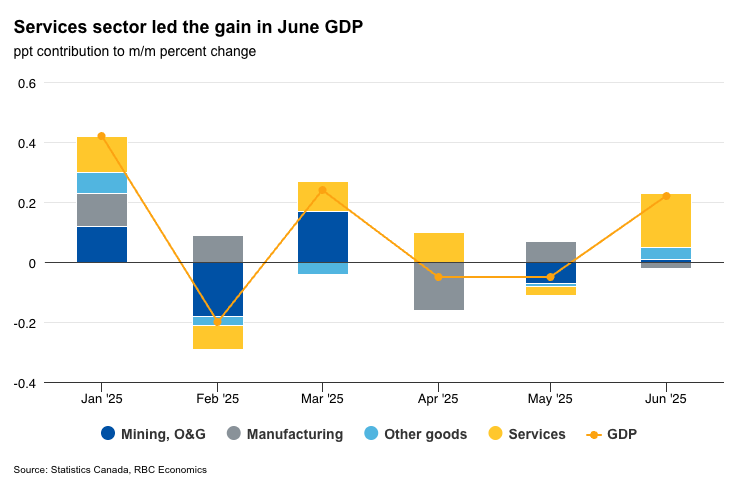
We expect GDP to post a slightly stronger 0.2% month-over-month increase in June than StatsCan’s 0.1% estimate, marking the first increase in three months following small declines in April and May.
Early indicators also point to a rise in output in service producing industries in June. Retail sales rebounded strongly (+1.5%) following a 1.2% drop in May, consistent with our tracking of RBC consumer card transactions that showed spending held up in Q2 despite the sharp drop in consumer confidence. The real estate sector extended its recovery as housing resales improved through the quarter.
Oil production to boost output
The manufacturing sector continues to be among the industries more significantly impacted by international trade disruptions, and uncertainty. We expect output in the sector to be broadly consistent with flat manufacturing sale volumes reported. But oil production likely bounced back after wildfire-related disruptions in Alberta in May.
Trade uncertainty will continue to affect business investment regardless of future tariff decisions. Nevertheless, CUSMA exemptions for most Canadian exports have prevented worst case scenarios, and we anticipate subdued, but positive growth through the remainder of 2025.
Week ahead data watch:
U.S. personal spending in July likely increased by 0.4%, slightly higher than the previous month. Much of this growth came from stronger auto sales. Additionally, retail sales rose by 0.5% in July, following a larger 0.9% increase in June. We also expect personal income to rise from 0.3% in July to 0.5%, reflecting the higher wage growth reported in the July payroll data.