


- The US dollar recorded its weakest week since May, falling 1.5% on Dollar Index, driven mainly by political uncertainty rather than shifts in monetary policy or bond yields.
- Erratic policy signals from President Donald Trump have increased investor caution, triggering a move into safe-haven currencies such as the Japanese yen and the Swiss franc, while pressuring the dollar broadly.
- With the Federal Reserve in focus and concerns growing over its future independence, markets are increasingly pricing in further downside risks for the dollar
The US dollar is posting its weakest week since May, losing ground against most major currencies. Dollar Index (DXY) fell by more than 0.5% on Friday and is down 1.6% for the week, marking its worst performance in over eight months. Importantly, the current weakness of the dollar is not the result of a sharp shift in monetary policy expectations, but rather a surge in political uncertainty in the United States.
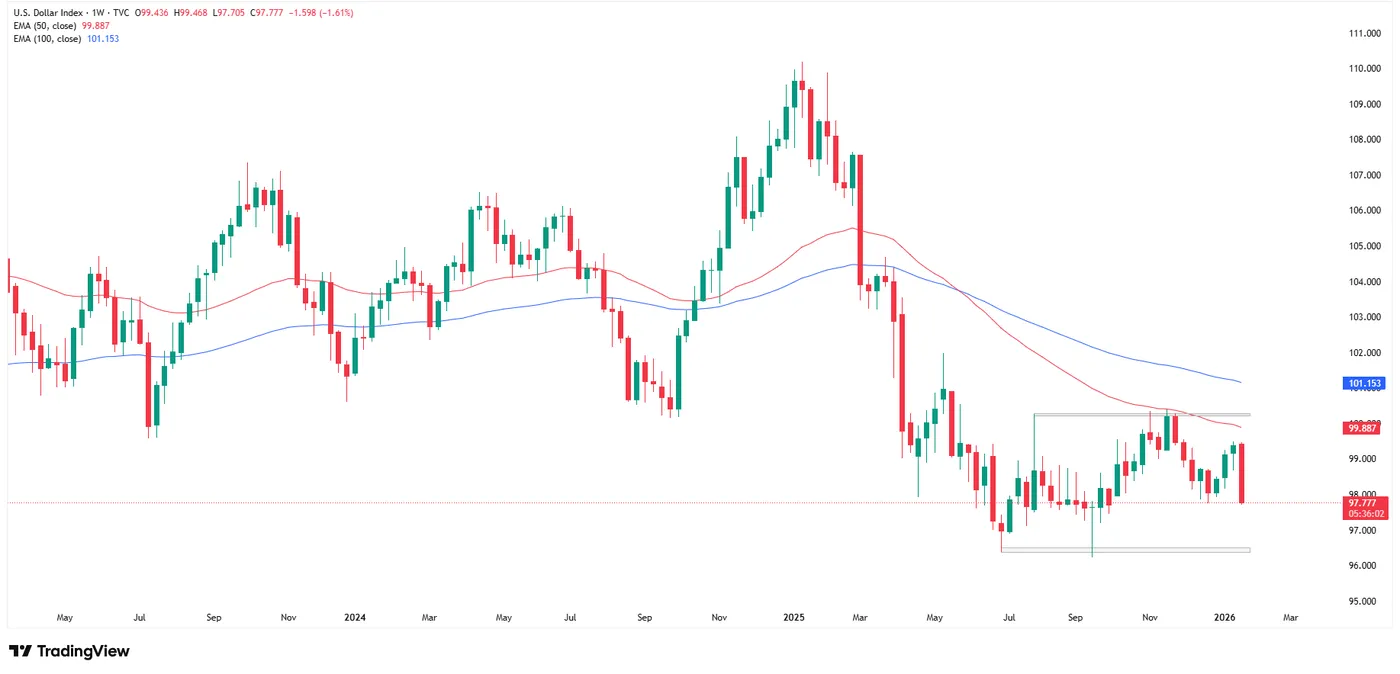
Dollar Index (DXY), weekly timeframe, source: TradingView
Trump as the main source of uncertainty
The key factor weighing on the dollar is the unpredictable and often contradictory policy stance of Donald Trump. Investors were unsettled by threats of tariffs against Europe linked to disputes over Greenland, followed by a rapid retreat from a confrontational tone after an agreement with NATO Secretary General Mark Rutte during the World Economic Forum in Davos. At the same time, US Treasury yields have remained relatively stable, reinforcing the view that political risk, rather than monetary factors, is currently the dominant force shaping the dollar. Right now the dollar has become a safety valve for US risk.
Flight to safe-haven currencies
The global foreign exchange reaction underscores rising aversion to US-related risk. The Japanese yen strengthened by more than 1%, moving to around 156.14 per dollar. The move accelerated following a press conference by Kazuo Ueda, head of the Bank of Japan, and during periods of low liquidity in Europe.
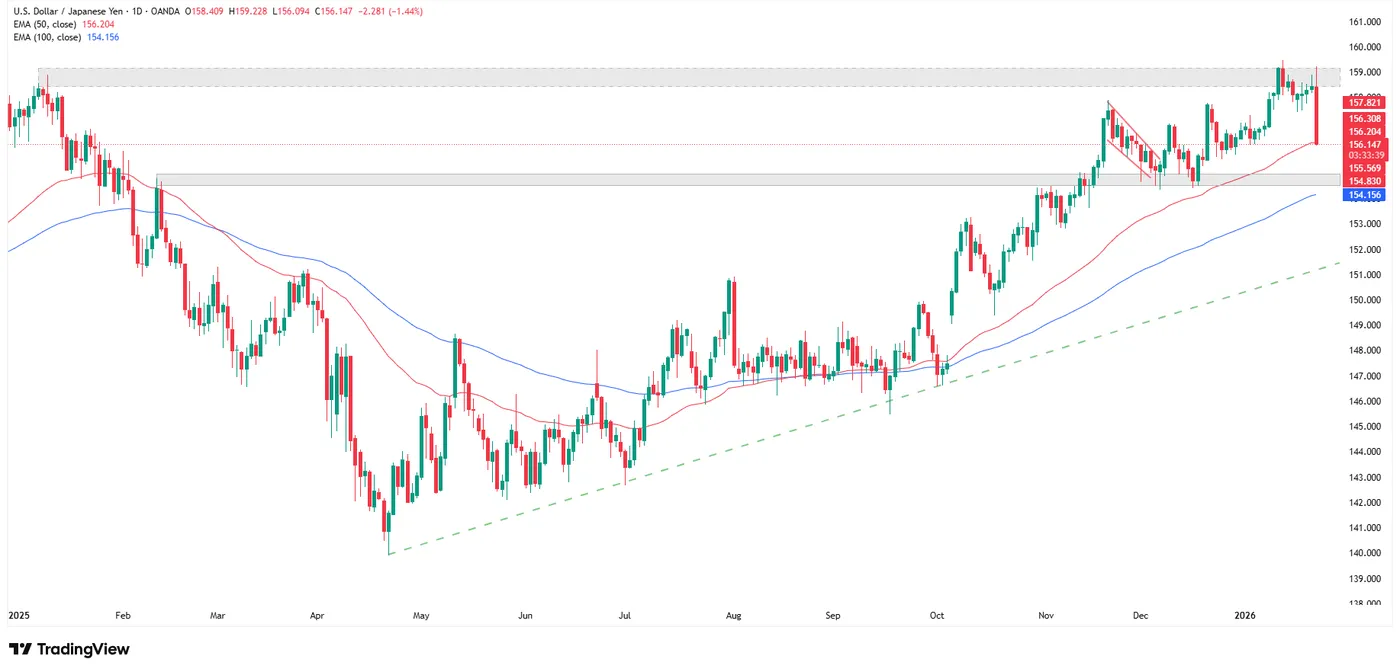
Daily Timeframe of USDJPY, source: TradingView
Additional uncertainty was introduced by comments from Japan’s finance minister Satsuki Katayama, who neither confirmed nor denied possible currency intervention. Meanwhile, the Swiss franc reached its strongest level since September, and the Canadian dollar recorded its best day since December, highlighting the broad-based pressure on the US currency.
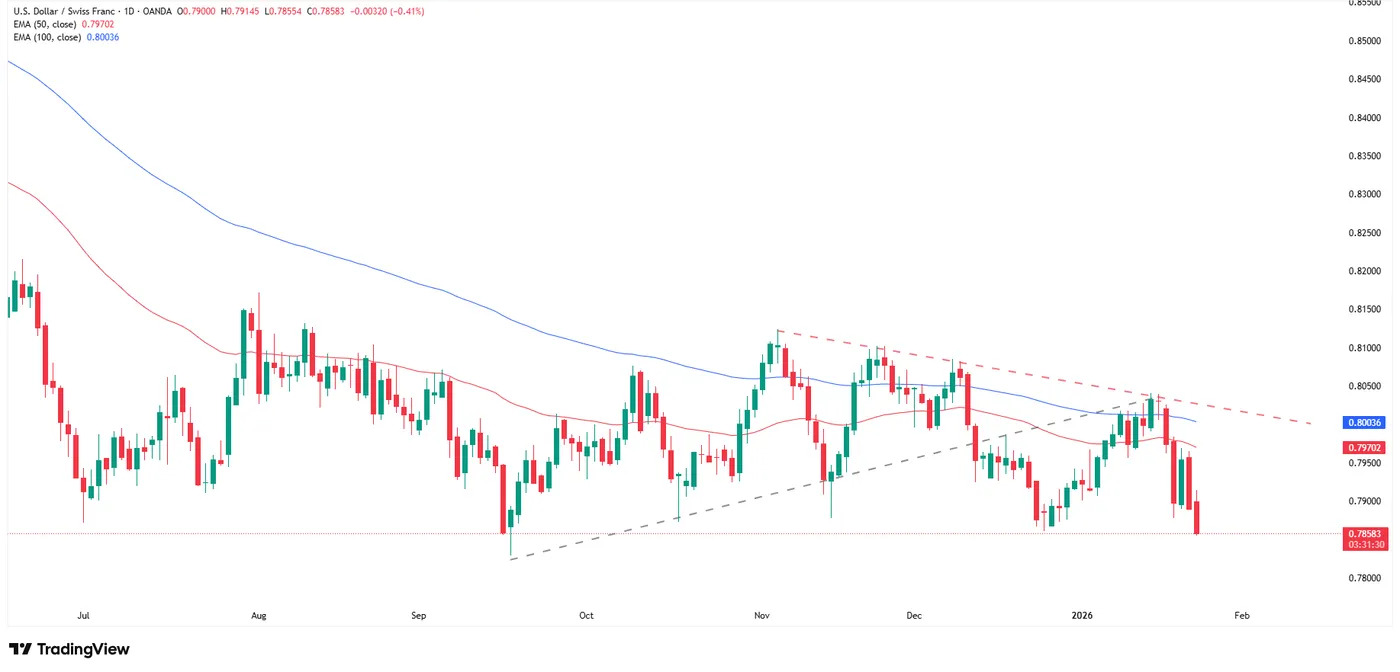
Daily timeframe of USDCHF, source: TradingView
The Fed in the spotlight
Another source of volatility is the upcoming meeting of the Federal Reserve. Markets are pricing in one rate cut around mid-year and the possibility of another in 2026. The dollar is also burdened by concerns over potential threats to the Fed’s independence and fears that a successor to Jerome Powell could move more quickly to ease policy under political pressure.
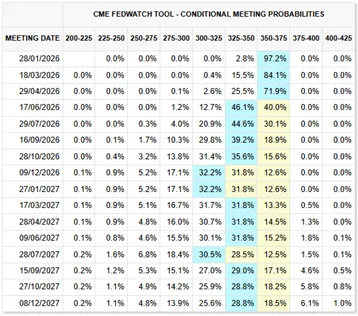
Fed Watchtool Conditional Meeting Probabilities, source: cmegroup.com
Downside Pressure on the Dollar May Persist
The current weakness of the dollar stems primarily from political turmoil and rising institutional uncertainty rather than deteriorating US economic fundamentals. As long as these factors remain in play, downward pressure on the US currency is likely to persist, especially against traditional safe-haven currencies.

