


Market Overview
The crypto market capitalisation surged by 4% over the past 24 hours to $2.45 trillion, making a promising move above the 50-day moving average. Leading the gains were ZEC (+22%), ICP (+13%) and Avalanche (+9.5%); underperforming the market were TRX (-0.2%), BNB (+2.5%) and Monero (+2.8%). News of a two-week ceasefire brought a sigh of relief, sharply boosting demand for risky assets.
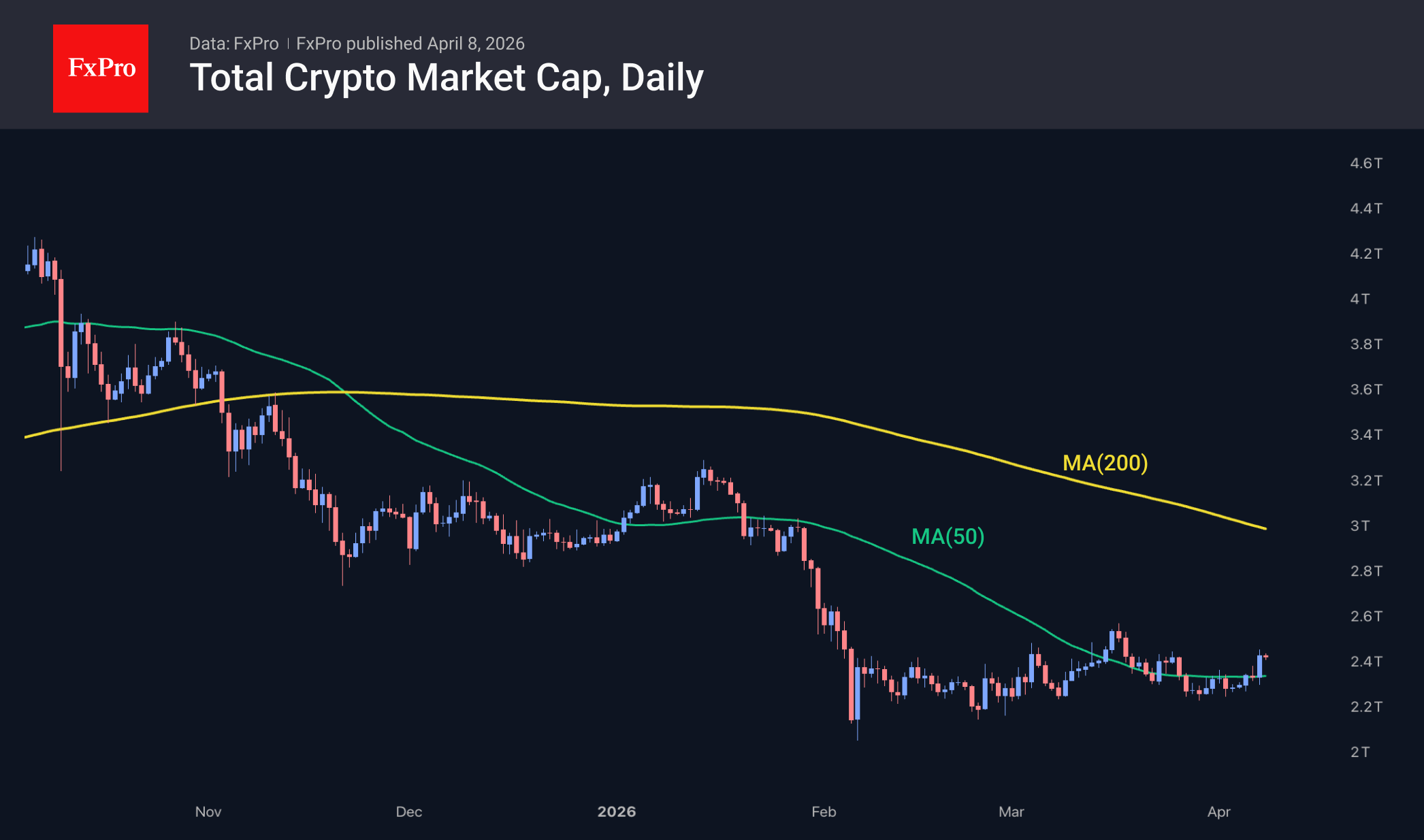
The sentiment index stood at 17 at the start of the day on Wednesday. However, significantly higher levels are to be expected unless the situation changes dramatically by the end of the day, as much of the market’s positivity emerged after today’s figures were released.
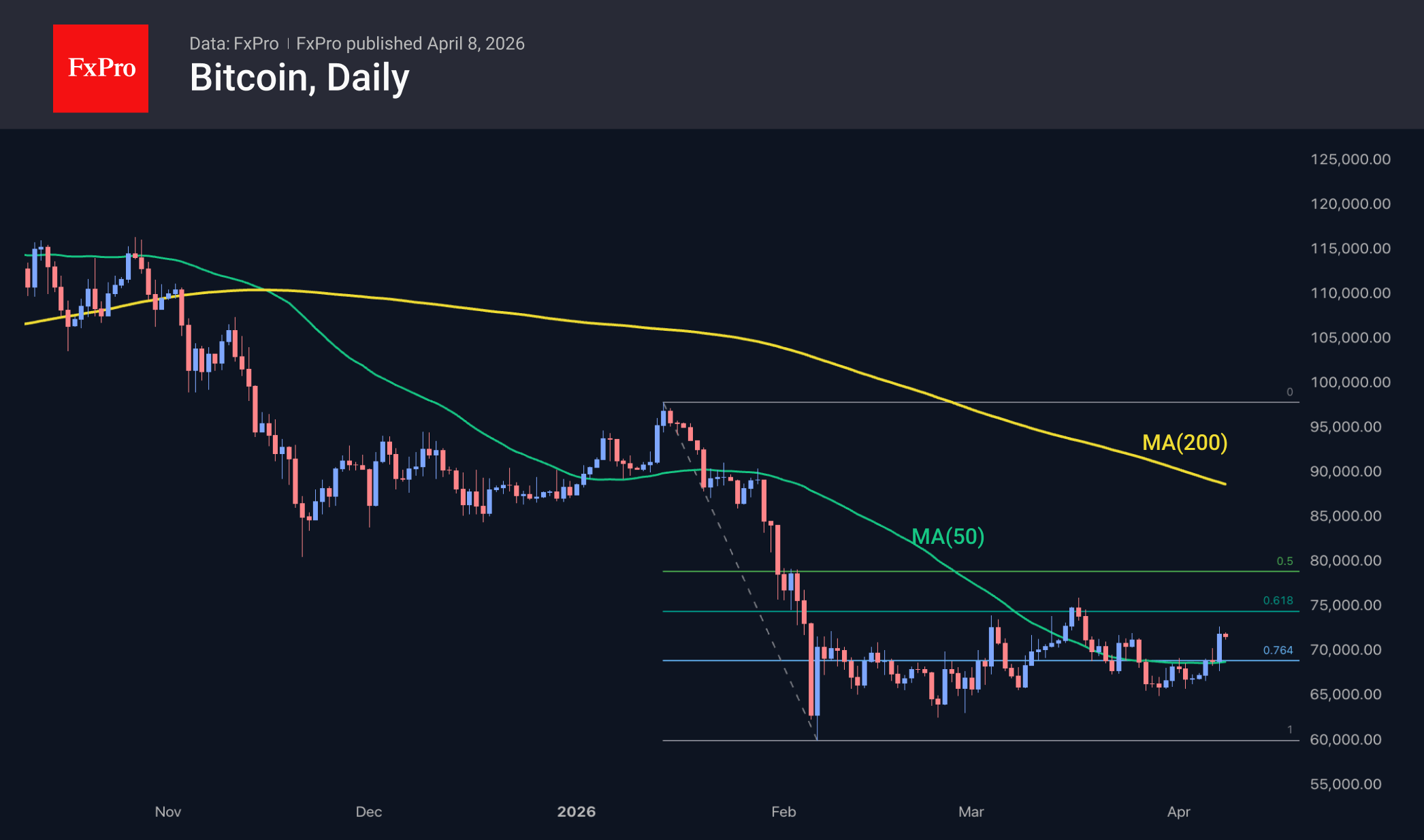
Bitcoin slipped above $72.7K on positive news from the Middle East, retreating slightly at the time of writing to $71.8K, up 4.8% over the past 24 hours. This consolidation above the 50-day MA and a move above the late-March highs are setting an optimistic tone. The immediate focus remains on the $75K area, near which lies the 61.8% resistance level of the latest downward impulse and two March pivot points
News Background
According to CoinShares, global investments in crypto funds rose by $224 million last week following an outflow the week before. Investments in Bitcoin increased by $107 million, in XRP by $120 million, and in Solana by $35 million. Investments in Ethereum fell by $53 million.
The inflow into XRP was the most significant among all assets and the largest since mid-December 2025.
According to BitInfoChart, the number of daily active addresses on the Bitcoin network has fallen to its lowest level since autumn 2013. The decline in network activity has negatively impacted transaction fees and mining profitability.
Bitcoin’s hash rate, smoothed by a 30-day SMA, fell during the first quarter from 1,066 EH/s to 1,004 EH/s, according to Hashrate Index. The 5.8% drop was due to the decommissioning of outdated equipment.
Bitcoin is vulnerable to risks posed by quantum computers, but the main risk lies not in the technology itself but in the community’s inability to reach consensus, according to Grayscale. Deciding on a course of action carries the risk of protracted disagreements and could take years.





, ICP (+13%) and Avalanche (+9.5%); underperforming the market were TRX (-0.2%), BNB (+2.5%) and Monero (+2.8%). News of a two-week ceasefire brought a sigh of relief, sharply boosting demand for risky assets.)