


- A rotation is taking place in the US stocks.
- Seasonal factors and impressive earnings are supporting the S&P 500.
With geopolitical concerns receding and the likelihood of a Fed rate rise diminishing, the US equity market has returned to a familiar theme: rotation. Interest in artificial intelligence has not waned, but technology shares appear overbought. Furthermore, there are concerns about their ability to generate high returns commensurate with the capital invested. As a result, capital is being reallocated across sectors, leading to consolidation in the S&P 500.
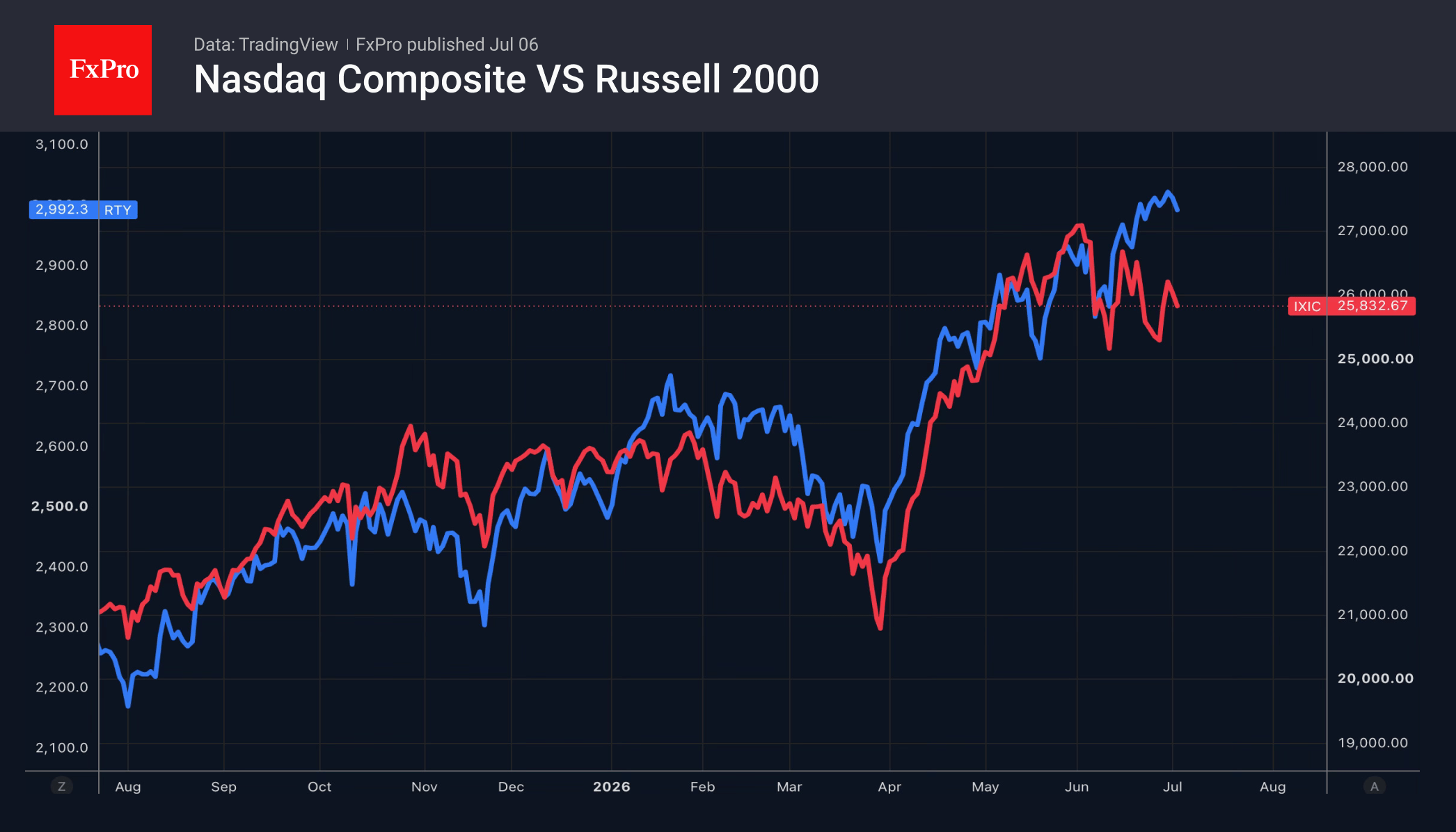
Investor interest in sectors sensitive to the US economy has lifted the Russell 2000 by 22% in the first half of the year. This marks the best performance by the small-cap index since 1991. Between January and June, it outperformed the Nasdaq Composite by 9 percentage points, for the first time since 2006. While the ‘Magnificent Seven’ dominated the market in 2023–2025 and chipmakers’ shares at the beginning of 2026, investors are now seeking new leaders.
The inability to identify them is driving capital outflows. According to Bank of America, citing EPFR Global, US-focused equity funds recorded outflows of $17.2 billion, the worst performance since March. By contrast, their Japanese counterparts recorded their largest inflow in seven weeks, totalling $1.9 billion.
Europe is not left behind. The STOXX Europe 600 has closed in positive territory for four consecutive weeks and has set a new record. Technology, industrial, and utility companies are particularly popular. Falling oil prices are providing a tailwind, as are reduced prospects of monetary policy tightening by the ECB and the Fed, and the associated decline in global bond yields.
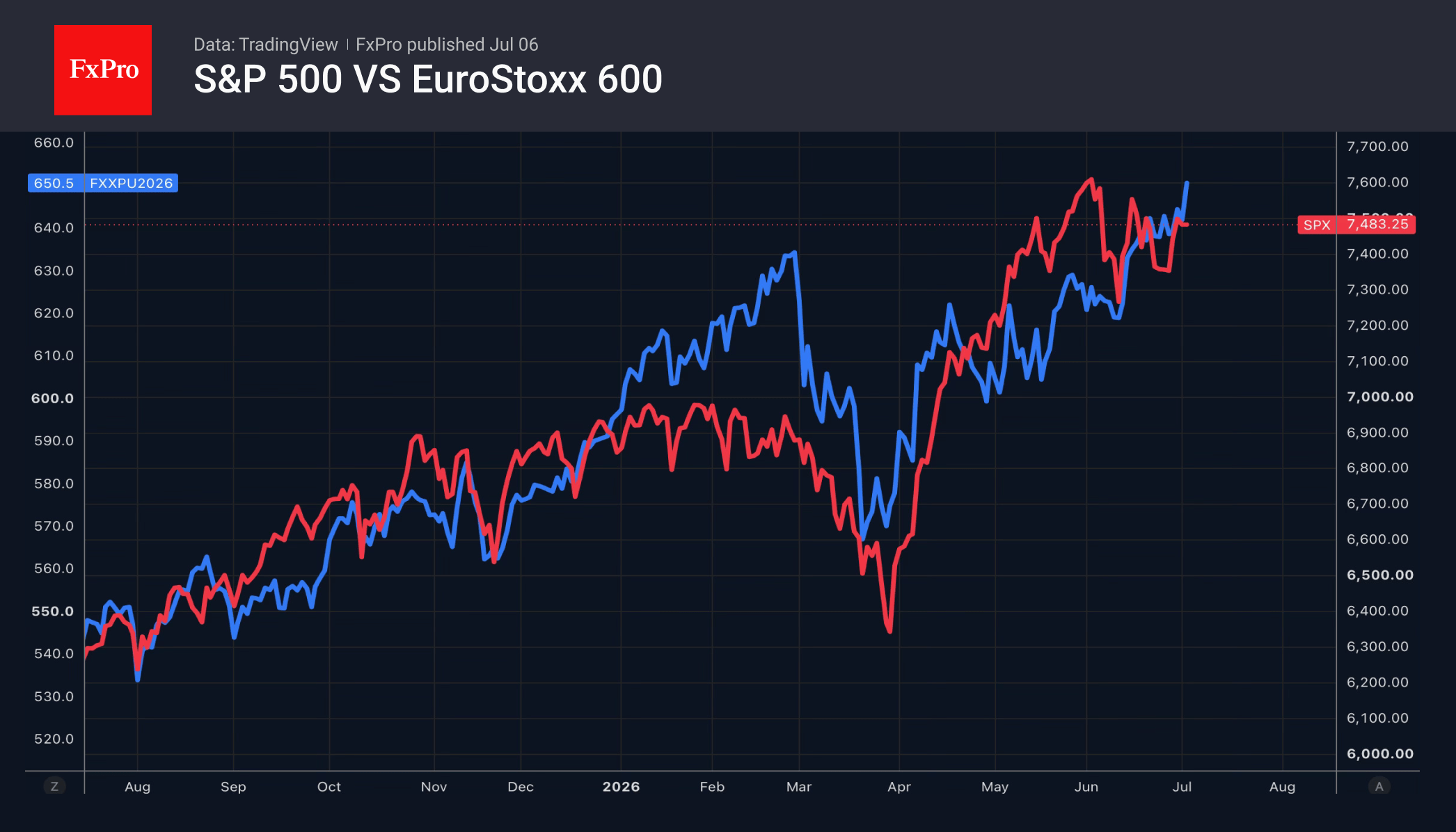
The S&P 500 is underperforming the STOXX Europe 600, but the US stock index has a seasonal advantage. Since 2014, it has never closed July in the red. The average gain at the end of the second month of summer has been 2.5%.
Investors remain encouraged by corporate results. In the first quarter, the net profit margin of S&P 500 companies rose by 14.8%. This marks the strongest performance since records began in 2009. The figure is expected to fall to 14.2% in April–June. However, compared with the same period in 2025, it will be up 3.4%. This is atypical for Wall Street. Over the last 40 quarters, it has lowered its forecasts by an average of 2.7 percentage points.
The FxPro Analyst Team





