- The escalation of the conflict in the Middle East has allowed oil prices to break out of the $80–90 range.
- The rapid decline in stocks is increasing the risk that Brent will rise above $100.
The US dollar has re-entered the fray thanks to geopolitics. The 60-day ceasefire agreement between the US and Iran has expired. Washington has no intention of extending it, whilst Tehran has threatened to escalate the conflict and has seized a tanker in the Strait of Hormuz. At the same time, the Houthis, who are under its control, have stepped up attacks on oil infrastructure in the Red Sea. This has caused Brent to surge towards $92 per barrel, increased the likelihood of the Fed tightening monetary policy, and allowed the USD index to rise.
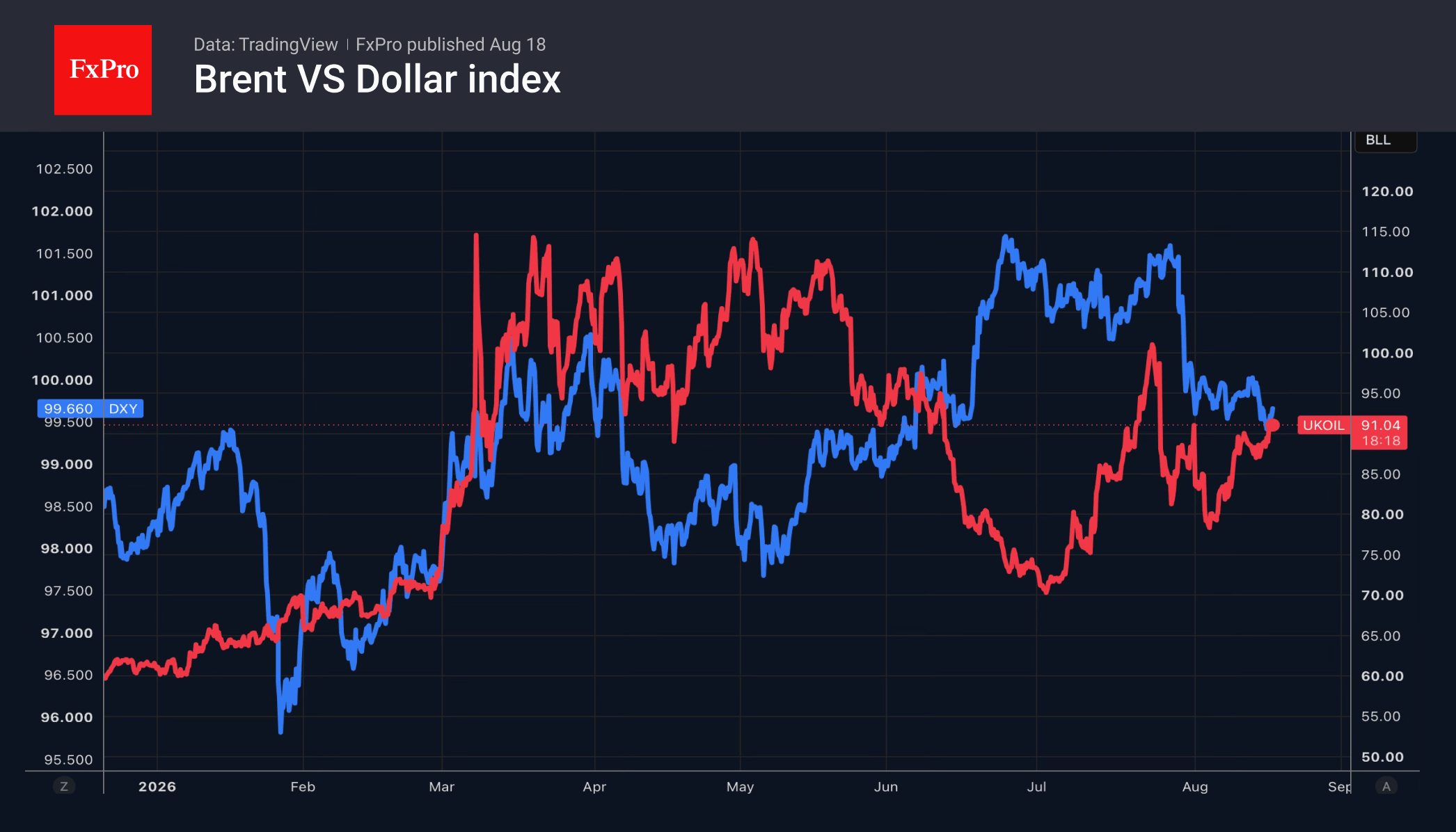
The main reason for the slowdown in US inflation in June and July was the decline in energy prices following the de-escalation of the conflict in the Middle East. As a result, the probability of monetary tightening in September fell to 34%, while the chances of a rate hike by the end of 2026 eased to 64%. Following Iran’s seizure of a tanker in the Strait of Hormuz and Donald Trump’s threats to bomb Oman if it continued to obstruct the US blockade, the risk of monetary policy tightening this year has returned to 70%. This has given the greenback a boost.
The situation is heating up, yet Brent is not rising as rapidly as many expected. At the start of the conflict in the Middle East, there was much talk of North Sea crude soaring to $150 per barrel. The bulls have made only modest gains. The reason lies in the Strait of Hormuz’s throughput capacity and shadow supply. It has fallen, but not as sharply as expected.
According to Kpler, transit volumes have fallen from a pre-war level of 18 million barrels per day to 4.9 million bpd. However, a Bloomberg insider claims that the actual figures are much higher. The US Department of Energy recently cited a figure of 9 million bpd. This is likely due to the ‘shadow fleet’ and the use of alternative routes. Kpler estimates that exports from the Middle East have fallen from 21 million bpd to 9.5 million bpd.
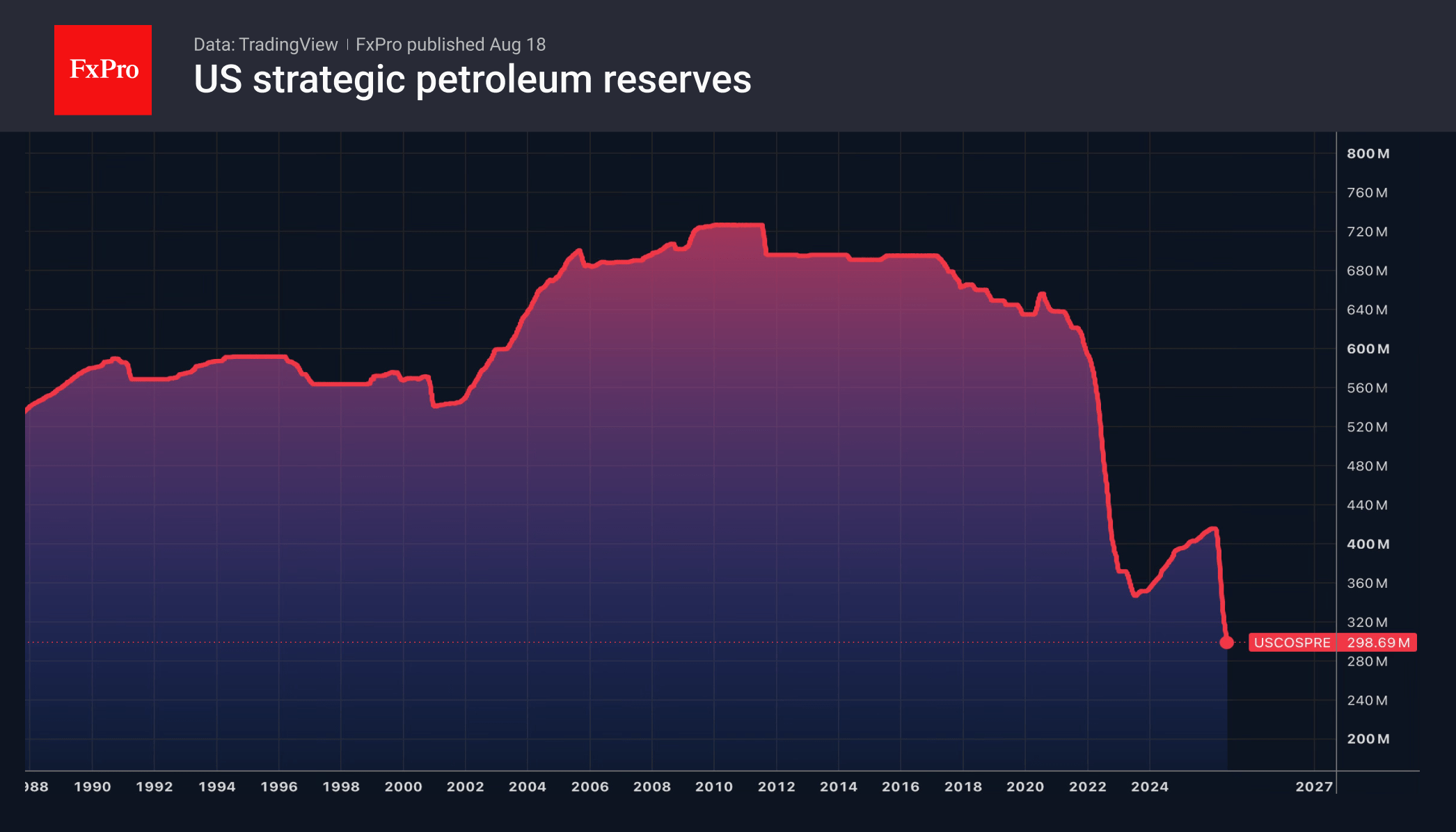
The market is gradually coming to terms with the idea that supply disruptions are not a temporary shock, but a new reality. Meanwhile, Brent is being supported by reports that US strategic reserves have fallen to their lowest level since 1982, losing 5.3 million barrels in the last week alone. The safety cushion is shrinking before our very eyes, and the risks of an oil rally above $100 per barrel are mounting.
The FxPro Analyst Team