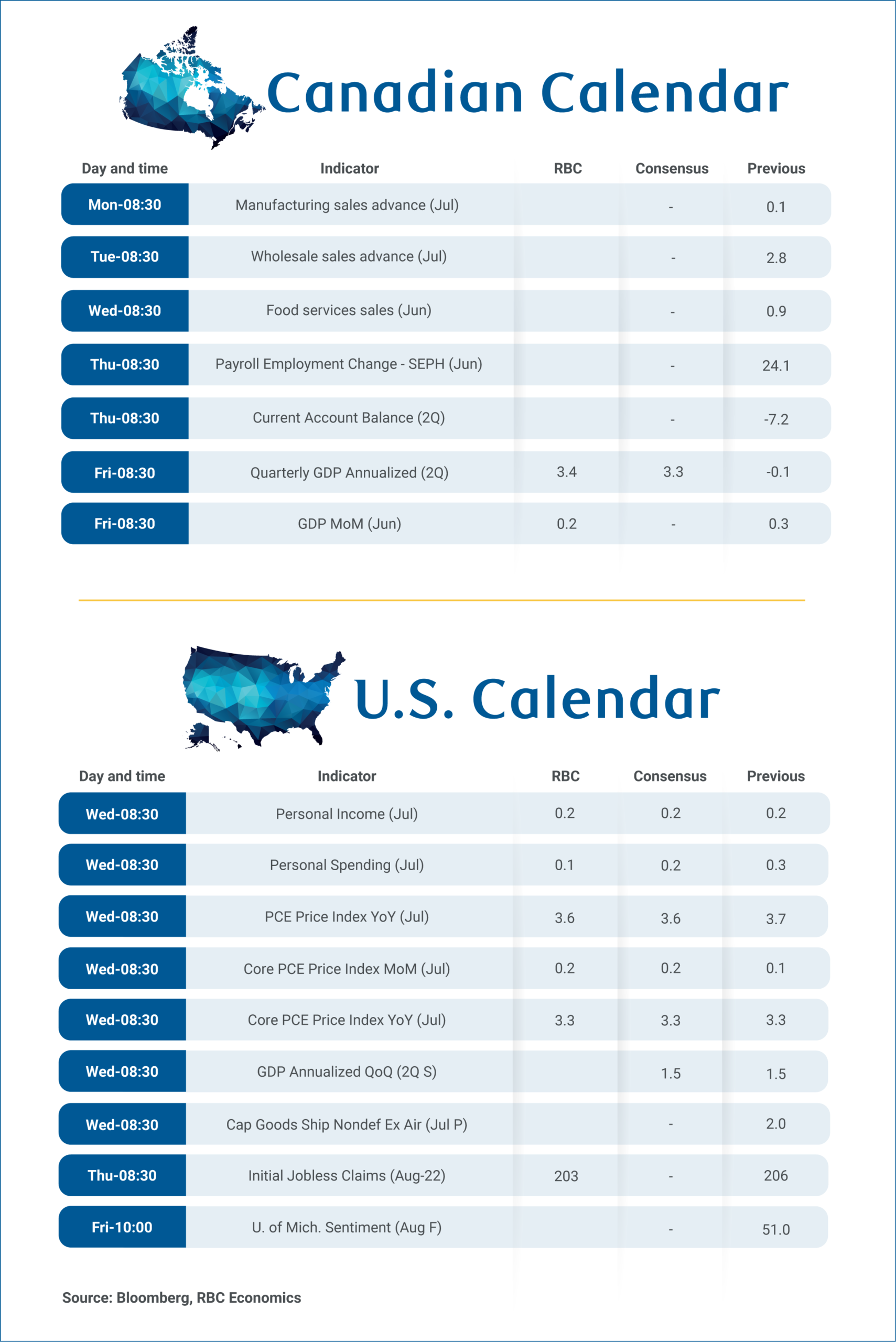
Next Friday’s Canadian gross domestic product reports for June and Q2 are expected to confirm a strong rebound in economic activity following stalling growth over the winter.
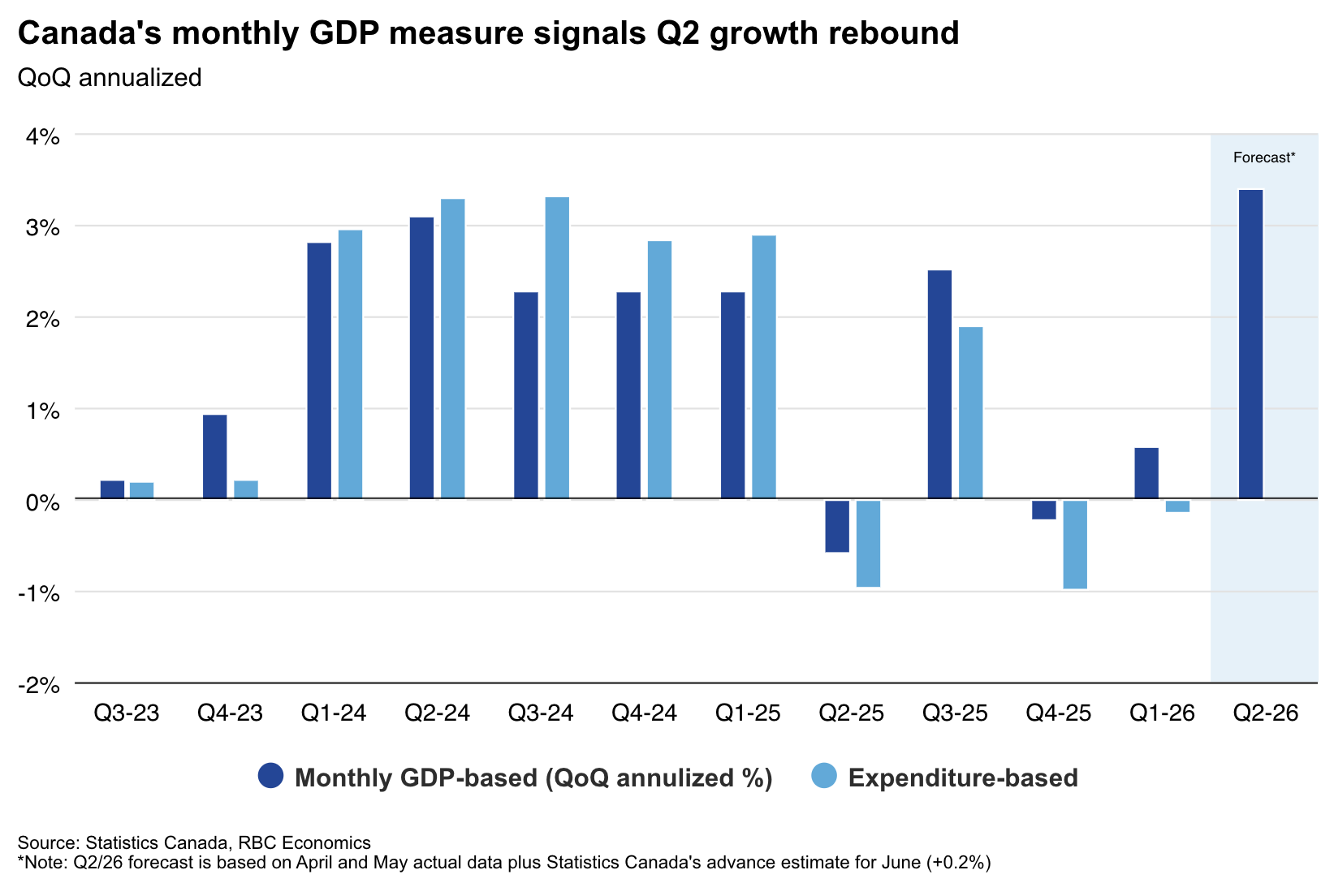
Statistics Canada reports two different measures of real GDP based on monthly production and quarterly expenditure. The two estimates have diverged significantly in recent quarters including Q1 when the production estimate posted a small increase while expenditure saw a second consecutive small decline.
But, monthly GDP data has looked substantially better to date in Q2. We expect a 0.2% increase in June, in line with Statistics Canada’s earlier advance estimate to add to an almost full percentage point increase over April and May.
Monthly numbers have been highly revision prone, but track above 3% annualized growth in Q2 overall. A broad range of indicators have also largely confirmed the bounce-back in Q2 growth. Labour market data have firmed after a slow start to the year.
Some of that Q2 strength reflects a reversal of temporary weakness earlier in the year. Net trade likely made a substantial positive contribution as exports outpaced imports, led in part by a recovery in the auto sector following winter production disruptions.
But Q2’s improvement appears broader than the trade rebound. Our tracking of RBC cardholder transactions showed stronger consumer spending despite higher fuel costs during the quarter. A jump in equipment imports suggests business investment grew more strongly, and residential investment appears to have rebounded alongside improving home resales and housing starts, although housing activity remains soft with a gradual recovery.
The boost from auto production and net trade in Q2 is unlikely to be repeated in coming quarters. And, declining population is still expected to weigh on total GDP growth, while trade uncertainty and remaining product-specific tariffs are still a headwind for business investment.
Q3 growth looks steady so far
Still early indicators, including our tracking of consumer spending and firming in hours worked in July, have remained constructive early in Q3.
Details of the trade deal to prevent additional U.S. tariffs on imports from Canada threatened in July are still pending – with a deadline to finalize the agreement and avoid 50% tariffs on another subset of Canadian exports at midnight tonight (August 21st). But early reports suggest current tariffs on products like autos, steel and aluminum could be lowered. Plus, most Canadian trade maintains duty free access to the U.S. through CUSMA exemptions.
We continue to expect growth to moderate from Q2’s strong pace, but remain positive over the remainder of 2026. That would be consistent with our base case forecast for a gradual cyclical recovery, including further improvement in per-capita growth even as elevated trade uncertainty remains a risk.