- Dollar direction hinges on US CPI and the ECB decision.
- Treasury buybacks in focus; could fuel another rally in gold and bitcoin.
- Yen strength may be challenged by a strong US CPI report.
- Middle East tensions could upset markets and bring forward rate hikes.
Rallies in Oil, the Yen and Bond Yields Set the Market Tone
With the summer finally over, investors returned with a strong appetite for action. Following last week’s strong performance, the US dollar has taken a back seat so far this week, as oil, the yen and sovereign bond yields monopolized market interest.
Developments in the Middle East took a turn for the worse, as the war-like rhetoric and fresh military operations from both the US and Iran pushed oil prices to fresh highs, threatening the shadow flow of oil and gas from the Middle East. While Pakistan is trying to reestablish a communication line between the US and Iran, investors are becoming concerned about the short-term supply shocks.
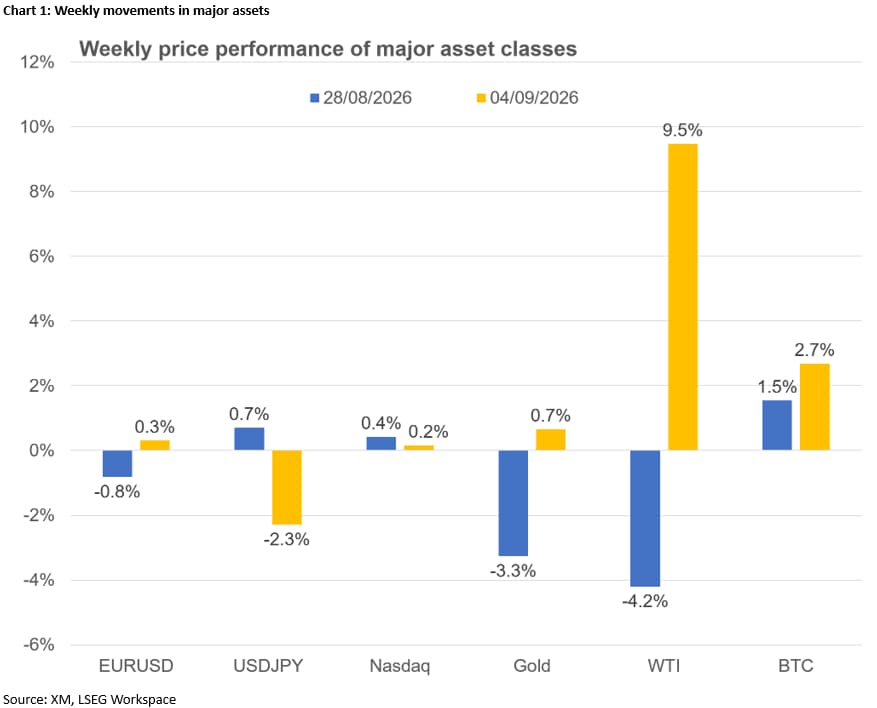
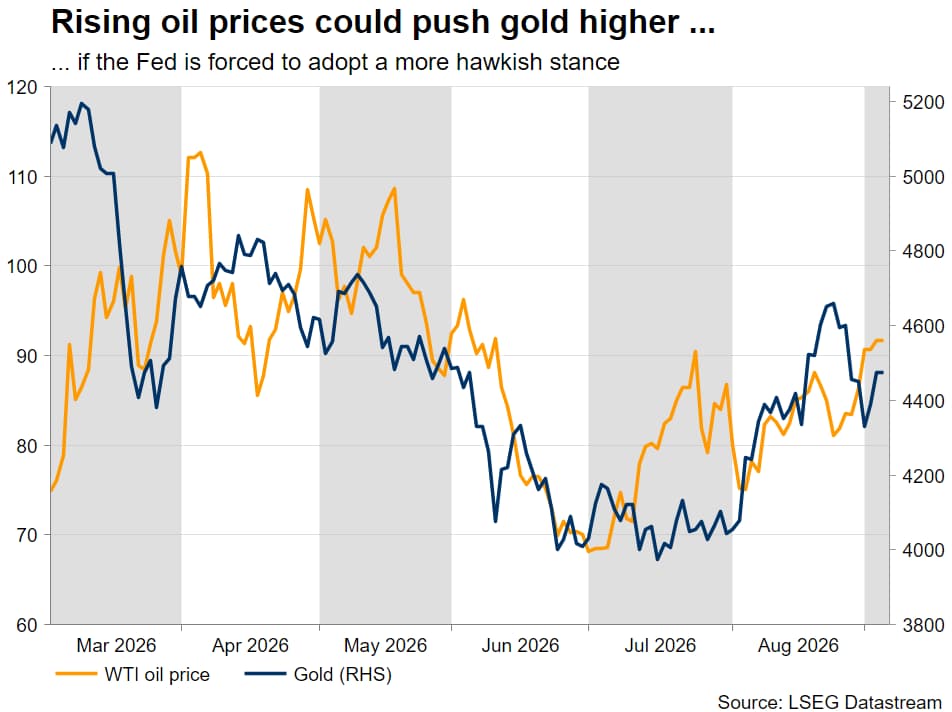
As a result, the ballooning inflation expectations have fuelled Fed rate hike bets and pushed sovereign bond yields higher. Investors demand higher inflation compensation to hold US sovereign debt, and even a more hawkish Fed stance might not be able to stop this trend. US yields are critical for risk appetite, particularly for AI firms seeking to fund their enormous investment plans, and growth momentum, especially as the tariff threat remains at large.
However, the increased Fed rate bets did not punish the yen. Repeated commentary from US Treasury Secretary Bessent, hawkish rhetoric from BoJ members and solid Japanese data have increased BoJ rate hike bets, triggering a sizeable dollar/yen decline.
CPI to Determine the Fed Meeting’s Outcome
With the Fedspeak blackout period in place and the hawks making their intentions to push for a hike crystal clear, the focus shifts to the PPI and CPI reports. Investors will digest the August jobs data, but the incoming inflation releases will determine the outcome of the September 16 Fed meeting, as Fed member Waller bluntly put it on Thursday.
July’s PPI report showed a considerable deceleration, erasing the March-April rise. Another soft report could signal a less volatile inflation outlook. More importantly, the August CPI report will be released on Friday. Following two soft reports, there is a decent chance for an upside surprise considering the muted rally in oil prices in August 2026 compared to the significant price drop in August 2025.
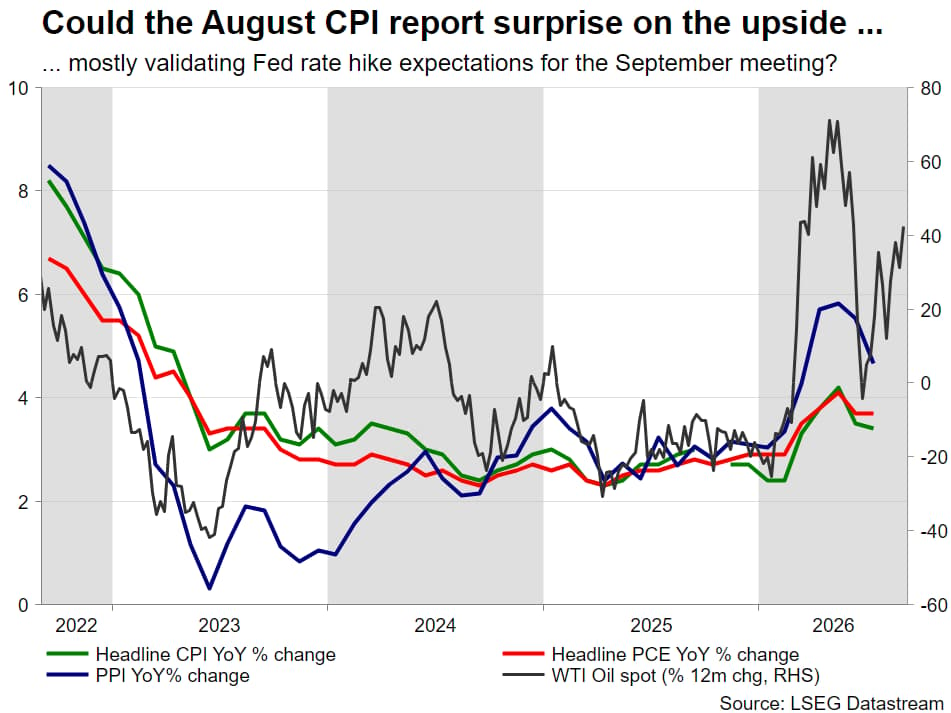
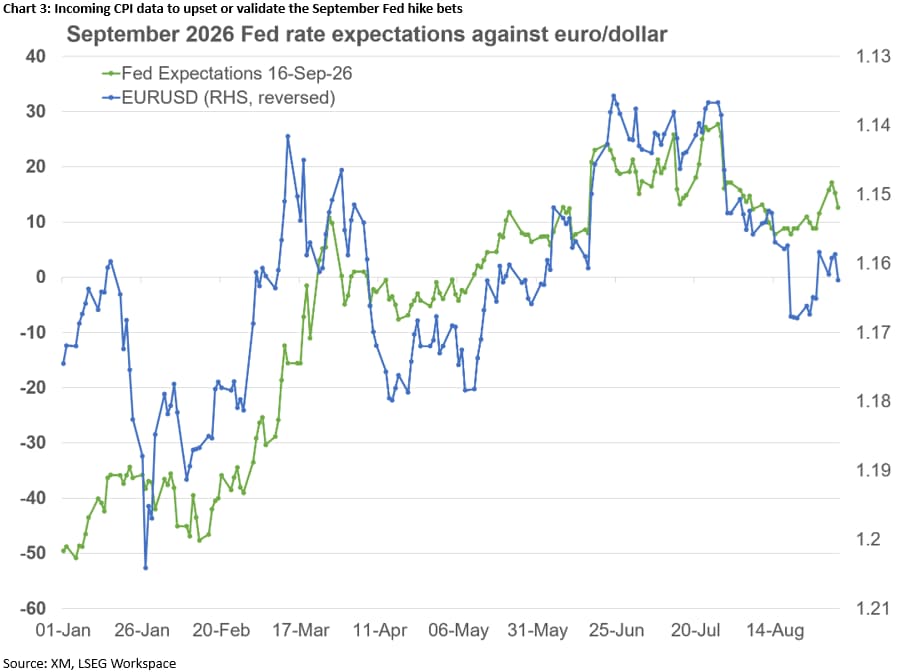
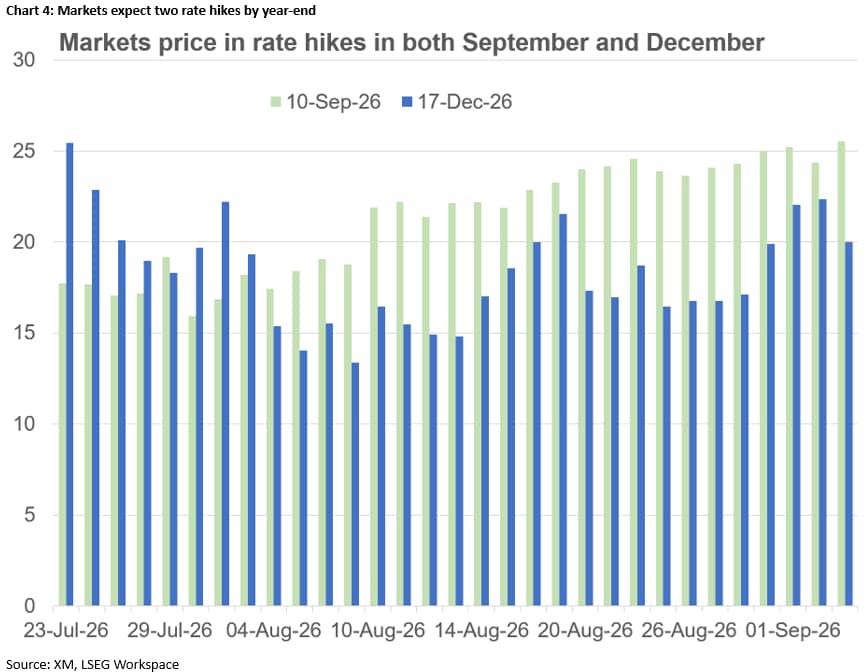
With the market assigning a 52% probability of a 25bps rate hike in mid-September, down from the 70% probability assigned on September 1, a strong CPI figure would further inflate hike expectations. While the outcome of the Fed gathering will remain uncertain, Warsh and the other hawks will probably be armed with sufficient evidence to support a rate hike and convince the remaining Fed voters, who are mostly in the dovish camp, as seen by NY Fed Williams’ commentary on Wednesday.
Interestingly, a downside CPI surprise may prove more market-moving though. Should core inflation ease towards 2.3% and the headline figure decelerate towards 3%, the risk-on reaction could be significant. Despite their measured reaction to the rising Fed hike bets, equities are set to gain, especially if bond yields retreat. Additionally, the dollar will be under strong bearish pressure, with both the loonie and aussie – especially if Wednesday’s Chinese CPI accelerates – ready to take advantage of this weakness.
A Hike Is Expected by the ECB, but Will Lagarde Be Hawkish?
The euro/dollar performance will also depend on Thursday’s ECB meeting. Armed with the accelerating August inflation level and encouraging growth data, ECB hawks are set to get their wish for another 25bps rate hike, confirming market expectations. But will the ECB validate market bets for a December rate hike?
The quarterly inflation projections, which will be scrutinized to check if the 2027 headline and core inflation rates will be clearly above the 2% level in the baseline scenario, and President Lagarde’s press conference might offer valuable insight about December’s meeting. In particular, her responses about whether the ECB is back to the baseline scenario, the size of the second-round effects that forced the rate hike, and the short-term outlook could upset or validate the current 80% probability attached to another hike before year-end.
Pending a major upset of the ECB not hiking on Thursday, which would likely trigger an acute market reaction, a euro/dollar rally would need the combination of a hawkish hike on Thursday and softer US data. In this case, a move above 1.1700 could gain momentum. On the other hand, persistent dollar strength and a move towards the 1.1500 range could manifest upon beefed-up Fed expectations and a dovish ECB hike.
Treasury Buybacks in the Spotlight
An important factor for the overall market performance will also be played by next week’s 3-, 10- and 30-year Treasury note/bond auctions, and the greatly awaited Treasury buybacks. The combination of low foreign demand at the bond auctions, and an increased Treasury purchase size on Thursday, well above the targeted $4bn level, could revive concerns about public financing and dollar debasement, weakening the greenback and triggering another rally in dollar-denominated assets like gold and bitcoin.
BoJ at a Crossroads if US CPI Surprise on the Upside
As detailed above, a series of verbal “interventions” prompted this rally, with the market assigning an 80% chance of a 25bps rate hike in two weeks, boosting the yen. The Japanese currency stands to benefit from a soft US inflation report, especially if the hawkish rhetoric persists and the incoming data releases, including the July average cash earnings, the final Q2 GDP report and the August PPI report, continue their recent positive trend.
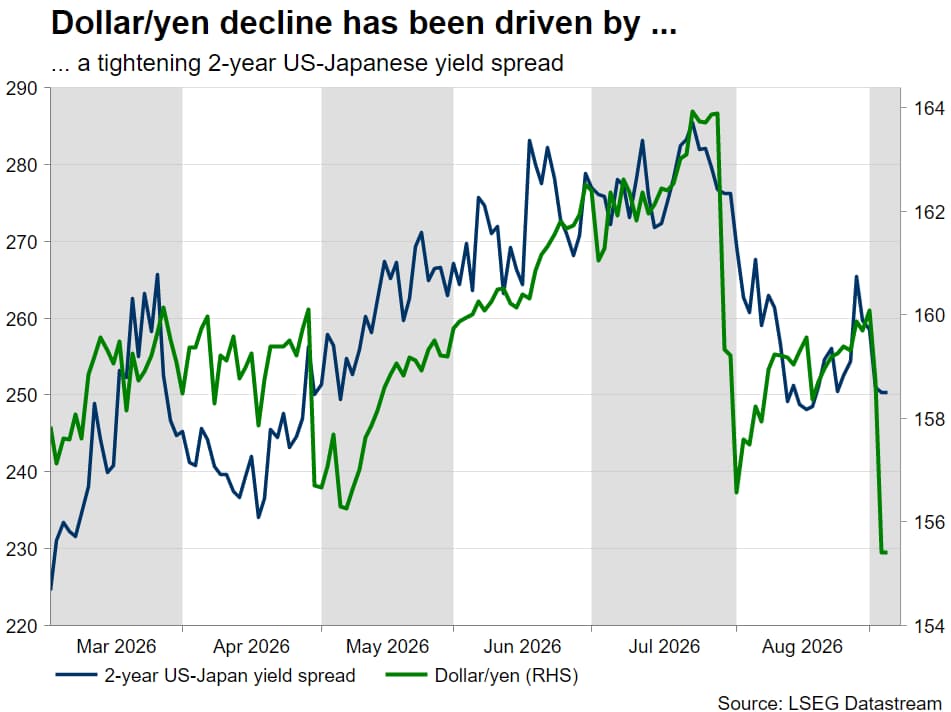
Interestingly, the impact of a strong US CPI report could prove even more market-moving. Higher US bond yields could pressure the yen, increasing the pressure on the BoJ Governor Ueda to respond more aggressively. Uber-hawk Takata already mentioned that the BoJ is not bound to move in 25bps increments, highlighting flexibility. However, given Ueda’s track record, rate hikes more than 25bps are a low probability scenario, partly due to resistance from Japanese PM Takaichi.
Can Markets Keep Ignoring Higher Oil?
Middle East developments could easily upset the current market trends. An escalation in the form of fresh military operations could push WTI oil prices above $100, triggering another rally in bond yields and bringing forward rate hikes from the major central banks. At the same time, and with winter approaching, elevated energy prices would considerably weigh on growth momentum, with the eurozone economy and the euro primed to suffer the most. Equities are also likely to underperform, driven by the Nasdaq 100 index, due to its closer correlation with sovereign bond yields.
Could Gold and Bitcoin Retest Recent Highs?
A surprise interim agreement in the Middle East, since reports point to Trump deciding to refrain from further military escalation, and softer US data could boost risk appetite at the expense of the dollar. Gold and bitcoin appear primed to benefit, along the lines of their performance in the latter part of August, although the Treasury buyback operation could really put the market on fire. Specifically, a move above the 200-day simple moving average (SMA) could act as the basis for a retest of the recent high in gold.