


GBP/USD stabilised around 1.3227 on Friday following a sharp decline the previous day. Rising geopolitical tensions have weighed on the pound following fresh statements from US President Donald Trump. Increased military rhetoric towards Iran and the lack of clarity regarding the reopening of the Strait of Hormuz have led to a jump in oil prices and heightened demand for the US dollar as a safe-haven asset.
Additional pressure on the pound stems from the UK’s heavy reliance on energy imports and concerns about public finances. Yields on British government bonds have risen in tandem with energy prices, adding further strain on the currency.
Overall, market dynamics are unfolding in accordance with a classic risk-off scenario. Rising oil prices and heightened geopolitical risks are weighing on most assets, while the US dollar remains the key safe-haven currency.
Sterling had already fallen approximately 1.9% against the dollar in March amid fears of an energy shock.
Technical Analysis
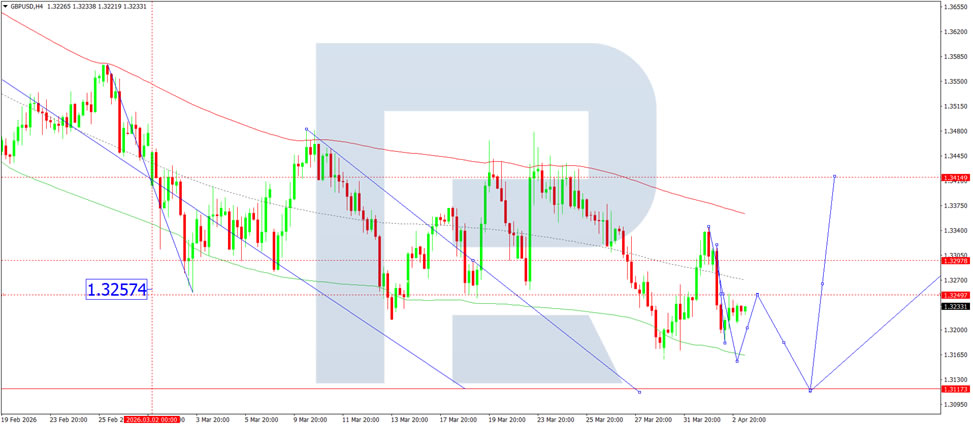
On the H4 GBP/USD chart, the market is forming a broad consolidation range around the 1.3250 level, currently extending down to 1.3180. A short-term move towards 1.3250 is expected. Following the completion of this correction, a new consolidation range is likely to form. An upside breakout would open the way for a continuation move to 1.3300, while a downside breakout would suggest further movement to 1.3100. Technically, this scenario is confirmed by the MACD indicator, with its signal line below zero and pointing firmly downwards.
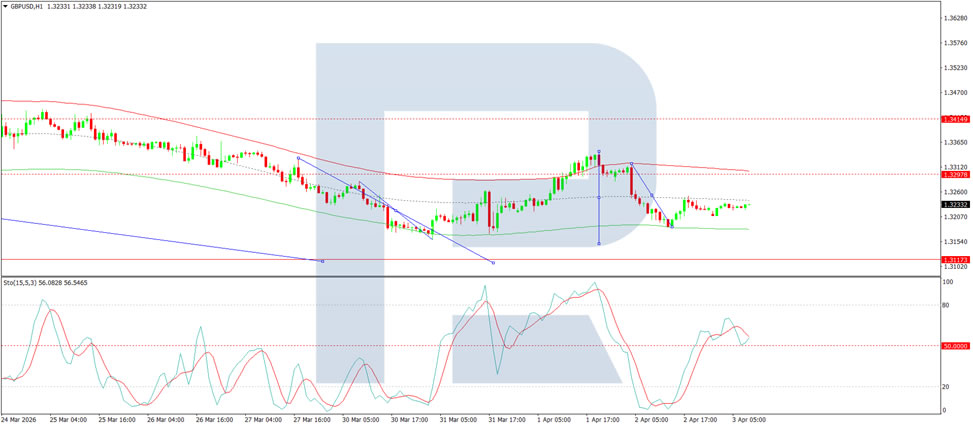
On the H1 chart, the market has formed a compact consolidation range around 1.3254. A downside breakout has initiated a wave structure extending to 1.3100. Should this level be breached, further downside potential towards 1.3050 would emerge. Conversely, an upside breakout from the range may trigger a rebound to 1.3300. Technically, this scenario is confirmed by the Stochastic oscillator, with its signal line below 50 and pointing downwards.
Conclusion
GBP/USD remains under sustained pressure as President Trump’s escalated military rhetoric towards Iran and the unresolved status of the Strait of Hormuz drive oil prices higher, bolstering safe-haven demand for the US dollar. The UK’s energy import dependence and fragile public finances leave sterling particularly vulnerable in this risk-off environment. Having already lost nearly 2% in March, the pound faces continued headwinds, with technical indicators pointing to further downside potential. Near-term stabilisation is possible, but any sustained recovery would likely require a tangible de-escalation in geopolitical tensions or a shift in broader risk sentiment.





