UK manufacturing activity strengthened in October, with S&P Global PMI Manufacturing rising from 51.9 to 52.8, matching the flash estimate and reaching a five-month high. Manufacturing production expanded for a seventh consecutive month, at its fastest pace in 25 months, supported by improving demand across consumer, intermediate and investment goods industries. New orders increased at their fastest rate since July, while export business grew for a tenth consecutive month, with stronger sales reported to markets including mainland China, the EU and the US.
The improvement in activity was accompanied by mounting cost pressures and a pause in hiring. Employment was unchanged after six consecutive months of growth, as some manufacturers delayed workforce expansion to contain rising labour, transport and raw material expenses. Meanwhile, supplier delivery times lengthened at one of the sharpest rates in four years, reflecting shipping disruptions, port congestion and material shortages. Input cost inflation accelerated to one of its highest rates in four years, while manufacturers raised selling prices at their fastest pace in three months.
The survey points to strengthening manufacturing momentum, but with rising operating costs complicating the outlook. Business confidence climbed to an eight-month high, supported by planned investment, new product launches and expectations of stronger demand, including AI-related infrastructure spending. Nevertheless, the contrast between faster production growth and unchanged employment suggests firms remain cautious about committing to additional labour capacity. The combination of resilient activity and intensifying inflation pressures also reinforces concerns about persistent manufacturing costs ahead of this week’s BoE policy decision. The survey was completed before the October 28 Autumn Budget, so it does not capture manufacturers’ responses to the announced measures.
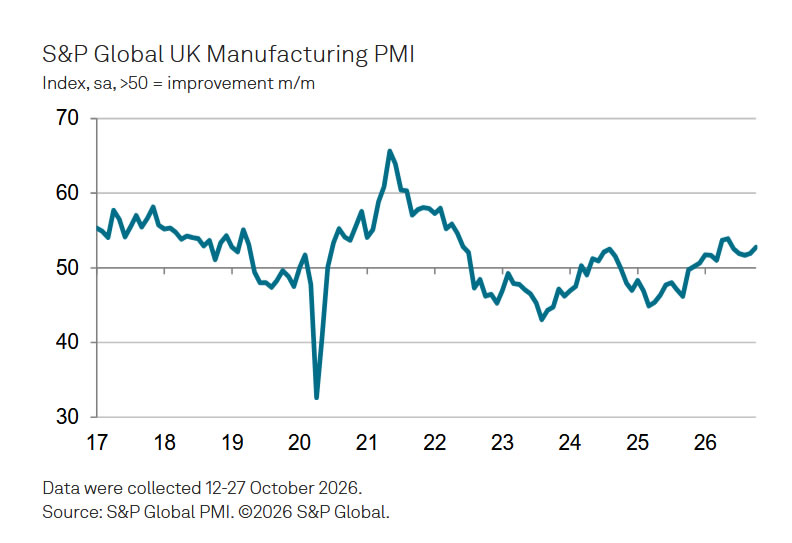
Data Summary
UK PMI Manufacturing — October 2026
| Indicator | Sep | Oct |
|---|---|---|
| PMI Manufacturing | 51.9 | 52.8 |
Components
| Component | October Trend |
|---|---|
| Output | Fastest growth in 25 months |
| New Orders | Fastest growth since Jul |
| Export Orders | Tenth consecutive monthly increase |
| Employment | Unchanged after six months of growth |
| Purchasing Activity | Third consecutive monthly increase |
| Stocks of Purchases | Further decline |
| Stocks of Finished Goods | Declined |
| Supplier Delivery Times | Among sharpest extensions in four years |
| Input Prices | Inflation among highest in four years |
| Output Prices | Fastest inflation in three months |
| Business Confidence | Eight-month high |
Key Takeaways
- Manufacturing expansion accelerated: PMI Manufacturing rose from 51.9 to 52.8, a five-month high, as output growth reached its strongest pace in 25 months. Production increased across all three major manufacturing subsectors, led by investment goods.
- Domestic and overseas demand strengthened: New orders expanded at their fastest rate since July, while export business increased for a tenth consecutive month. Manufacturers reported stronger sales to markets including mainland China, the EU and the US.
- Hiring stalled despite stronger production: Employment was unchanged after six consecutive months of growth. Rising labour, transport and raw material costs prompted some manufacturers to postpone workforce expansion despite improving demand.
- Supply disruptions intensified inflation pressures: Supplier delivery times lengthened at one of the sharpest rates in four years. Input inflation accelerated to one of its highest rates over the same period, while manufacturers raised selling prices at their fastest pace in three months.
- Business confidence strengthened: Optimism about future output reached an eight-month high, supported by planned expansion, improving order pipelines and investment opportunities involving capital equipment and AI-related infrastructure. The survey closed before the October 28 Autumn Budget and therefore does not reflect reactions to its measures.