


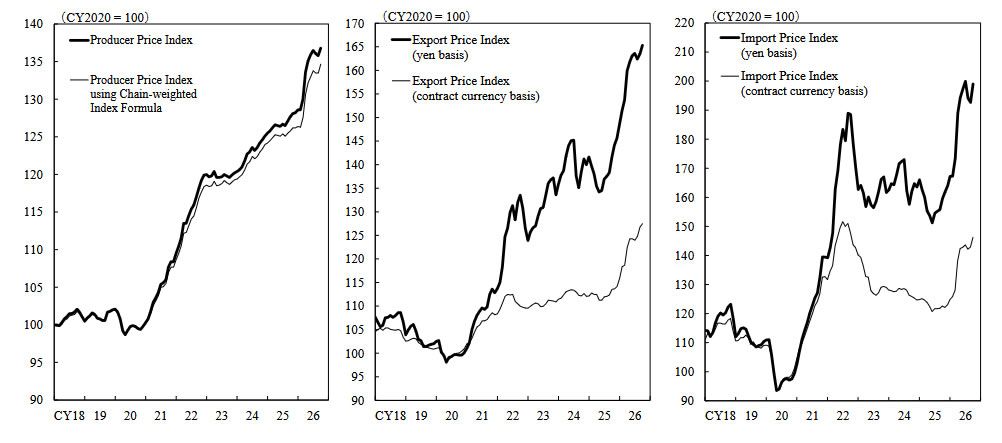
Japan’s producer price inflation accelerated from 6.8% yoy in September to 7.1% in October, exceeding market expectations of 6.5%, as rising energy, chemical and industrial costs reinforced inflation pressures across the economy. On a monthly basis, the Corporate Goods Price Index rebounded from -0.2% to 0.7%, reflecting renewed price increases across several major industries. The data suggest that inflationary pressures are extending beyond the immediate impact of energy disruptions linked to the Middle East conflict, with firms continuing to pass higher raw material and labour costs through their selling prices.
Energy and chemical products were major contributors, but the October increase was not confined to these sectors. Petroleum and coal product inflation accelerated from 11.5% to 15.9% yoy, while chemical prices rose from 13.4% to 15.5%. Inflation in electric power, gas and water strengthened from 10.5% to 15.8%, and iron and steel prices accelerated from 3.4% to 6.3%. Transportation equipment inflation also edged higher from 2.9% to 3.2%, with strong semiconductor demand associated with AI investment contributing to production costs. On a monthly basis, petroleum and coal products, chemicals and utilities together contributed 0.50 percentage points to the overall 0.7% PPI increase. Additional increases in steel, food, plastics and electrical machinery indicate broader cost pressures across the production chain, although agricultural prices fell sharply and provided a partial offset.
Imported inflation added another source of pressure. Yen-denominated import prices accelerated from 23.8% to 24.8% yoy, while their monthly increase rebounded from -0.7% to 3.3%. Import prices measured in contract currencies also strengthened from 17.3% to 19.2% yoy, suggesting that rising international costs, rather than currency depreciation alone, were contributing to the increase. Petroleum, coal and natural gas import prices rose 46.1% yoy, while electrical and electronic products increased 31.6%. The combination of higher overseas prices and Yen weakness is adding to Japanese companies’ input costs, creating further potential for increases to be passed through to domestic selling prices.
The report reinforces concerns that Japan’s producer inflation is being sustained by a wider range of cost pressures, rather than energy alone. Continued increases in labour, raw material and import costs could eventually feed into consumer prices, although the extent of that pass-through remains uncertain. The figures also support expectations for further Bank of Japan tightening ahead of its December 17–18 meeting, when many analysts anticipate a 25bps increase in the policy rate from 1.25% to 1.50%. However, the decision will depend on the BoJ’s broader assessment of underlying inflation and economic conditions. For now, October’s PPI acceleration adds evidence that inflationary pressures remain persistent across Japan’s production sector, strengthening the case for continued policy normalization.
| Indicator | Oct | Sep | Trend |
|---|---|---|---|
| Japan PPI (yoy) | 7.1% | 6.8% | Accelerated |
| Japan PPI (mom) | 0.7% | -0.2% | Rebounded |
| PPI Excluding Summer Electricity Charges (mom) | 0.9% | -0.3% | Rebounded |
| Petroleum and Coal Products (yoy) | 15.9% | 11.5% | Accelerated |
| Chemicals and Related Products (yoy) | 15.5% | 13.4% | Accelerated |
| Electric Power, Gas and Water (yoy) | 15.8% | 10.5% | Accelerated |
| Iron and Steel (yoy) | 6.3% | 3.4% | Accelerated |
| Transportation Equipment (yoy) | 3.2% | 2.9% | Accelerated |
| Import Prices — Yen Basis (yoy) | 24.8% | 23.8% | Accelerated |
| Import Prices — Contract Currency Basis (yoy) | 19.2% | 17.3% | Accelerated |
| Import Prices — Yen Basis (mom) | 3.3% | -0.7% | Rebounded |
Source: Bank of Japan, October 2026 Corporate Goods Price Index. September figures incorporate revisions where applicable.
Key Takeaways
- Japan’s PPI inflation accelerated from 6.8% to 7.1% yoy in October, beating expectations of 6.5%, while monthly producer prices rebounded from -0.2% to 0.7%.
- Price pressures extended beyond energy, with accelerating inflation across chemicals, utilities, steel and transportation equipment. Yen-denominated import inflation also rose from 23.8% to 24.8%, reflecting higher overseas costs and currency-related pressure.
- Broader producer-price increases reinforce expectations for further BoJ tightening, with many analysts anticipating a 25bps hike to 1.50% in December. However, the extent of pass-through to consumer inflation remains uncertain.