


Waller’s Hawkish Policy Warning Was Reinforced by Stronger-Than-Expected US Inflation Data, Pushing Markets to Price a Faster Pace of Fed Tightening
What’s happening: Dollar rebounded broadly on Tuesday after Fed Governor Christopher Waller said a 50bps hike should be considered if core CPI stays around 0.3% mom or higher, and October CPI then delivered core inflation of 0.3% mom against 0.2% expected. The US two-year Treasury yield jumped around 12bps to 4.68% and markets priced out a December hold, yet DXY recovered only to around 102.04, still below Friday’s close of 102.279.
Why it matters: The gap between the sharp yield reaction and the restrained Dollar move shows markets still see 25bps as the overwhelmingly favored December outcome, with a 50bps hike priced at 11.3% after CPI. Further Dollar upside may depend on whether other Fed officials endorse a faster tightening pace.
Dollar strengthened broadly on Tuesday as Fed Governor Christopher Waller’s hawkish policy warning was reinforced by stronger-than-expected US inflation data, prompting markets to price a faster pace of monetary tightening. US two-year Treasury yield surged around 12bps to 4.68%, reflecting a sharp reassessment of near-term Fed policy expectations. However, Dollar’s advance has been relatively restrained, with DXY recovering to around 102.04 but still below last Friday’s close. While markets have effectively eliminated the possibility of a December hold and begun pricing a larger rate increase, 25bps remains the overwhelmingly favored outcome, limiting the extent of the repricing.
Follow Waller’s 50bps warning, the CPI reaction and Dollar’s rebound on the ActionForex Telegram channel.
Waller Sets the Conditions, CPI Delivers the Test
Speaking at the Bank of England Watchers Conference in London, US Federal Reserve Governor Christopher Waller indicated that he would support a 25bps hike at the December FOMC meeting even if inflation improved. More significantly, he argued that a 50bps increase should be considered if core CPI inflation remained around 0.3% mom or higher.
Waller warned that insufficient tightening could undermine the Fed’s credibility, stating, “Hiking only 25 basis points would put our credibility at risk, a risk I am not eager to take.”
His comments provided an unusually explicit framework for the next policy decision. Rather than leaving the December outlook entirely dependent on incoming data, Waller identified the inflation threshold that could justify considering a larger adjustment.
The Treasury market responded quickly, with the two-year yield rising approximately 6.6bps during the period surrounding his remarks. FedWatch pricing also shifted sharply toward a December hike, although markets initially continued to favor a conventional 25bps move.
October’s CPI release subsequently met Waller’s stated condition. Core inflation held at 0.3% mom for a third consecutive month, exceeding expectations of 0.2%. Headline CPI eased from 0.6% to 0.4%, but also surpassed the 0.3% forecast.
The underlying composition reinforced concerns about persistent inflation. Services excluding rent of shelter accelerated from 0.3% to 0.5%, with notable increases in transportation, recreation and medical care costs. Meanwhile, energy inflation slowed sharply from 5.2% to 0.7%, providing headline relief without a comparable improvement in core prices.
The sequence is important: Waller identified the inflation condition that could warrant stronger tightening, and the subsequent CPI report delivered precisely that numerical outcome. This does not mean the Fed has committed to a 50bps move, but it has given markets a concrete reason to consider the possibility.
October CPI at a Glance
- Core CPI: 0.3% mom for a third consecutive month, against 0.2% expected
- Headline CPI: 0.4% mom, down from 0.6%, against a 0.3% forecast
- Services excluding rent of shelter: 0.5%, up from 0.3%
- Energy inflation: 0.7%, down from 5.2%
FedWatch Shifts Toward Faster Tightening, but 25bps Dominates
The combined effect of Waller’s comments and CPI was visible in Fed funds futures pricing.
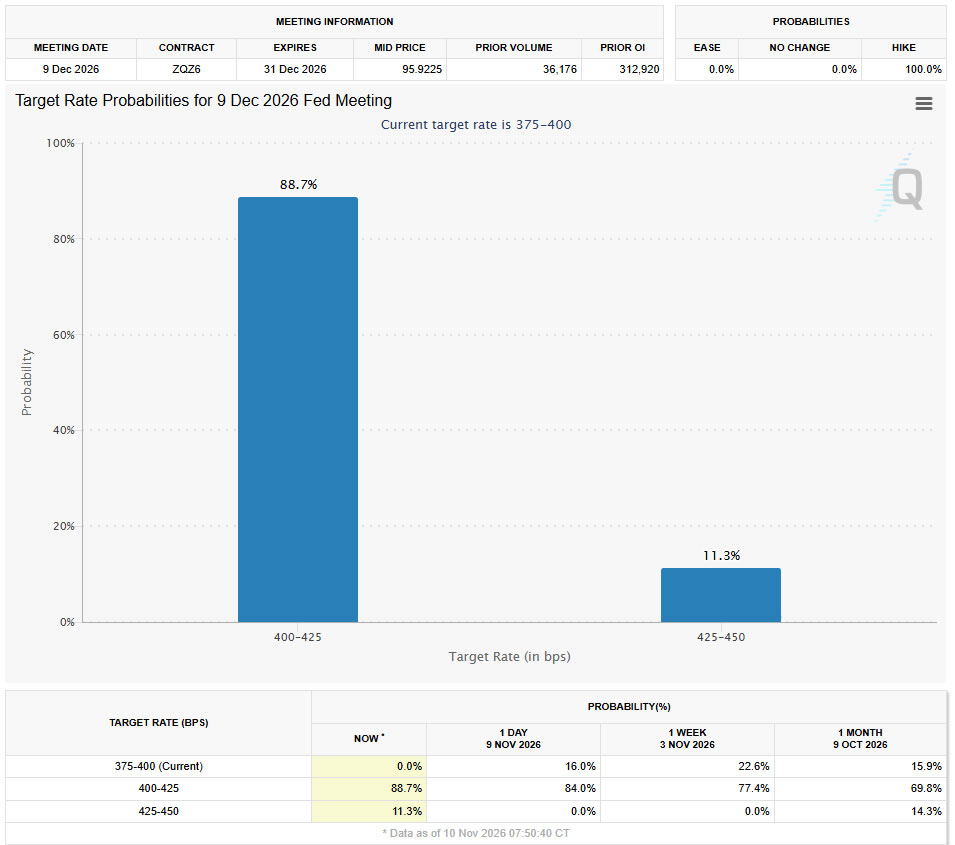
Ahead of the speech, CME FedWatch assigned a 17.6% probability to no change in December. That possibility subsequently disappeared, with markets pricing a rate increase as virtually certain.
Following CPI, the probability of a 50bps December hike rose from zero to 11.3%, while a standard 25bps increase retained an 88.7% probability.
December FOMC Pricing After Waller and CPI
- No change: 17.6% ahead of Waller’s speech, since priced out
- 25bps hike: 88.7% following CPI
- 50bps hike: 11.3% following CPI, up from zero
The distinction helps explain the restrained Dollar response. Markets have shifted decisively toward tightening, but the additional risk of a larger move remains relatively modest.
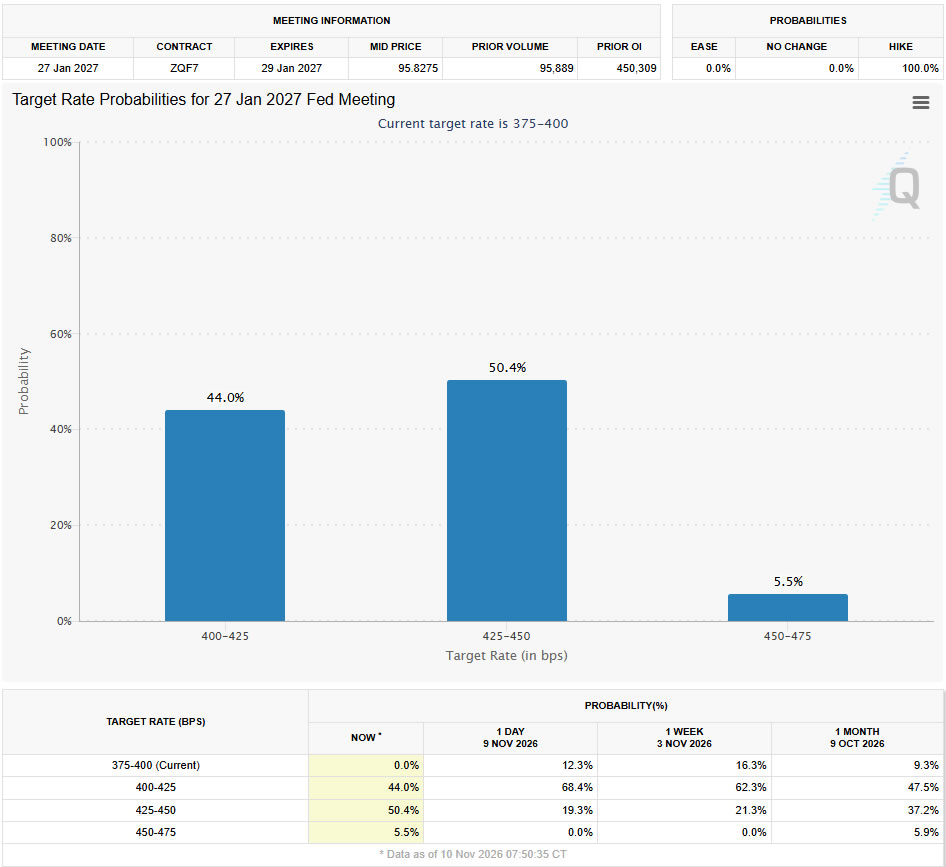
Pricing for January 2027 also suggests increasing expectations of faster cumulative tightening. FedWatch assigned a 50.4% probability to a target range of 4.25–4.50%, compared with 44.0% for 4.00–4.25% and 5.5% for 4.50–4.75%.
January 2027 Target Range Pricing
| Target range | FedWatch probability |
|---|---|
| 4.00–4.25% | 44.0% |
| 4.25–4.50% | 50.4% |
| 4.50–4.75% | 5.5% |
| Two higher ranges combined | Approximately 55.9% |
Taken together, the two higher ranges account for approximately 55.9%, indicating that markets now see a slightly greater probability of at least 50bps of cumulative tightening by January than of just 25bps.
However, that outcome could be achieved through either consecutive 25bps increases or a larger move in December. The figures therefore signal expectations of more tightening over a relatively short period, rather than a firm consensus on its timing.
The key limitation is that Waller represents one FOMC vote. Although his remarks have provided a powerful catalyst for repricing, broader support among policymakers would be needed to establish a stronger case for accelerating beyond the conventional 25bps pace.
Treasury Yields Surge, but Dollar Recovery Remains Incomplete
The most pronounced market reaction occurred in short-term US Treasury yields.
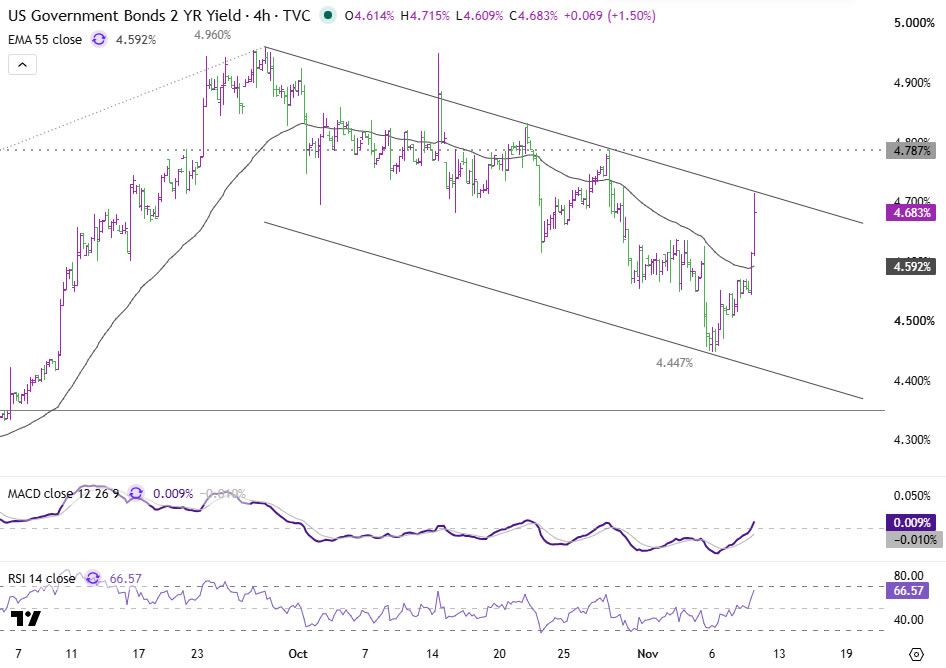
The two-year yield rose approximately 12bps to around 4.68%, with substantial advances around both Waller’s remarks and the CPI release. The movement highlights how quickly expectations for near-term policy tightening have shifted.
The increase also widened the yield advantage of US government bonds relative to major European counterparts, providing support for the Dollar.
DXY recovered approximately 0.36% to 102.04, with the greenback strengthening against major currencies including Euro, Sterling, Yen and Swiss Franc.
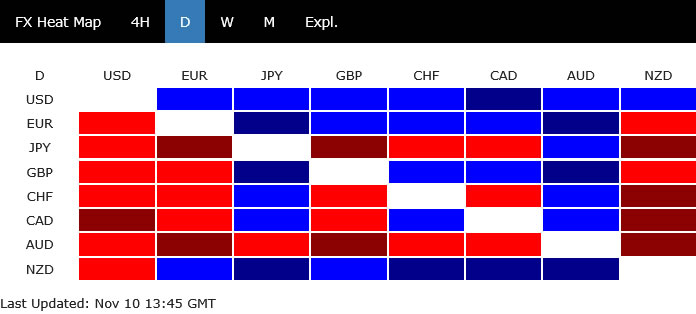
The daily currency heatmap showed broad Dollar strength, but most major currency pairs continued trading within their previous day’s ranges.
More importantly, DXY remained below Friday’s closing level of 102.279, indicating that Tuesday’s advance had not yet fully reversed the previous session’s decline.
This contrast between the forceful Treasury yield response and more measured currency movements is central to the market outlook.
Yield Reaction vs Dollar Reaction
| Market | Tuesday’s reaction |
|---|---|
| US two-year Treasury yield | Rose approximately 12bps to around 4.68% |
| Dollar Index | Recovered approximately 0.36% to 102.04, still below Friday’s close of 102.279 |
| Most major currency pairs | Continued trading within their previous day’s ranges |
December tightening was already substantially priced before CPI, leaving limited room for further adjustment to the probability of a conventional hike. The new information was the possibility of a larger increase and a faster subsequent tightening path, neither of which has yet become the market’s dominant expectation.
Precious Metals Retreat as Markets Reprice Fed Risks
Higher US Treasury yields and a firmer Dollar also coincided with renewed pressure on precious metals.
Gold fell toward USD 4,060, while silver retreated toward USD 52.07, surrendering much of their gains from Monday’s recovery.
The decline began during the period surrounding Waller’s comments and continued following CPI, consistent with the increasingly restrictive US rate outlook weighing on precious metals.
Meanwhile, Brent crude extended its decline below USD 90. However, oil continues to face separate pressures from expectations of reduced US-Iran military escalation and a softer physical market. Its weakness should not be attributed primarily to the Fed repricing.
Metals and Oil Levels
- Gold: fell toward USD 4,060
- Silver: retreated toward USD 52.07
- Brent crude: extended its decline below USD 90
The broader market response therefore points to higher expected US interest rates as the more direct transmission channel into Dollar and precious metals movements, while oil retains its own geopolitical and supply dynamics.
The Bottom Line: Dollar Recovery Stays Incomplete Until 50bps Gains Support
Tuesday’s developments have significantly strengthened the case for further Fed tightening.
Waller’s warning removed much of the uncertainty around his December preference, while October’s persistent core inflation provided the numerical evidence he identified as potentially warranting a larger increase.
Yet the market continues to distinguish between a likely 25bps hike and the possibility of 50bps. That distinction helps explain why the Dollar has recovered without establishing a decisive breakout.
Further upside may depend on whether other Fed officials endorse a faster tightening pace or subsequent developments push markets toward assigning materially greater probability to a larger December move.
Until then, the shift in rate expectations supports the Dollar, but the incomplete recovery in DXY suggests that markets are not yet prepared to price Waller’s more aggressive scenario as the central outcome.
Related Coverage
Fed Policy and US Inflation
- US Core CPI Stays at 0.3% for Third Month, Defying Expectations as Headline Inflation Cools: US core CPI rose 0.3% mom in October for a third consecutive month, exceeding expectations of 0.2% and highlighting persistent underlying inflation pressures. Headline CPI moderated from 0.6% to 0.4% but also exceeded forecasts as energy inflation slowed sharply. The composition was less encouraging, with services excluding rent of shelter accelerating from 0.3% to 0.5%, offsetting improvements in shelter and goods prices, and food inflation also rebounded to 0.5%. The divergence suggests that while energy relief is helping headline inflation, core price pressures have yet to establish convincing downward momentum.
- Fed’s Waller Backs December Hike, Says 50bps Should Be Considered if Inflation Stays Hot: Federal Reserve Governor Christopher Waller signalled support for a 25bps rate hike in December even if October inflation improves, warning that a larger 50bps increase should be considered if core CPI rises around 0.3% mom or higher. He argued that insufficient tightening could damage the Fed’s credibility as inflation becomes increasingly widespread, with September core PCE up 3.1% yoy and more than 70% of core services components recording annual increases above 3%. Although growth and employment remain resilient, persistent AI-related and energy costs could complicate disinflation, and at the time the upcoming CPI release was seen as critical for December policy expectations.
- Fed’s Goolsbee Warns AI Boom Risks Overheating, Barkin Urges Caution on Rates: Chicago Fed President Austan Goolsbee warned that the AI data-centre investment boom is increasingly resembling traditional demand overheating, adding to inflation pressures that policymakers must confront. Richmond Fed President Thomas Barkin agreed that inflation is the greatest immediate risk but urged careful policy adjustments as AI introduces uncertainty for growth and employment. Disappointing investment returns could weaken business spending and financial markets, while rapid automation could displace workers. Neither official committed to a December rate hike, and the next inflation and employment reports were expected to be crucial.
Precious Metals and Oil
- Silver Rebounds with Gold, but Gold/Silver Ratio Warns of Further Underperformance: Silver rebounded alongside gold, gaining 1.81% against gold’s 1.13% advance as Dollar weakness and stronger equities supported precious metals. However, the recovery from 48.60 remains technically corrective, with significant resistance at 55.37–55.84, while the gold/silver ratio continues to hold a broader bullish structure between 77.07 and 80.11. A break above 80.11 would target 84.53, signalling renewed gold outperformance. Ahead of US CPI, with the Fed’s longer-term tightening outlook uncertain, silver faced an important test of whether its rebound can develop into a sustainable recovery.
- Brent Breaks Key Support as Trump Holds Off Iran Strikes, 88.21 Comes Into Focus: Brent crude oil futures plunged nearly 6% on Monday as President Donald Trump signalled that Washington would hold off renewed strikes against Iran, reinforcing expectations of de-escalation. Prices extended losses, with Brent CFDs trading near 91.46 and breaking below the critical 93.22–93.80 support area. However, the US naval blockade remains in place and Qatar-led mediation has yet to produce a breakthrough. Technically, the decline from 117.45 may be developing into a broader bearish reversal, with the 61.8% retracement at 88.21 emerging as the next major test.
Japan and China
- BoJ Hawks Push for Faster Rate Hikes as Inflation Hits Target, but Consumption Risks Persist: The Bank of Japan’s October Summary of Opinions revealed growing calls for faster interest rate normalization as underlying inflation reached the 2% target. Some policymakers argued that accommodative financial conditions justified accelerating the move toward neutral rates, while others cautioned against tightening too quickly given the delayed effects of previous hikes. The debate has gained urgency following Japan’s latest household spending figures, which showed a 6.8% annual decline despite improving real income. With consumption lacking momentum and policymakers divided over the neutral rate, the BoJ faces a difficult balance between containing inflation and preserving economic resilience.
- Japan Household Spending Plunges 6.8% Despite Rising Real Income, Exposing Weak Consumer Demand: Japan’s real household spending plunged 6.8% yoy in September, far worse than expectations and the steepest decline since September 2020. The contraction extended across transport, education, recreation and food, with unusually poor weather contributing. Working households recorded a 0.9% increase in real income and a 1.7% rise in real disposable income, yet their consumption expenditure collapsed 10.0%, and the average propensity to consume fell sharply to 72.7%. Japan’s domestic demand recovery remains fragile despite stronger earnings.
- China’s Trade Surplus Narrows to USD 105.3B as Imports Surge, AI Exports Stay Strong: China’s trade surplus narrowed sharply from USD 133.5B in September to USD 105.3B in October as imports accelerated faster than exports. Exports rose 35.2% yoy, beating expectations of 33.5%, while imports surged 41.6%, significantly exceeding the 32.0% forecast. Strong demand for AI-related technology products and energy supported trade activity, although domestic consumer spending remained subdued. The cumulative trade surplus reached USD 1.04 trillion in the first ten months of 2026, highlighting the strength of China’s external sector alongside continued dependence on global demand and vulnerability to trade tensions.
Australia
- Australia NAB Business Confidence Falls to -15 as Weak Demand and Rising Costs Squeeze Profits: Australia’s NAB Business Confidence Index fell to -15 in October, while Business Conditions slipped to -2 as weaker demand and elevated costs continued to pressure firms. Forward orders plunged 11 points to -12, pointing to further risks for economic activity, while trading conditions and profitability also deteriorated. Purchase cost growth accelerated to 2.4% at a quarterly-equivalent rate, compared with just 0.6% growth in product prices, suggesting persistent margin compression. Although employment intentions rebounded, above-average capacity utilisation indicates that inflation pressures could remain stubborn despite slower growth, complicating the RBA’s policy outlook.
- Australia Westpac Consumer Sentiment Hits Four-Year Low as Mortgage Holders Sink to Record Pessimism: Australia’s Westpac–Melbourne Institute Consumer Sentiment Index fell 2.7% to 78.2 in November, its lowest since late 2022, as inflation and higher interest rates continued to undermine confidence. Mortgage-holder sentiment plunged 11.6% to a record low of 68.1, while 72% of respondents surveyed after the latest RBA decision expected further mortgage rate increases. Expectations for the economy over the next year also deteriorated sharply, and house price expectations fell below neutral for the first time since November 2022. Christmas spending intentions suggest caution rather than collapse, while Westpac expects the RBA to pause in December.
FAQ
Why did Dollar recover only modestly when US two-year yields jumped 12bps?
Waller’s hawkish warning and hot October CPI pushed the US two-year yield up around 12bps to about 4.68%, but DXY recovered only about 0.36% to 102.04 and stayed below Friday’s close of 102.279. December tightening was already substantially priced before CPI, so the new information was only the possibility of a larger increase and a faster tightening path. With a 25bps hike at 88.7% and a 50bps hike at 11.3% after CPI, neither of those has yet become the market’s dominant expectation.
Is a 50bps Fed hike in December now likely?
It is possible but not the base case. Waller said a 50bps increase should be considered if core CPI remained around 0.3% mom or higher, and October core CPI held at 0.3% for a third consecutive month against 0.2% expected. After CPI, FedWatch assigned 11.3% to a 50bps December hike, up from zero, and 88.7% to 25bps. Waller is one FOMC vote, so broader support among policymakers would be needed to make the larger move a stronger case.
Why did gold and silver fall while Brent also dropped?
Higher US Treasury yields and a firmer Dollar coincided with pressure on precious metals, with gold falling toward USD 4,060 and silver toward USD 52.07, consistent with a more restrictive US rate outlook. Brent crude extended its decline below USD 90, but oil faces separate pressures from expectations of reduced US-Iran military escalation and a softer physical market, so its weakness should not be attributed primarily to the Fed repricing.
Key Takeaways
- Dollar rebounded broadly on Tuesday as Waller’s hawkish warning was reinforced by stronger-than-expected US inflation, with DXY recovering about 0.36% to 102.04.
- Waller said he would support a 25bps December hike even if inflation improved and argued that a 50bps increase should be considered if core CPI remained around 0.3% mom or higher.
- October core CPI held at 0.3% mom for a third consecutive month against 0.2% expected, while headline eased from 0.6% to 0.4% but beat the 0.3% forecast and services excluding rent of shelter accelerated from 0.3% to 0.5%.
- After CPI, FedWatch priced an 88.7% probability for a 25bps December hike and 11.3% for 50bps, up from zero, with the 17.6% no-change probability seen before Waller’s speech priced out.
- January 2027 pricing put 50.4% on a 4.25–4.50% target range and 5.5% on 4.50–4.75%, about 55.9% combined, signalling expectations of more tightening over a short period without a firm view on timing.
- The US two-year yield rose around 12bps to 4.68%, yet DXY stayed below Friday’s close of 102.279 because markets still treat 25bps as the dominant December outcome.
- Gold fell toward USD 4,060 and silver toward USD 52.07 as US rate expectations rose, while Brent’s decline below USD 90 reflects separate Iran and supply pressures.
What to Watch Next
The key test is whether other Fed officials endorse a faster tightening pace. Waller is one FOMC vote, and broader support would be needed to establish a stronger case for moving beyond 25bps in December.
Watch also whether subsequent developments lift the 11.3% probability assigned to a 50bps December hike, how January 2027 pricing evolves from its current 4.25–4.50% focus, and whether DXY can recover Friday’s closing level of 102.279 to confirm that the Dollar rebound is complete.
Stay ahead of the Fed’s December hike debate and its impact on Dollar, Treasury yields and gold—join the ActionForex Telegram channel for regular market updates and analysis.