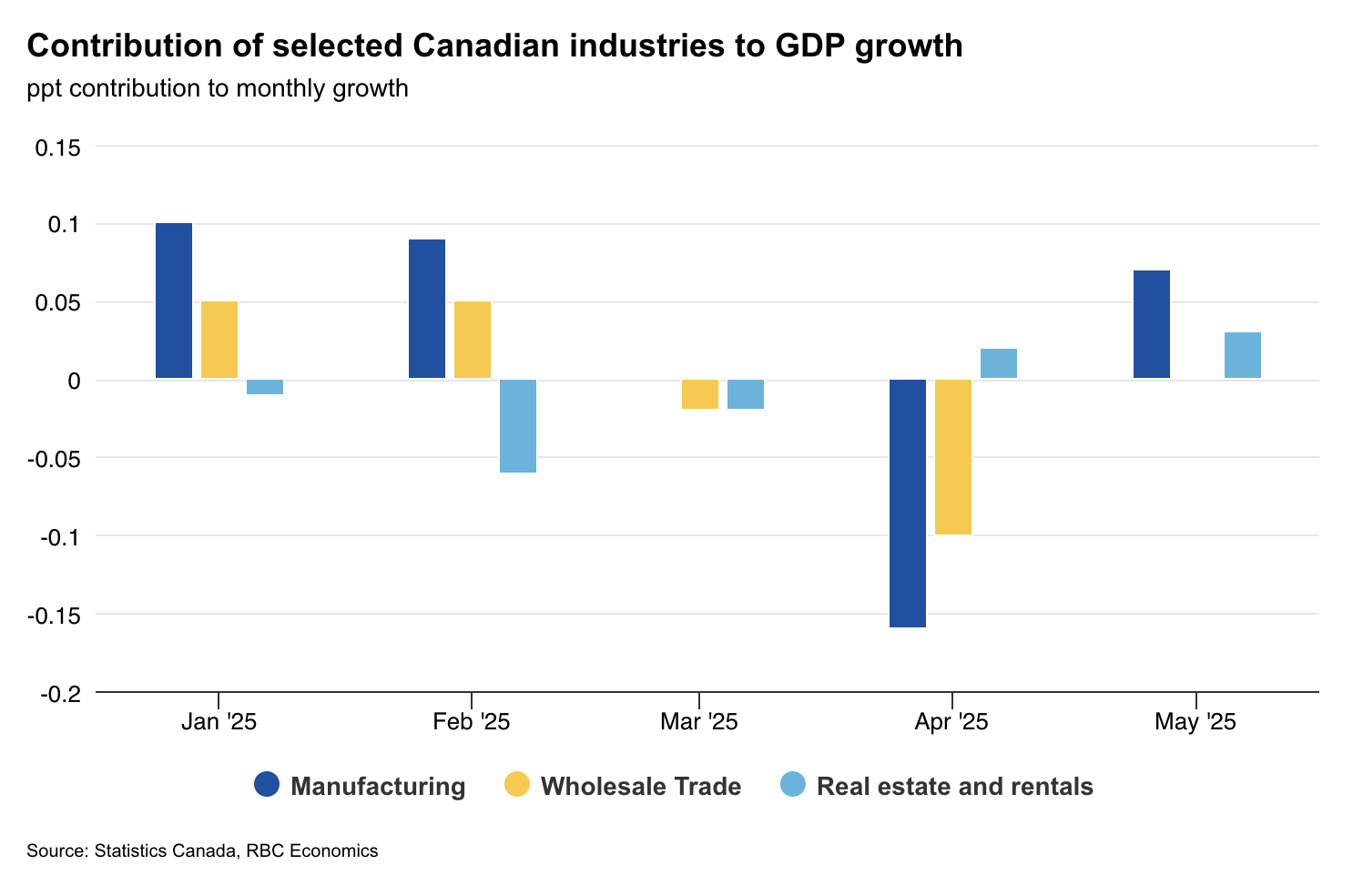
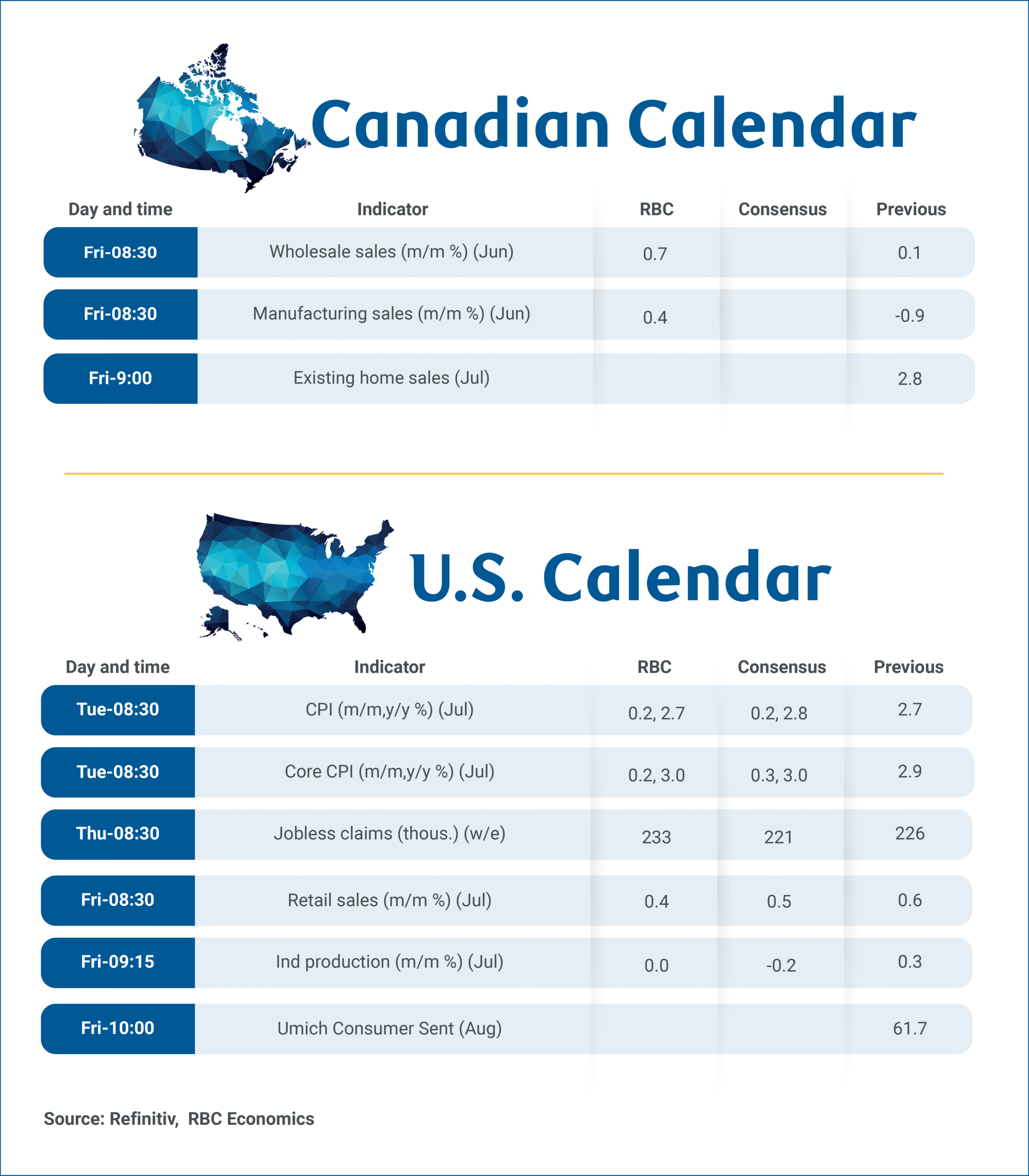
Canadian manufacturing and wholesale trade reports on Friday will be in focus to help gauge the impact that U.S. tariffs are having on the trade-exposed industrial sector.
Early trade reports have been showing most Canadian exports continue to enter the U.S. duty free under an exemption from tariffs for products compliant with the CUSMA. Canada has maintained a relative advantage in accessing the U.S. market.
But, sector specific tariffs on steel, aluminum, and the non-U.S. content of motor vehicle exports, along with new tariffs on copper products in August still apply. Those tariffs are raising costs for U.S. buyers and a slowdown in their manufacturing activity could spill over to Canada, given heavily integrated cross-border supply chains.
Statistics Canada’s advance indicator for manufacturing sales rose 0.4% in June, led by petroleum and coal products likely reflecting a jump in oil prices as well as food manufacturing sales. A rise in manufacturing industrial product prices suggests that real (volume) manufacturing sales were likely little changed compared to May, and still down about 3% from the end of 2024.
We expect core wholesale sales, which exclude petroleum and its products, oilseed and grain, to rise 0.7% from 0.1% in May. Growth appeared to be broad based with five of seven subsectors contributing to the increase.
Meanwhile, early data is expected to continue to confirm that domestic household spending is resilient compared to the externally exposed industrial sector. Early housing reports are pointing to further recovery in home resales in July after plunging consumer confidence sent prospective buyers to the sidelines in the spring.
U.S. consumer prices and spending key for policymakers
In the U.S., the focus will be on inflation on Tuesday and consumer spending on Friday after a softer-than-expected July jobs report increased speculation that the Federal Reserve could cut interest rates sooner than previously expected.
A bounce back in auto sales in July points to an increase in retail sales, but policymakers will also be watching the consumer price index for further signs on whether tariffs are beginning to show up in store prices.
Headline inflation is expected to remain steady at 2.7% year-over-year as a modest rise in food prices will likely be offset by a decline in energy costs. Meanwhile, core inflation, which excludes food and energy, is projected to edge slightly higher to 3% from 2.9% in June on an annual basis.