- Gold prices steadied near $4 880 an ounce, just below record highs, after tensions over Greenland eased following a diplomatic breakthrough between Donald Trump, Europe, and NATO, temporarily cooling safe-haven demand.
- Geopolitical risk and concerns over U.S. monetary policy independence continue to support gold.
- Goldman Sachs Group Inc. raised its year-end gold price forecast to $5,400 an ounce, citing strong demand from private investors and central banks, while silver and other precious metals also extended gains.
Gold stabilizes after a political storm
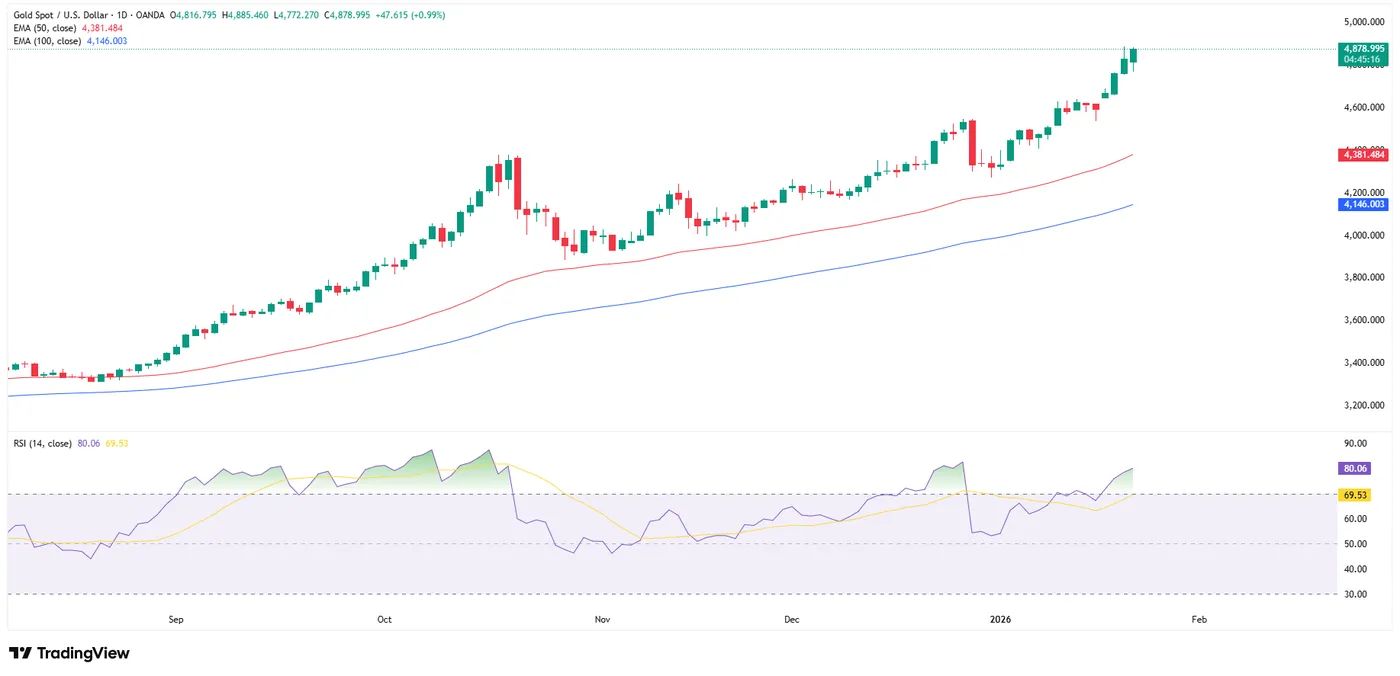
Daily timeframe of Gold, source: TradingView
Gold prices steadied near $4 880 an ounce, very close to yesterday’s all-time high, after tensions surrounding Greenland eased. For several sessions, the metal had hovered close to record levels, fueled by demand for safe-haven assets amid escalating diplomatic strains.
Important was shift in tone from the White House. Donald Trump withdrew the threat of tariffs against Europe following an agreement with allies on a “framework for a future deal” concerning Greenland.
Greenland, NATO, and financial markets
The understanding announced after talks with NATO Secretary General Mark Rutte includes a strengthened NATO presence, the stationing of U.S. missile systems, and rules governing mining rights—aimed at limiting Chinese influence in the region. The meeting at the World Economic Forum in Davos “took some of the temperature out of U.S.–EU tensions,” although there are still “plenty of dip-buyers” supporting gold prices.
Goldman Sachs raises its forecast
Despite the near-term cooling, the outlook for gold remains robust. Goldman Sachs Group Inc. lifted its year-end gold price forecast to $5 400 an ounce, citing intensifying demand from private investors and central banks. Analysts emphasized that risks are “significantly skewed to the upside” amid lingering global policy uncertainty.
Silver and other metals also advance
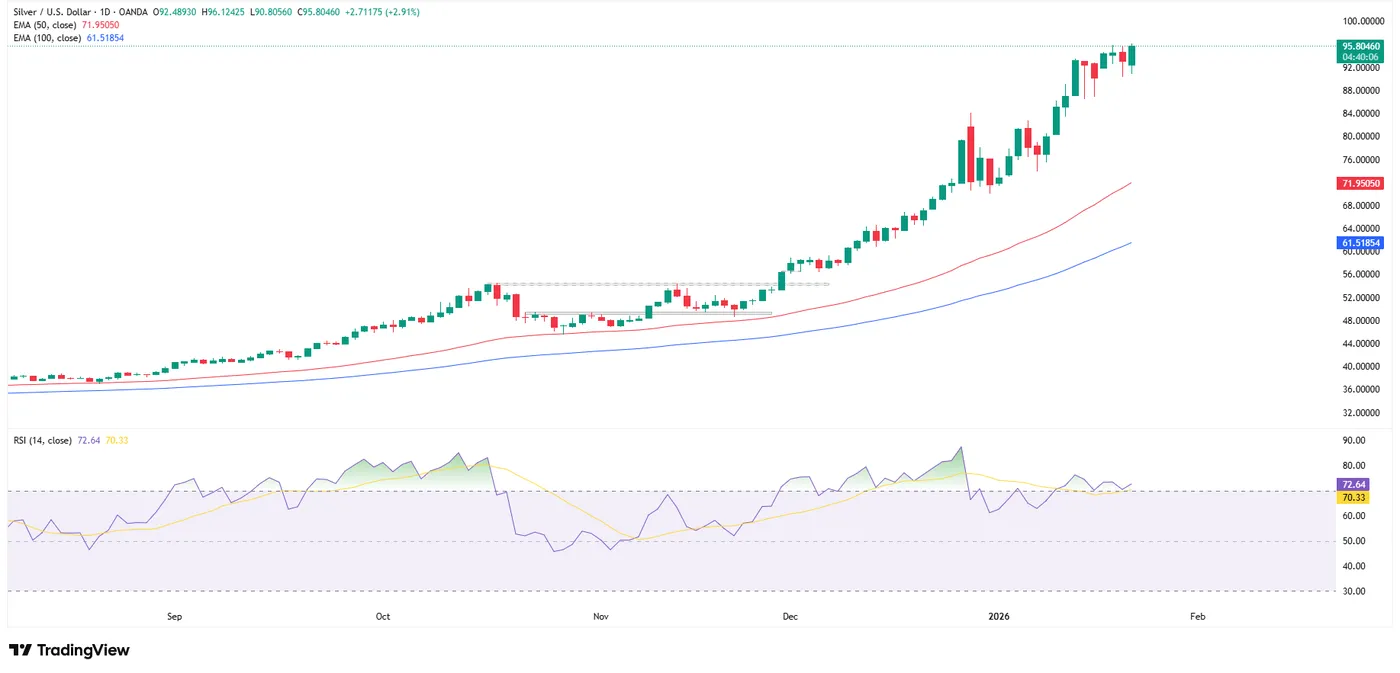
Daily Timeframe of Silver, source: TradingView
Silver climbed as much as 2.8% and reach new all-time high at $96 an ounce and reversing earlier losses. Over the past year, prices have tripled, boosted by a historic short squeeze and heavy retail buying. Platinum and palladium also edged higher, while the Bloomberg Dollar Spot Index slipped slightly, offering additional support to precious metals.
What’s next?
Gold underlying fundamentals remain strong. Geopolitics, monetary policy, and structural investment demand continue to keep gold—and precious metals more broadly—firmly in the global market spotlight.