


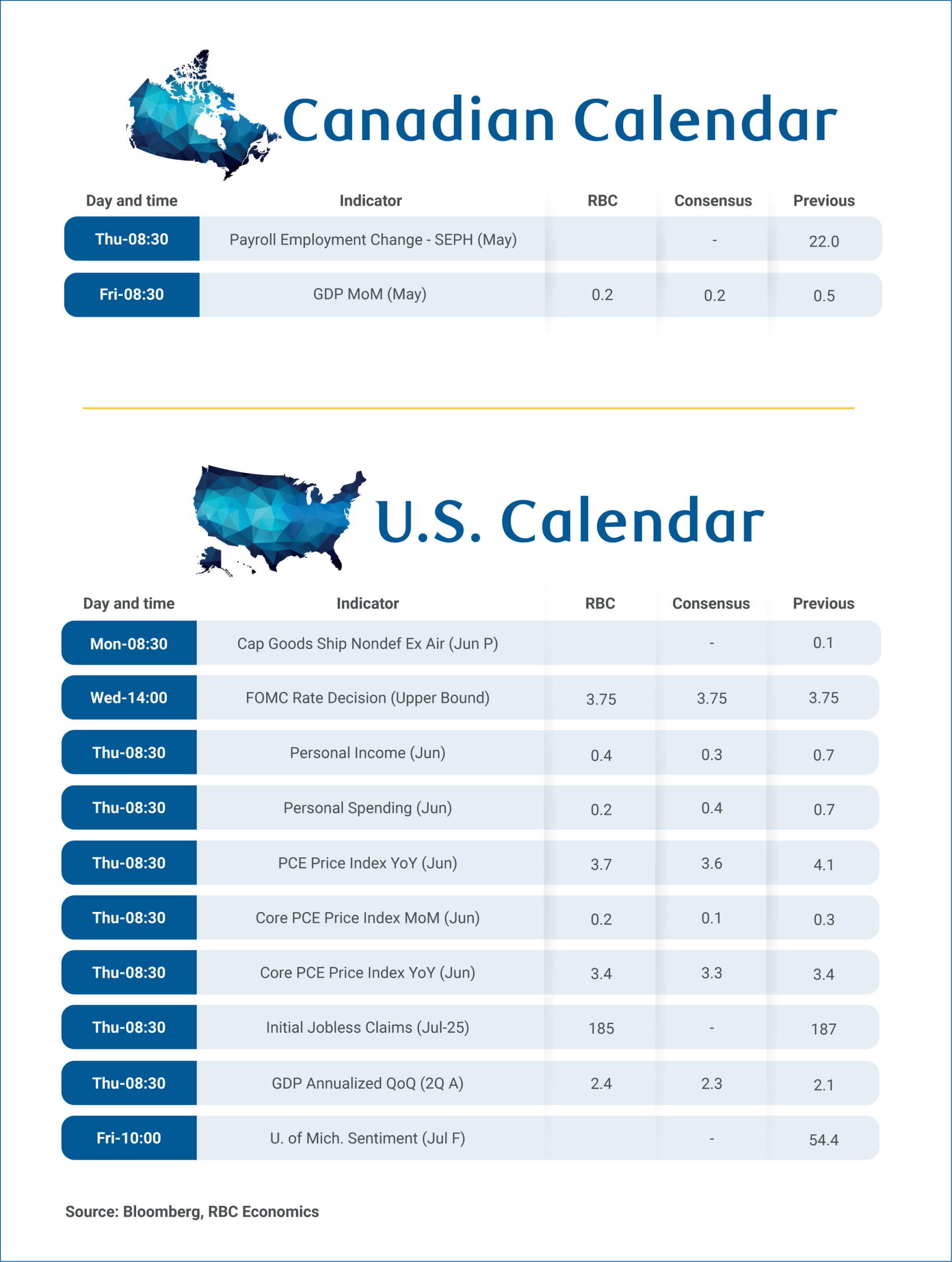
Another month of recovery is in the cards for Canada’s economy next Friday where we expect to see a 0.2% increase in GDP data for May (more details below), but the outlook is once again clouded by the latest bout of U.S. tariff threats that suggest the path ahead could be bumpier.
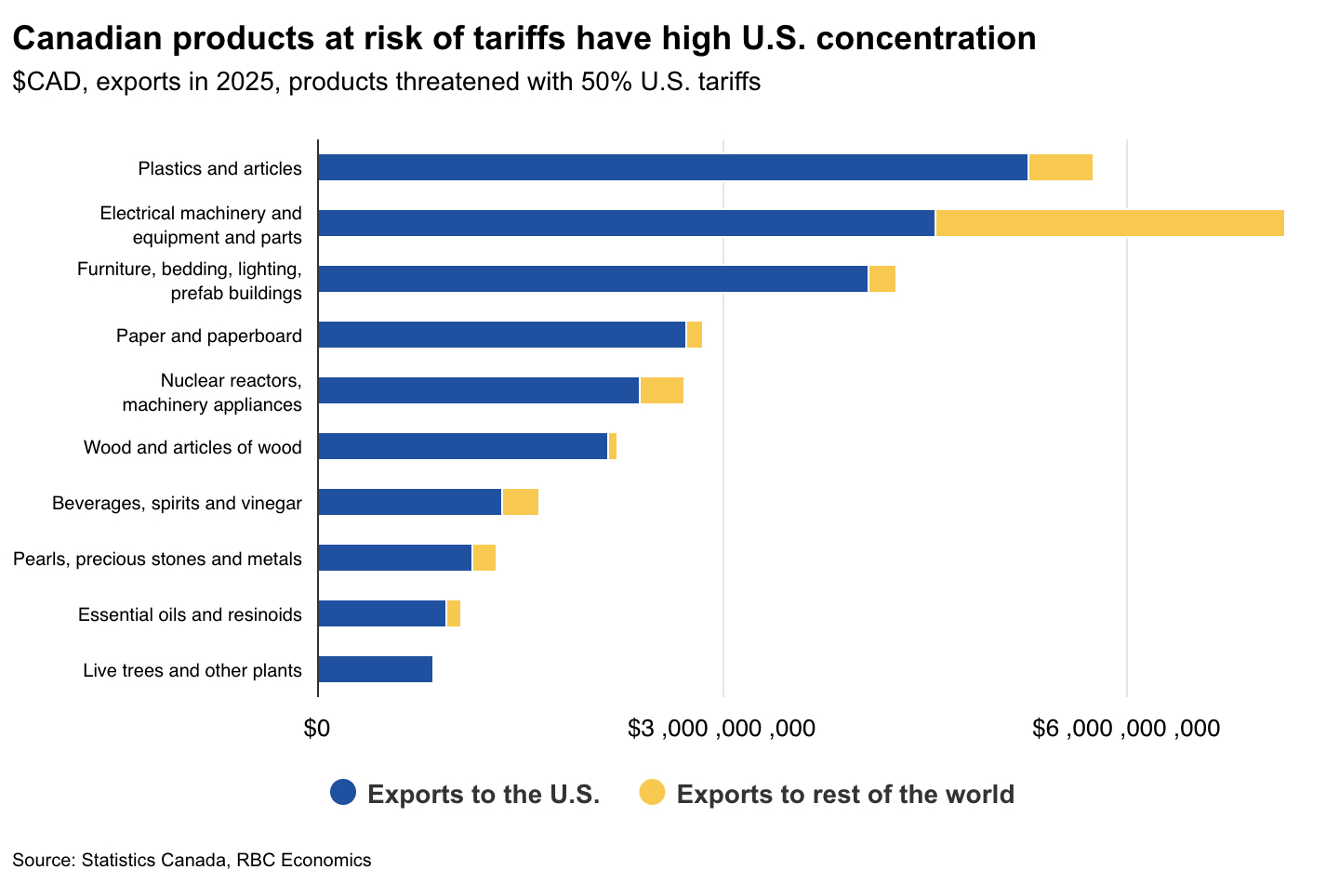
Just how bumpy is challenging to clearly assess. For one, we’re keenly aware that tariffs threatened in the past have often been significantly modified or halted ahead of the implementation date. New U.S. Section 301 (broader global) tariffs imposed on July 24 maintain a duty free exemption for imports from Canada under CUSMA, and the more severe 50% Section 338 product- and Canada-specific tariffs don’t take effect until Aug. 20.
Secondly, as we emphasized back in February 2025, the economic impact will depend on a wide range of factors from how firms creatively navigate tariffs, the path of the Canadian dollar to government responses and the Bank of Canada’s decisions.
That said, there are six early thoughts from the developments of this week:
- Big picture: Canada should be able to manage through new wave of potential tariffs
Targeted sectors would struggle - New tariffs would further exacerbate provincial divergences
- Domestic demand for tariffed goods could provide partial offset
- BoC even more likely to hold interest rates this year
- Business sentiment needs to be monitored
We expect the Federal Reserve will stay on hold in Wednesday’s meeting. June’ Consumer Price Index report showed broad-based deceleration in inflation pressures—a turn from the run of hotter core CPI prints to take an immediate rate hike off the table. Still, the path forward remains highly uncertain, and entirely contingent on future inflation data while labour market resilience persists.
On Thursday, we’ll receive the advance Q2 U.S. GDP report, where headline growth is expected to come at an annualized 2.4% quarter-over-quarter. Much of this growth has been supported by resilient consumer spending, which is expected to accelerate to 2%. Business fixed investment likely expanded, offset by net trade that is projected to have subtracted from growth.





, but the outlook is once again clouded by the latest bout of U.S. tariff threats that suggest the path ahead could be bumpier.)