


TL;DR: Gold has barely moved despite dramatic swings in oil, Treasury yields, and the Dollar over the past month — because the Fed’s abandonment of forward guidance and a widening gap between geopolitical rhetoric and physical Hormuz supply data have raised the bar for what counts as a genuine catalyst.
A Range That Refuses to Break
Gold traders enter another pivotal week expecting a familiar set of catalysts to finally break the precious metal out of the 3,942–4,202 range that has contained prices since late June. ISM surveys, Friday’s non-farm payrolls, and the latest developments surrounding the Strait of Hormuz would normally be more than enough to generate a decisive move. Yet there’s a growing risk that those waiting for a breakout are looking in the wrong places.
Gold’s Striking Lack of Sensitivity
Over the past month, Gold has shown a striking lack of sensitivity to the very markets that usually drive it:
- Brent crude surged from around $70 on July 12 to as high as $102 on July 23, before plunging back to $80 and rebounding again.
- The US 10-year Treasury yield climbed from 4.36% in late June to above 4.74% last week.
- The Dollar Index fell from above 101 to as low as 99.4.
Under normal circumstances, such dramatic swings in energy prices, yields, and the Dollar would have triggered a clear directional move in Gold. Instead, the metal barely left its established trading range.
Why Warsh’s Fed Changed the Reaction Function
The explanation may lie less in Gold itself than in the way markets now process information. Since Kevin Warsh became Federal Reserve Chair, the Fed has largely abandoned the explicit forward guidance that previously helped investors translate incoming economic data into a reasonably predictable policy path. Instead of signaling where interest rates were likely to head, Warsh has repeatedly stressed flexibility and a willingness to let incoming evidence speak for itself.
That shift has fundamentally changed the market’s reaction function. Before Warsh, a stronger-than-expected payrolls report or ISM survey could meaningfully alter expectations for the next FOMC meeting, because investors had a relatively clear policy framework against which to judge the data.
Today, markets already assign roughly a 64% probability to a September rate hike. Ordinary economic surprises may shift those probabilities slightly, but without an explicit policy commitment from the Fed, those adjustments often fail to produce sustained moves in Treasury yields, the Dollar, or Gold. Only data strong or weak enough to force policymakers themselves to abandon the current wait-and-see approach are likely to generate a lasting repricing.
Why Hormuz Headlines Aren’t Moving Gold Either
A similar process appears to be unfolding in the Middle East. Throughout this cycle, markets have been confronted with repeated headlines suggesting progress toward reopening the Strait of Hormuz or de-escalating tensions, often accompanied by optimistic statements from Washington. Yet those announcements have rarely been matched by equivalent confirmation from Tehran, or by clear evidence that oil flows have materially changed. The gap between political messaging and physical developments has become a recurring feature rather than an exception.
As a result, Gold barely reacted to the informal pause in hostilities, repeated claims a deal was close, or successive statements hinting at improving conditions — because traders have learned that announcement-level optimism doesn’t necessarily translate into changes in physical supply. What would matter far more is independently verifiable evidence that Hormuz has genuinely reopened to normal shipping, or conversely, confirmation of sustained disruption to tanker traffic. Those outcomes would have direct implications for oil prices, inflation expectations, and central bank policy — making them far more meaningful for Gold than another round of competing political statements.
The Threshold for a Catalyst Has Risen, Not Disappeared
Taken together, these shifts suggest Gold isn’t short of potential catalysts. Rather, the threshold for what constitutes a meaningful catalyst has risen. Ordinary US economic data may not be sufficient unless it fundamentally alters expectations for Fed policy, while ordinary geopolitical headlines have become less influential unless backed by observable changes in energy markets. In both cases, markets are demanding confirmation rather than inference.
ActionForex’s Technical View on Gold
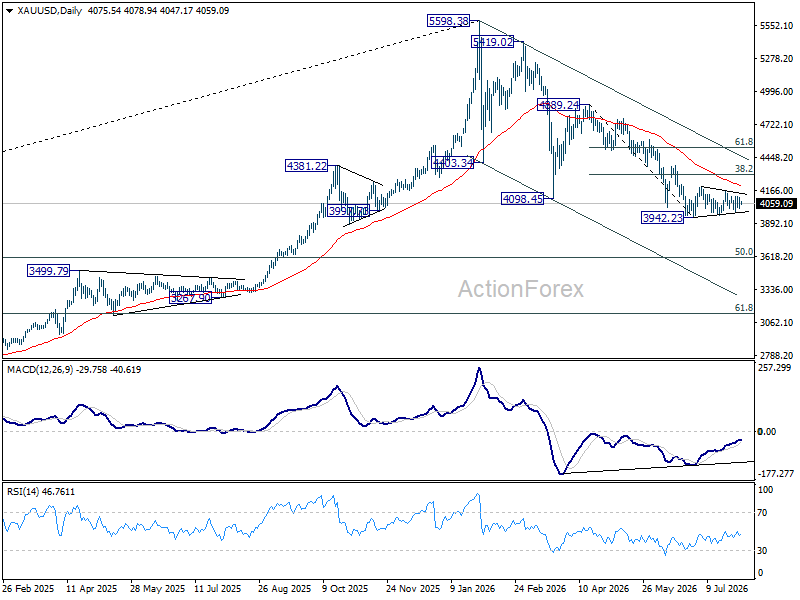
The technical picture tells much the same story. Gold remains trapped within the medium-term falling channel from the 5,598.38 peak and continues to trade comfortably below the falling 55-day EMA, now around 4,213. While the daily MACD has developed bullish divergence, indicating downside momentum is fading, loss of momentum alone isn’t evidence of a trend reversal.
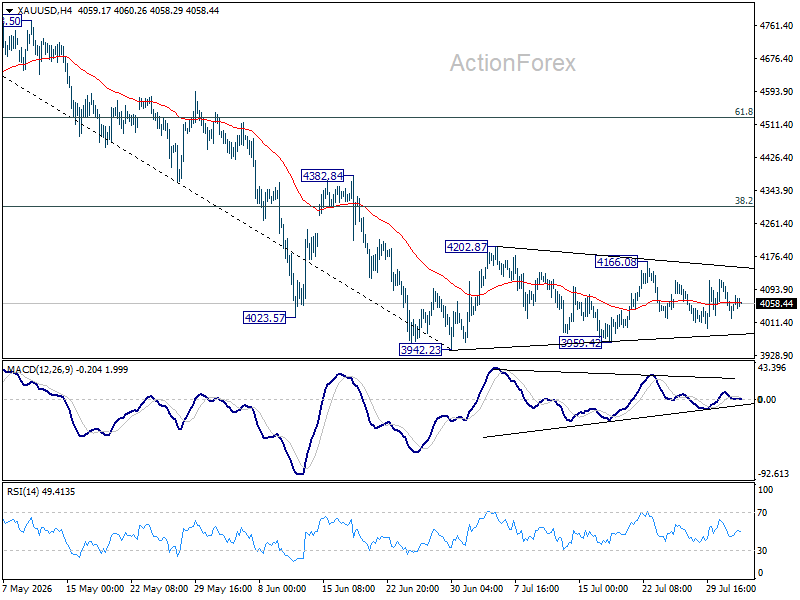
The consolidation above 3,942.23 could certainly extend, but any rebound is likely to encounter significant resistance around the 55-day EMA unless a genuinely new macro catalyst emerges.
What It Would Take to Finally Break the Range
For now, both bulls and bears may need patience. Gold isn’t reacting automatically to higher oil prices, a lower Dollar, or routine shifts in Treasury yields. It’s waiting for information capable of breaking the market’s current base case — either a Fed forced into a clear policy commitment by truly exceptional economic data, or a physically confirmed change in conditions around Hormuz that reshapes the inflation outlook. Until one of those occurs, Gold’s prolonged consolidation may have further to run.
Key Takeaways
- Gold has stayed within its 3,942-4,202 range despite Brent swinging from $70 to $102, the 10-year yield rising from 4.36% to 4.74%, and the Dollar Index falling from 101 to 99.4.
- Warsh’s abandonment of Fed forward guidance means ordinary economic data no longer reliably shifts rate expectations, muting Gold’s usual sensitivity to yields and the Dollar.
- Markets have learned that geopolitical optimism around Hormuz rarely matches physical supply confirmation, reducing Gold’s reaction to political headlines alone.
- The bar for a genuine catalyst has risen: only data forcing a clear Fed policy shift, or verified physical change in Hormuz shipping, is likely to break Gold’s range.
- Gold remains capped below the falling 55-day EMA near 4,213, with bullish MACD divergence suggesting fading downside momentum but not yet a confirmed reversal.





