


What’s happening: Dollar retreated from its post-FOMC highs as Brent crude dropped more than 3% to below $103 and WTI fell around 2.8% to $99.5, moving back under the psychologically important $100 level. DXY pulled away from levels above 100.3, while Sterling pared part of its initial decline after the Bank of England held Bank Rate at 3.75% on a 6–3 vote.
Why it matters: Oil’s drop removed one of the accelerants, higher energy costs feeding inflation expectations and hawkish Fed repricing, that had been supporting Dollar all week, without changing the Fed’s broader hawkish outlook, 16 of 18 officials still favor at least one more 2026 hike. Sterling’s recovery reflected two forces at once: the BoE’s internal split (three members already voting to hike, four more conditionally open) put a floor under GBP, while the broader Dollar pullback did the rest.
Also today:
- European Commission President Ursula von der Leyen proposed making Canada the EU’s first “associate member,” a category that doesn’t yet exist under EU treaties. Trump called the idea laughable and threatened Europe with “very heavy tariffs,” opening a new standing source of headline risk for CAD and EUR, though there was no same-day FX reaction.
Oil Relief Takes Some Pressure Off the Dollar
The oil decline followed signs that the immediate supply squeeze was easing. Saudi Arabia was reportedly moving additional crude to Asian refiners through ship-to-ship transfers near Oman’s Sohar port, helping compensate for disruption caused by the pipeline attack. US Energy Secretary Chris Wright also told CNBC that the outage was a “brief and temporary interruption” expected to be measured in days.
Those developments softened concerns that the disruption would cause an extended shortage. The move in oil also reversed part of the macro chain that had supported the Dollar earlier in the week: higher energy costs had lifted inflation expectations, pushed market interest rates higher and strengthened expectations of a multi-meeting Fed tightening phase.
Thursday’s decline does not invalidate that broader policy outlook. The Fed’s projections still showed 16 of 18 officials favoring at least one additional hike in 2026, while the strong US retail-sales and jobless-claims reports gave policymakers little reason to retreat. Lower oil simply removed one of the accelerants behind the post-FOMC Dollar rally.
Oil’s short-term momentum has nevertheless turned clearly lower. RSI is approaching oversold territory and MACD has rolled over, suggesting the move is more substantial than a minor intraday fluctuation. The relief remains conditional, however. Renewed disruption or escalation in the Middle East could quickly restore the oil–inflation–yields linkage and revive support for the Dollar.
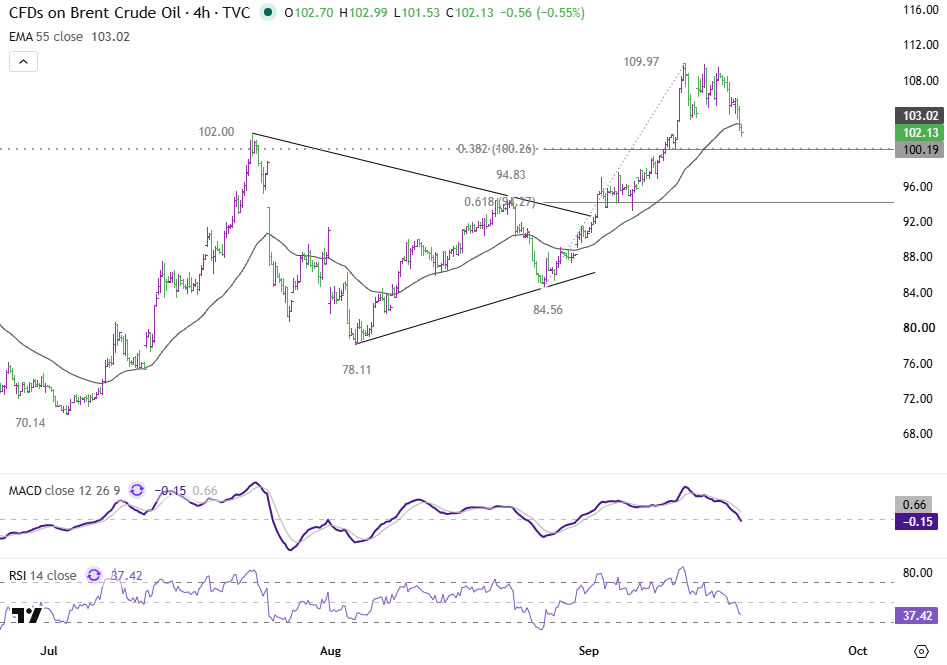
Thursday’s Oil Move
- Brent: down more than 3%, below $103.
- WTI: down around 2.8%, to $99.5, back under $100.
- Saudi Arabia: reportedly moving extra crude to Asian refiners via ship-to-ship transfers near Oman’s Sohar port.
- US Energy Secretary Chris Wright: pipeline outage a “brief and temporary interruption,” measured in days.
- Fed outlook unchanged: 16 of 18 officials still favor at least one more 2026 hike.
BoE’s Hawkish Hold Limits Sterling’s Decline
Sterling initially weakened after the BoE held Bank Rate at 3.75% by 6–3 earlier Thursday. The reflex reaction focused on the unchanged rate, but the details were considerably more hawkish than the headline decision.
External MPC members Megan Greene and Catherine Mann and Chief Economist Huw Pill again voted for an immediate 25bp increase to 4.00%. Within the hold majority, Bank of England Governor Andrew Bailey, Deputy Governor Sarah Breeden, Deputy Governor Clare Lombardelli and Deputy Governor Dave Ramsden all indicated that persistent energy pressure or growing second-round effects could strengthen the case for tightening.
The BoE now expects inflation to reach around 3.75% in Q4 and slightly exceed 4% in early 2027. There has been little evidence so far of material second-round effects in wages and broader prices, allowing the majority to wait. However, the committee’s tolerance depends increasingly on whether the conflict persists and whether higher energy costs begin influencing wage settlements, services prices and inflation expectations.
That conditional hawkishness helped contain Sterling’s initial losses, but it should not receive all the credit for the subsequent recovery. GBP/USD was also supported by the broader Dollar pullback as oil prices fell. Two separate forces were therefore operating simultaneously: the BoE minutes established a floor under Sterling, while weaker oil reduced support for the Dollar side of the pair.
Momentum has yet to confirm a full GBP/USD reversal, leaving the move better described as a recovery from the initial decline than a new bullish breakout. The next Sterling test will depend on whether markets continue bringing forward expectations for a BoE hike or whether easing energy prices allow the six-member hold majority to retain control.
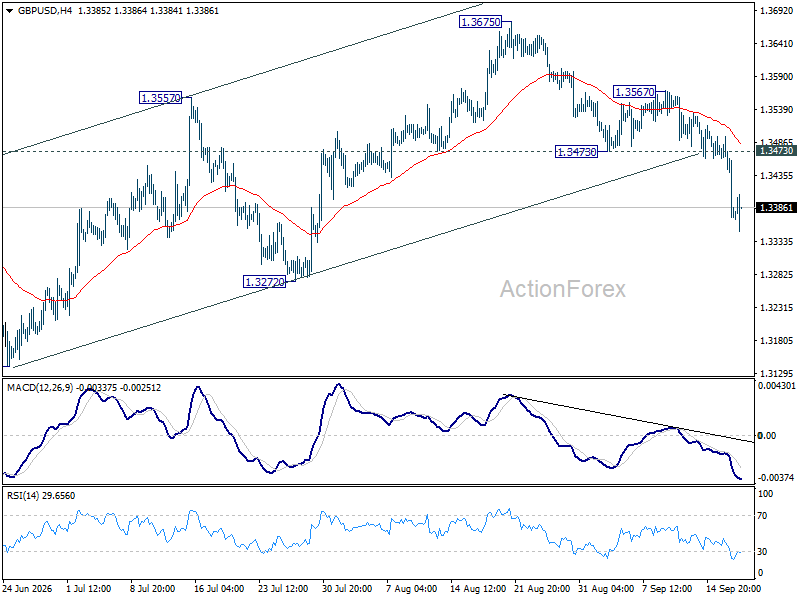
BoE Vote Breakdown
- Bank Rate: held at 3.75%, 6–3 vote.
- Voted to hike: Greene, Mann and Pill, all for an immediate 25bp increase to 4.00%.
- Conditionally hawkish within the hold majority: Bailey, Breeden, Lombardelli and Ramsden, all flagged that persistent energy pressure or second-round effects could strengthen the case for tightening.
- BoE inflation forecast: around 3.75% in Q4, slightly above 4% in early 2027.
Two Forces Behind GBP/USD’s Recovery
| Force | Effect |
|---|---|
| BoE’s hawkish hold (3 hike votes, 4 more conditionally open) | Established a floor under Sterling |
| Falling oil (Brent below $103, WTI under $100) | Reduced support for the Dollar side of the pair |
Canada–EU Proposal Opens Another Trade Front
A separate trade-policy story also began developing after European Commission President Ursula von der Leyen proposed making Canada the EU’s first “associate member.” No such category currently exists under EU treaties, meaning a new framework would have to be created and approved by member states before the proposal could become operational.
Speaking in Strasbourg, Canadian Prime Minister Mark Carney argued that economic integration was being “weaponized,” with tariffs and financial mechanisms increasingly used as instruments of pressure. His comments did not name US President Donald Trump directly, but came as Canada sought to reduce its dependence on the United States amid an escalating bilateral tariff dispute.
Trump responded in North Carolina by calling the proposal laughable and warning that Europe could face very heavy tariffs if Washington treated the move as hostile. He also raised the possibility of sharply reducing US trade with Europe. The threat potentially pulls the EU into a dispute that had previously centered on the United States and Canada, where Ottawa has already promised dollar-for-dollar retaliation.
There was no clear same-day FX reaction attributable to the proposal, and the institutional obstacles mean any Canadian association with the EU would be a lengthy process. Nevertheless, the dispute creates a new standing source of headline risk for CAD, EUR and broader trade sentiment. Oil and central-bank expectations remain the immediate market drivers, but the Canada–EU initiative could become more important if Trump converts his warning into a concrete tariff proposal.
Canada-EU Trade Development at a Glance
- Von der Leyen proposed making Canada the EU’s first “associate member,” a category not yet defined under EU treaties.
- Carney (Strasbourg): economic integration is being “weaponized” via tariffs and financial mechanisms.
- Trump (North Carolina): called the proposal laughable, threatened “very heavy tariffs” on Europe, floated sharply reducing US-Europe trade.
- No clear same-day FX reaction; Canada has already promised dollar-for-dollar retaliation against the US.
Related Coverage
BoE & Sterling Deep Dive
BoE Held Rates on 6-3 Vote, but Four More Policymakers Are Moving Toward a Hike — a closer look at why the committee may be nearer a hike than the headline vote suggests.
Fed & Dollar Deep Dive
Gold Price Absorbs Hawkish Fed Hike—Will 4,368 Confirm a Reversal? — how Gold held 4,230 support through the Fed hike, Dollar breakout and surging short-term yields.
Dollar Index Completes Double Bottom, Targets 100.59 as Markets Look Beyond Fed’s 4.1% 2027 Median — why DXY’s technical breakout reflected markets pricing a higher rate path than the Fed’s own median.
Global Data Watch
US Claims Drop to 196k as Labor Market Resilience Continues — claims decisively beat forecast, reinforcing that the labor market can tolerate additional Fed tightening.
Eurozone CPI Finalized at 3.2%, but Services and Core Pressures Ease — an energy-driven headline increase that leaves the ECB with a headline problem rather than renewed underlying inflation.
SECO Nearly Doubles Swiss 2026 Growth Forecast as Weaker Franc Supports Exports — an export-led upgrade that masks only gradual improvement in domestic consumption.
New Zealand GDP Avoids Stagnation—But Households Are Still Losing Ground — a headline beat that conceals stagnant consumption and falling real disposable income.
FAQ
Why did Dollar pull back from its post-FOMC highs?
Falling oil, Brent below $103, WTI under $100, removed one of the accelerants behind this week’s hawkish rate repricing, on signs the pipeline-driven supply squeeze was easing. The Fed’s own outlook hasn’t changed, 16 of 18 officials still favor another 2026 hike, so the pullback reflects one supporting force fading rather than the broader policy view shifting.
Is the BoE actually more hawkish than a 6-3 hold suggests?
By this account, yes. Three members already voted for an immediate hike, and four of the six holders flagged that persistent energy pressure or second-round effects could push them toward tightening, leaving the committee closer to a hike than the headline vote implies.
What is the Canada-EU “associate member” proposal and why does it matter for markets?
European Commission President von der Leyen proposed a new category, not yet defined under EU treaties, making Canada the EU’s first “associate member.” Trump called it laughable and threatened heavy tariffs on Europe. There’s no same-day FX reaction, but it opens a new standing source of headline risk for CAD and EUR alongside the existing US-Canada tariff dispute.
Key Takeaways
- Dollar retreated from post-FOMC highs as Brent fell more than 3% below $103 and WTI dropped to $99.5, back under the psychological $100 level.
- The oil relief followed signs the pipeline-driven supply squeeze was easing, but doesn’t change the Fed’s broader hawkish outlook of 16 of 18 officials favoring another 2026 hike.
- The BoE held Bank Rate at 3.75% on a 6-3 vote, but three members voted for an immediate hike and four more flagged that persistent energy pressure could push them toward tightening, a more hawkish internal split than the headline vote suggests.
- GBP/USD’s recovery reflected two simultaneous forces: the BoE’s hawkish hold put a floor under Sterling, while the broader Dollar pullback on falling oil did the rest.
- A separate Canada-EU “associate member” proposal from von der Leyen drew a sharp tariff threat from Trump, opening a new standing source of headline risk for CAD and EUR even though it produced no same-day FX reaction.
What to Watch Next
Whether oil’s relief holds or renewed Middle East disruption revives the oil-inflation-yields link and Dollar support. Whether markets keep bringing forward BoE hike expectations or the hold majority regains control as energy prices ease. And whether Trump converts his tariff warning on the Canada-EU proposal into a concrete measure.





