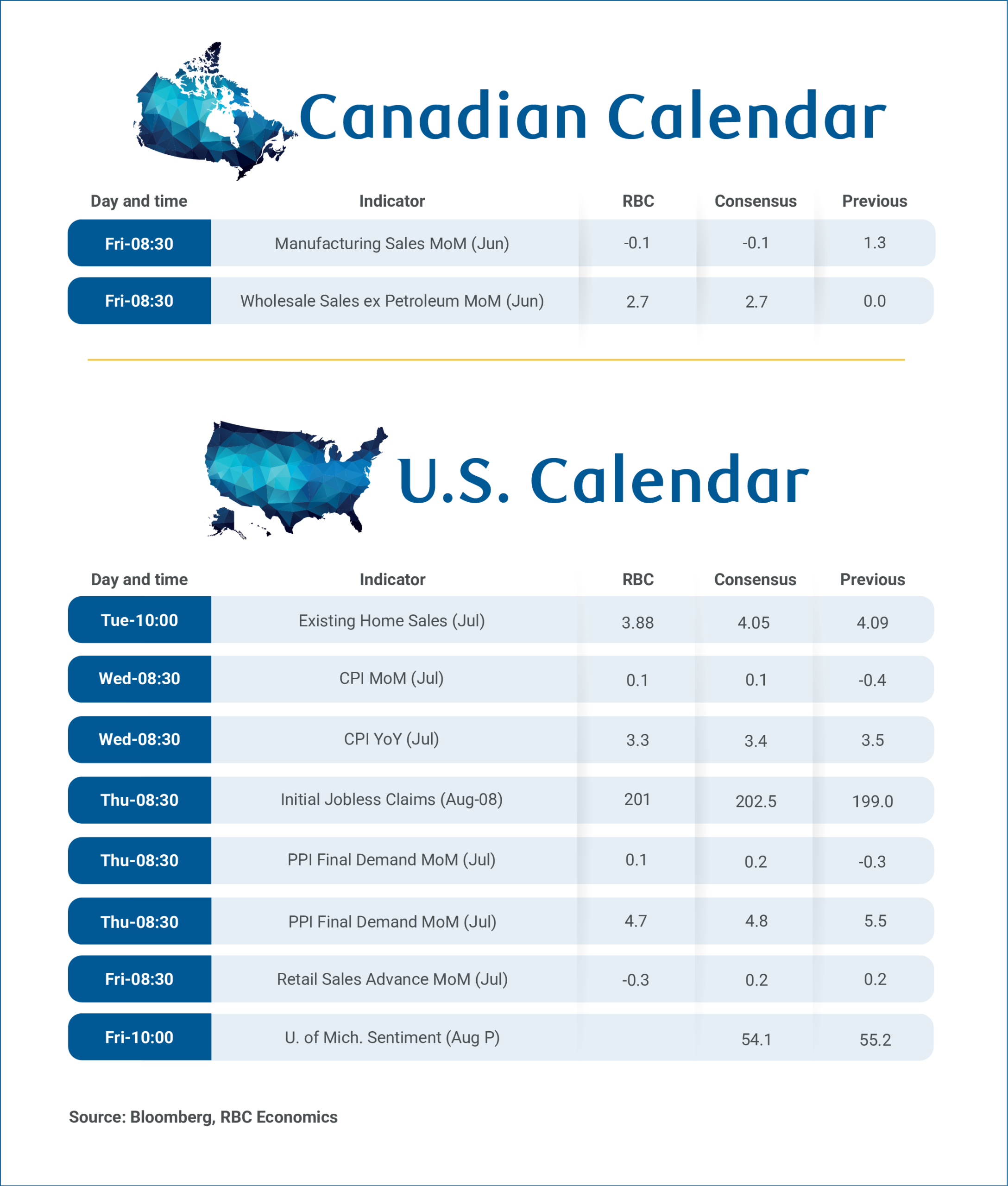
Canadian manufacturing and wholesale sales data for June next Friday should reveal readings consistent with more real gross domestic product growth in June, capping off a solid Q2.
The BoC highlighted two-sided risks to the interest rate in their prior policy meetings – risks of cuts tied to potential downside growth surprises and hike risks due to concerns that higher energy prices from conflict in the Middle East could lead to “generalized inflation.”
Wholesale sales are estimated by Statistics Canada to have risen 2.7% following soft readings in April and May, with growth driven by stronger sales in machinery, equipment, and supplies—mirroring a surge in equipment imports from the U.S. in June.
Along with an earlier 0.4% increase in advance retail sales in June (despite lower gasoline prices) and another increase in home resales, these data suggest persistent growth momentum near the end of Q2 and that quarterly real GDP growth is likely well above our earlier tracking of 2.2% (annualized).
At the same time, Canada’s growth and labour market data have looked better after a downside surprise in Q1 gross domestic product growth.
The sustainability of Q2’s economic strength remains uncertain, with the path forward highly contingent on volatile U.S. trade policy.
Still, stronger backward-looking data is encouraging after softer readings over the winter. Coupled with subdued core inflation readings this year, it also means the Bank of Canada has more room to remain in data-watching mode while maintaining current interest rates.
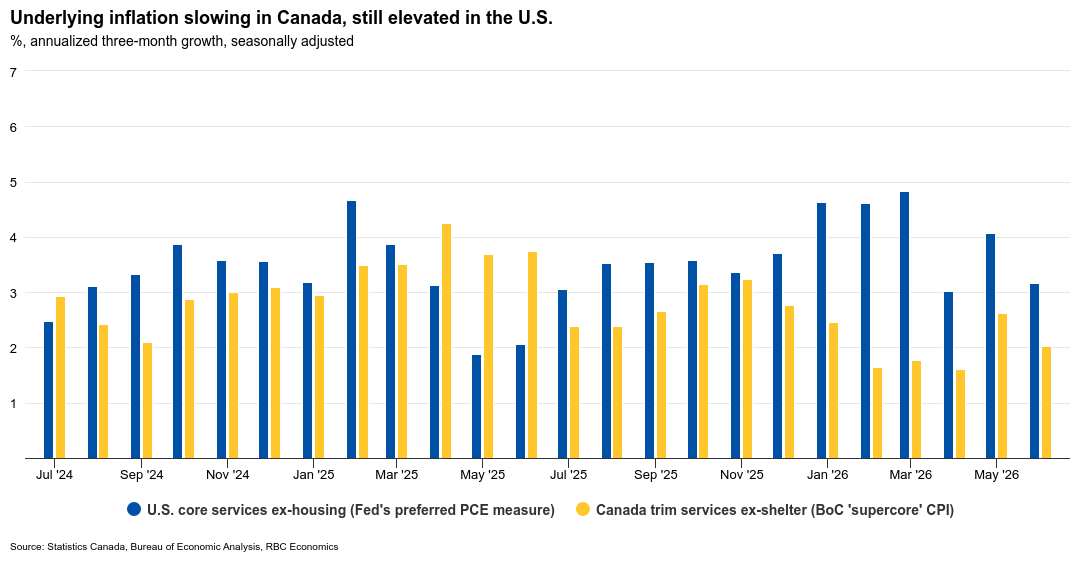
U.S inflation key for near-term Fed decisions
South of the border, the Federal Reserve is facing a more challenging and less balanced trade-off between growth and inflation. U.S. growth and labour markets have remained exceptionally resilient, but inflation remains worryingly high, raising the odds for the Fed to hike interest rates.
July’s Consumer Price Index report on Wednesday could be key to that decision. A lower surprise reading in June CPI’s growth was a reprieve policymakers needed to leave interest rates unchanged in July. But, one downside surprise doesn’t erase a string of hotter core inflation prints earlier this year.
Our base case forecast assumes price growth (outside of energy components) will remain slow enough this year to keep the Fed on the sidelines in September, and through the end of this year. We expect headline CPI will have eased to 3.3% in July from 3.5% in July, reflecting a moderation in core ex-food and gasoline CPI that we expect grew 0.2% month over month in July.