


Australian Household Spending Jumps Again, Adding to RBA’s Inflation Dilemma
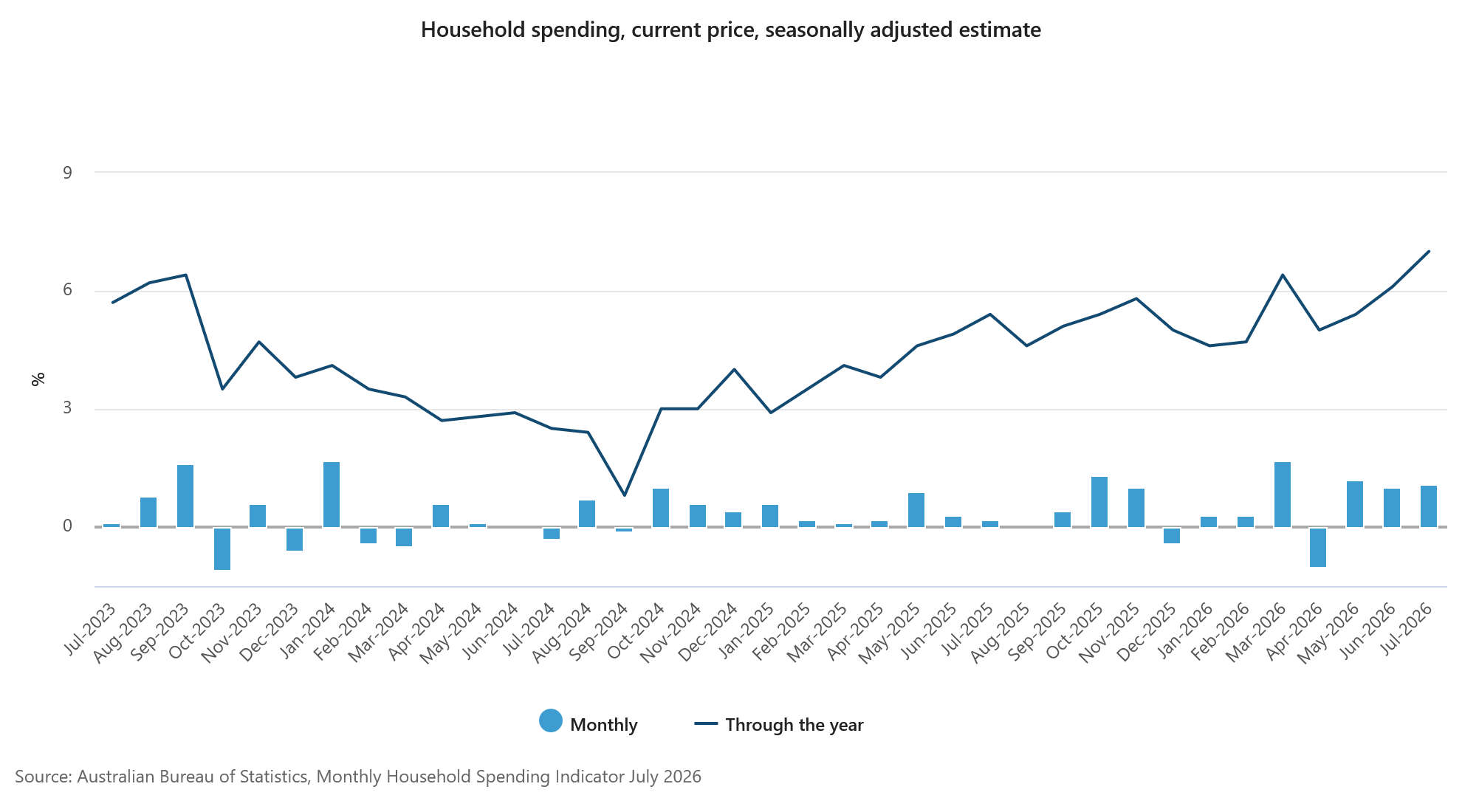
Australian household spending rose 1.1% m/m in July, well above 0.3% consensus, after gains of 1.2% in May and 1.0% in June. Through year, spending growth accelerated from 6.1% to 7.0%, strongest annual pace since June 2023. ABS said July increase was led by recreation and culture, food, hotels, cafes and restaurants, and health.
Details showed demand strength extended beyond one category. Recreation and culture spending rose 1.5%, health increased 1.2%, hotels, cafes and restaurants gained 1.1%, and food spending rose 1.0%. Price effects were important, however. ABS noted higher prices contributed to food and hospitality spending, while nominal fuel spending rose 2.2% even as experimental volume estimates showed fuel consumption falling 4.7% after a 7.9% increase in June.
That distinction matters for RBA. July household-spending data are measured in current prices, so part of headline strength reflects inflation rather than stronger real demand. But three consecutive solid monthly gains, alongside resilience in discretionary services, make it harder to argue that restrictive policy is already producing a broad collapse in household activity. That is particularly relevant after July CPI showed Trimmed Mean inflation holding at 3.6% y/y and accelerating to 0.5% m/m.
For RBA, report therefore adds another modestly hawkish piece of evidence ahead of Sept. 28–29 meeting. August minutes showed Board considered pre-emptive tightening and judged economy was still operating with excess demand, while July CPI has already kept September live. Strong nominal household spending does not by itself make another hike necessary, especially given price effects and softer labour data, but it strengthens case that domestic demand is still resilient enough for RBA to remain focused on upside inflation risks.
Data Summary
| Indicator | Actual | Expected | Previous |
|---|---|---|---|
| Household Spending m/m | +1.1% | +0.3% | +1.0% |
| Household Spending y/y | +7.0% | — | +6.1% |
Details
| Indicator | Actual |
|---|---|
| Recreation and Culture m/m | +1.5% |
| Health m/m | +1.2% |
| Hotels, Cafes and Restaurants m/m | +1.1% |
| Food m/m | +1.0% |
| Nominal Fuel Spending m/m | +2.2% |
| Experimental Fuel Volume m/m | -4.7% |
Key Takeaways
- Australian household spending rose 1.1% m/m in July, far above 0.3% consensus, after a 1.0% increase in June.
- Spending has now risen strongly for three consecutive months: 1.2% in May, 1.0% in June and 1.1% in July.
- Annual spending growth accelerated from 6.1% to 7.0%, highest since June 2023.
- Gains were broad, led by recreation and culture, health, hospitality and food.
- Price effects contributed materially to July strength. Fuel spending rose 2.2% in nominal terms, while experimental volume data showed fuel consumption falling 4.7%.
- Report therefore points to resilient household demand, but not all headline growth represents stronger real consumption.
- For RBA, data lean hawkish at margin after sticky July CPI. Strong spending makes it harder to argue restrictive policy is already causing a broad demand slowdown.
- Combined with August minutes and 3.6% trimmed mean inflation, July spending keeps September tightening debate live.





