


- Capital repatriation to Japan risks pushing USDJPY significantly lower.
- The US dollar is under pressure due to the Treasury, the ECB, and a stronger yen.
The US dollar has been falling for five of the last six days amid concerns over the Treasury’s intervention in the debt market, the ECB’s readiness to tighten monetary policy aggressively, and capital flows from the US to Japan. The latter trend is reflected in the strengthening of the yen. Neither the rally in Brent crude above $100 per barrel, nor the pullback in the S&P 500, nor the rising yields on Treasuries are helping the greenback.
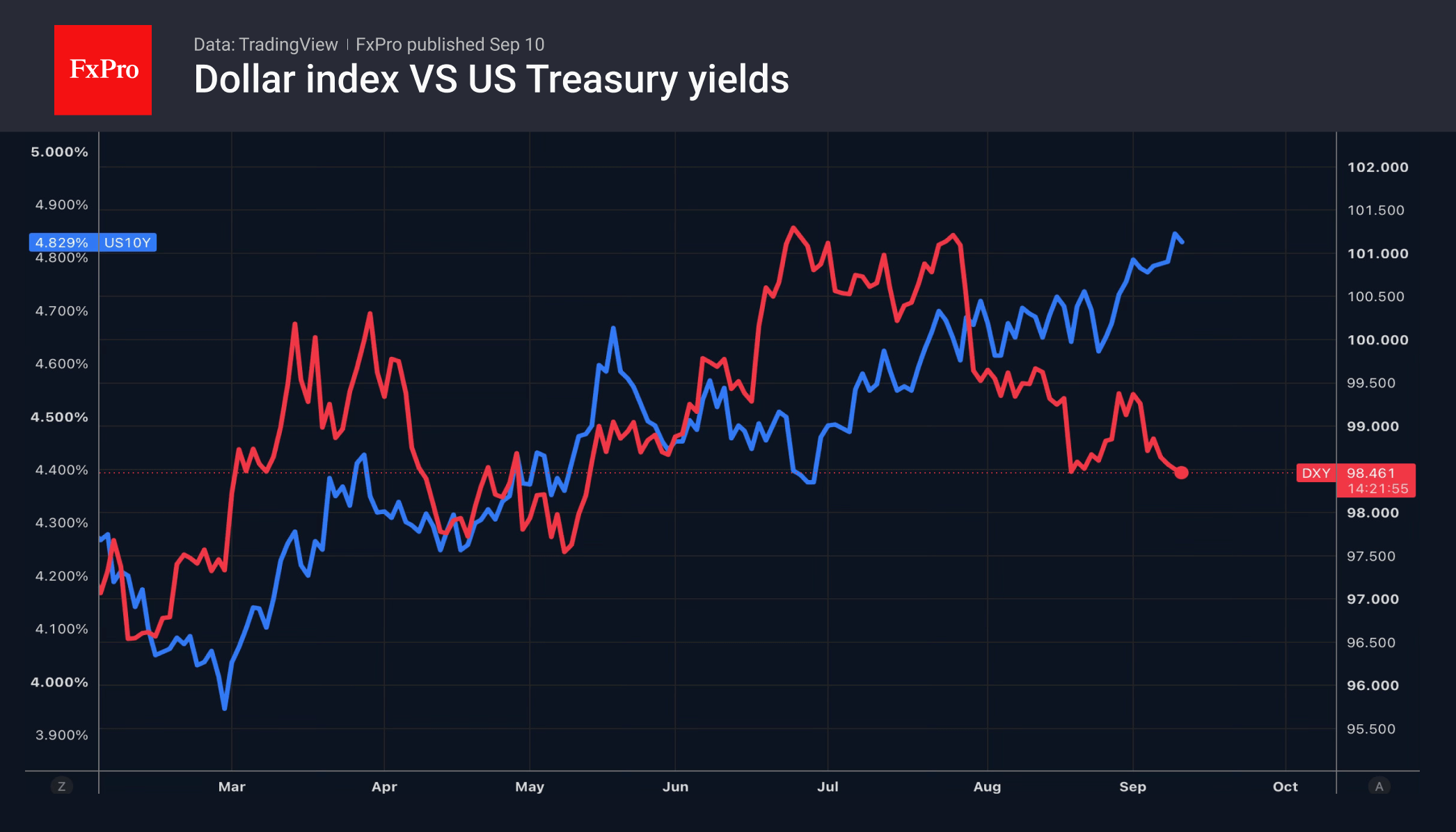
The US Treasury intends to buy back $6 billion worth of long-term bonds, carry out six such operations by early November, and then announce its plans for the following three months. Such a humble move for such a big market and its problems has disappointed investors who were expecting a bolder Treasury intervention. Treasury yields rose, while the US dollar enjoyed a brief respite. However, soon fears over the ECB’s hawkish rhetoric led to renewed pressure on the greenback.
A far more significant factor in its medium- and long-term weakness could be the repatriation of capital to Japan. The fall in USDJPY is not solely the result of currency interventions and rising expectations of aggressive monetary tightening from the BoJ. If domestic yields continue to rise, Tokyo will be able to keep more money at home. Moreover, long-term bond yields at their highest levels since the 1990s risk triggering a process of capital repatriation.
Japan is the largest holder of Treasuries, with $1.1 trillion, and its residents hold another $5 trillion in foreign assets. If this flood of money pours out of the US and Europe into Asia, USDJPY and EURJPY are bound to fall. And the GPIF and other pension funds are likely to lead the way. Indeed, Norway is ready to invest billions of dollars in Japanese assets.
As a result, the yen will be able to break free from its long-standing dependence to interest rate differentials and begin to correct the fundamental imbalances between Japan and the US. At the same time, relative prices, current accounts, fiscal policy and inflation prospects are all favouring the bears on USDJPY.
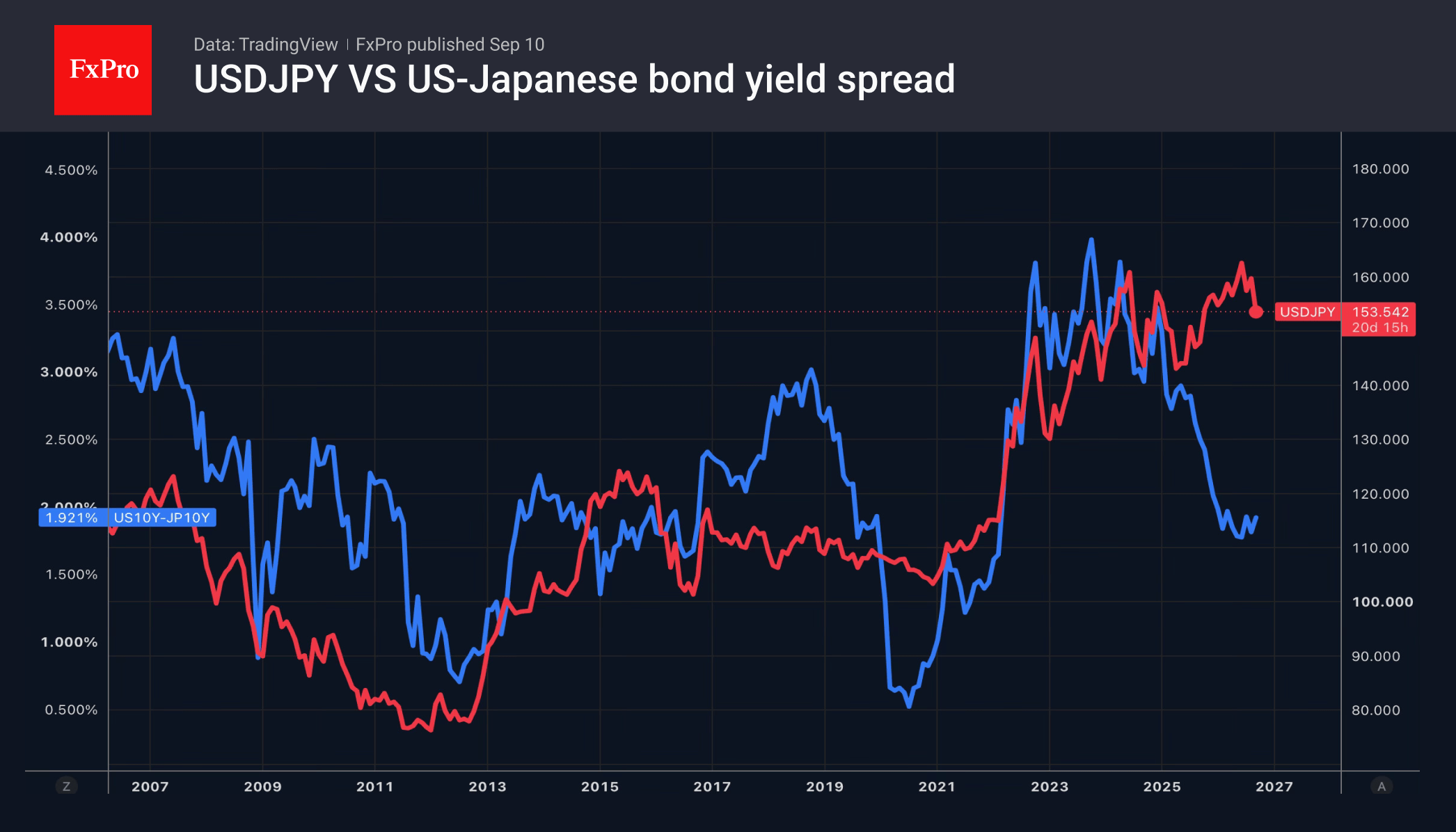
However, in terms of the bond yield differential, the yen is the most undervalued G10 currency. Aggressive monetary tightening by the Bank of Japan is required to correct this imbalance.
The FxPro Analyst Team





