


TL;DR: One Fed hike is effectively certain today, but markets are pricing four hikes total at an approximately quarterly cadence—whether the SEP validates that path, or its hawkish tail, will decide whether EUR/USD extends below 1.1471 or reverses back through 1.1653.
Markets Have Moved Beyond Today’s Hike
One Fed hike is effectively certain. The other three are where the risk lies. If officials validate the market’s 100bp tightening path—or its hawkish tail—EUR/USD has room to extend below 1.1471. If they undershoot it materially, 1.1653 becomes the level that separates a temporary bounce from a genuine reversal.
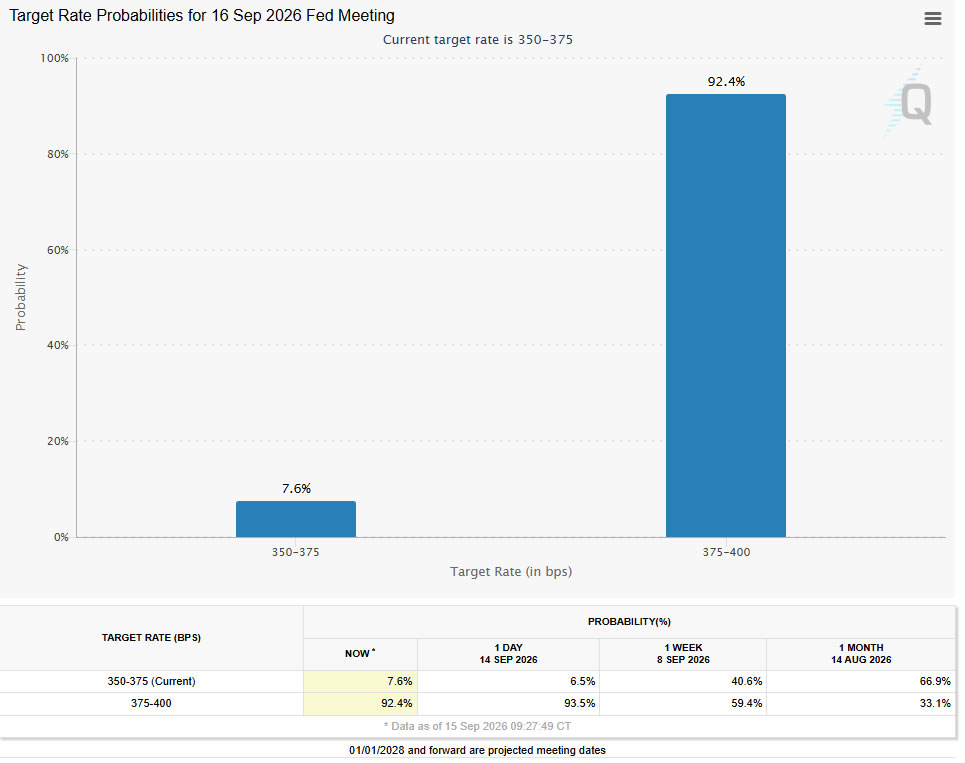
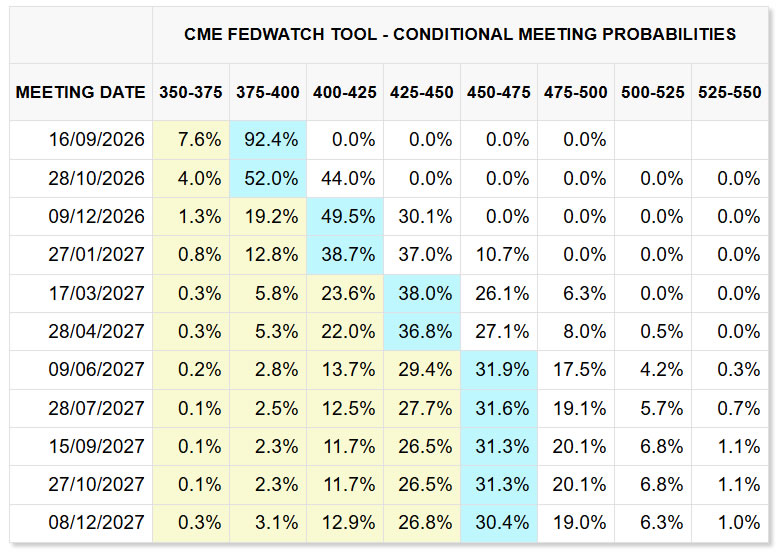
Fed funds futures indicate investors are pricing four 25bp hikes in total over the next several quarters, including today’s expected move. The modal terminal range reaches 4.50–4.75% around June 2027 and then holds near that level through the end of the year. That plateau matters because it suggests the market is pricing a completed tightening cycle rather than a policy rate still moving continuously higher.
Probability-weighted OIS pricing produces an expected rate around 4.52–4.55% by mid-2027, broadly consistent with the futures distribution. This is another representation of the same short-rate market rather than an independent confirmation, but the two measures point toward a similar endpoint.
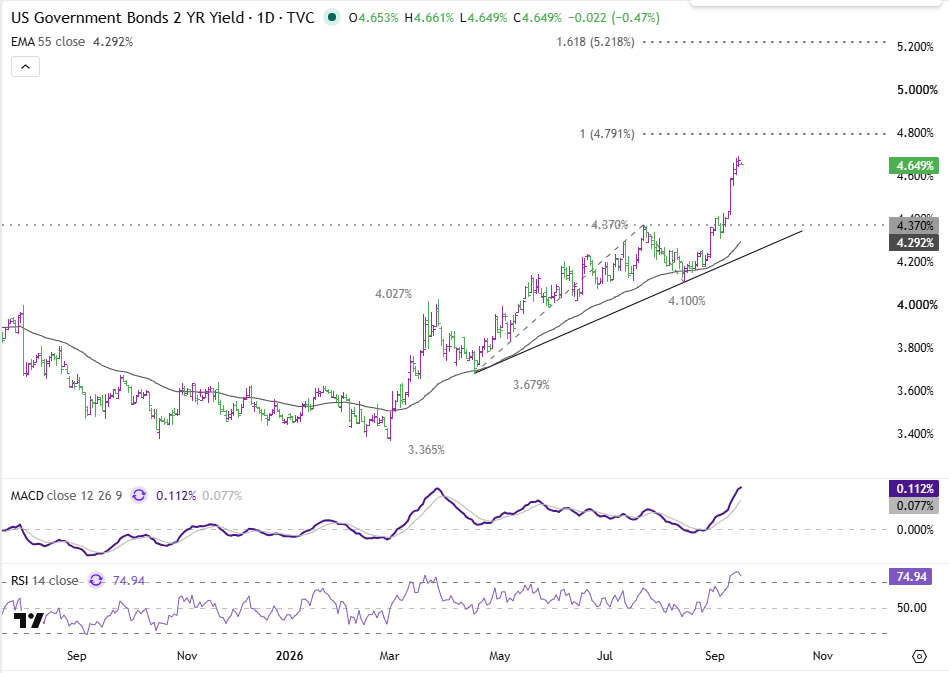
The US two-year Treasury yield around 4.65% provides a separate consistency check. The cash yield reflects the average expected policy rate over its maturity, plus term premium and other adjustments, so it can’t independently identify the terminal rate. Nevertheless, it’s consistent with a policy path that stays elevated as tightening extends into 2027.
The important distinction is therefore that today’s hike is the first move in a four-hike path, not a standalone event.
The Priced Cadence Is Approximately Quarterly
The market isn’t expecting four consecutive hikes. OIS probabilities alternate between meetings with relatively high and low tightening risks, concentrating the likelier moves around September, December, and March, with intervening meetings more likely to be skips.
That produces an approximate one-hike-per-quarter cadence. It implies a measured cycle in which the Fed raises rates, assesses the economic response, and then tightens again if inflation and activity continue to justify it.
This distinction matters for EUR/USD. A projection showing further hikes without suggesting consecutive moves could still validate the market’s broader Dollar-supportive path. The Fed doesn’t need to promise an aggressive meeting-by-meeting campaign to endorse the 100bp total.
The Four-Hike Path Isn’t a Hard Ceiling
The futures distribution also contains a meaningful hawkish tail. Around 19% probability is assigned to a fifth hike and a 4.75–5.00% range by December 2027. A further approximately 7% is distributed across outcomes above 5.00%.
That gives a combined 19–26% tail risk above the four-hike base case. If the updated projections point toward either a faster cadence or a terminal rate above 4.75%, the Fed would validate a scenario currently treated as possible but not central. Such an outcome would deliver a larger Dollar catalyst than today’s expected decision itself.
The SEP Must Validate Both Timing and Destination
The June SEP produced a median year-end 2026 rate of 3.8%, broadly consistent with one hike during the year. Nine of the 18 officials submitting projections expected at least one increase. Three policymakers subsequently dissented in favor of tightening at the July meeting, up from two in June, keeping the risk of a higher median firmly in play.
The September projections now face two separate tests. The 2026 median will show whether officials expect another hike after today, potentially in October or December. The 2027 median will indicate whether the committee is moving toward the market’s broader 4.50–4.75% terminal range.
Federal Reserve Chair Kevin Warsh is expected to withhold his individual projection again, consistent with the position he adopted in June. The number of other participants submitting dots will therefore matter. Any further abstentions would thin the sample and make movement in the median less informative than usual.
Warsh’s press conference will be equally important. The dots may reveal the intended destination, but his guidance will determine whether markets interpret a lower projection as a gradual tightening path or a genuine rejection of additional hikes.
ActionForex’s Technical View on EUR/USD: Breaking Its Daily Moving Average
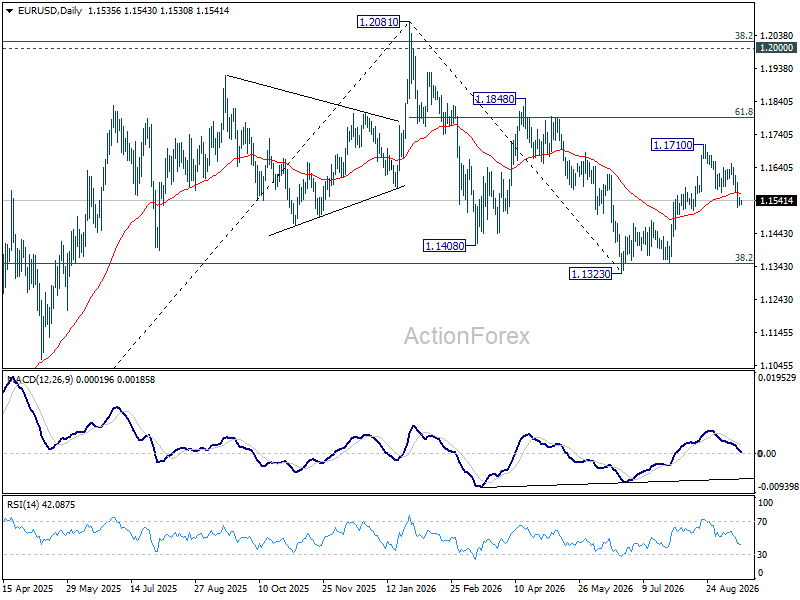
EUR/USD enters the decision with a mild downside bias. This week’s break below the daily 55-day EMA strengthens the case that the rebound from 1.1323 to 1.1710 completed as a three-wave corrective structure rather than the beginning of a new impulsive advance.
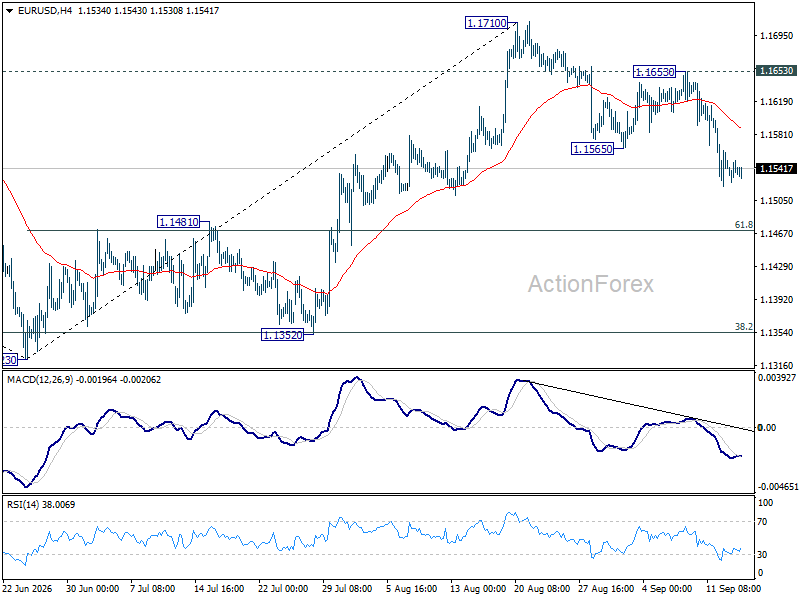
Daily MACD has turned lower, while RSI has fallen to around 42, leaving room for further weakness before oversold conditions emerge. On the four-hour chart, price is also below its moving average, with MACD in negative territory and RSI near 38.
The weekly picture is less decisively bearish. Weekly RSI stands near a neutral 48, while MACD remains below zero but above its signal line. The higher timeframe therefore provides no oversold floor, but it hasn’t yet confirmed a larger bearish reversal. The immediate downside case is being driven primarily by the daily and four-hour structures.
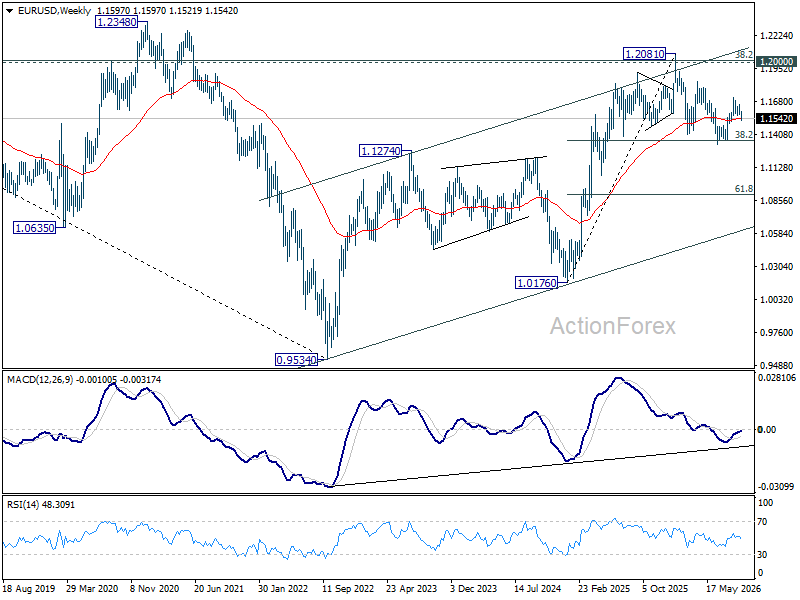
The first target is the 61.8% retracement of 1.1323 to 1.1710 at 1.1471. A decisive break would expose the stronger 1.1353–1.1323 support zone, formed by the July low and the long-term 38.2% retracement of the rise from 1.0176 to 1.2081.
Four SEP Outcomes, Four Technical Tests
| SEP outcome | EUR/USD confirmation | Market interpretation |
|---|---|---|
| Exceeds the priced path | Break of 1.1471, followed by 1.1353–1.1323 | Hawkish tail above four hikes becomes a central risk |
| Validates four-hike pricing | Initial test of 1.1471 | Downside bias continues, but sell-the-fact volatility is possible |
| Mildly undershoots | Recovery stays below 1.1653 | Dollar pullback without confirmation of a EUR/USD reversal |
| Deeply undershoots | Break of 1.1653, followed by 1.1710 | Market reprices the Fed path materially lower |
These levels should confirm the interpretation rather than be treated as automatic outcomes. Because much of the tightening path is already priced, even an SEP that broadly validates four hikes could produce a limited Dollar reaction or an initial sell-the-fact move.
Similarly, a modestly lower dot plot wouldn’t complete a EUR/USD reversal by itself. A break of 1.1653 is required to indicate the fall from 1.1710 has ended. A subsequent move through 1.1710 would confirm the broader rebound is resuming.
The Dot Plot, Not the Hike, Holds the Answer
EUR/USD already reflects competing Fed and ECB tightening expectations. The immediate question is whether the Fed’s updated projections preserve a sufficiently stronger US path to extend the pair’s decline.
A break of 1.1471 would show the SEP had reinforced the current Dollar advantage. A fall through 1.1353–1.1323 would require a more substantial hawkish surprise and would carry larger structural implications. Conversely, a recovery through 1.1653 would indicate the Fed failed to meet what markets had already priced.
Today’s hike was never the central uncertainty. The decision lies in whether the Fed validates the remaining three moves, their approximately quarterly cadence, and the tail risk beyond them.
Key Takeaways
- Markets price four total 25bp hikes at an approximately quarterly cadence (September, December, March), with a modal terminal range of 4.50-4.75% by mid-2027.
- A combined 19-26% tail risk sits above the four-hike base case, meaning a faster cadence or a terminal rate above 4.75% would deliver a bigger catalyst than today’s hike itself.
- The September SEP faces two tests: whether the 2026 median rises above 3.8% (signaling another hike this year) and whether the 2027 median moves toward the market’s 4.50-4.75% terminal range.
- Warsh is expected to withhold his individual projection again, making the participation count and his press conference guidance as important as the median dot itself.
- EUR/USD’s first target is 1.1471; a break opens 1.1353-1.1323, while a recovery through 1.1653 and then 1.1710 would instead signal the Fed undershot priced expectations.





