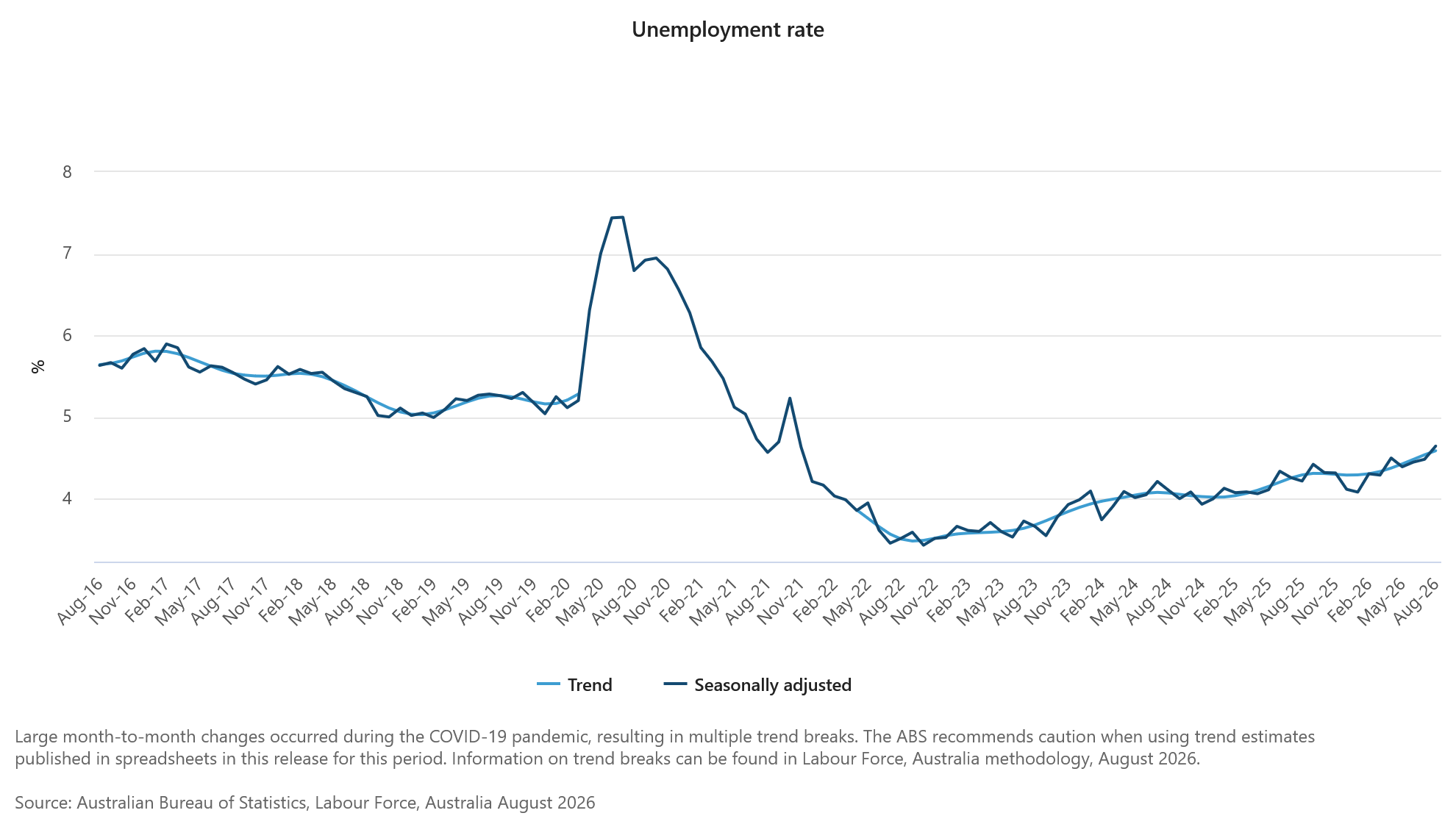
Australian employment rebounded from -15.8k to +39.5k in August, comfortably beating expectations for a gain of around 20k, but the stronger headline was offset by a rise in unemployment. The unemployment rate increased from 4.5% to 4.6%, while the participation rate climbed from 66.9% to 67.1%. ABS said there were around 39k more people employed but also 28k more unemployed, as a larger share of people previously outside the labour force moved into unemployment.
The composition was less strong than the headline employment gain suggested. Part-time employment rose by 46k, while full-time employment fell by -6k. Hours worked nevertheless increased 0.7% m/m, or 14m hours, reversing an equivalent decline in July. The underemployment rate also improved from 6.3% to 6.2%, showing that the increase in headline unemployment was not accompanied by a broad deterioration across all measures of labour utilisation.
Overall, the seasonally adjusted figures point to a labour market that is still generating jobs but absorbing a rapidly expanding workforce less completely. The stronger employment gain and rebound in hours argue against a sharp weakening in labour demand, while the rise in unemployment and reliance on part-time hiring point to some continued easing at the margin. The ABS also cautioned that changes to its Supplementary Survey methodology could have some effect on August seasonally adjusted movements, although sensitivity testing suggested any impact should be smaller than normal sampling variability.
Data Summary
| Indicator | Actual | Expected | Previous |
|---|---|---|---|
| Employment Change | +39.5k | +20.3k | -15.8k |
| Unemployment Rate | 4.6% | 4.5% | 4.5% |
| Participation Rate | 67.1% | — | 66.9% |
| Underemployment Rate | 6.2% | — | 6.3% |
| Hours Worked | +0.7% m/m | — | -0.7% m/m |
The ABS seasonally adjusted data showed employment rising by 39.5k while unemployment increased by 28.2k, with participation climbing to 67.1%.
Employment Composition
| Component | August Change |
|---|---|
| Full-time employment | -6k |
| Part-time employment | +46k |
| Unemployed persons | +28.2k |
The employment rebound was therefore driven entirely by part-time work, even as total hours worked recovered and underemployment edged lower.
Key Takeaways
- Australian employment rebounded from -15.8k to +39.5k, almost double market expectations.
- The unemployment rate nevertheless rose from 4.5% to 4.6% as the labour force expanded faster than employment.
- Participation increased from 66.9% to 67.1%, helping explain why unemployment rose despite solid job creation.
- The composition was softer than the headline: part-time employment rose 46k while full-time employment fell 6k.
- Hours worked rebounded 0.7% m/m, offsetting July’s decline and arguing against a broad collapse in labour demand.
- Underemployment improved from 6.3% to 6.2%, so the rise in headline unemployment was not matched by deterioration across all labour-utilisation measures.
- Overall, the seasonally adjusted data point to a labour market that is loosening without breaking: hiring remains positive, but stronger labour-force growth is creating more slack.
- ABS noted that August was affected by changes to its Supplementary Survey treatment, although it expects any impact on monthly movements to be smaller than normal sampling variability.