


Oil and Yields Squeeze the Equity Cushion From Both Sides
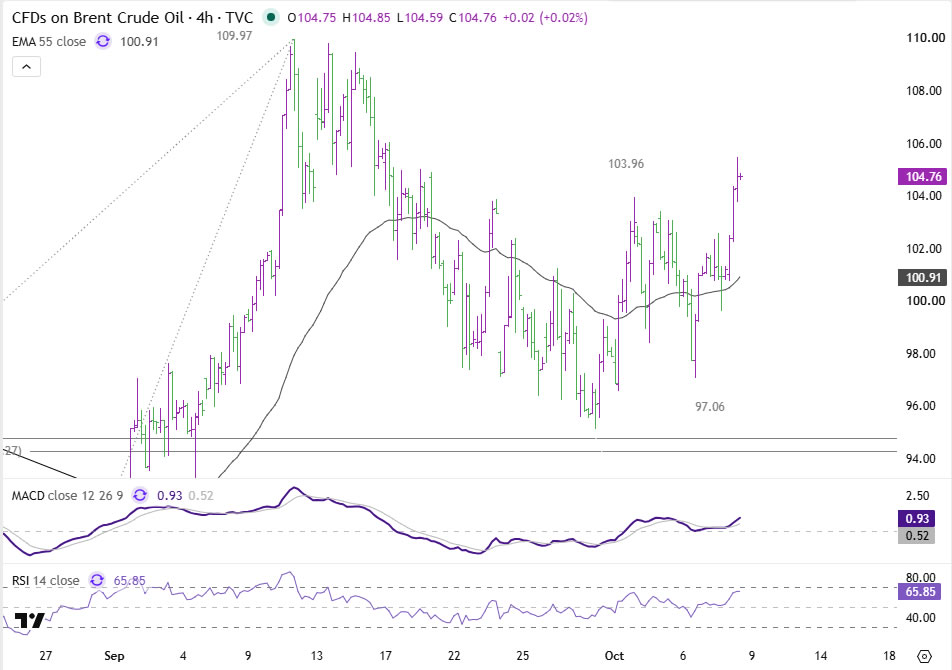
What’s happening: Global risk sentiment weakened on Thursday as Brent briefly pushed above $105 on renewed reports of possible US military action against Iran, while the US 10-year Treasury yield returned to around 5.35%, close to levels last seen in 2002. US equity futures fell and Asian stocks were broadly lower. The Dollar was broadly the strongest major, with the Yen and Swiss Franc relatively resilient.
Why it matters: Higher oil threatens inflation and corporate costs, while higher long-term yields raise financing costs and the discount rate on future earnings. Strong profits have let equities absorb much of the bond selloff so far, but the cushion thins when both pressures rise together, and the oil market has already used much of its inventory shock absorber. Markets are orderly, but increasingly vulnerable to another leg higher in either oil or long-term yields.
Global risk sentiment weakened on Thursday as two familiar pressures intensified at the same time. Brent briefly pushed above $105 as renewed reports of possible US military action against Iran revived supply concerns, while the US 10-year Treasury yield returned to around 5.35%, close to levels last seen in 2002. US equity futures fell and Asian stocks were broadly lower, leaving markets orderly but increasingly vulnerable to another leg higher in either oil or long-term yields.
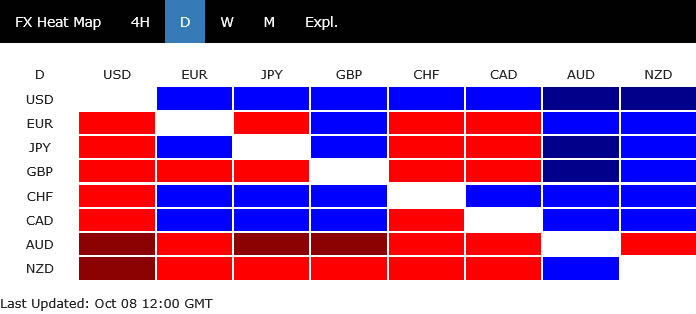
Currency markets showed the same defensive tone. The Dollar was broadly the strongest major currency in the 12:00 GMT Currency Heat Map, while the Yen and Swiss Franc were relatively resilient and the Australian and New Zealand Dollars lagged. The pattern is consistent with risk reduction rather than outright panic: investors are moving toward liquidity and defensive currencies, but there is little evidence yet of disorderly deleveraging.
The broader pressure on equities comes from both sides. Higher oil threatens inflation, household purchasing power and corporate costs. Higher long-term yields simultaneously increase financing costs and the discount rate applied to future earnings. Strong corporate profits have allowed equities to absorb much of the bond selloff so far, but the cushion becomes thinner when both pressures rise together.
Two Pressures on Equities
| Pressure | Current level | Channel to equities |
|---|---|---|
| Oil | Brent briefly above $105 | Threatens inflation, household purchasing power and corporate costs |
| Long-term yields | US 10-year around 5.35% | Raises financing costs and the discount rate applied to future earnings |
Iran Headlines Hit an Oil Market With Thinner Buffers
The immediate catalyst for crude was renewed concern over Iran.
Iran and Oil Data Points
- Brent: briefly pushed above $105
- NBC News: Trump and his national security team discussed the possibility of resuming large-scale military operations in the coming weeks
- Axios: preparations reported for possible major strikes against Iranian energy, infrastructure and nuclear targets
- Status: military options are being discussed and prepared, and a decision to launch strikes has not been confirmed
NBC News, citing a US official and another person with knowledge of the discussions, reported that US President Donald Trump and his national security team had discussed the possibility of resuming large-scale military operations in the coming weeks. Axios separately reported preparations for possible major strikes against Iranian energy, infrastructure and nuclear targets.
The language remains important. Military options are being discussed and prepared; a decision to launch strikes has not been confirmed. Trump’s own comments also carried mixed signals. At a campaign rally in San Antonio late Wednesday, he said an agreement with Iran was not something he wanted to do, while also praising envoy Steve Witkoff’s handling of the talks and saying Tehran was willing to offer concessions to stop the conflict.
That leaves crude exposed to headline risk in both directions. Evidence that military operations are moving closer could add further supply premium, particularly if the Strait of Hormuz or Gulf infrastructure becomes involved. But credible progress toward negotiations could remove part of that premium quickly.
What makes the latest escalation risk more important is that the oil market has already used a large part of its inventory cushion. Saudi Aramco Chief Executive Amin Nasser said this week that fewer than 6bn barrels of commercial inventories remain and that the vast majority are not practically available. More than 1bn barrels have already been released since the Middle East crisis began.
Nasser estimated that only around 10% or less of remaining inventories can actually be drawn. Using his own figures, that implies no more than roughly 600m barrels, equivalent to about six days of global consumption at around 102m barrels per day. That is an illustrative calculation rather than a measure of immediately releasable emergency supply, but it captures the central point: the geopolitical risk is familiar; the amount of shock absorber left in the oil system is not.
How Thin Is the Oil Buffer?
| Item | Figure | Read-through |
|---|---|---|
| Commercial inventories remaining (Nasser) | Fewer than 6bn barrels, the vast majority not practically available | More than 1bn barrels already released since the Middle East crisis began |
| Share that can actually be drawn (Nasser) | Around 10% or less, implying no more than roughly 600m barrels | About six days of global consumption at around 102m barrels per day; an illustrative calculation, not immediately releasable emergency supply |
| Planned IEA release | Another 100m barrels of crude and diesel | Roughly one day of global demand |
| US Strategic Petroleum Reserve crude stocks | Around their lowest level since 1982 | Less emergency supply available to absorb disruption |
The IEA is preparing another 100m-barrel release of crude and diesel, but that is roughly equivalent to only one day of global demand. US Strategic Petroleum Reserve crude stocks also remain around their lowest level since 1982. Oil executives increasingly describe a market in which additional disruption would transmit more directly into prices because fewer inventories are available to absorb it.
5.35% Yields Create the Second Pressure Point
The bond market is applying the other side of the squeeze. The US 10-year yield returned to around 5.35% on Thursday after Wednesday’s strong 10-year auction briefly demonstrated substantial investor demand around the 5.3% area.
Yields and Fed Data Points
- US 10-year Treasury yield: returned to around 5.35% on Thursday, close to levels last seen in 2002
- Wednesday’s 10-year auction: strong, with substantial investor demand around the 5.3% area
- Fed Governor Christopher Waller: expects “additional hikes” if the economy develops as anticipated
- Fed Governor Christopher Waller: hikes “do not need to come at consecutive meetings”
Fed Governor Christopher Waller added to the broader rates backdrop by saying he expects “additional hikes” if the economy develops as anticipated. But he also stressed there is flexibility over timing and that hikes “do not need to come at consecutive meetings.”
That reinforces the distinction markets have increasingly been making between the Fed’s timing and its destination. An October pause remains possible, but it does not necessarily imply that tightening has ended. Waller’s message leaves the eventual policy-rate peak higher even if the Fed chooses to wait between moves.
That matters for the long end because another sustained oil rise would reinforce inflation concerns at a time when Fed officials are already signaling that current policy may not be sufficient. Oil is therefore not a separate story from the Treasury selloff. It can become another reason for investors to demand higher compensation for holding duration.
Dalio: The Equity Cushion Is Shrinking
Bridgewater founder Ray Dalio, speaking to CNBC at the Milken Institute Asia Summit in Singapore, offered a useful framework for why stocks have remained resilient despite the rise in bond yields.
Equities entered the current cycle offering investors a substantial expected-return advantage over bonds, while strong earnings growth helped preserve that advantage even as yields climbed. That is why rates could rise sharply without immediately producing an equivalent decline in stocks.
But that cushion narrows as both stock prices and bond yields rise. Dalio said that as the relative advantage comes down, “you’re coming later into that cycle,” adding that this is where markets now stand. He also argued that investors should increasingly focus on free cash flow rather than reported earnings alone.
Companies can continue delivering earnings growth while simultaneously investing heavily and generating less cash from those investments. Higher borrowing costs then become increasingly important because they can eventually force companies and households to reduce credit use and spending. Dalio stopped short of predicting an imminent earnings downturn or equity correction, but his argument is that the market’s ability to absorb rising yields is becoming progressively smaller.
The oil shock adds another layer. Higher yields raise the cost of capital while higher energy prices pressure costs and disposable income. The problem for equities is no longer simply higher yields or higher oil. It is having to absorb both at the same time.
Orderly, But With Less Room for Another Shock
Markets remain orderly. Equity losses are contained relative to the magnitude of the rise in yields, Treasury markets continue to function, and FX moves still resemble conventional risk aversion rather than a broader liquidity event.
Cross-Asset Snapshot
- US equity futures: fell
- Asian stocks: broadly lower
- Dollar: broadly the strongest major currency in the 12:00 GMT Currency Heat Map
- Yen and Swiss Franc: relatively resilient
- Australian and New Zealand Dollars: lagged
But orderly is not the same as insulated.
Attention now turns to the 30-year Treasury auction and long-end buyback, which will provide another test of investor demand for duration at elevated yields. Strong demand could ease some of the immediate rate pressure. Weak demand would leave the long end exposed to another move higher.
Oil remains equally headline-sensitive. Any confirmation or denial of renewed US military operations, further incidents around Hormuz or Gulf infrastructure, or a meaningful change in US-Iran negotiations could quickly alter the geopolitical premium.
For equities, the test is about how much cushion remains. Brent above $105 and the 10-year yield around 5.35% are individually manageable. Sustained moves higher in both would make that resilience much harder to maintain.
Related Coverage
Fed, Treasury Yields and Gold
- Fed’s Waller Strengthens “Pause Is Not Pivot” Message With Call for Additional Hikes: the live-comment version of Waller’s remarks, going beyond the September minutes while saying the Fed can pause between moves without changing direction.
- US 10-Year Yield Tests Its Ceiling as 5.3% Draws Buyers, FOMC Minutes Bring AI Debt Into the Discussion: the yield-ceiling view behind Wednesday’s strong auction demand, and whether 5.3% can cap the latest surge.
- October Pause or Not, Fed Minutes Keep Another Hike Firmly on the Table: why an October pause would not mean the cycle is over, with most Fed officials still seeing another hike as likely by year-end.
- Could Gold’s Selloff Run Out of Road Below 4,000?: the Gold angle, with downside momentum fading near the 3,937–3,942 support zone as Treasury yields show signs of topping.
ECB and BoE: Bond Markets as Tightening
- ECB Minutes: Higher Long-Term Yields Could Do Part of Its Tightening Work: September’s hike was unanimous, but rising bond yields may lower how much further policy rates need to go.
- BoE’s Greene Says Bond Markets Cannot Do the Tightening Job Forever: the BoE substitution debate, with Greene arguing market tightening can delay a rate hike but not replace it.
FAQ
Why are equities under pressure from both oil and bond yields?
Higher oil threatens inflation, household purchasing power and corporate costs, while higher long-term yields increase financing costs and the discount rate applied to future earnings. Strong corporate profits have let equities absorb much of the bond selloff so far, but that cushion becomes thinner when both pressures rise together. On Thursday Brent briefly pushed above $105 and the US 10-year yield returned to around 5.35%, with US equity futures lower and Asian stocks broadly down.
How thin is the oil market’s inventory buffer?
Saudi Aramco CEO Amin Nasser said fewer than 6bn barrels of commercial inventories remain and that the vast majority are not practically available, with more than 1bn barrels already released since the Middle East crisis began. If only around 10% or less can be drawn, that implies no more than roughly 600m barrels, or about six days of global consumption at around 102m barrels per day. That is an illustrative calculation rather than immediately releasable emergency supply. The IEA’s planned 100m-barrel release is roughly one day of global demand, and US Strategic Petroleum Reserve crude stocks are near their lowest since 1982.
Does Waller’s “additional hikes” comment rule out an October pause?
No. Waller said he expects additional hikes if the economy develops as anticipated, but stressed there is flexibility over timing and that hikes do not need to come at consecutive meetings. An October pause therefore remains possible without implying that tightening has ended. His message leaves the eventual policy-rate peak higher even if the Fed waits between moves.
Key Takeaways
- Brent briefly pushed above $105 on reports of possible US military action against Iran, but a decision to launch strikes has not been confirmed.
- The oil market has little shock absorber left: fewer than 6bn barrels of commercial inventories remain, roughly 600m barrels at most are drawable, and the IEA’s planned 100m-barrel release is about one day of demand.
- The US 10-year yield returned to around 5.35%, close to levels last seen in 2002, after Wednesday’s strong auction showed substantial demand around 5.3%.
- Waller expects additional hikes but not necessarily at consecutive meetings, so an October pause would not mean tightening has ended.
- Oil is not separate from the Treasury selloff: another sustained oil rise would reinforce inflation concerns and raise the compensation investors demand for holding duration.
- Dalio argues the equity advantage over bonds is narrowing, with markets “coming later into that cycle,” and that investors should focus on free cash flow, though he stopped short of predicting a correction.
- Markets remain orderly, with the Dollar strongest and the Yen and Swiss Franc resilient, but sustained moves higher in both Brent and the 10-year yield would make equity resilience much harder to maintain.
What to Watch Next
The 30-year Treasury auction and long-end buyback are the next test of demand for duration at elevated yields: strong demand could ease immediate rate pressure, while weak demand would leave the long end exposed to another move higher. In oil, watch for any confirmation or denial of renewed US military operations, further incidents around Hormuz or Gulf infrastructure, and any change in US-Iran negotiations.
For equities, the key is whether Brent holds above $105 and the 10-year yield stays around 5.35%. Each is individually manageable, but sustained moves higher in both would test the cushion much harder.





