


- Bulls recommend buying on dips in the S&P 500.
- Corporate earnings growth is slowing.
Strong US labour market data failed to reassure investors. Signs that the use of artificial intelligence is not leading to job losses were expected to dampen the sell-off in the equity market. In fact, the S&P 500 and Nasdaq-100 have stabilised near three-month lows. The key question is whether the sell-off on Black Thursday, 5 November, was a temporary blip or the start of a long downward trend for AI stocks.
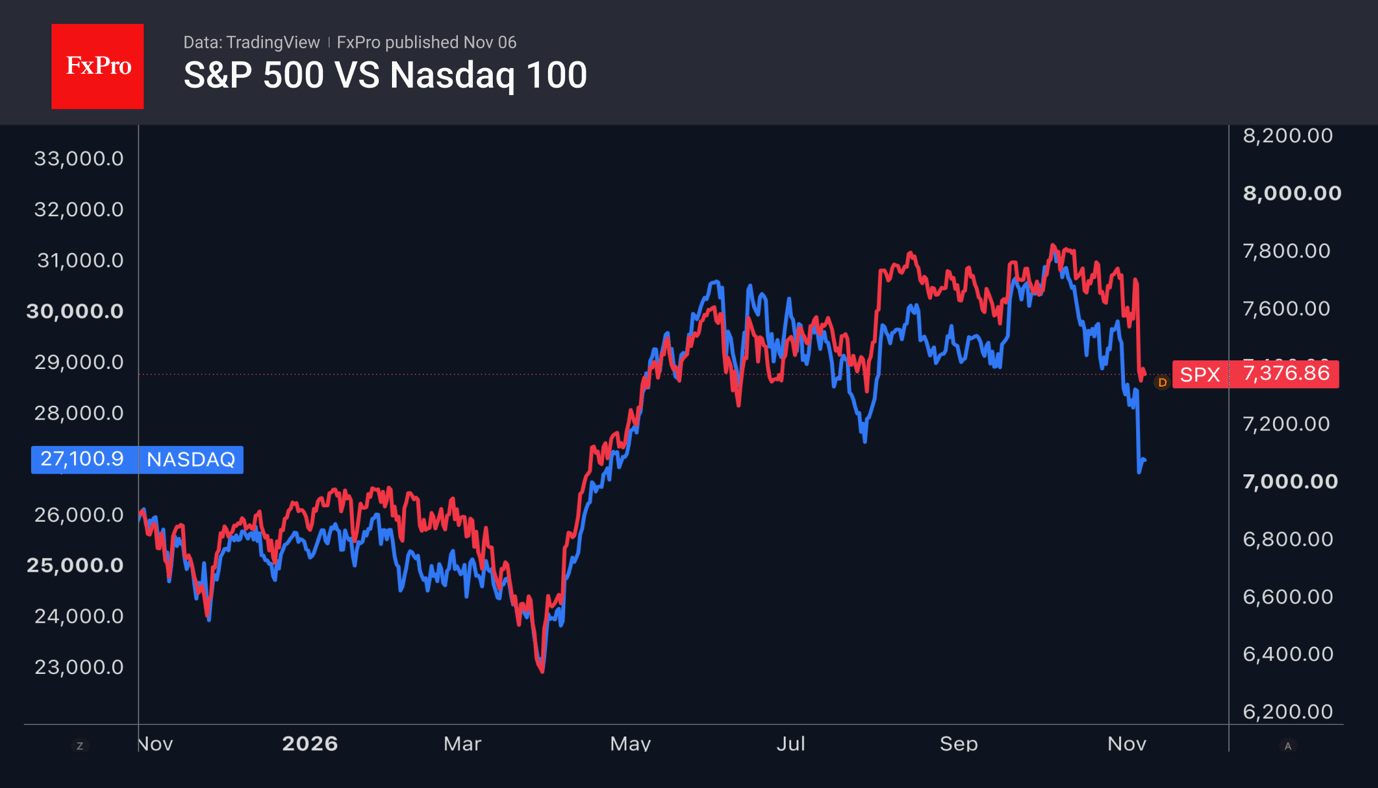
One of the key principles of investing is to let your rules, rather than media headlines, make decisions for you. The bulls who called for buying the dip in the S&P 500 continue to insist they were right, despite the broad market index’s dramatic slump. Morgan Stanley is urging investors to add risk to their portfolios over the next 2–3 weeks. Yardeni Research maintains that the AI bubble has not burst; it has simply lost some air. There is no economic catastrophe on the horizon, and now is the time to buy shares.
In our view, the market is now shifting into a lower gear. Despite the fall in index levels, market breadth and strength indicators have been rising steadily since the start of October. Separately, according to FactSet, second-quarter profitability reached an all-time high. For half a century before the 1990s, corporate profits accounted for 6% of GDP; by 2026, this share had doubled.
A Democratic victory means that the construction and commissioning of data centres will slow but will not halt. This implies weaker financial results not only for chip manufacturers but also for other companies and the economy as a whole. Sustained stabilisation of these results will create opportunities for new purchases of S&P 500 shares. For now, however, the turbulence in the equity market is due to a shift into a different gear.
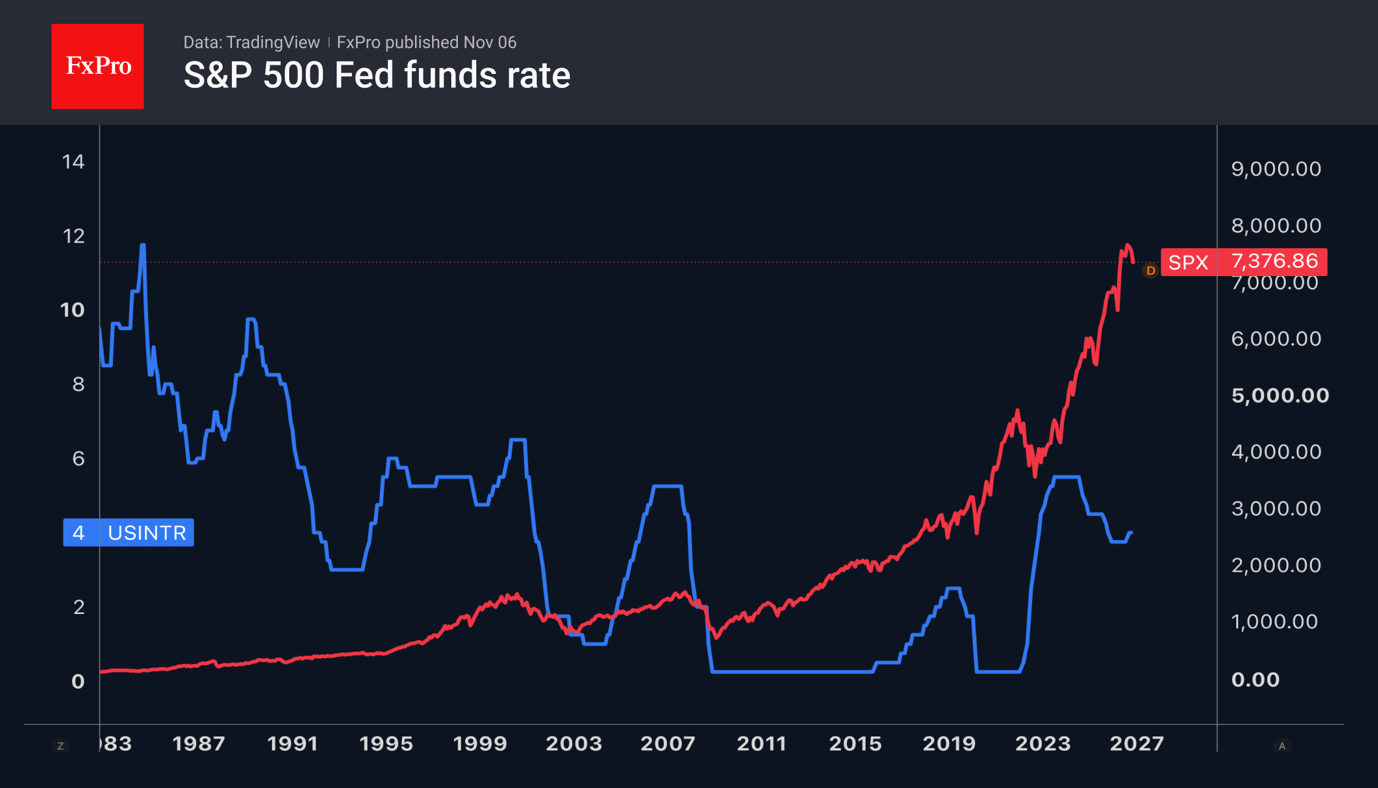
The Fed may provide support for the S&P 500 over the medium term. Fed Chair Kevin Warsh believes that markets should do some of the work for the central bank. In this regard, a deepening sell-off in stock indices will lead to tighter financial conditions and will not require monetary tightening at the pace anticipated by derivatives markets. Instead of the Trump put, the Fed put may return to the equity market. The key is that US inflation does not continue to accelerate.
The FxPro Analyst Team