Swiss Q2 GDP stagnates as manufacturing slumps

    Switzerland’s GDP growth for Q2 came in flat at 0.0% qoq, missing the modest expectation of a 0.1% qoq growth. While this paints a grim picture, particularly for manufacturing and construction sectors, certain segments like trade and accommodation services displayed resilience, leaving a mixed bag of results for economists and investors to sift through.

    The manufacturing sector contracted sharply by -2.9% qoq, weighed down significantly by a decline in the chemical and pharmaceutical industry, which shrank by -2.3%. Mechanical engineering and metal construction also faced headwinds, reflecting the sector’s sensitivity to challenging international conditions. Furthermore, the construction sector didn’t fare well either, contracting by -0.7% qoq.

    On a brighter note, both private and government consumption showed marginal growth at 0.4% and 0.1% qoq, respectively. These figures indicate that domestic demand remains somewhat steady, offering a counterbalance to the weaknesses observed in production sectors.

    Equipment and software investment plunged by -3.7% qoq, while exports of goods fell by -1.2% qoq. However, export of services saw a rise of 2.6% qoq, and imports of goods and services contracted by -3.7%, making a net positive contribution to GDP.

    Full Swiss GDP release here.

    New Zealand goods terms of trade rose 0.4% in Q2

      In Q2 2023, New Zealand’s goods terms of trade rose by a 0.4%, much better than expectation of -1.3% decline. Both export and import prices for goods witnessed a dip, falling -0.6% and -1.0% respectively. Export volumes surged 6.8%, while import volumes declined by -2.8%, suggesting robust external demand and potentially cautious domestic consumption.

      The services sector terms of trade rose significantly by 4.4%, a robust figure indeed. Export prices for services edged up 0.3%, whereas import prices saw a more considerable decline of -3.9%.

      Alasdair Allen, international trade manager, highlighted that New Zealand typically enjoys a trade surplus with China, increasingly driven by trade in goods. The trade surplus for Q2 stood at a NZD 2.0B, with total goods and services exports to China valued at NZD 5.8B, and imports at NZD 3.8B. Notably, there have been only three quarterly goods deficits with China over the past five years.

      Full NZ international trade release here.

      ECB Wunsch inclined to do a little bit more

        In a radio interview over the weekend, Pierre Wunsch, a hawkish member of ECB Governing Council, signaled that more action may be needed to address the issue of “very persistent” inflation in Eurozone.

        “I’m inclined to say we maybe need to do a little bit more,” Wunsch stated on Belgian public radio, leaving the door open for additional monetary policy adjustments.

        Wunsch clarified that it’s too soon to talk about a complete stop in tightening. He added that he does not expect inflation to come back to ECB’s target of 2% before 2025.

        US ISM manufacturing rose to 47.6, corresponds to -0.4% annualized GDP contraction

          US ISM Manufacturing PMI rose from 46.4 to 47.6 in August. New orders dropped from 47.3 to 46.8. Production rose from 48.3 to 50.0. Employment rose from 44.4 to 48.5. Prices rose from 42.6 to 48.4.

          ISM said: “This is the 10th month of contraction and continuation of a downward trend that began in June 2022. That trend is reflected in the Manufacturing PMI’s 12-month average falling to 47.8 percent. Of the five subindexes that directly factor into the Manufacturing PMI, none are in growth territory.”

          “The past relationship between the Manufacturing PMI and the overall economy indicates that the August reading (47.6 percent) corresponds to a change of minus-0.4 percent in real gross domestic product (GDP) on an annualized basis.”

          Full ISM manufacturing release here.

          Canada GDP contracts -0.2% mom in Jun, flat in Jul

            Canada’s GDP contracted -0.2% mom in June, matched expectations. Services-producing industries was down -0.2% mom. Goods-producing industries were down -0.4% mom. 12 of 20 industrial sectors posted decreases.

            Advance information indicates that real GDP was essentially unchanged in July.

            Full Canada GDP release here.

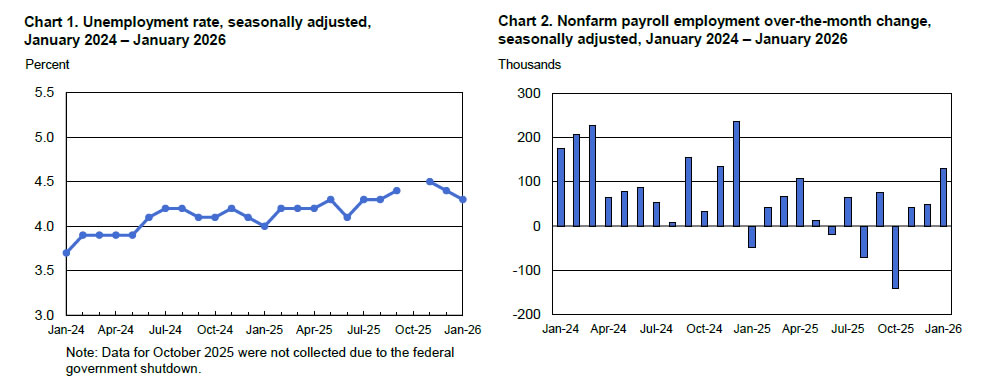
            US NFP grows 187k, unemployment rate jumps to 3.8%

              US non-farm payroll employment grew 187k in August, above expectation of 170k. That’s notably lower than the average monthly gain of 271k over the prior 12 months.

              Unemployment rate jumped from 3.5% to 3.8%, above expectation of 3.5%, marking the highest level in a year and a half. Number of unemployment persons increased by 514k to 6.4m. Labor force participation rate rose 0.2% to 62.8%, first increase since March.

              Average hourly earning rose 0.2% mom, below expectation of 0.3% mom. Over the past 12 months, average hourly earnings have increased by 4.3% yoy.

              Full US NFP release here.

              UK PMI manufacturing finalized at 43, deepening downturn

                UK PMI Manufacturing was finalized at 43.0 in August, down from 45.3 in July. This marks the lowest level since May 2020, underscoring the frailty in the sector. S&P Global highlighted that the demand slackened due to weaker domestic and export conditions. Interestingly, purchase prices have also declined at their fastest rate since January 2016.

                Rob Dobson, Director at S&P Global Market Intelligence, described the situation as a “deepening of the UK manufacturing downturn,” with the latest PMI reaching a 39-month low. He drew attention to the severity of the contraction rates in output and new orders, which he said are “rarely seen outside of major periods of economic stress, such as the global financial crisis of 2008/09 and the pandemic lockdowns.”

                Dobson elaborated on multiple economic headwinds affecting demand, including rising interest rates, the ongoing cost-of-living crisis, export losses, and overall market outlook concerns. These conditions have forced manufacturing firms into a “more defensive posture,” with cutbacks in purchasing activity, inventory holdings, and staffing levels as they focus on controlling costs and maintaining margins.

                Full UK PMI manufacturing release here.

                Eurozone PMI manufacturing finalized at 43.5, glimmers of hope despite persistent weakness

                  Eurozone PMI Manufacturing was finalized at 43.5, marking a slight uptick from July’s 38-month low of 42.7. Country-level readings reveal that Germany, the largest economy in the Eurozone, remains a cause for concern. Although it reported a two-month high, its PMI of 39.1 underscores its struggles. Spain (46.5), France (46.0), the Netherlands (45.9), Italy (45.4), and Austria (40.6) remained in contraction. Greece and Ireland were above 50-mark at 52.9 and 50.8 respectively.

                  Cyrus de la Rubia, Chief Economist at Hamburg Commercial Bank, commented on the situation, stating, “These numbers aren’t as terrible as they might look at first glance.”

                  Despite the obvious weakness signaled by a PMI below 50, de la Rubia pointed out that all twelve subindices either improved or remained stable. “This indicates that the downward trend from the past few months is starting to lose steam across the board,” he added.

                  However, the cloud over Germany continues to darken. “Germany remains a negative outlier among the big euro countries,” de la Rubia noted. This latest data will likely rekindle debates about Germany being the “sick man of Europe”, even though it remains one of the most diversified economies in the region.

                  Full Eurozone PMI manufacturing release here.

                  Swiss CPI up 0.2% mom in Aug, unchanged at 1.6% yoy

                    Swiss CPI rose 0.2% mom in August, matched expectations. Core CPI (excluding fresh and seasonal products, energy and fuel) rose 0.1% mom. Domestic products prices was flat 0.0% mom. Import products prices rose 0.8% mom.

                    Compared with the same month a year ago, CPI was unchanged at 1.6% yoy, above expectation of 1.5% yoy. Core CPI slowed from 1.7% yoy to 1.5% yoy. Domestic products prices slowed from 2.3% yoy to 2.2% yoy. Imported products prices rose from -0.6% yoy to -0.3% yoy.

                    Full Swiss CPI release here.

                    Downside risks for NFP, yet market impact may be fleeting

                      Today, the financial markets are keenly focused on US Non-Farm Payrolls data, which is expected to show growth of 170k jobs in August. While unemployment rate is anticipated to remain steady at 3.50%, average hourly earnings are projected to grow by 0.3% mom. However, related data paint a murkier picture, suggesting that risks could be skewed to the downside for the NFP report. Yet, it’s unsure if the impact on the markets would last long.

                      Earlier this week, ADP private job growth came in at 177k, slightly missing expectations and dampening the overall employment outlook. Moreover, JOLTS data showed that job openings have plummeted to their lowest level since March 2021, and consumer confidence took a significant hit, dropping from 114.0 to 106.1. The employment components of ISM Manufacturing and Non-Manufacturing reports are not yet available, leaving a gap in the data to fully assess labor market conditions.

                      Traders have been notably indecisive recently. While it is almost certain that Fed will pause its tightening this month, the likelihood of a rate hike by year’s end seems to be teetering around 50% mark. Market participants are unlikely to get more clarity until the Fed releases its new economic projections and dot plot on September 20, alongside the rate decision.

                      As for Dollar Index, it’s clearly losing upside momentum as seen in D MACD. While another rise cannot be ruled out as long as 102.84 support holds, strong resistance is likely at 38.2% retracement of 144.77 to 99.57 at 105.37 to limit upside. Break of 102.84 will argue that the corrective rally from 99.57 has completed earlier then expected.

                      Yuan spikes higher as PBoC slashes FX RRR, but move quickly undone

                        Chinese Yuan saw a sharp uptick after PBoC announced a substantial 200 bps cut in foreign exchange reserve requirement ratio to 4% from 6%, effective September 15. According to PBoC, the move aims to “improve financial institutions’ ability to use foreign exchange funds.”

                        This RRR cut is set to release approximately USD 16.4B in foreign exchange, based on China’s FX deposits standing at USD 821.8B as of end-July. Market analysts also note that the FX RRR reduction could have the added effect of lowering dollar funding costs in the interbank market, thereby alleviating some of downward pressure on Yuan.

                        On the technical front, USD/CNH saw a drop to as low as 7.2387 following the announcement, but it has since recovered most ground. Despite the knee-jerk reaction, the broader uptrend from 6.6971 appears to remain intact. Should it break 7.3103 minor resistance, this would signal completion of the correction from 7.3491 and likely pave the way through 7.3491 for testing 7.3745 high.

                        However, considering bearish divergence condition in D MACD, strong resistance is likely at 61.8% projection of 6.8100 to 7.2853 from 7.1154 at 7.4091 to limit upside, to complete the five wave sequence from 6.6971.

                        While technical landscape seems to suggest further upside for USD/CNH, it is crucial to note that these views could be rendered academic at a moment’s notice. The Chinese authorities may implement various intervention measures any time, adding an extra layer of unpredictability to the equation.

                        China’s Caixin PMI manufacturing rose to 51, output and employment see uptick

                          China’s Caixin PMI for manufacturing defied expectations in August, rising from 49.2 to 51.0 and beating market forecasts of 49.4. This indicates a return to expansionary territory. The report noted several key improvements, including increases in output, new business, and a rebound in employment levels. Significantly, input costs rose for the first time since February, suggesting an easing in deflationary pressures.

                          Wang Zhe, Senior Economist at Caixin Insight Group, elaborated on the data, stating, “In August, the manufacturing sector showed overall improvement. Apart from sluggish exports, the gauges for supply, total demand, and employment were all in expansionary territory.” Wang also noted that the “slight rise in prices buffered the pressure of deflation” and that logistics remained smooth.

                          However, caution still underlines the market’s medium-term outlook. According to Wang, “Looking ahead, seasonal impacts will gradually subside, but the problem of insufficient internal demand and weak expectations may form a vicious cycle for a longer period of time.” Wang also warned that “combined with the uncertainty in external demand, the downward pressure on the economy may continue to increase.”

                          Full China Caixin PMI manufacturing release here.

                          Japan PMI manufacturing finalized at 49.6, input costs inflation at three-month high

                            Japan’s PMI Manufacturing remained stagnant at 49.6 in August, indicating a third consecutive month of sectoral contraction. According to Usamah Bhatti at S&P Global Market Intelligence, the rate of deterioration was “unchanged from July and only fractional,” primarily due to a “slower reduction in new orders.”

                            The report highlighted concerning trends in cost pressures. “Input prices rose at a quicker pace for the first time since September 2022, pushing the rate of input cost inflation to a three-month high,” Bhatti stated. The escalation in input costs was specifically attributed to high raw material prices, labor costs, and a weakened yen.

                            Despite these pressures, the report found that manufacturers increased their selling prices at the “weakest rate in two years,” indicating that companies may be absorbing the additional costs instead of transferring them to consumers.

                            The employment situation also emerged as a point of concern. Bhatti noted, “The rate of job creation broadly stalled, with the latest increase the slowest recorded in the 29-month sequence.”

                            Full Japan PMI manufacturing release here.

                            ECB de Guindos: Decision is open for Sep

                              In a cautious tone, ECB Vice President Luis de Guindos said yesterday that “For September, the decision is open,” dropping no hint on whether the central bank would deliver another rate hike, or pause.

                              Nevertheless, de Guindos was clear about the new economic projections to be published at the September meeting. He noted, “forecasts for economic growth are worse than we had projected in June, while inflation projections are similar to what we had in June.”

                              De Guindos added that the ECB is “entering the final stretch” of its tightening cycle. He put emphasis on second-round effects and inflation expectations as the factors for any future monetary policy decisions.

                              US initial jobless claims dropped to 228k

                                US initial jobless claims dropped -4k to 228k in the week ending August 26, slightly above expectation of 227k. Four-week moving average of initial claims rose 250 to 237.5k.

                                Continuing claims rose 28k to 1725k in the week ending August 19. Four-week moving average of continuing claims rose 8k to 1704k.

                                Full US jobless claims release here.

                                US PCE price index rose to 3.3% yoy, core PCE up to 4.2% yoy

                                  US personal income edged up by 0.2% mom, or USD 45.0 billion, missing the anticipated 0.3% increase. The modest gain in income primarily reflected an uptick in compensation, which was partially offset by a decline in personal current transfer receipts.

                                  Conversely, personal spending outperformed expectations, registering a 0.8% mom rise, or an increase of USD 144.6 billion, compared to the projected 0.7%. This growth was predominantly driven by a USD 102.7 billion expansion in spending on services and a USD 41.9 billion increase in goods expenditure.

                                  PCE price index and Core PCE price index (excluding food and energy), both rose 0.2% mom, matching market expectations. The components within the inflation basket displayed a mixed pattern, with prices for goods falling by -0.3% and prices for services rising by 0.4%. Additionally, food prices saw a modest increment of 0.2%, while energy prices edged up by 0.1%.

                                  On a year-over-year basis, PCE price index climbed from 3.0% yoy to 3.3% yoy, while Core PCE price index ascended from 4.1% to 4.2%, both in alignment with market predictions. A disaggregated look at the year-over-year data reveals that prices for goods dropped by -0.5%, and prices for services surged by 5.2%. Meanwhile, food prices increased by 3.5%,and energy prices dipped by a notable -14.6%.

                                  Full US Personal Income and Outlays release here.

                                  ECB accounts: Diverging views on the need of a Sep hike

                                    According to the minutes, all members supported the 25 basis point rate increase. Nevertheless, some members expressed a preference initially for not raising key ECB interest rates further, citing risks of stronger-than-anticipated transmission of rate hikes into the economy.

                                    Interestingly, the account captured diverging views on the necessity for another rate hike in September. On one side, it was argued that if inflation did not decline as swiftly as expected, interest rates would need to be adjusted further to ensure a timely return to the 2% target.

                                    On the other side, some members posited that the September ECB staff projections could potentially show a downward revision in the inflation path, making another rate hike in September unnecessary.

                                    ECB Holzmann: We could do another hike or two

                                      ECB Governing Council member Robert Holzmann said he has yet to make a decision about the upcoming September meeting but pointedly did not rule out the possibility of an interest rate hike.

                                      “We are not yet at the highest level; it could be that we do another hike or two,” Holzmann commented, offering a glimpse into his thoughts on the current stance of ECB monetary policy.

                                      However, Holzmann also put forth a scenario that could lead to an earlier-than-expected easing of rates. “If we were to move this year to above 4% … and inflation comes down, then we could be able, perhaps, to change it already to lower rates in 2024. If that’s not the case, we’ll have to wait for 2025,” he said.

                                      Eurozone CPI holds steady at 5.3%, core CPI slows to 5.3%

                                        In August, Eurozone’s CPI defied market expectations by remaining unchanged at a 5.3% yoy, contrary to anticipated slowdown to 5.1% yoy. Core inflation, which excludes energy, food, alcohol, and tobacco, did slow down, but only to match expectations, declining from 5.5% yoy to 5.3% yoy.

                                        A breakdown of the main components contributing to Eurozone’s inflation rate reveals a mixed bag. Food, alcohol, and tobacco are expected to register the highest annual rate in August at 9.8%, albeit lower than the 10.8% seen in July. Services come next, slipping slightly from 5.6% to 5.5%, followed by non-energy industrial goods which also dipped from 5.0% to 4.8%. Notably, energy costs seem to have eased their downward trend, registering at -3.3% compared to -6.1% in the previous month.

                                        Full Eurozone CPI release here.

                                        BoE Pill: Current emphasis on sufficiently restrictive policy for sufficiently long

                                          In a speech in South Africa today, BoE Chief Economist Huw Pill underscored the importance of seeing “the job through” to ensure a “lasting and sustainable return of inflation to the 2% target,” highlighting the critical balance the bank must strike as it’s now in the territory of restrictive policy.

                                          Pill acknowledged the perils of “doing too much,” and “inflicting unnecessary damage on employment and growth”.

                                          Nevertheless, the present emphasis, he noted, is on maintaining “sufficiently restrictive” policy for “sufficiently long” to assure a sustainable return to the inflation target, echoing the language used in the MPC’s last statement.