BoJ Kuroda: Yen depreciation may have good impact on economy, but speculation is bad

    BoJ Governor Haruhiko Kuroda said, “yen depreciation may have a good impact on macro-economy as a whole, but there are some sectors which are suffering from weak yen.” He added that “we have to carefully watch, and analyze the impact of currency movements on the economy.”

    Kuroda also qualified that “if currency movement is so fast and uni-direction, probably caused by speculation, that would be bad for the economy.”

    Meanwhile, he reiterated, “we will continue our monetary easing to achieve the 2% inflation target in a stable and sustainable manner.”

    BoE Pill: A significant monetary policy response required in Nov

      BoE Chief Economist Huw Pill said in a speech, “Given the uncertain world and volatile markets we face, November can seem a long time away. At present, I am still inclined to believe that a significant monetary policy response will be required to the significant macro and market news of the past few weeks.”

      “But I will see when we get to November how events have evolved in the meantime. As always, my policy choices will be driven by the data and guided by pursuit of the inflation target,” he added.

      Full speech here.

      UK NIESR: Energy price guarantees to drive GDP growth higher in Q4

        NIESR said the -0.3% contraction in UK GDP in August “possibly signalling the beginning of an economic recession”. Given that September PMI pointed to further decrease in the manufacturing sector, it’s likely to continue to drag on the economy in Q3.

        However, it expects “the energy price guarantees for households and firms announced in September’s fiscal event to drive GDP growth higher in the fourth quarter. The extent to which the measures in the mini-budget will counter the dampening effects of plummeting confidence and increased interest rates will become clearer over the coming months.”

        Full release here.

        US PPI up 0.4% mom, 8.5% yoy in Sep

          US PPI for final demand rose 0.4% mom in September, above expectation of 0.2% mom. Two-thirds can be traced to a 0.4% mom prices for services. The index for goods rose 0.4%. Prices less food, energy, and trade services rose 0.4% mom.

          For the 12 months ended in the period, PPI slowed from 8.7% yoy to 8.5% yoy. PPI ex food, energy and trade was unchanged at 5.6% yoy.

          Full release here.

          Eurozone industrial production up 1.5% mom in Aug, EU up 1.1% mom

            Eurozone industrial production rose 1.5% mom in August, above expectation of 0.5% mom. Production of capital goods rose by 2.8% mom, durable consumer goods by 0.9% mom and non-durable consumer goods by 0.7% mom, while production of intermediate goods fell by -0.5% mom and energy by 2.1% mom.

            EU industrial production rose 1.1% mom. Among Member States for which data are available, the highest monthly increases were registered in Ireland (+16.6%), Estonia (+5.0%) and Denmark (+4.3%). The largest decreases were observed in Sweden (-7.0%), Belgium (-6.1%) and the Netherlands (-1.5%).

            Full release here.

            UK GDP contracted -0.3% mom in Aug, driven by production

              UK GDP contracted -0.3% mom in August, worst than expectation of 0.1% mom expansion. In the three months to August, compared with the three months, GDP contracted by -0.3%, with -1.5% fall in production, -0.1% fall in services and flat growth in construction.

              Production fell by -1.8% mom, and was the main contributor to the decline in GDP. Growth was negative in three of the four sectors. Services dropped -0.1% mom. Construction rose 0.4% mom.

              Also released, industrial production came in at -1.8% mom, -5.2% yoy, versus expectation of -0.2% mom, 0.6% yoy. Manufacturing production came in at -1.6% mom, -6.7% yoy, versus expectation of 0.0% mom, 0.7% yoy. Goods trade deficit widened to GBP -19.3B, but smaller than expectation of GBP -20.5B.

              Full GDP release here.

              USD/JPY breaks to new 24-yr high as Japan just closely watching

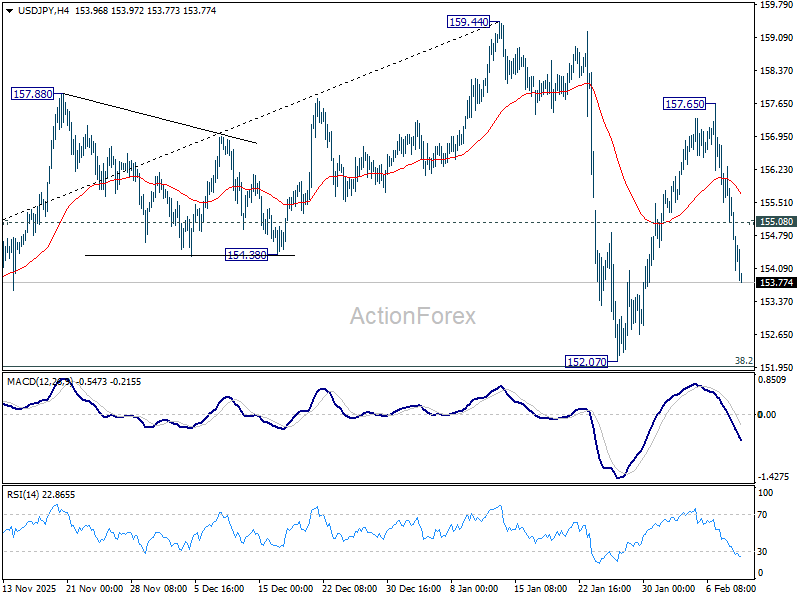
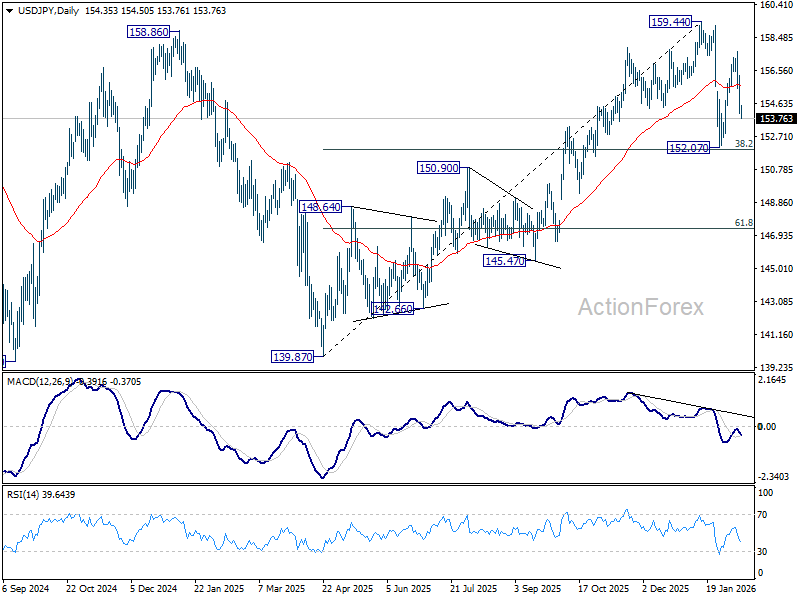
                USD/JPY finally breaks through 145.89 resistance to resume up trend to new 24-year high. It’s on track towards 1998 high at 147.68. But there is not clear sign of imminent intervention by Japan yet.

                Finance Minister Shunichi Suzuki just repeated that what was important was the speed of forex moves. Japan will closely watch forex moves with a sense of urgency.

                Chief Cabinet Secretary Matsuno Hirokazu said echoed that the government is “closely watching FX moves with a high sense of urgency” and will ” take appropriate steps on excess FX moves”.

                The message has been consistent that Japan is mindful of fast, one-sided depreciation of yen, rather than the actual rate.

                RBA Ellis: Neutral is not a destination we necessarily reach

                  RBA Assistant Governor Luci Ellis said in a speech that “don’t think of this as a mechanistic approach of ‘we have to get back to neutral’, or above neutral” interest rate.

                  “The neutral rate is an important guide rail for thinking about the effect policy might be having. It is not necessarily a prescription for what policy should do,” he said.

                  “‘Neutral’, then, is not a destination we necessarily reach, but more a pole-star to guide us. And even then, its location is sufficiently uncertain that we are perhaps better served by paying more attention to the ground as it shifts beneath our feet than to that faraway pole-star,” he added.

                  Full speech here.

                  ECB Villeroy: Interest rate should be at neutral by year end

                    ECB Governing Council member Francois Villeroy de Galhau said it’s still too early to decide whether the central bank should hike by 50bps or 75bps at October 27 meeting. But he noted interest rate should be at neutral level, or “a bit less than 2%” by year end.

                    Then, ECB could start shrinking its balance sheet. “It would not be consistent to keep a very large balance sheet for too long in order to compress the term premium, whilst at the same time contemplating tightening policy rates above neutral,” he added.

                    “The reimbursement of TLTROs comes first, and we should avoid any unintended incentives to delay repayments by banks,” he said. “Here we could start earlier than 2024, maintaining partial reinvestments but at a gradually reduced pace.”

                    Fed Mester: There has been no progress on inflation

                      Cleveland Fed President Loretta Mester said, “Unacceptably high and persistent inflation remains the key challenge facing the U.S. economy. Despite some moderation on the demand side of the economy and nascent signs of improvement in supply side conditions, there has been no progress on inflation.”

                      “Monetary policy is moving into restrictive territory and will need to be there for some time in order to put inflation on a sustained downward path to our 2 percent goal,” she said, adding “I do not anticipate any cuts in the fed funds target range next year.”

                      “With growth well below trend over the next couple of years, it is possible that a shock could push the U.S. economy into recession for a time,” Mester said, adding “none of this is painless,” but it is necessary, as high inflation exerts heavy costs on the economy.

                      IMF global growth at 3.2% in 2022, 2.7% in 2023

                        In the latest World Economic Outlook Report, IMF keeps global economic growth forecasts unchanged at 3.2% in 2022, but downgrade 2023 by -0.2% to 2.7%.

                        It said: “Global economic activity is experiencing a broad-based and sharper-than-expected slowdown, with inflation higher than seen in several decades. The cost-of-living crisis, tightening financial conditions in most regions, Russia’s invasion of Ukraine, and the lingering COVID-19 pandemic all weigh heavily on the outlook.”

                        Global inflation is forecast to rise from 4.7% in 2021, to 8.8% in 2022, but to decline to 6.5% in 2023, and then 4.1% in 2024.

                        IMF said, “Monetary policy should stay the course to restore price stability, and fiscal policy should aim to alleviate the cost-of-living pressures while maintaining a sufficiently tight stance aligned with monetary policy. ”

                        Full report here.

                        ECB Lane: Monetary policy is to ensure residual inflation dynamic returns to target in timely manner

                          In a speech, ECB Chief Economist Philip Lane said that monetary is “always decided under conditions on uncertainty”, both about “inflation dynamics” and the “channels connecting medium-term inflation to our monetary policy instruments”. This uncertainty is “mitigated to some extent by taking a meeting-by-meeting”.

                          The “considerable lags” between monetary policy actions and their impact on inflation outcomes imply that much of the near-term attention in assessing monetary policy actions focuses on the transmission to financial conditions.

                          Also, “in the absence of further shocks, the profile of euro area inflation over the next 12 to 18 months will be primarily driven by the fading impact of past supply shocks and the deceleration in demand that is signalled by the latest confidence indicators.” The role of monetary policy is to ensure that the “residual” inflation dynamic returns to target in a timely manner.

                          Full speech here.

                          Japan foreign currency deposits up 8.3% since start of the year

                            Accord to latest BoJ data, foreign currency deposits at domestic banks rose the JPY 26.58T at the end of August, up 8.3% since the start of 2022. The increase in despoits in the eight month period was also the highest since 2015.

                            The surge could partly be explained by Yen’s depreciation. Yet, the flow into foreign currencies could also be seen as a factor contributing to the persistent decline in Yen’s exchange rate.

                            UK payrolled employment rose 69k in Sep, unemployment rate dropped to 3.5% in Aug

                              UK payrolled employment rose 69k in September, or 0.2% mom, to 29.7m. Total growth over the 12-month period was 714k. Median monthly pay rose 6.3% yoy to GBP 2131.

                              In the three-month period to August, unemployment rate dropped to 3.5%, down -0.3% from the previous three-month period. Employment rate also dropped -0.3% to 75.5%. Economic inactivity rate rose 0.6% to 21.7%. Totally weekly hours dropped -0.4% to 1046m.

                              Average earnings excluding bonus rose 5.4% 3moy in August, up from 5.2%. Average earnings including bonus rose 6.0% 3moy, up from 5.5% 3moy.

                              Full release here.

                              Australia NAB business conditions rose to 25, confidence dropped to 5

                                Australia NAB Business Confidence dropped from 10 to 5 in September. Business Conditions rose from 22 to 25. Trading conditions rose from 29 to 38. Profitability conditions was unchanged at 19. Employment conditions dropped from 17 to 16.

                                “Conditions are now higher than their pre-COVID peak, which shows just how strong demand is at present,” said NAB Chief Economist Alan Oster. “The current level of conditions are only exceeded by the post-lockdown surge in early 2021. Clearly, consumers are still finding a way to keep spending, with the very strong labour market, savings buffers and a broader post-pandemic recovery all playing a role.”

                                “Confidence eased in the month but is still around the long-run average in the history of the survey,” said Oster. “The confidence index has been volatile recently but is clearly a little lower than it was early in the year when the passing of the Omicron wave was providing a strong reason for optimism. Still, businesses are far from pessimistic.”

                                Full release here.

                                Australia Westpac consumer sentiment dropped to 83.7, RBA averted a much bigger fall

                                  Australia Westpac Consumer Sentiment Index dropped -0.9% mom to 83.7 in October. Westpac said the index remains in “deeply pessimistic territory”, at a level comparable to the lows “briefly reached during the pandemic”, and during the Global Financial Crisis.

                                  It added RBA’s smaller than expected 25bps rate hike “averted a much bigger fall” in sentiment. Sentiment amongst those sampled before the RBA decision showed a “depressing” 77.4 index read. But the post RBA “relief rebound” is “unlikely to be repeated in future months”.

                                  Westpac expects four more consecutive 25bps rate hikes at RBA’s November, December, February and March meetings.

                                  Full release here.

                                  Japan Suzuki: Will take appropriate action on excessive Yen moves

                                    Japanese Finance Minister Shunichi Suzuki reiterated today, “we will take appropriate action if there are any excessive moves” in Yen’s exchange rate. The comment came as Yen threatens to decline further towards the lowest level since 1998 again.

                                    Suzuki also said, Japan is closely watching current FX moves with a “strong sene of urgency”. He planned to explain the stance on intervention at G20 meeting. He said that Japan have gained “certain understanding” from the US regarding intervention.

                                    Fed Brainard: Monetary policy will be restrictive for some time

                                      Fed Vice Chair Lael Brainard said in a speech, “monetary policy will be restrictive for some time to ensure that inflation moves back to target over time.”

                                      “It will take time for the cumulative effect of tighter monetary policy to work through the economy broadly and to bring inflation down.”

                                      “In light of elevated global economic and financial uncertainty, moving forward deliberately and in a data-dependent manner will enable us to learn how economic activity, employment, and inflation are adjusting to cumulative tightening in order to inform our assessments of the path of the policy rate.” She said.

                                      Full speech here.

                                      Fed Evans sees interest rate above 4.5% early next year

                                        Chicago Fed President Charles Evans said, “we can bring inflation down relatively quickly while also avoiding a recession.” He pointed to Fed’s projections that unemployment rate will rise form current 3.5% to 4.4% by the end of next year. Core inflation will dropped from August’s 6.2 to 2.8% then.

                                        That’s a “pretty good looking soft landing,” he said. “While this does represent a noticeably softer labor market when compared with today’s, these certainly are not recession-like numbers.”

                                        Evans saw federal funds rising to “a bit above 4.5%” early next year, then “remaining at this level for some time.”

                                        ECB Villeroy: Takes 2 to 3 years to bring inflation back to target

                                          ECB Governing Council member Francois Villeroy de Galhau said the central bank is engaged in bringing down inflation to 2% target in “two to three years” time. “It is a very strong signal the central bank sends to all economic players that we will bring down inflation to the target”, he said.

                                          Another Governing Council member Mario Centeno said, “normalization of monetary policy is absolutely necessary and desired.” But he added, that “policy normalization must be gradual… A policymaker cannot become a factor of instability”.