Australia NAB business confidence rose to 7, conditions rose to 20

    Australia NAB Business Confidence rose from 2 to 7 in July. Business Conditions rose from 14 to 20. Trading conditions rose from 19 to 27. Profitability conditions rose from 13 to 17. Employment conditions rose from 11 to 17.

    “Businesses are continuing to report that conditions are really strong,” said NAB Group Chief Economist Alan Oster. “While some of the real time data we look at is showing signs of softening, there are no signs of that in the survey with demand at a really high level. Importantly, the strength is showing up across the board in terms of industries and across the country.”

    “Confidence bounced back in July, which was something of a surprise,” said Oster. “Inflation and rising interest rates are clouding the outlook, and there are growing concerns about the global economy, but businesses seem to have a fairly positive outlook at the moment. Forward orders are also fairly strong at +10 index points which also supports the outlook.”

    Full release here.

    Australia Westpac consumer sentiment dropped to 81.2 in Aug

      Australia Westpac Consumer Sentiment Index fell -3% to 81.2 in August. The reading was on par with the lows of the Covid and Global Financial Crisis. Also, there was a cumulative decrease of -22.9% from recent peak made in November 2021.

      Economic conditions for the 12 months dropped from 80.3 to 73.9. Economic conditions for the next five years dropped from 91.6 to 90.7. Unemployment expectations index dropped from 109.8 to 103.4. House price expectations index dropped from 104.9 to 97.1.

      Regarding RBA’s next meeting on September 6, Westpac expects the central bank to hike by another 50bps to 2.35%, leaving the cash rate in “neutral range”. It expects RBA to then scale back the increase to 25bps per meeting until February 2023.

      Full release here.

      Ethereum breaks higher on risk-on sentiment, bitcoin lags

        Both ethereum and bitcoin follow generally positive market sentiment and rise as another week starts. Nevertheless, bitcoin is clearly lagging behind.

        Ethereum breaks through near term resistance at 1783.2 today, as rally from 878.5 low resumes. The sustained trading above 55 day EMA is a bullish signal, so is the bearish divergence condition in daily MACD. Current rise is seen as, at least, a correction to fall from 3577.70. Further rally is expected as long as 1578.96 support holds. Next target is 38.2% retracement of 3577.7 to 878.5 at 1909.5. Decisive break there will raise the chance of medium term reversal, and target 2157.05 support turned resistance next.

        Bitcoin also rallies today but it’s stuck below near term resistance at 24949. It has yet gotten rid of 55 day EMA clearly. Nevertheless, there is still upside prospect as helped by the rally in ethereum. Break of 24949 will target 38.2% retracement of 48226 to 17575 at 29283.

        Eurozone Sentix improved to -25.2, but recession still very likely

          Eurozone Sentix Investor Confidence improved slightly from -26.4 to -25.2 in August, better than expectation of -26.3. Current Situation index ticked up from -16.5 to -16.3. Expectations index also edged up from -35.8 to -33.8.

          However, Germany Investor Confidence dropped from -24.2 to -24.4, lowest since May 2020. Current Situation index dropped from -13.0 to -14.8, lowest since February 2021. Expectations index, on the other hand, ticked up from -34.8 to -33.5.

          Sentix said, the improvement in Eurozone “does not mean that the all-clear has been given”. And, “a recession in the Eurozone is still very likely.”

          Full release here.

          RBNZ 2-yr inflation expectation dropped to 3.07% in Q3

            According to the latest RBNZ Survey of Expectations, the one-year-out inflation was relatively unchanged at 4.86% in Q3, down from Q2’s 4.88%. Expectations were still much higher than Q1’s 4.4% and Q4’s 3.7%.

            However, two-year-out inflation expectation has fallen significantly to 3.07% in Q3, down from Q2’s 3.29%. That’s already below Q1’s 3.27% but still above Q4’s 2.96%.

            Still, the most watched 2 year expectation sit above RBNZ’s target range. There is no change in market expectation that RBNZ would deliver another 50bps rate hike on August 17.

            Full release here.

            Fed Daly: Most important risk out there is inflation

              San Francisco Fed President Mary Daly said in a CBS New interview, “if you’re out in the economy, you don’t feel like you’re in a recession. That’s the bottom line. The most important risk out there is inflation. And I think the job market just confirms that.”

              She added that a 50bps hike in September is still “absolutely” appropriate. “And we need to be data dependent. It could. We need to leave our minds open. We have two more inflation reports coming out, another jobs report. We continue to collect all the information from the context we talk to you to see how this is working its way through the economy,” She said.

              Full transcript of the interview here.

              Fed Bowman supports more 75bps hikes until seeing inflation declining

                Fed Governor Michelle Bowman sad in a speech over the weekend, she supported Fed’s 75bps rate hike in July, as well as the view that “ongoing increases” would be appropriate at “coming meetings”.

                “My view is that similarly-sized increases should be on the table until we see inflation declining in a consistent, meaningful, and lasting way,” she added.

                Bowman saw a “significant risk of higher inflation into next year for food, housing, fuel, and vehicles.” And, the supply problems seem “likely to persist”. But job market was tight with unemployment rate finally returning to the pre-pandemic level of 3.5%. Her base case is for a pickup in growth during H2, and for moderate growth in 2023.

                Full speech here.

                Canada employment dropped -30.6k in Jul, unemployment rate unchanged at 4.9%

                  Canada employment dropped -30.6k in July, much worse than expectation of 25.0k growth. Services-producing jobs dropped -53k or -0.3% while goods-producing jobs rose 23k or 0.6%.

                  Unemployment rate was unchanged at 4.9%, below expectation of 5.0%, but matched the historic low reached in June. Total hours worked were down -0.5%. Average hourly wages was up 5.2% yoy.

                  Full release here.

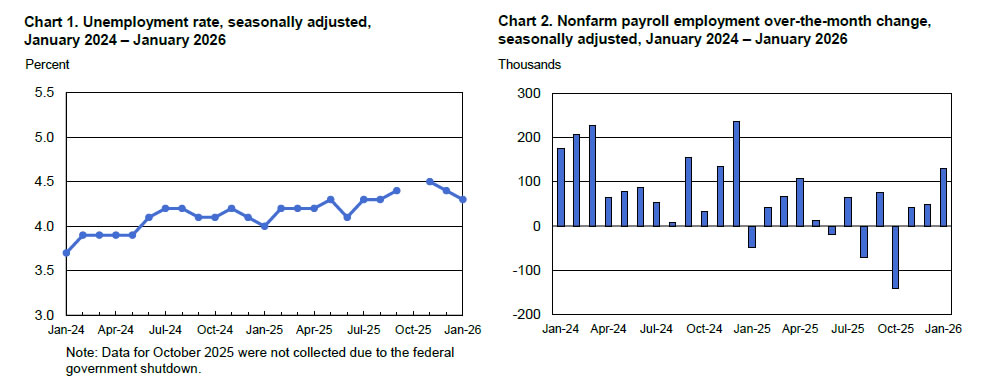
                  US NFP grew 528k in Jul, unemployment rate down to 3.5%, strong wage growth

                    US non-farm payroll employment grew strongly by 528k in July, well above expectation of 250k. That’s also much higher than the average gain of 388k over the prior 4 months. Total non-farm employment has also reached its pre-pandemic level.

                    Unemployment rate dropped from 3.6% to 3.5%, better than expectation of 3.6%. Participation rate dropped -0.1% to 62.1%.

                    Average hourly earnings rose 0.5% mom in July, above expectation of 0.3% mom.

                    Full release here.


                    BoE Pill: We need flexibility on rates according to cirumstances

                      BoE Chief Economist Huw Pill told Bloomberg Television, the BoE is not “behind the curve” on tightening.

                      But he added that investors should not assume there will be another 50bps rate hike in September. “Given the uncertainties we face, I think we need flexibility either to go further, or to stay where we are, and the pace at which we go further to be varied according to circumstances,” he said.

                      BoE Bailey: Businesses concerned about hiring, not raising prices

                        BoE Governor Andrew Bailey said at the Today Programme that the real risks is import inflation from energy and food becomes “embedded”. As firms are not struggling to raise prices, inflation would be comes worse when its embedded.

                        “The first thing they (businesses) want to talk to me about is that businesses have trouble hiring people, and that is still going on. They’re also saying to us actually they’re not finding it difficult to raise prices at the moment. That can’t go on,” he said.

                        Bailey also said the interest rates are not going to go back to pre-2008 financial crisis levels. Additionally, “we don’t think that the rolling back of QE and the sale of assets is going to have a big impact on market interest rates”.

                        Gold resumes rally as focus turns to NFP

                          US non-farm payroll report is a major focus today. Employment is expected to grow 250k in July. Unemployment rate is forecast to be unchanged at 3.6%. Average hourly earnings would maintain a growth pace of 0.3% mom.

                          Looking at related data, ISM manufacturing employment ticked up from 47.3 to 49.9. ISM services employment rose from 47..4 to 49.1. Four-week moving average of initial claims rose from 233k to 255k. Overall, these data suggest that there won’t be a blockbuster NFP today. Wage growth would likely be the more market moving part.

                          Here are some readings on NFP:

                          Gold’s rally from 1680.83 resumed after brief retreat and breaks through 1786.65 resistance. The development adds to the case that whole decline from 2070.06 has completed after defending 1682.60 key support. Further rally is now in favor as long as 1754.13 minor support holds, for 38.2% retracement of 2070.06 to 1680.83 at 1829.51. The move could be accompanied by another round of near term selloff in Dollar.

                          Australia AiG services rose to 51.7, two-speed sector emerges

                            Australia AiG Performance of Services rose 2.9 pts to 51.7 in July. Sales jumped 7.4 to 49.3. However, employment dropped -2.9 to 52.4. New orders rose 1.7 to 50.6. Supplier deliveries rose 5.9 to 47.6. Input prices rose 5.3 to 74.3. Selling prices dropped -3.8 to 63.4.

                            Innes Willox, Chief Executive of Ai Group, said: “We are seeing a ‘two-speed’ services sector emerge as businesses contend with labour shortages and rising interest rates. Business & property and personal services grew dramatically in July, while retail & hospitality and logistics fell dramatically. Chronic labour shortages and a super-charged winter spike in absenteeism are large and growing challenges for labour-intensive service industries. And rising interest rates are dampening consumer sentiment, casting a shadow over consumer-facing sectors.”

                            Full release here.

                            Fed Mester: Interest rates continue to rise this year and into next through first half

                              Cleveland Fed President Loretta Mester said that “interest rates continue to rise this year and into next year through the first half and maybe by then we can pause and we can start bringing them back down.” She would “pencil in going a bit above four as appropriate”.

                              As for September meeting, she said, “it’s not unreasonable to think we might have to do a 75 (basis point move) but I can imagine it could be a 50. We’ll just have to look at the data as it comes in.”

                              US initial jobless claims rose to 260k, continuing claims rose to 1416k

                                US initial jobless claims rose 6k to 260k in the week ending July 30, above expectation of 250k. Four-week moving average of initial claims rose 6k to 255k.

                                Continuing claims rose 48k to 1416k in the week ending July 23. Four-week moving average of continuing claims rose 11k to 1375k.

                                Full release here.


                                BoE Bailey: Faster tightening will help, but policy not on predetermined path

                                  In the post meeting press conference, BoE Governor Andrew Bailey said, “overall a faster pace of policy tightening at this meeting will help to bring inflation back to the 2% target sustainably in the medium term,” he said.

                                  “Looking ahead, that does not mean we’re now moving to a predetermined path of raising bank rate by 50 basis points per meeting, or indeed any other number for that matter.”

                                  “Policy is not on a preset path. And what we do this time does not tell you what we’re going to do next time. All options are on the table for our September meeting, and beyond that.”

                                  BoE hikes 50bps, CPI to peak at over 13%, GDP to contract -1% in Q4

                                    BoE raises Bank Rate by 50bps to 1.75% by 8-1 vote. Known dove Silvana Tenreyro voted for just 25bps hike. In the accompanying statement, BoE said the MPC will “take the actions necessary to return inflation to the 2% target sustainably in the medium term”. Policy is “not on a pre-set path”. But it will be “particularly alert to indications of more persistent inflationary pressures”, and will “if necessary act forcefully in response.”

                                    In the Monetary Policy Report, CPI is projected to peak at “just over 13%” in Q4, due to Russia restricting the supply of gas to Europe and the risk of further curbs. It’s projected to fall to 5.5% by the end of 2023, and back at 2% in Q3 2024.

                                    GDP growth is expected to slow further from Q2’s 0.5% to 0.2% in Q3, and then decline by nearly -1% in Q4. GDP is also forecast to all further, by -1.50% in 2023, and then -0.25% in 2024.

                                    Full statement here.

                                    Full MPR here.

                                    ECB consumer survey: Inflation expectations up, growth expectations down

                                      In ECB’s Consumer Expectations Survey, consumers’ mean perceived inflation over the past 12 months increased markedly from May’s 8.2% to June’s 8.6%. Median inflation perceptions over the previous 12 months rose from 6.6% to 7.2%.

                                      Mean inflation expectations for 12 month ahead rose from 6.3% to 6.6%. Median inflation expectations for 12 months ahead rose from 4.9% to 5.0%.

                                      Mean economic growth expectations for the next 12 months dropped from -1.0% to -1.3%. Median economic growth expectations was unchanged at 0%.

                                      Full release here.

                                      UK PMI construction dropped to 48.9, first contraction since since start of 2021

                                        UK PMI Construction dropped from 52.6 to 48.9 in July, below expectation of 52.1. That’s the first contraction reading since January 2021, and worst since May 2020.

                                        Tim Moore, Economics Director at S&P Global Market Intelligence, said:

                                        “July data illustrated that cost of living pressures, higher interest rates and increasing recession risks for the UK economy are taking a toll on construction activity. Total industry output fell for the first time since the start of 2021 as civil engineering joined house building in contraction territory…. Expectations for output growth in the next 12 months are far less exuberant than those seen over the past two years, amid concerns that elevated inflation and higher borrowing costs will constrain demand.”

                                        Full release here.

                                        BoE to hike 50bps, GBP/CHF ready for breakout?

                                          BoE is expected raise interest rate by 50bps to 1.75% today. That would be the largest rate hike since 1995, while interest rate will then be at the highest level since 2008. The voting will again be a focus and the new economic projections will be scrutinized too. Back in June BoE said inflation is expected to rise to slightly above 11% in October while GDP was weaker than anticipated at the May report. The change in outlook would be reflected in the new economic projections.

                                          Here are some previews on BoE:

                                          GBP/CHF turned into range trading after hitting 1.1525 in late June. There is risk of sell-on-fact in Sterling after BoE which prompt a downside breakout. But anyway, outlook will stay bearish as long as 1.1774 resistance holds, even in case of a rebound. Current down trend is still expected to resume towards 1.1107 low, which is close to 161.8% projection of 1.3070 to 1.2134 from 1.2598 at 1.1084 next, in the medium term.