ECB de Guindos: Green energy is a key priority for environment and security

    ECB Vice President Luis de Guindos said in a speech, “for the euro area, the financial stability impact of the war has so far been relatively contained.” And, “markets have generally been functioning well”, with “no dash for cash”.

    “While both banks and non-banks have been affected – especially the few that have large direct exposures to Russia and Ukraine – the economic fallout has not had a sizeable impact on the EU banking or financial systems as a whole,” he added.

    But he also noted, “the invasion of Ukraine also demonstrated how vulnerable Europe is due to its high dependency on fossil fuel imports from Russia. Speeding up the green transition is a key priority from this perspective too – not only to address the urgent environmental and climate challenges we face, but also to help increase our energy security and protect the EU economy from energy price spikes.”

    Full speech here.

    US 10-yr yield breaks 2.5 again as up trend resumes

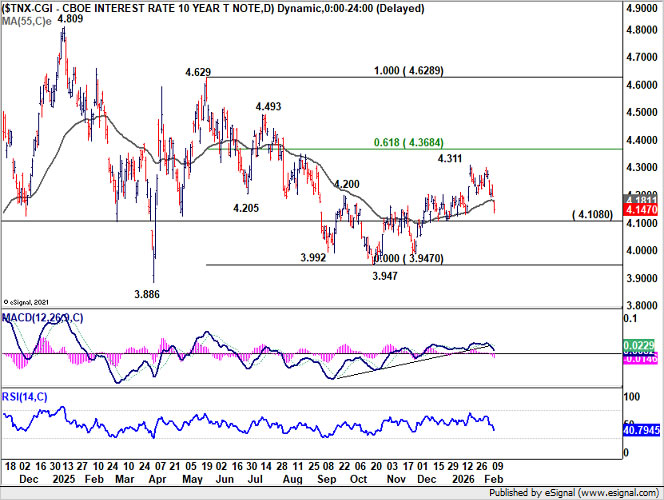
      US 10-year yield resumed recent up trend after hawkish comments from Fed officials, and closed up 0.144 at 2.556. It should be emphasized again that TNX is now facing multi-decade channel resistance, at around 2.6. Rejection by this channel resistance, followed by break of 2.311 support will bring deeper correction, before making the next move.

      However, sustained break of the channel resistance will mark the the change of a very long term trend. Further break of 100% projection of 0.398 to 1.765 from 1.343 at 2.710 could trigger rather fierce upside acceleration through 3.248 structural resistance (2018 high).

      China PMI composite dropped to 43.9, downward pressure aggravated by several factors

        China Caixin PMI Services dropped sharply from 50.2 to 42.0 in March, much worse than expectation of 49.9. That’s also the worst reading since February 2020. PMI Composite dropped from 50.1 to 43.9, also the worst since February 2020.

        Wang Zhe, Senior Economist at Caixin Insight Group said: “At present, China is facing the most severe wave of outbreaks since the beginning of 2020. Uncertainty also increased abroad. The outcome of the war between Russia and Ukraine is uncertain, and the commodity market has convulsed. Several factors have aggravated the downward pressure on China’s economy and underscore the risk of stagflation.”

        Full release here.

        ECB Lane: Inflation may peak by mid then than decline in H2

          ECB Chief Economist Philip Lane said in an interview with Antenna TV, there are three concerns about the Russian invasion of Ukraine, from view point of the economy, including energy, trade and uncertainty. “The war is a major negative economic issue, but the reopening of the economy gives some momentum. So this year, for example, we should expect the tourist season to be better than last year,” he said.

          Lane expected that inflation might peak by “mid-year” but that depends on the war. “Most likely, with the nature of the energy shock, prices will either level off at these high prices or will start to decline”, he added. “But the momentum of inflation will slow down, so we do think that in the second half to the year, as you say, the inflation rate will come down.”

          He also emphasized, “unlike the 1970s, these are a few months of high inflation rates. It is not a decade of high inflation rates, and we do think the inflation will fall later this year. So please remember: this inflation is coming from outside, it is not coming from the European economy. This is why we do think it has this special characteristic.”

          Full interview here.

          Fed George: We might have to go above neutral to bring inflation down

            Kansas City Fed President Esther George told Bloomberg that “50 basis points is going to be an option that we will have to consider, along with other things” at the May FOMC meeting.

            “We have to be very deliberate and intentional as we remove this accommodation. I am very focused on thinking about how the balance sheet moves in conjunction with policy-rate increases,” she added.

            “I think if you just look at where we are today, you might say we will have to go above neutral to bring inflation down,” George said. “But there is a long time between now and the end of the year to see how the economy unfolds.”

            Brainard: Fed to continue tightening methodically through series of hikes and balance sheet reduction

              Fed Governor Lael Brainard said in a speech that FOMC will “continue tightening monetary policy methodically through a series of interest rate increases and by starting to reduce the balance sheet at a rapid pace as soon as our May meeting.”

              “Given that the recovery has been considerably stronger and faster than in the previous cycle, I expect the balance sheet to shrink considerably more rapidly than in the previous recovery, with significantly larger caps and a much shorter period to phase in the maximum caps compared with 2017–19,” she added.

              “I expect the combined effect of rate increases and balance sheet reduction to bring the stance of policy to a more neutral position later this year, with the full extent of additional tightening over time dependent on how the outlook for inflation and employment evolves,” she said.

              Full speech here.

              US ISM services rose to 58.3, corresponds to 3% annualized real GDP growth

                US ISM Services PMI rose from 56.5 to 58.3 in March, above expectation of 57.7. Looking at some details, business activity/production rose from 55.1 to 55.5. New orders rose from 56.1 to 60.1. Employment rose notably from 48.5 to 54.0. Prices rose 0.7 to 83.8.

                ISM said: “The past relationship between the Services PMI and the overall economy indicates that the Services PMI for March (58.3 percent) corresponds to a 3-percent increase in real gross domestic product (GDP) on an annualized basis.”

                Full release here.

                US trade deficit unchanged at US 89.2B in Feb

                  US exports of goods and services rose 1.8% to USD 228.6B in February. Imports of goods and services rose 1.3% to USD 317.8B. Trade deficit was relatively unchanged at USD 89.2B, larger than expectation of USD 88.5B.

                  Trade deficit with Mexico dropped USD 2.7B to USD 9.8B. Deficit with Japan dropped USD 2B to USD 5.1B. Deficit with China rose USD 7.9B to USD 41.2B.

                  Full release here.

                  Canada trade surplus narrowed to CAD 2.7B in Feb

                    Canada imports rose 3.9% to CAD 56.1B in February. Gains were observed in 9 of 11 import product sections. Exports rose 2.8% to CAD 58.7B, with increases in 8 of 11 products sections. Trade surplus narrowed from CAD 3.1B to CAD 2.7B, smaller than expectation of CAD 2.9B.

                    Full release here.

                    UK PMI services finalized at 62.6, second strongest since 1997

                      UK PMI Services was finalized at 62.6 in March, up from February’s 60.5. Rate of expansion was the second strongest since May 1997, exceeded only by the post-lockdown recovery in May 2021. PMI composite was finalized at 60.9, up from prior months 59.9, fastest expansion since June 2021.

                      Tim Moore, Economics Director at S&P Global: “UK economic growth continued to surge higher in March after an Omicron-induced slowdown at the turn of the year… However, the near-term growth outlook weakened in March, with optimism dropping to its lowest since October 2020 as the war in Ukraine and global inflation concerns took a considerable toll on business sentiment.

                      “Service providers experienced the second-fastest rise in business expenses since this index began in 1996, driven by higher wages, energy bills and fuel prices. Soaring costs meant that output charges were increased to the greatest extent for more than 25 years in March. Many survey respondents commented that the full extent of the recent spike in their operating costs had yet to be passed on to customers.”

                      Full release here.

                      Eurozone PMI composite finalized at 54.9, greater risk of economy stalling or contracting

                        Eurozone PMI Services was finalized at 55.6 in March, up from February 55.5, hitting a 4-month high. However, PMI Composite was finalized at 54.9, down from prior month’s 55.5.

                        Looking at some member states, Ireland PMI composite rose to 5-month high at 61.0. France rose to 8-month high at 56.3. But Germany dropped to 55.1. Spain dropped to 53.1. Italy dropped to 52.1. PMI composite of Germany, Spain and Italy were all at 2-month low.

                        Chris Williamson, Chief Business Economist at S&P Global said: “The further reopening of the eurozone economy amid the fading Omicron wave has provided a welcome tailwind to business activity in March… However, the resilience of the economy will be tested in the coming months by headwinds which include a further spike in energy costs and other commodity prices due to Russia’s invasion of Ukraine, as well as worsening supply chain issues arising from the war and a marked deterioration in business optimism regarding prospects for the year ahead…

                        “The outlook for growth has therefore deteriorated at a time when the inflation outlook has worsened. A recession is by no means assured, as the extent to which the economy could suffer in the coming months will depend on the duration of the war and any changes to both fiscal and monetary policy. It certainly seems likely however that the solid expansion seen in March will prove hard to sustain and there is clearly a greater risk of the economy stalling or contracting during the second quarter.”

                        Full release here.

                        AUD/CAD upside breakout after RBA, pressing 0.95

                          Australian Dollar rises sharply after the hawkish twist in RBA statement. AUD/CAD’s strong break of 0.9460 resistance confirms resumption of whole rise from 0.8906. Near term outlook will now stay bullish as long as 0.9337 support holds. Sustained break of 61.8% projection of 0.8906 to 0.9460 from 0.9160 at 0.9511 will indicate further upside acceleration. Next target will be 100% projection at 0.9723.

                          More importantly, the current development affirms the case that medium term corrective fall from 0.9991 has completed at 0.8906. AUD/CAD could be ready to resume the whole up trend from 0.8058 (2020 low).

                          RBA stands pat, drop the patient stance

                            RBA keeps cash rate unchanged at 0.10% today as widely expected. The central bank dropped the line that “the Board is prepared to be patient as it monitors how the various factors affecting inflation in Australia evolve.” It’s seen as a sign that RBA is preparing the markets for an earlier rate hike.

                            In the forward guidance, RBA said “the Board has wanted to see actual evidence that inflation is sustainably within the 2 to 3 per cent target range before it increases interest rates.”. While inflation has picked up and further increase is expected, “growth in labour costs has been below rates that are likely to be consistent with inflation being sustainably at target.”

                            RBA concluded, “over coming months, important additional evidence will be available to the Board on both inflation and the evolution of labour costs. The Board will assess this and other incoming information as its sets policy to support full employment in Australia and inflation outcomes consistent with the target.”

                            BoJ Kuroda: Recent Yen moves somewhat rapid

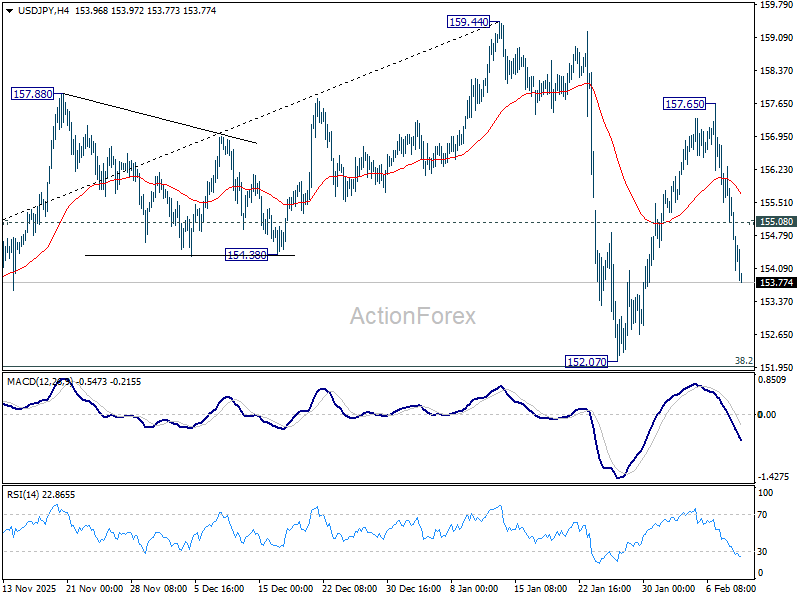
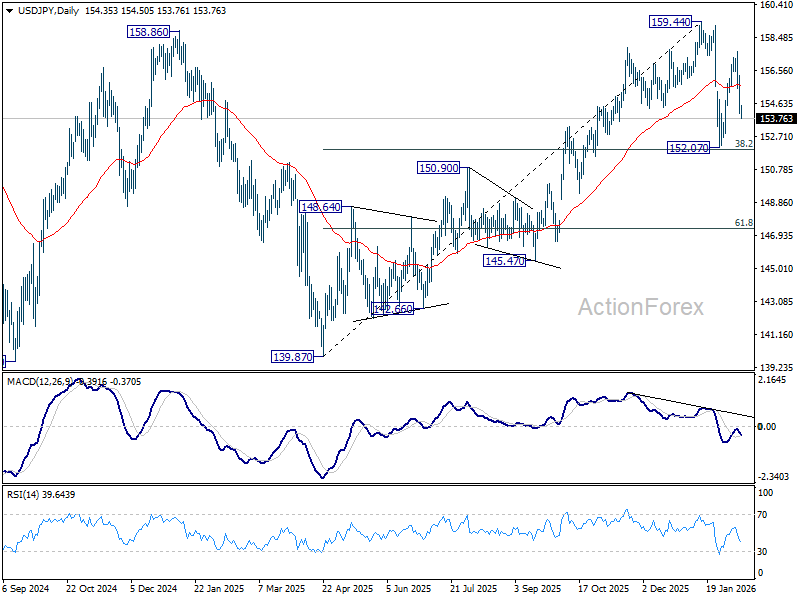
                              BoJ Governor Haruhiko Kuroda told the parliament today that recent moves in Yen exchange way have been “somewhat rapid”. He added, “it’s extremely important for currency rates to move stably reflecting economic and financial fundamentals.”

                              “We will patiently maintain powerful monetary easing to support an economy still in the midst of recovering from the COVID-19 pandemic’s impact,” he reiterated.

                              “If long-term interest rates rise rapidly, we are ready to deploy such market operations,” Kuroda said, referring to the intervention to cap 10-year JGB yield at 0.25%.

                              BoE Cunliffe: We will need carefully to judge the risks on both sides

                                BoE Deputy Governor Jon Cunliffe said said in a speech that the UK economy entered 2022 “still affected by two major impacts of the path out of Covid – very high imported inflation, and a very tight labour market with strong pay growth.”

                                “While I recognise the risk of second-round effects and that further tightening of monetary policy might be necessary, I am not at present convinced that we will inevitably have to lean heavily and constantly against an embedding of an inflationary psychology as we progress through this challenging period and as the impact of higher commodity prices on real household incomes depresses activity.”

                                “Rather, we will need carefully to judge the risks on both sides, weighing the evidence on the evolution of domestic prices, wages, activity and employment as it emerges. The MPC’s next forecast will be the first opportunity since the invasion to do that,” he added.

                                Full speech here.

                                ECB Vasle preaches getting out of negative rate by turn of the year

                                  ECB Governing Council member Bostjan Vasle said the most important thing for him is to start the process of ending asset purchases “note very late in the year”, and “have the opportunity to be out of negative territory by the turn of the year.”

                                  “We’re still expecting quite strong positive growth rates, and if that scenario materializes I don’t see any reasons why we wouldn’t continue with policy normalization after the turn of the year and go above zero with interest rates,” he said.

                                  That’s “one element affecting my understanding of not only inflation, but especially inflation pressures which are in the pipeline at the moment,” Vasle said. “It also gives me additional insight into what’s happening in the labor market and how these expectations regarding wages will be formed in future months and quarters.”

                                  “My expectation is that in a quarter or two we’ll see the peak of inflation and then a gradual easing by the end of the year,” he said. “The last inflation reading was indeed very high, but in the context of the conflict and the rising prices across various energy segments, it was something which wasn’t so unexpected.”

                                  BoE Bailey: Crypto creates an opportunity for the downright criminal

                                    BoE Governor Andrew Bailey criticized at a “Stop Scam” conference that’s cryptocurrencies created an “opportunity for the downright criminal.” He asked, “what do people committing ransom attacks usually demand payment in? The answer is crypto.”

                                    He also lamented that cryptocurrency users act as though national rules do not apply to them. “Some crypto enthusiasts say they shouldn’t be covered by Russian sanctions because that’s not their world,” he said. “I’m sorry, it is your world. We’re all in the same world.”

                                    Eurozone Sentix dropped to -18 in April, pushed into recession

                                      Eurozone Sentix Investor Confidence dropped from -7.0 to -18.0 in April, much worse than expectation of -9.7. That’s also the lowest level since July 2020. Current Situation index dropped from 7.8 to -5.5, lowest since April 2021. Expectations index dropped from -20.8 to -29.8, lowest since December 2011.

                                      Sentix said the Eurozone economy is “being pushed into recession by the Ukraine conflict and the accompanying sanctions and uncertainties.”

                                      “Due to the still considerable dynamics in the inflation trend, investors do not expect the central bank to be able to come to the rescue with a looser, even more expansive monetary policy. The economy and the stock markets are thus left to their own devices. For many investors, this is a new experience with its own risks.”

                                      Full release here.

                                      Fed Williams: Balance sheet reduction can begin as soon in May

                                        New York Fed President John Williams said in a speech that FOMC communicated “two important message” about the likely future course of monetary policy during March meeting, along with the rate hike.

                                        Firstly, it expects that “ongoing increases in the target range will be appropriate” and “the median assessment of the appropriate level of the federal funds rate at the end of next year is expected to be somewhat above the median assessment of its longer-run level”.

                                        Secondly, FOMC expects to “decide at a coming meeting when to begin reducing its holdings of securities”. He added, “I expect that this process of reducing the size of the balance sheet can begin as soon as the May FOMC meeting”.

                                        “These actions should enable us to manage the proverbial soft landing in a way that maintains a sustained strong economy and labor market,” Williams said. “Both are well positioned to withstand tighter monetary policy. In fact, I expect the economy to continue to grow this year and for the unemployment rate to remain close to its current level.”

                                        Full speech here.

                                        Fed Daly: The case for 50bps hike has grown

                                          San Francisco Fed President Mary Daly told FT, the case for 50bps rate hike in May has grown. “The case for 50, barring any negative surprise between now and the next meeting, has grown,” she said. “I’m more confident that taking these early adjustments would be appropriate.”

                                          Daly noted the US labor market was “very strong” and “tight to an unsustainable level”. “If you want a job in the United States, you can get one and you can probably get multiple jobs at this point,” she said. “If you’re an employer looking for workers, it’s hard to both hire them and retain them.”