Fed George prefer earlier balance sheet runoff, Mester could support March hike

    Kansas City Fed President Esther George said, “my own preference would be to opt for running down the balance sheet earlier rather than later as we plot a path for removing monetary accommodation.”

    Separately, Cleveland Fed President Loretta Mester said, “If the economy in March looks like it does today and the outlook is similar … then I would support moving the funds rate up at that meeting and starting to move back from some of the extraordinary accommodation we needed earlier in the pandemic.”

    Fed Bostic: March hike a reasonable possibility

      Atlanta Fed President Raphael Bostic said today, “there is a risk inflation is likely to be elevated for an extended period of time and we need to respond directly, clearly and aggressively.” “If things continue the way they are March would be a reasonable possibility,” he added.

      Bostic also said there was no need to phase in balance sheet runoff. “I would hope we would move pretty quickly and get out of this emergency stance,” he said. “The tool is pretty well understood and the motivation is pretty well understood. It should go faster for sure.”

      Bundesbank Nagel: Inflation could remain high for longer than expected

        New Bundesbank President Joachim Nagel said in his swearing in ceremony, “it’s true that high inflation rates can be attributed to special effects that expire automatically. But not entirely. I see a danger that inflation could remain high for longer than expected.”

        At the same occasion, ECB President Christine Lagarde said, “we understand that rising prices are a concern for many people, and we take that concern very seriously… The whole Governing Council is united in pursuit of this goal. At the same time, one of the key strengths of the Eurosystem is the way that it brings together different perspectives to form a consensus. Our rich quality of debate and diversity of views ensures that our decisions are robust.”

        GBP/CHF accelerates up to 1.26, heading to 1.30?

          GBP/CHF rises strongly to as high as 1.2605 so far today week. Current development argues that correction from 1.3070 has completed with three waves down to 1.2134. That came just ahead of 50% retracement of 1.1107 to 1.3070 at 1.2089.

          Further rise is now expected as long as 1.2452 support holds. Sustained break trend line resistance (now at 1.2642) will affirm this bullish case and target 1.2816 and then 1.3070 high.

          While it’s a bit early, it should noted that sustained break of 1.3070 will likely be accompanied by sustained trading above 55 month EMA. That would be a long term bullish signal, which suggest that rise from 1.1107 is at least correcting the down trend from 2.7328 (2000 high).

          BoJ public opinion survey: 78.8% expect prices to rise in a year

            According to BoJ’s December public opinion survey, 78.8% of the respondents said they expect price levels to go up one year from now. That’s a notable increase from September’s 68.2% and the highest level since 2019. Among them, 13.4% said prices will go up significantly, comparing to September’s 8.4%.

            On outlook for economic conditions one year from now, 26.0% said it will improve, up from 16.6%. 52.5% said it will remain the same, up from 46.1%. 21.0% said it will worsen, down from 36.4%. The Diffusion Index rose from -19.8% to 5.0%.

            Full survey results here.

            ECB Lane: Criteria for rate hike not in place

              In an interview, ECB chief economist Philip Lane pointed to the December economic projections, and said, ” inflation will fall this year, and that it will go below our 2 per cent target in 2023 and 2024.”

              While the 5% December inflation number is “unusually high”, Lane said that’s dominated by the 26% rise in energy prices last year. He added, “we do not see behaviour that would suggest inflation will remain above our target into the medium term.”

              As inflation will “settle below our target in 2023 and 2024”, he added, “The criteria for moving interest rates up are therefore not in place. This remains our view.”

              On growth, Lane said that bottlenecks are “temporary factors” and the order book is very good. “Overall, in Europe we see a solid growth engine this year, next year and the year after that.”

              Full interview here.

              NASDAQ staged strong rebound after initial dive

                NASDAQ initially dived sharply to as low as 14530.22 overnight, but staged a strong rebound to close up 0.05% at 14942.82. Technically, we’re seeing NASDAQ as in correction to the move from 10822.57 to 16212.22. It’s envisaged as a range pattern that could last for a while.

                Nevertheless, 14100/14200 zone should provide enough support to floor any decline attempt. We’re talking about a cluster of support levels there, including 14175.11 resistance turned support, 14181.69 support, and 38.2% retracement of 10822.57 to 16212.22 at 14153.37.

                However, it should be noted that a firm break of 14181.69 structural level, which is unlikely, would indicate that NASDAQ could be in a larger scale correction.

                Australia exports rose 2% in Nov, imports rose 6%

                  Australia goods and services exports rose 2% mom or AUD 691m to AUD 43.86B in November. Goods and services imports rose 6% mom or AUD 2049m to AUD 34.44B. Trade surplus came in at 9.42B, below expectation of AUD 10.75B.

                  Full release here.

                  Australia retail sales rose 7.3% mom in Nov as restrictions eased

                    Australia retail sales rose 7.3% mom in November, well above expectation of 4.0% mom. That’s also the fourth strongest monthly rise on record. Total turnover at current prices hit a record AUD 33.4B.

                    “Further easing of COVID-19 restrictions in the South-Eastern states and territories has seen the retail industry recover all lost momentum caused by the Delta outbreak,” Ben James, Director of Quarterly Economy Wide Statistics, said. “Victoria recorded the largest state rise, up 20.0 per cent, reaching its highest level of the series. This follows the state’s lockdown ending in late October.”

                    “Continued easing of COVID-19 restrictions, including less strict density and capacity limits, in New South Wales (5.1 per cent) and the Australian Capital Territory (19.2 per cent) led to rises in turnover to record levels.”

                    Full release here.

                    Fed Powell committed to prevent higher inflation from becoming entrenched

                      In the prepared remarks for the nomination hearing before Senate Banking Committee, Fed Chair Jerome Powell said, “today the economy is expanding at its fastest pace in many years, and the labor market is strong.”

                      After the initial shutdown and the subsequent reopening, “the economy has rapidly gained strength despite the ongoing pandemic, giving rise to persistent supply and demand imbalances and bottlenecks, and thus to elevated inflation.”

                      “We are strongly committed to achieving our statutory goals of maximum employment and price stability,” Powell said. “We will use our tools to support the economy and a strong labor market and to prevent higher inflation from becoming entrenched.”

                      Full remarks here.

                      NZD/JPY and AUD/JPY breaking down with US stocks

                        NZD/JPY and AUD/JPY are breaking down, together with US stocks. At the time of writing, DOW is down -1.5%, S&P 500 down -1.78% and NASDAQ even -2.5%.

                        NZD/JPY’s strong break of 77.96 resistance turned support should confirm that corrective pattern from 75.95 has completed with three waves up to 79.22. Deeper fall should now be seen through 75.95, to resume the whole decline from 82.49 to 61.8% projection of 82.49 to 75.95 from 79.22 at 75.17 next. On the upside, above 78.51 minor resistance will delay the bearish case.

                        AUD/JPY also follow and breaches 82.42 support turned resistance. Further downside acceleration will confirm the corrective rebound from 78.77 has completed with three waves up to 84.27. In this case, deeper fall would likely be seen through 78.77, to resume the pattern from 86.24 to 100% projection of 86.24 to 78.77 from 84.27 at 76.80. Meanwhile, above 83.34 minor resistance will mix up the outlook.

                        Ethereum breaches 3000, Bitcoin presses 40k

                          Ethereum extends recent down trend today and hit as low as 2927.20, just ahead of 61.8% retracement of 1715.62 to 4863.75 at 2918.20. Further decline is expected as long as 3245.45 resistance holds. Decline from 4863.75 is seen as in the same degree as the rise from 1715.62 to 4865.75. Deeper decline would be seen to or even further to 100% projection of 4863.75 to 3439.00 from 4126.20 at 2701.45, which is close to 2647.30 support, before forming a bottom.

                          Similarly, Bitcoin is also extending recent fall and hit as low as 39636. Deeper fall is expected as long as 43577 resistance holds. Current fall from 68986 would target 61.8% projection of 68986 to 41908 from 52101 at 35366 before BTC/USD forms a bottom.

                          Eurozone unemployment rate dropped to 7.2% in Nov, EU down to 6.5%

                            Eurozone unemployment rate dropped from 7.3% to 7.2% in November, matched expectations. EU unemployment rate dropped from 6.7% to 6.5%.

                            Eurostat estimates that 13.984 million men and women in the EU, of whom 11.829 million in the euro area, were unemployed in November 2021. Compared with October 2021, the number of persons unemployed decreased by 247 000 in the EU and by 222 000 in the euro area. Compared with November 2020, unemployment decreased by 1.659 million in the EU and by 1.411 million in the euro area.

                            Full release here.

                            Eurozone Sentix rose to 14.9 in Jan, fundamentally constructive outlook with an Achilles’ heel

                              Eurozone Sentix Investor Confidence rose from 13.5 to 14.9 in January, above expectation of 12.0. Current Situation Index rose from 13.3 to 16.3. Expectations Index dropped slightly from 13.8 to 13.5.

                              Sentix said, “our fundamentally constructive outlook for the economy in 2022 (especially the first half of the year) has an Achilles’ heel: The support of expansive central banks is threatening to run out faster than expected.

                              “The sentix topic barometer ‘Central Bank Policy’ indicates an increasing burden for the bond market and thus for the real economy. The burden on this is estimated to be greater than in 2018, when the monetary guardians also adopted a more restrictive course.

                              “Fiscal balancing impulses must therefore be put in place swiftly to cushion the weakening monetary impetus from the central banks.”

                              Full release here.

                              IMF Blog: Faster Fed hike could rattle financial markets

                                In an blog post, senior IMF officials said the continued to expect “robust US growth”. Inflation will “likely moderate” late this year as supply disruptions ease and fiscal contraction weighs on demand. Fed’s indication that it would raise interest rate more quickly “did not cause a substantial market reassessment of the economic outlook”.

                                “Should policy rates rise and inflation moderate as expected, history shows that the effects for emerging markets are likely benign if tightening is gradual, well telegraphed, and in response to a strengthening recovery,” the post noted.

                                However, “broad-based US wage inflation or sustained supply bottlenecks could boost prices more than anticipated and fuel expectations for more rapid inflation”.

                                “Faster Fed rate increases in response could rattle financial markets and tighten financial conditions globally. These developments could come with a slowing of US demand and trade and may lead to capital outflows and currency depreciation in emerging markets.”

                                Full blog post here.

                                WTI oil back below 80 as Kazakhstan normalizes production

                                  Oil prices dip mildly in Asian session as Kazakhstan’s largest oil venture Tengizchevroil is gradually normalizing production. Some contractors had disrupted train lines in support of protests in the country last week.

                                  WTI crude oil hit as high as 80.63 last week but fails to sustain above 80 handle so far. Some consolidations could be seen first, but further rally is expected as long as 74.48 support holds. Rally from 62.90 should target 161.8% projection of 62.90 to 73.66 from 66.46 at 83.86, which is close to 85.92 high.

                                  For now, we’re not expecting a break of 85.92 yet. We’d expect at least one more down leg before the corrective pattern from there completes. Hence, we’d look for topping between 83.86/85.92.

                                  ECB Schnabel: Rising energy prices may require a departure from a looking through policy

                                    ECB Executive Board member Isabel Schnabel warned in a speech on Saturday, “monetary policy, for its part, cannot afford to look through energy price increases if they pose a risk to medium-term price stability.”

                                    “This could be the case if prospects of persistently rising energy prices contribute to a deanchoring of inflation expectations, or if underlying price pressures threaten to lift inflation above our 2% target as rising carbon prices and the associated shifts in economic activity boost rather than suppress growth, employment and aggregate demand over the medium term.”

                                    Full speech here.

                                    Canada employment grew 54.7k in Dec, way above expectation

                                      Canada employment grew 54.7k in December, much better than expectation of 24.5k. Full-time employment rose 123k while part-time employment dropped -68k. Total hours worked dropped -0.3%, first decline since June.

                                      Unemployment rate dropped from 6.0% to 5.9%, better than expectation of 6.0%. Labor force participation rate held steady at 65.3%.

                                      Full release here.

                                      US non-payroll missed expectation, but unemployment rate and wage growth beat

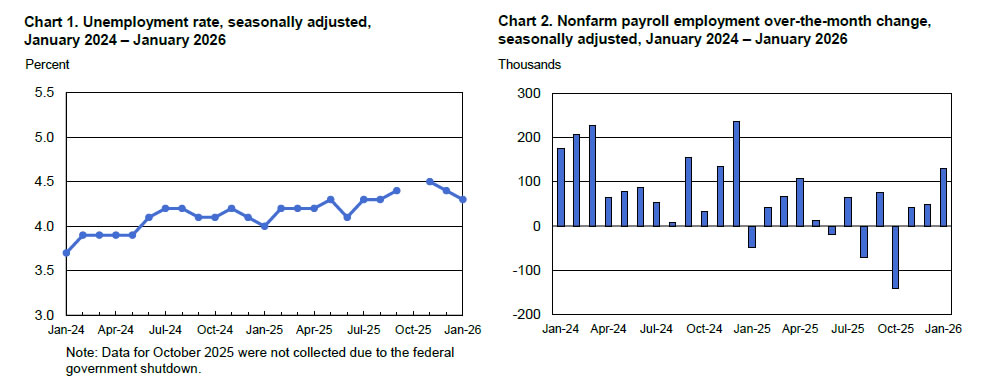
                                        US non-farm payroll employment rose only 199k in December, much worse than expectation of 400k. Overall job growth averaged 537k per month in 2021. Non-farm employment remained -3.6m, or -2.3%, from its pre-pandemic level in February 2020.

                                        Unemployment rate dropped to 3.9%, down from 4.2%, better than expectation of 4.1%. Number of unemployed persons dropped -483k to 6.3m. Labor force participation rate was unchanged at 61.9%, remain -1.5% below pre-pandemic level.

                                        Average hourly earnings rose strongly by 0.6% mom, above expectation of 0.4%.

                                        Full release here.

                                        Eurozone economic sentiment dropped to 115.3 in Dec, EU down to 114.5

                                          Eurozone Economic Sentiment Indicator dropped -2.3 pts to 115.3 in December. Employment Expectations Indicator dropped -1.6 pts to 114.0. Industry confidence rose from 14.3 to 14.9. Services confidence dropped sharply from 18.3 to 11.2. Consumer confidence dropped from -6.8 to -8.3. Retail trade confidence dropped from 3.7 to 1.1. Construction confidence rose from 9.0 to 10.2.

                                          EU ESI dropped -2.1 pts to 114.5. EEI dropped -1.4 pts to 114.2. Amongst the largest EU economies, the ESI rose only in Poland (+0.6). By contrast, confidence worsened in the Netherlands (-4.1), Germany (-2.8), France (-2.1), Italy (-1.6) and Spain (-0.8).

                                          Full release here.