German ZEW dropped to 29.9, suffering noticeably from latest pandemic development

    Germany ZEW Economic Sentiment dropped to 29.9 in December, down from 31.7, but beat expectation of 25.3. Current Situation index dropped sharply to -7.4, down from 12.5. That’s the first negative reading since June. Inflation Expectations dropped -19.0 pts to -33.3. 56.6% of experts expected inflation rate to decline in the next six months.

    Eurozone ZEW Economic Sentiment rose from 25.9 to 26.8, above expectation of 23.5. Current Situation indicator dropped -13.9 pts to -2.3.

    “The German economy is suffering noticeably from the latest developments in the COVID-19 pandemic. Persisting supply bottlenecks are weighing on production and retail trade. The decline in economic expectations shows that hopes for much stronger growth in the next six months are fading. Especially the earnings expectations of export-oriented and consumer-related industries are assessed more negatively,” comments ZEW President Professor Achim Wambach on current expectations.

    Full release here.

    Eurozone GDP growth finalized at 2.2% qoq in Q3, EU at 2.1% qoq

      According to the final revised data, Eurozone GDP grew 2.2% qoq, 3.0% yoy in Q3. GDP volumes remained -0.3% below pre-pandemic level in Q4 2019. Household consumption rose 4.1%. Government final consumption expenditure rose 0.3%. Gross fixed capital formation dropped -0.9%. Exports rose 1.2%. Imports rose 0.7%.

      Household final consumption expenditure in Eurozone rose 2.1%. Government final expenditure rose 0.1%. Gross fixed capital formation dropped -0.2%. The contributions from external balance were positive while change in inventories was slightly negative.

      EU GDP grew 2.1% qoq, 4.1% yoy. GDP volumes remained -0.1% below pre-pandemic level in Q4 2019. Austria (+3.8%) recorded the highest increase of GDP compared to the previous quarter, followed by France (+3.0) and Portugal (+2.9%). Lowest growth rates were observed in Romania and Slovakia (+0.4%), while GDP remained stable in Lithuania (0.0%).

      Full release here.

      China exports rose 22% yoy in Nov, imports rose 31.7% yoy

        In November in USD term, China exports rose 22.0% yoy, above expectation of 17.2% yoy. Imports rose 31.7% yoy, versus expectation of 19.5% yoy. Trade surplus narrowed to USD 71.7B, down from USD 84.5B, below expectation of USD 82.2B.

        In CNY term, exports rose 16.6% yoy, below expectation of 17.2% yoy. Imports rose 26.0% yoy, above expectation of 9.4% yoy. Trade surplus narrowed to CNY 461B, down from CNY 546B, below expectation of CNY 575B.

        RBNZ Hawkesby: A higher currency helps us achieve objectives more quickly

          RBNZ Assistant Governor Christian Hawkesby said today that the central bank would take “considered steps” in raising interest rate. He added, “we have more confidence around the fact that the labour market is tight and that’s going to build inflation pressures.”

          Regarding the government’s plan to reopen borders from January, Hawkesby said “One risk we are conscious of in the very short term is that even when the borders reopen, that actually becomes easier for more Kiwis to leave the country than it does for foreigners to come in… So there is a potential that the labour market gets tighter before it gets looser”.

          Also, “at the moment a higher currency in the short term will actually help us achieve our objectives more quickly because a strong currency will feed through a lower tradeables inflation and feed through to lower inflation, and we are managing inflation from the top side.”

          Separately, outgoing Deputy Governor Geoff Bascand said inflation is “definitely got some persistence to it for the next 12 months”. He added, we’ll see the CPI moving along at 4 percent over the next year, but we think it will moderate over time, some of those things that have driven it up won’t last forever.”

          Bascand also said, “we will keep reducing stimulus and do our part to stop inflation from getting momentum into it.”

          Australia AiG services rose to 49.6, underachieving relative to expectations

            Australia AiG Performance of Services rose 2.0 pts to 49.6 in November. Sales dropped -1.6 to 53.6. Employment dropped -0.6 to 56.2. New orders rose 8.6 to 47.4. Supplier deliveries rose 0.9 to 40.4. Input prices dropped -8.3 to 65.3. Selling prices dropped -3.5 to 58.2.

            Ai Group Chief Executive, Innes Willox, said: “The Australian services sector was broadly stable in November, underachieving relative to expectations of a more convincing recovery after the COVID-19 downturn in recent months.”

            Full release here.

            RBA keeps cash rate at 0.1%, asset purchase as 4B a week

              RBA left monetary policy unchanged as widely expected. The cash rate target is held at 0.10%. It reiterated that “the Board will not increase the cash rate until actual inflation is sustainably within the 2 to 3 per cent target range.”

              Asset purchases will continue at AUD 4B a week until at least mid-February 2022. The decision on the program in February will be guided by the same three considerations used from the outset: “the actions of other central banks; how the Australian bond market is functioning; and, most importantly, the actual and expected progress towards the goals of full employment and inflation consistent with the target.”

              Full statement here.

              BoE Broadbent: Transitory never meant inflation effects gone in even 12 months

                BoE Deputy Governor Ben Broadbent reiterated in a speech that “it takes time for policy to work”. “A change in interest rates has its peak impact on inflation only after a significant delay – probably eighteen months or more”.

                When global central bankers used the word “transitory” in describing current surge in inflation, “they do not mean (and never meant) that these effects will be gone in one, two or even twelve months”.

                “The relevant question is whether the global factors currently pushing up on goods prices are still there by the time a policy decision taken today could have any significant effect of its own,” he added.

                “What is their prospective contribution to inflation in eighteen, twenty-four months and beyond? This is the horizon that matters for policy and against which the word ‘transitory’ should be measured.”

                Full speech here.

                UK PMI construction rose to 55.5 in Nov, faster growth and softer inflation

                  UK PMI Construction rose from 54.6 to 55.5 in November, above expectation of 52.0. Markit noted recovery was led by robust and accelerated rise in commercial work. Numbers of firms reporting suppliers delays continued to ease. In put costs inflation dipped to seven-month low.

                  Tim Moore, Director at IHS Markit: “November data highlighted a welcome combination of faster output growth and softer price inflation across the UK construction sector…. Input price inflation remains extremely strong by any measure, but it has started to trend downwards after hitting multi-decade peaks this summer… Port congestion and severe shortages of haulage capacity were again the most commonly cited reasons for longer lead times for construction products and materials.”

                  Full release here.

                  Eurozone Sentix investor confidence dropped to 13.5, risks are increasing

                    Eurozone Sentix Investor Confidence dropped from 18.3 to 13.5 in December, missed expectation of 15.9. That’s also the lowest level since April. Current Situation Index dropped for the third straight month from 23.5 to 13.3, lowest since May. Expectation Index, on the other hand, improved slightly from 13.3 to 13.8.

                    Sentix said that hopes of an end to the economic slowdown “have been abruptly dampened” by the latest Sentix data. Lockdown measures in Germany and Austria are “putting a considerable damper on current economic activity”.

                    It added: “Our basic scenario of a ‘mid-cycle slowdown’, i.e. a consolidation in the middle of a cycle, does not have to be abandoned yet. But the risks are increasing! It is also interesting that our thematic analysis reveals an increasingly negative influence of central bank policy. While a continued expansionary monetary policy is likely to fuel inflation in particular, a shift to a restrictive course would obviously be burdened by liquidity constraints. The ECB thus seems to be definitively ‘behind the curve’. The risks for markets and the economy are increasing.

                    Full release here.

                    Germany factor orders dropped -6.9% mom in Oct, as foreign orders tumbled

                      Germany factory orders dropped sharply by -6.9% mom in October, much worse than expectation of -0.2% mom decline. Not including major orders, a 1.8% decrease in new orders in manufacturing was recorded.

                      Looking at some details, domestic orders rose 3.4% mom. Foreign orders dropped -13.1%. New orders from Eurozone dropped -3.2% mom. The fall in new orders from other countries amounted to 18.1% in the current month (last month +15.7%), influenced by the absence of major orders in the sector of manufacture of machinery and equipment.

                      Compared with October 2020, new orders were also down -1.0% mom yoy. That;s the first decreased since September 2020. New orders in the period January to October 2021 as a whole increased by 20.8% on the same period a year earlier. Comparing with pre-pandemic February 2020, new orders were 1.7% higher.

                      Full release here.

                      Bitcoin in ugly weekend selloff, downside risks remain

                        Cryptocurrencies suffered an ugly selloff over the weekend, as Bitcoin dived to as low as 41908, and then recovered and settled in range around 48k/49k. The move was exaggerated by low liquidity and cascading selling and liquidations. But it’s also part of the overall risk-off moves late last week.

                        Technically, downside risks will remain in Bitcoin as long as 53299 support turned resistance holds. But we’re not expecting a break of 40k handle for now, which is close to 39559. However, firm break of 39559 could trigger even steeper selling to 30k handle, which is close to 29261.

                        CBI downgrades UK growth forecasts to 6.9% in 2021 and 5.1% in 2022

                          The Confederation of British Industry downgraded UK GDP growth forecast for 2021 from 8.2% to 6.9%. For 2022, GDP growth forecast was also lowered from 6.1% to 5.1%. Inflation is projected to peak at 5.2% in the coming April while unemployment rate would fall to 3.8% by the end of 2023.

                          “The challenge for January 1st is now very clear for the UK economy. Significant headwinds and rising costs of living threaten the extent of recovery and prospects for economic success. These hurdles for firms will provide a major test for the government – can they foster sustainable UK investment and growth?” said Tony Danker, CBI director-general.

                          “The UK’s New Year resolution must be to give firms the confidence to go for growth. We should be raising our sights on the economy’s potential and seizing the moment.”

                          US ISM services jumped to 69.1, corresponds to 6.9% annualized growth in GDP

                            US ISM Services rose from 66.7 to 69.1 in November, above expectation of 65.5. Business activity/production rose from 69.8 to 74.6. New orders was unchanged at 69.7. Employment rose from 51.6 to 56.5. Prices dropped from 82.9 to 82.3. Employment rose from 51.6 to 56.5.

                            ISM said: “The past relationship between the Services PMI and the overall economy indicates that the Services PMI for November (69.1 percent) corresponds to a 6.9-percent increase in real gross domestic product (GDP) on an annualized basis.”

                            Full release here.

                            Canada employment rose 154k in Nov, unemployment rate dropped to 6.0%

                              Canada employment grew 154k in November, well above expectation of 37k. It’s now 1% higher than its pre-COVID February 2020 level. Unemployment rate dropped sharply from 6.7% to 6.0%, much better than expectation of 6.6%.

                              Full time jobs grew 80k while part-time jobs rose 74k. Services-producing sector added 127k jobs, while goods-producing sectors rose 26k. Total hours worked rose 0.7% mom.

                              Full release here.

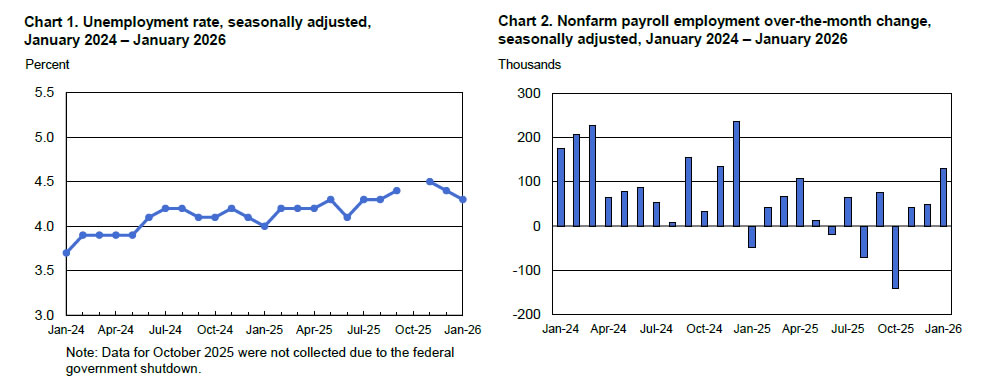
                              US NFP grew only 210k, but unemployment rate dropped to 4.2%

                                US non-farm payroll employment grew only 210k in November, well below expectation of 525k. So far this year, monthly job growth has averaged 555k. Overall employment remained down by -3.9m, or -2.6%, from its pre pandemic level in February 2020.

                                Unemployment rate dropped sharply by -0.4% to 4.2%, better than expectation of 4.5%. Labor force participation rate edged up to 61.8%. Average hourly earnings rose 0.3% mom, below expectation of 0.4% mom.

                                Full release here.

                                BoE hawk Saunders: Omicron a key considering for December meeting

                                  BoE MPC member Michael Saunders, a known hawk, said in a speech that “policy is not on auto pilot”. He added. “the pace, and scale, of any monetary policy changes will depend on economic developments and the outlook”.

                                  “In particular, at the December meeting, a key consideration for me will be the possible economic effects of the new Omicron Covid variant, and the potential costs and benefits of waiting to see more data on this before – if necessary – adjusting policy,” he said.

                                  “It is likely that any rise in Bank Rate will be limited given that the neutral level of interest rates remains low. Provided we do not delay too long, it should be a case of easing off the accelerator rather than applying the brakes,” he noted.

                                  Full release here.

                                  Eurozone retail sales rose 0.2% mom in Oct, EU up 0.3% mom

                                    Eurozone retail sales rose 0.2% mom in October, below expectation of 0.3% mom. Volume of retail trade increased by 1.3% for automotive fuels and by 0.4% non-food products, while it fell for food, drinks and tobacco by 0.1%.

                                    EU retail sales rose 0.3% mom. Among Member States for which data are available, the highest monthly increases in the total retail trade volume were registered in Slovenia (+13.0%), Portugal (+2.3%) and Denmark (+2.2%). The largest decreases were observed in Latvia (-5.4%), Austria (-2.8%) and Estonia (-2.6%).

                                    Full release here.

                                    UK PMI services finalized at 58.5, recovery accelerated from Q3

                                      UK PMI Services was finalized at 58.5 in November, down from October’s 59.1. PMI Composite was finalized at 57.6, down from October’s 57.8. Markit also said there was the strongest increase in new work since June. Output growth eased slightly. Input costs and prices charged rose at record rates.

                                      Tim Moore, Economics Director at IHS Markit:

                                      “Surging price pressures have done little to dent business and consumer spending across the UK economy… The overall speed of recovery looks to have accelerated in comparison to the third quarter of 2021, with output growth mostly driven by services as manufacturers struggle with severe shortages of raw materials and critical components.

                                      “The vast majority of survey responses in November were received prior to the news of the Omicron variant, however, which has the potential to derail near-term growth prospects and add to international supply chain disruption.

                                      Full release here.

                                      Eurozone PMI composite finalized at 55.4, downside growth risk, upside inflation risk

                                        Eurozone PMI Services was finalized at 55.9 in November, up from October;s 54.6. PMI Composite was finalized at 55.4, up from October’s 54.2. Looking at some member states, Ireland PMI composite dropped to 7-month low at 59.3. Spain rose to 3-month high at 58.3. Italy rose to 3-month high at 57.6. France rose to 4-month high at 56.1. Germany rose to 2-month high at 52.2.

                                        Chris Williamson, Chief Business Economist at IHS Markit said:

                                        “An improvement in the rate of economic growth signalled by the eurozone PMI looks likely to be short-lived. Not only did demand growth weaken, but firms’ expectations of future growth also sank lower as worries about the pandemic intensified again. With the data collected prior to news of the Omicron variant, sentiment about near-term prospects will inevitably have been knocked even further….

                                        “..While growth risks have shifted to the downside, risks to the inflation outlook seem tiled to the upside if virus case numbers continue to rise and new restrictions are introduced. Supply chains will be further hit, staff availability will deteriorate and spending could shift from services to goods again, further exacerbating the imbalance of supply and demand.”

                                        Full release here.

                                        Germany PMI services finalized at 52.7, eke out further modest growth

                                          Germany PMI Services was finalized to 52.7 in November, up from October’s 52.4. PMI Composite was finalized at 52.2, up slightly from October’s 52.0. Markit said new business fell as fourth COVID wave took hold. Firms’ expectation slipped to 12-month low. Rate of input cost and output price accelerated to new highs.

                                          Phil Smith, Economics Associate Director at IHS Markit:

                                          “Germany’s service sector was able to eke out further modest growth in November, but the survey’s forward-looking indicators gave reason for concern. Inflows of new work and business confidence were already in decline in November thanks to the fourth wave of coronavirus, and now the Omicron variant brings added uncertainty and a risk of tighter virus containment measures.

                                          “Given what we’ve seen in the survey data so far and the potential new risks posed by the Omicron variant, the economy is, at best, set for a notable slowdown in growth in the final quarter.

                                          “The survey data showed a further intensification of inflationary pressures in November driven by a surge in energy costs, with service providers joining manufacturers in recording an unprecedented rise in prices. This was despite signs of inflation already easing across consumer-facing sectors.

                                          “Another strong round of hiring across the service sector in November maintained the labour market’s solid pace of recovery. However, with recruitment tending to lag movements in activity and underlying demand, we can reasonably expect the pace of job creation to slow in line with weaker economic growth and lower business confidence.”

                                          Full release here.