RBA Kent: There are good prospects for growth and increase in wages and inflation

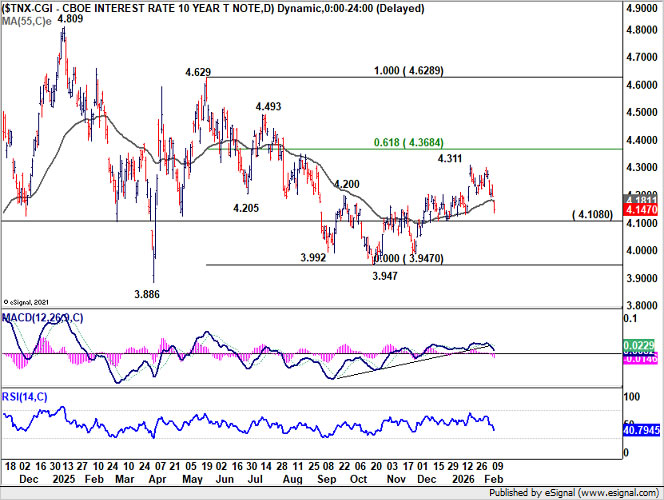
    RBA Assistant Governor Christopher Kent said in a speech that “the improvement in the economic outlook globally and in Australia has contributed to a rise in sovereign bond yields to around pre-pandemic levels.” There has been increase in inflation expectations to be “more in line with central banks’ targets”. Also expectations of short term interest rates have “increased a bit”.

    But households and business continue to “benefit from record low interest rates” and their balance sheets are “in good shape”. The economy is “benefiting from supportive fiscal policy. He added, “there are good prospects for growth and an eventual increase in wages and inflation”. But the process will be “gradual” and inflation is unlikely to be sustainably within target rate “until 2024 at the earliest”.

    Full speech here.

    Australia Westpac consumer confidence dropped -5.2% on concerns around Melbourne lockdown

      Australia Westpac consumer confidence dropped -5.2% to 107.2 in June. The index has now fallen by -9.7% over the last two months. Westpac said the latest fall is “almost certainly due to concerns around the two-week lockdown in Melbourne.” There was a fall of -7.5% in Victoria, -4% in Queensland, -9% in Western Australia, and -10.9% in South Australia. New South Wales dropped only -1.1%.

      Westpac expects RBA to decide against extending the Yield Curve Targeting from April 2024 bond to November 2024 bond. Also, RBA could announce a more flexible approach to QE, with a weekly target of AUD 5B.

      Full release here.

      New Zealand ANZ business confidence dropped to -0.4, inflation expectations rose further

        In the preliminary read, New Zealand ANZ business confidence dropped to -0.4 in June, down from May’s 1.8. Own activity outlook rose from 27.1 to 29.1. Looking at some more details, export intentions rose from 12.2 to 13.9. Investment intentions rose from 18.9 to 25.3. Employment intentions dropped from 20.5 to 19.6. Pricing intentions rose from 57.4 to 62.8. Inflation expectations rose further from 2.22 to 2.33.

        ANZ said: “Shipping disruptions, rising global commodity prices, the higher minimum wage, labour shortages due to both the closed border and uneven sector growth are creating a perfect storm for the supply side of the economy at the same time as demand is holding up much more than firms (or economists!) had anticipated.

        “Headline inflation is set to jump over the next six months as a result, but it’s best to focus on wage growth and inflation expectations for clues regarding when the Reserve Bank might conclude they can no longer look through inflation pressure and simply wait for temporary pressures to subside, necessitating a higher OCR.”

        Full release here.

        World bank upgrades 2021 global growth forecast to 5.6%

          In the Global Economic Prospect report, World Bank upgrades global to 5.6% in 2021 (from January projection of 4.1%). Growth is then projected to slow to 4.3% in 2022 (up from 3.8%), and then 3.1% in 2023 (new).

          US growth upgraded to 6.8% in 2021 (from 3.5%), 4.2% in 2022 ( from 3.3%), and 2.3% in 2023 (new). Eurozone growth is also upgraded ti 4.2% in 2021 (from 3.6%), then accelerate to 4.4% in 2022 (from 4.0%), and then slow to 2.4% in 2023 (new). China growth is projected to be 8.5% in 2021 (from 7.9%), then slow to 5.4% in 2022 (from 5.2%) and then 5.3% in 2023.

          David Malpass, World Bank Group President, said: “Following last year’s collapse, the global economy is experiencing an exceptionally strong but uneven recovery. While advanced economies are re- bounding, many of the world’s poorest countries are being left behind, and much remains to be done to reverse the pandemic’s staggering human and economic costs. Moreover, the recovery is not assured: the possibility remains that additional COVID-19 waves, further vaccination delays, mounting debt levels, or rising inflationary pressures deliver setbacks.”

          Full report here.

          US exports rose 1.1% in Apr, imports dropped -1.4%

            US goods and services exports rose 1.1% mom to USD 205.0B in April. Imports dropped -1.4% mom to USD 273.9B. Trade deficit narrowed to USD 68.9B, from March’s USD 75.0B, matched expectations.

            Trade deficit dropped USD 7.1B to USD 32.4B, while exports rose USD 1B and imports dropped USD 6B. Deficit with EU dropped USD 1B to USD 16.1B, while exports rose USD 2B and imports rose USD 1B.

            Full release here.

            Eurozone GDP contracted -0.3% qoq in Q1, EU down -0.1% qoq

              Eurozone GDP contracted -0.3% qoq in Q1, according to latest estimate by Eurostat. Compared with the same quarter of the previous year, GDP dropped -1.3% yoy. EU GDP contracted -0.1% qoq, -1.2% yoy in Q1.

              Among EU member states, Ireland (+7.8%) and Croatia (+5.8%) recorded the sharpest increases of GDP compared to the previous quarter, followed by Estonia (+4.8%) and Greece (+4.4%). The strongest declines were observed in Portugal (-3.3%) and Slovakia (-2.0%), followed by Germany (-1.8%) and Latvia (-1.7%).

              Full release here.

              Germany ZEW economic sentiment dropped to 79.8, current situation surged to -9.1

                Germany ZEW economic sentiment dropped from 84.4 to 79.8 in June, below expectation of 85.3. Current situation index improved from -40.1 to -9.1, well above expectation of -28.0. Eurozone ZEW economic sentiment dropped from 84.0 to 81.3, below expectation of 85.5. Eurozone current situation rose 27.0 pts to -24.4.

                “The economic recovery is progressing. Although the ZEW Indicator of Economic Sentiment has experienced a drop in June, it remains at a very high level. The decline in expectations is probably largely due to the considerably better assessment of the economic situation, which is now back at pre-crisis levels. The financial market experts therefore continue to expect a strong economic recovery for the next six months,” comments ZEW President Professor Achim Wambach on current expectations.

                Full release here.

                Gold breached 1900, but struggles to stay above again

                  Gold’s rebound from 1855.30 resumed overnight and edged higher to 1903.19. But for now, it struggles to stay above 1900 handle again and retreated. Upside momentum is also a bit unconvincing. While further rise is in favor as long as 1881.37 minor support holds, current momentum doesn’t warrant a firm break of 1916.30 high yet.

                  Instead, it looks like consolidation pattern from 1916.30 is going to extending with one more falling leg before completion. Break of 1881.37 will bring another fall back towards 1855.30 support to continue the consolidation pattern. Up trend would resume at a later stage.

                  Australia NAB business conditions rose to record 37, entering growth period after rapid rebound

                    Australia NAB business conditions rose from 32 to 37, setting another record high. Trading conditions rose from 41 to 47. Profitability conditions rose from 34 to 40. Employment conditions rose from 20 to 25. All three sub-components also reset last month’s highs. Business confidence dropped from 23 to 20 in May.

                    NAB said: “Overall, this was another very strong read for the business sector – and forward indicators point to ongoing strength in the near-term. This is a pleasing result coming after last week’s national accounts which showed that the economy has now surpassed its pre-COVID level. The economy now appears to be entering a new period of growth after a very rapid rebound”.

                    Full release here.

                    Japan Q1 GDP finalized at -1.0% qoq, -3.9% annualized

                      Japan Q1 GDP contraction was finalized at -1.0% qoq, revised up from -1.3% qoq. Annualized rate was finalized at -3.9%. Capital expenditure shrank -1.2% qoq, revised up from -1.4% qoq. Government consumption dropped -1.1%, revised up from -1.8% qoq. Private consumption contracted -1.5% qoq, revised down from -1.4% qoq. External demand contracted -0.2% qoq. GDP deflator was finalized at -0.1%.

                      Economy Minister Yasutoshi Nishimura said after the release that consumption spending is expected to return ahead. “If infections subside, there’ll be pent-up demand from not having been able to go eating out or travelling,” he said.

                      Also released, labor cash earnings rose 1.6% yoy in April, above expectation of 0.8% yoy. Current account surplus narrowed to JPY 1.55T in April, versus expectation of JPY 1.60T. Bank lending rose 2.9% yoy in May, below expectation of 5.6% yoy.

                      BoE publishes discussion paper on central bank digital currency

                        BoE published a discussion paper on central bank digital currency today. Governor Andrew Bailey said in the release, “we live in an increasingly digitalized world where the way we make payments and use money is changing rapidly.”

                        “The prospect of stablecoins as a means of payment and the emerging propositions of CBDC have generated a host of issues that central banks, governments, and society as a whole, need to carefully consider and address. It is essential that we ask the difficult and pertinent questions when it comes to the future of these new forms of digital money,” he added.

                        Full release here.

                        Eurozone Sentix investor sentiment rose to 28.1, positive situation unlikely to end any time soon

                          Eurozone Sentix Investor Sentiment rose to 28.1 in June, up from 21.0, above expectation of 26.0. That’s the fourth increase in a row , and the highest reading since February 2018. Current situation index rose from 6.3 to 21.3, fourth increase in a row, and highest since November 2018. Expectations index dropped slightly from record high of 36.8 to 35.3.

                          Sentix said: “The eurozone is increasingly leaving the painful losses of the Corona year behind… The positive economic situation is not likely to end any time soon…. However, there is a downside to the strong economy and that is foreseeable rising prices”.

                          It added, “Experience shows that institutions such as central banks are often “behind the curve” at key turning points. This means that the pressure on prices, and thus also on the bond markets, is likely to continue over the summer. The ECB will probably not be able to avoid the discussion about turning away from its very expansionary policy for much longer.”

                          Full release here.

                          S&P maintains Australia’s AAA rating, upgrades outlook to stable

                            S&P Global Ratings maintained Australia’s sovereign rating at AAA, and up graded the outlook from “negative” to “stable”. It said, “the government’s policy response and strong economic rebound have reduced downside risks to our economic and fiscal outlook for Australia.”

                            “We expect the budget to be supported by steady revenue growth, aided by robust commodity prices and expenditure restraint,” the agency added. “We believe Australia’s external accounts are likely to remain stronger than in the past and be resilient during potential crises.”

                            Australian Treasurer Josh Frydenberg welcomed the upgrade in the outlook outlook. He described that as a “resounding expression of confidence” in the government’s policies.

                            US Yellen: Higher interest rate environment is a plus for society and Fed

                              US Treasury Janet Yellen said in a Bloomberg interview that the USD 4T spending plan would be good even if it results in higher inflation and interest rates. “If we ended up with a slightly higher interest rate environment it would actually be a plus for society’s point of view and the Fed’s point of view,” she added.

                              “We’ve been fighting inflation that’s too low and interest rates that are too low now for a decade,” the former Federal Reserve chair said, adding that “we want them to go back to” a normal interest rate environment, “and if this helps a little bit to alleviate things then that’s not a bad thing — that’s a good thing.”

                              China’s import rose 51.5% yoy in May, exports rose 27.9% yoy

                                In USD term, in May, China’s total trade rose 37.4% yoy to USD 482.3B. Export grew 27.9% yoy to USD 263.9B, slowed from prior month’s 32.3% yoy. Imports rose 51.5% yoy to USD 218.4B, accelerated from April’s 43.1% yoy. Trade surplus widened to USD 45.5B, up from USD 42.9B, but missed expectation of USD 50.5B. The import growth rate was fastest since January 2011.

                                From January to May, total trade rose 38.1% yoy to USD 2271.8B. Exports rose 40.2% yoy to USD 1237.6B. Imports rose 35.6% yoy to USD 1034.B. Trade surplus for the period was at USD 203.5B.

                                Australia AiG services rose to 61.2, highest since 2003

                                  Australia AiG Performance of Services Index rose 0.2 pts to 61.2 in May. That’s the highest monthly result since October 2003, indicating a stronger expansion. Four of the five services sectors indicated expansion while the other was broadly stable. Four of the five activity indicators, sales, ne orders, employment and deliveries, showed positive results.

                                  Ai Group Chief Executive, Innes Willox, said: “Australia’s services sector maintained its momentum in May…. With existing capacity well utilised, and with reports of labour shortages becoming more common, conditions were in place for a substantial lift in investment in the sector.”

                                  Full release here.

                                  Canada employment dropped -68k, unemployment rate ticked up to 8.2%

                                    Canada employment dropped -68k, or -0.4% in May, much worse than expectation of -20.3k. That’s the decline consecutive month of contraction. Almost all of the decline was in part-time work (-54k, -1.6%). Unemployment rate edged up to 8.2%, from April’s 8.1%, matched expectations.

                                    Full release here.

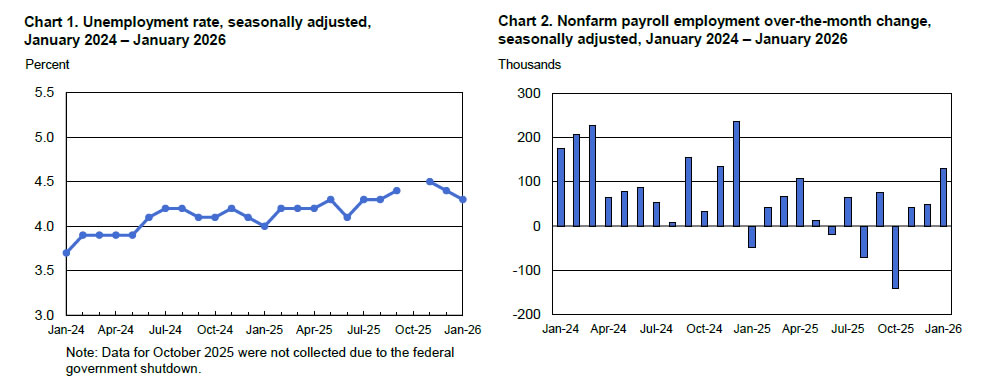
                                    US NFP grew only 559k, unemployment rate dropped to 5.8%

                                      US non-farm payroll employment grew 559k in May, below expectation of 621k. Prior month’s figure was revised slightly up from 266k to 278k. Total non-farm payroll employment is down by -7.6m, or -5.0%, from its pre-pandemic level in February 2020.

                                      Unemployment rate dropped to 5.8%, down from 6.1%, slightly below expectation of 5.9%. Number of unemployed persons fell by -496k to 9.3m. The unemployment measures are still well above pre-pandemic levels of 3.5% and 5.7m, in February 2020. Labor force participation rate was little changed at 61.6%, and remained in range of 61% to 61.7% since June 2020.

                                      Wage growth was strong, as average hourly earnings rose 0.5% mom, versus expectation of 0.2% mom.

                                      Full release here.


                                      Eurozone retail sales dropped -3.1% mom in Apr, EU down -3.1% mom

                                        Eurozone retail sales dropped -3.1% mom in April, worse than expectation of -0.9% mom. For the month, volume of retail trade decreased by -5.1% for non-food products and by -2.0% for food, drinks and tobacco, while it increased by 0.4% for automotive fuels.

                                        EU retail sales dropped -3.1% mom too. Among Member States for which data are available, the largest monthly decreases in total retail trade were registered in Slovenia (-10.4%), Denmark (-8.6%) and France (-6.0%). The highest increases were observed in Portugal (+4.3%), Latvia (+3.8%) and Lithuania (+3.7%).

                                        Full release here.

                                        UK PMI construction rose to 64.2, another month of rapid output growth

                                          UK PMI Construction rose to 64.2 in May, up from April’s 61.6, above expectation of 62.3. The data signaled the strongest rate of output growth for just under seven years.

                                          Tim Moore, Economics Director at IHS Markit: “UK construction companies reported another month of rapid output growth amid a surge in residential work and the fastest rise in commercial building since August 2007. Total new orders increased at the strongest rate since the survey began more than two decades ago, but supply chains once again struggled to keep pace with the rebound in demand.”

                                          Full release here.