Dollar index rebounded ahead of NFP, eyeing 90.90 resistance

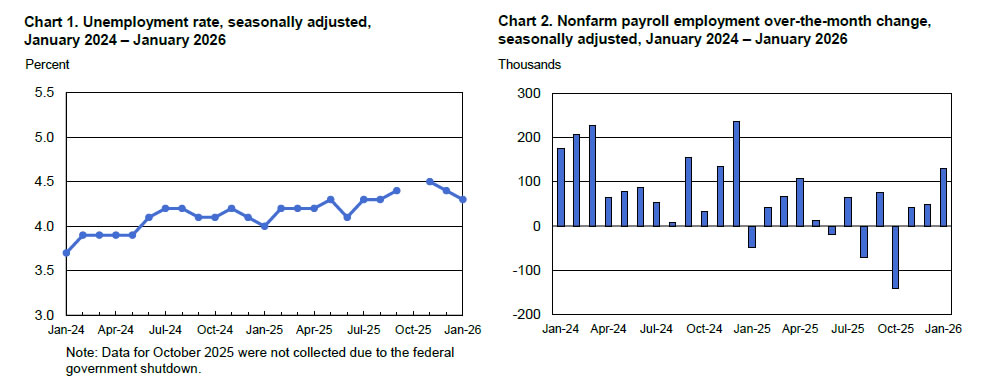
    US non-farm payroll employment is once again a major focus today. Markets are expecting 621k job growth in May. Unemployment rate is expected to drop from 6.1% to 5.9%. Average hourly earnings are expected to grow 0.2% mom.

    Looking at related data, ADP private jobs grew a massive 978k in the month. More importantly, growth was quite evenly distribution among small, mid, and large companies. Four-week moving average of initial jobless claims dropped sharply from 612k to 428k. However, ISM manufacturing employment dropped notably from 55.1 to 50.9. ISM services employment also dropped from 58.8 to 55.3. There is still room for disappointment considering the relatively high expectations on the NFP numbers.

    Dollar staged a strong and broad based rebound overnight. The Dollar index look set to start the third leg of the consolidation pattern from 89.20. Yet, we’d need to see firm break of 90.90 resistance, as well as sustained trading above 55 day EMA to confirm. In that case, stronger rise should follow towards 93.43 resistance in the next few months. However, failure to do so would keep near term outlook bearish for at least another take on 89.20 low.

    Fed Williams: Not is not the time to take any action on tapering

      New York Fed President John Williams said, “we’re still quite a ways off from maintaining the substantial further progress we’re really looking for in terms of adjustments to our asset purchase program.” And, “I just don’t think the time is now to take any action.”

      “We have to be thinking ahead, planning ahead, so I do think it makes sense for us to be thinking through the various options we may have in the future,” Williams added.

      Williams was “very positive” about the economic look. “I expect the economy will adapt to the rapid recovery and we’re going to see very good jobs growth and expect to see really strong GDP growth this year and seeing good growth next year,” he said.

      Fed Kaplan: It’s wiser sooner rather than later to discuss tapering

        Dallas Fed President Robert Kaplan reiterated that ” it would be wiser sooner rather than later to begin discussions about adjusting our purchases with a view to taking the foot off the accelerator gently, gradually, so we can avoid having to depress the brake down the road.”

        “At this stage, as it’s clear we are weathering the pandemic and making progress, I don’t think the housing market needs the level of support that the Fed is currently providing,” he added. “I would love to see sooner rather than later a discussion of the efficacy, for example, of those mortgage purchases.”


        Gold retreats on Dollar rebound, 1820 could provide key support

          Gold drops sharply in US session and breaks 1882.07 minor support. That should confirms short term topping at 1916.00, on bearish divergence condition in 4 hour MACD. The development should also double confirm underlying momentum in the greenback.

          Anyway, deeper pull back is now likely in Gold, towards 55 day EMA (now at 1820.12), which is close to 38.2% retracement of 1676.65 to 1916.06. As long as this level holds, we’d hold on to the bullish view that correction from 2075.18 has completed with three waves down to 1676.65. That is, rise from 1676.65 should resume sooner rather than later to retest 2075.18 high.

          However, sustained break of the EMA will open up the case that correction from 2075.18 is extending with another falling leg. Deeper fall would be seen towards 1676.65 low instead.

          US oil inventories dropped -5.1m barrels, WTI retreats ahead of 70 handle

            US commercial crude oil inventories dropped -5.1m barrels in the week ending May 28. At 479.3m barrels, oil inventories are about -3% below the five year average for this time of year. Gasoline inventories rose 1.5m barrels. Distillate rose 3.7m barrels. Propane/propylene rose 4.1m barrels. Total commercial petroleum inventories rose 1.9m barrels.

            WTI crude oil edged higher to 69.27 earlier today but retreated on broad based Dollar rebound. Nevertheless, prior break of 67.83 resistance should have confirmed up trend resumption. While some consolidation might be seen, downside should be contained well above 65.15 resistance to bring rise resumption. We’re tentatively put 38.2% projection of 33.80 to 67.83 from 61.51 at 74.50 as next target, as WTI rises through 70 handle.

            US ISM services rose to 64 in May, another record high

              US ISM Services PMI rose 1.3 pts to 64.0 in May, above expectation of 62.9. That’s another record higher, following 63.7 in March. Looking at some details, business activity/production rose 3.5 to 66.2. New orders rose 0.7 to 63.9. Employment dropped -3.5 to 55.3. Prices rose 3.8 to 80.6.

              ISM said: “The past relationship between the Services PMI® and the overall economy indicates that the Services PMI® for May (64 percent) corresponds to a 5.2-percent increase in real gross domestic product (GDP) on an annualized basis.”

              Full release here.

              US initial jobless claims dropped to 385k, continuing claims ticked up to 3.77m

                US initial jobless claims dropped -20k to 385k in the week ending May 29, better than expectation of 410k. Four-week moving average of initial claims dropped -30.5k to 428k. Both figures were lowest since March 14, 2020.

                Continuing claims rose 169k to 3771k in the week ending May 22. Four-week moving average of continuing claims rose 23k to 3688k.

                Full release here.

                US ADP jobs grew 978k, upstick in companies of all sizes

                  US ADP private sector employment grew 978k in May, well above expectation of 695k. By company size, small businesses added 333k jobs, medium term businesses added 338k, large businesses added 308k. By sector, goods-producing jobs grew 128k, service-providing jobs grew 850k.

                  “Private payrolls showed a marked improvement from recent months and the strongest gain since the early days of the recovery,” said Nela Richardson, chief economist, ADP. “While goods producers grew at a steady pace, it is service providers that accounted for the lion’s share of the gains, far outpacing the monthly average in the last six months. Companies of all sizes experienced an uptick in job growth, reflecting the improving nature of the pandemic and economy.”

                  Full release here.

                  UK PMI services finalized at 62.9, eye-popping growth in Q2

                    UK PMI Services was finalized at 62.9 in May, up from April’s 62.9, fastest growth in 24 years. PMI Composite was finalized at 62.9, up from April’s 60.7, record high since 1998.

                    Tim Moore, Economics Director at IHS Markit: “UK service providers reported the strongest rise in activity for nearly a quarter-century during May as the roll back of pandemic restrictions unleashed pent up business and consumer spending. The latest survey results set the scene for an eye-popping rate of UK GDP growth in the second quarter of 2021, led by the reopening of customer-facing parts of the economy after winter lockdowns.”

                    Full release here.

                    Eurozone PMI Composite finalized at 57.1, strong growth in Q2, even more impressive in Q3

                      Eurozone PMI Services was finalized at 55.2 in My, up from April’s 50.0. PMI Composite was finalized at 57.1, up from April’s 53.8. Looking at some member states Ireland PMI Composite rose to record high of 63.5. Spain rose to 174-month high at 59.2. France rose to 10-month high at 57.0. Germany rose to 2-month high at 56.2. Italy rose to 39-month high at 55.7.

                      Chris Williamson, Chief Business Economist at IHS Markit said: “The eurozone’s vast service sector sprang back into life in May, commencing a solid recovery that looks likely to be sustained throughout the summer… The service sector revival accompanies a booming manufacturing sector, meaning GDP should rise strongly in the second quarter. With a survey record build-up of work-in-hand to be followed by the further loosening of covid restrictions in the coming months, growth is likely to be even more impressive in the third quarter.”

                      Full release here.

                      Germany PMI services finalized at 52.8, scope for further rise in services prices

                        Germany PMI Services was finalized at 52.8 in May, up from April’s 49.9. PMI Composite rose to 56.2, up from April’s 55.8.

                        Phil Smith, Economics Associate Director at IHS Markit said: “Germany’s service sector started to revive in May, buoyed by the partial easing of lockdown measures and a surge in new business as progress in the vaccine rollout helped spur confidence and demand…

                        “The other standout feature of the survey remains the growing cost pressures in the service sector, which have now reached the highest since mid-2008…. When factoring in that many services businesses have been mostly absorbing higher costs up to now and are facing up to the prospect of a rapid release of pent up demand, there is scope for services prices to rise further in the coming months.”

                        Full release here.

                        France PMI services finalized at 56.6, in good stead for strong growth in summer

                          France PMI Services was finalized at 56.6 in May, up from April’s 50.3. PMI Composite was finalized at 57.0, up from April’s 51.6.

                          Shreeya Patel, Economist at IHS Markit said: “Latest PMI data indicated a strong improvement in business activity across the French service sector after virus-related restrictions eased in May… Stronger demand, particularly from the domestic market, underpinned the uplift…

                          “That said, output was somewhat hindered by capacity constraints after a softer increase in headcounts contributed to a marked rise in backlogs. Nevertheless, the upturn across France’s private sector, and a rising vaccination rate will place the country in good stead for strong growth as we head into the summer.”

                          Full release here.


                          China Caixin PMI services dropped to 55.1, composite dropped to 53.8

                            China Caixin PMI Services dropped to 55.1 in May, down from 56.3, below expectation of 56.2. PMI Composite dropped to 53.8, down from 54.7.

                            Wang Zhe, Senior Economist at Caixin Insight Group said: “To sum up, the expansion in manufacturing and services maintained its momentum as both supply and demand expanded. Overseas demand was generally good, but service exports were affected by the pandemic. The job market continued to improve. In May, services recovered faster than manufacturing. Entrepreneurs were confident about the economic outlook. Inflation remained a crucial concern as the price gauges in manufacturing and services both rose last month.

                            Full release here.

                            Australia trade surplus rose to AUD 8B

                              Australia goods and services exports rose 3% mom to AUD 39.8B in April. Imports dropped -3% to AUD 31.7B. Trade surplus rose from AUD 2.2B to AUD 8.0B, matched expectations. Retail sales rose 1.1% mom, unchanged from preliminary results.

                              AiG Performance of Construction Index dropped -0.8 pts to 58.3, “largely maintaining the strong pace of post-2020 recovery following on from a record high in March”.

                              Fed Harker: It may be time to a least think about thinking about tapering

                                Philadelphia Fed President Patrick Harker said “we’re planning to keep the federal funds rate low for long.” He added, “but it may be time to at least think about thinking about tapering our $120 billion in monthly Treasury bond and mortgage-backed securities purchases.”

                                “We have to be careful in removing accommodation so that we don’t create any kind of ‘taper tantrum,'” he emphasized. “And that’s why we need to communicate very early, very often what we’re going to do.”


                                Fed: Economy expanded at somewhat faster pace, price pressures increased further

                                  Fed’s Beige Book report noted that the national economy expanded at a “moderate pace”, “somewhat faster” than the prior reporting period. Several Districts cited the “positive effects” of increased vaccination and relaxed social distancing measures. Overall, “expectations changed little, with contacts optimistic that economic growth will remain solid.”

                                  Two-third of Districts reported “modest employment growth” while wage growth was “moderate”. Businesses expected “labor demand will remain strong, but supply constrained, in the months ahead”. Overall price pressures “increased further”. Businesses anticipated facing “cost increase and charging higher prices in coming months.”

                                  Full report here.

                                  ECB: Euro unchallenged as the second most widely used global currency

                                    ECB President Christine Lagarde said in an annual review that “the euro remains unchallenged as the second most widely used currency globally after the US dollar”. Share of Euro across various indicators of international currency was stable, averaging around 19% in 2020.

                                    The relative resilience of the international role of the euro despite the pandemic shock stands in contrast to the significant decline observed in the wake of the euro area sovereign debt crisis. “To some extent, this development may reflect the effectiveness of the unprecedented policy support measures and coordinated approach that have prevailed in the euro area during the COVID-19 crisis,” said Lagarde.

                                    On the topic of digital currency, Executive Board member Fabio Panetta said, “depending on its design, a central bank digital currency may support the use of a currency in cross-border payments. However, fundamental forces, such as the quality of economic policies and institutions, as well as the depth of markets, remain the most important factors for international currency status,”

                                    Full release here.

                                    Eurozone PPI at 1.0% mom, 7.6% yoy in Apr

                                      Eurozone PPI came in at 1.0% mom, 7.6% yoy in April, above expectation of 0.9% mom, 7.3% yoy. For the month, industrial producer prices in the Eurozone increased by 1.8% for intermediate goods, by 1.0% in the energy sector, by 0.5% for non-durable consumer goods, by 0.4% for durable consumer goods and by 0.3% for capital goods. Prices in total industry excluding energy increased by 0.9%.

                                      EU PPI came in at 0.9% mom, 7.6% yoy. The highest increases in industrial producer prices were recorded in Ireland (+6.2%), Spain (+2.9%) and Estonia (+2.1%), while the only decreases were observed in Croatia (-0.4%) and France (-0.3%).

                                      Full release here.

                                      BoJ Adachi: Post-pandemic era may give a prime opportunity to achieve inflation target

                                        BoJ board member Seiji Adachi said in a speech, “the post-COVID-19 phase may be an opportunity for the services industry to raise the prices of their services while improving their quality.”

                                        “As Japan’s past deflationary phase is characterized by the fact that there were almost no price rises in the domestic demand-oriented services industry, the post-COVID-19 era may afford a prime opportunity to achieve the 2 percent price stability target,” he added.

                                        Full speech here.

                                        Australia GDP grew 1.8% qoq in Q1, recovered to above pre-pandemic levels

                                          Australia GDP grew 1.8% qoq in Q1, above expectation of 1.1% qoq. Through the year, GDP rose 1.1%. Head of National Accounts at the ABS, Michael Smedes said: “With 1.8% growth in the March quarter 2021, Australian economic activity has recovered to be above pre-pandemic levels and has grown 1.1% through the year.”

                                          Full release here.